Rakib Ehsan

Dr Rakib Ehsan is an independent expert on community relations and a Senior Fellow at Policy Exchange. His PhD thesis investigated the impact of social integration on British ethnic minorities.

Britain really is a successful multi-racial democracy

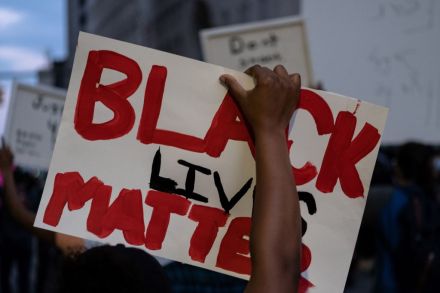
A new report by the UK government’s Commission on Race and Ethnic Disparities has been published today. At over 250 pages, it is a meaty document that makes a total of 24 recommendations, based on four broad themes: ‘building trust’, ‘promoting fairness’, ‘creating agency’, and achieving inclusivity’. But one of its more eye-catching conclusions – which will inevitably cause a stir in the ‘anti-racism’ circles which have rallied behind the Black Lives Matter movement – is that the report says Britain is a successful multi-racial democracy.

The Bristol riots show the danger of ignoring anti-police extremism

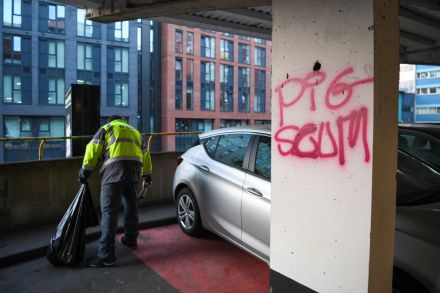
The ugly scenes in Bristol last night make it plain to see that Britain can no longer turn a blind eye to a particular brand of political disorder. Violent clashes during the city’s ‘Kill the Bill’ demonstration – supposedly in protest against the Conservative government’s Police, Crime, Sentencing, and Courts Bill – resulted in 20 police officers being injured, burned-out police vans, and a police station being attacked. Two officers who were seriously injured suffered from broken ribs, a broken arm and a punctured lung. So who was to blame for this violence? The chairman of Avon and Somerset Police Federation, Andy Roebuck, labelled last night’s anarchy a form of 'unprecedented violence'.

Is Black Lives Matter a voice for black Brits?

Does Black Lives Matter speak for black Brits? The organisation's objectives are certainly radical: it has professed public support for direct action in the name of ‘black liberation’, along with aspirations to dismantle the capitalist economy. It has also said it wants to get rid of the police and abolish prisons. It's safe to say those views are not shared by many of those BLM claims to represent. A new report by the Henry Jackson Society reveals that, while nearly six in ten black people in Britain think the UK is a fundamentally racist society (a view shared by three in ten people in the general population), the core objectives of BLM are far from well supported.

What lessons can we learn from the case of Khairi Saadallah?

Khairi Saadallah is a name that should not be forgotten in a hurry. Found guilty of the murders of James Furlong, David Wails, and Joe Ritchie-Bennett, Saadallah was yesterday given a whole-life jail term for the June 2020 terrorist attack in Reading’s Forbury Gardens. He will never leave prison. We shouldn't, though, remember Saadallah's name because of his crimes, but in order to learn lessons from the catalogue of blunders that left him free to kill. While the whole-life prison sentence handed is welcome, the case of Khairi Saadallah represents a fundamental failure of epic proportions in the British justice system. Saadallah was previously convicted for a string of knife-related offences and racially-aggravated assault.