Rakib Ehsan

Dr Rakib Ehsan is an independent expert on community relations and a Senior Fellow at Policy Exchange. His PhD thesis investigated the impact of social integration on British ethnic minorities.

The judiciary is still in thrall to DEI

Reports of the death of diversity, equality, and inclusion (DEI) have been grossly exaggerated. DEI still threatens to undermine equality of opportunity in Britain, as well as suggesting we are not focusing enough on genuine barriers to social mobility. The UK Supreme Court and Judicial Committee of the Privy Council’s recently published fourth annual update to its Judicial Diversity and Inclusion Strategy is a case in point. As well as orchestrating a peculiar scheme which entails junior legal professionals from ‘under-represented groups’ mentoring a judge (with a strong focus on ‘diversity and inclusion’), it sets out objectives such as supporting an ‘inclusive and respectful’ culture.


The small boats are a national security emergency

New immigration data published today has only reinforced what many have known for some time – the current government strategy of ‘smashing the gangs’ to resolve the UK’s small-boats emergency is failing miserably. There are growing signs that the impact of the Yemeni civil war and the Israel-Palestine conflict is spilling over into the UK’s small-boats emergency Following the recent development that 50,000 small-boat migrants had arrived in the UK under the prime ministership of Sir Keir Starmer, the fresh immigration statistics reveal that in the year ending June 2025, there were 49,341 detected so-called ‘irregular arrivals’ – 27 per cent more than in the previous year. Nearly nine in ten arrived by crossing the English Channel on a small boat.

Britain doesn’t need yet another equalities quango

Labour has evidently not learned from its recent troubles with the Sentencing Council over guidelines which risked undermining the very foundations of the criminal justice system. The government now has plans to create a new enforcement body to tackle ‘pay discrimination’ against ethnic minorities and disabled people. The equalities minister, Seema Malhotra, has set up a call for evidence which will search for advice on the planned formation of an equal pay regulatory and enforcement unit – a proposed quango that would work with the trade union movement to strengthen the implementation of equal pay rights.

Labour’s grooming gang plan doesn’t go far enough

Home Secretary Yvette Cooper has finally bowed to pressure and announced five local reviews alongside a ‘rapid national audit’ into grooming gangs. But the plan falls short of the national inquiry that many, including some Labour MPs, want. Cooper's plan is insufficient. Labour may well pay a hefty electoral price for it Cooper’s statement in the Commons yesterday encouragingly included a pledge to enact recommendations made by the Independent Inquiry into Child Sexual Abuse (IICSA), which concluded with its flagship report published back in October 2022. These include the creation of a single core data set which covers the characteristics of victims and alleged perpetrators of child sexual abuse, including age, sex, and ethnicity.

Nigel Farage is right to talk about British Muslims

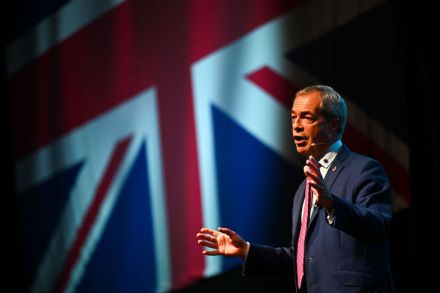
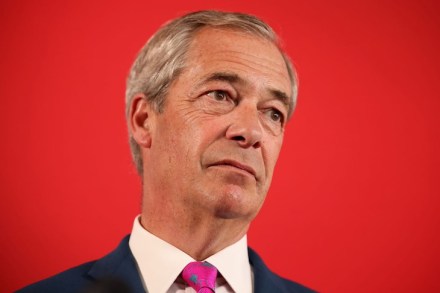
Nigel Farage claims that British Muslims are just as concerned, if not more, by the threat of Islamist extremism. The Reform leader said that ‘if you’re a Muslim family and the news is all about radical Islamists committing heinous acts, you’re going to think “wow, my neighbours may well be prejudiced against me because I’m Muslim’”.  Farage is determined to face down his critics Farage is right: after all, wicked crimes committed by a sliver of British Muslims – especially Islamist terrorist attacks – have the potential to fan the flames of prejudice towards the entire group.

Is class rather than race a bigger barrier to success in Britain?

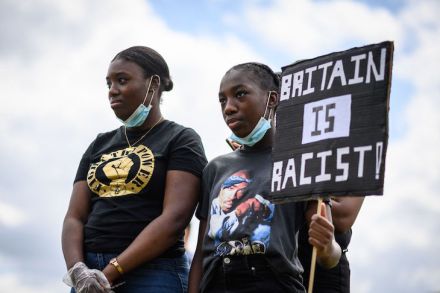
Is Britain racist? At times, you'd be forgiven for thinking so. In recent years, our country has experienced considerable turbulence on the subject of race and equality. The spread of the American Black Lives Matter movement on these shores in the summer of 2020 – which led to protests from the Isle of Wight on England’s southern coast to Scotland’s Shetland Islands – contributed towards an acceleration in race-focused thinking. Yet the reality is that Britain is a tolerant place in which race does not usually hold people back. Ethnic minorities in the UK regularly outperform the white-British population in various spheres of life Ethnic minorities in the UK regularly outperform the white-British population in various spheres of life.

Anjem Choudary is in jail for life – but is that enough?

Radical preacher Anjem Choudary – the Bexley-born godfather of homegrown Islamist terrorism in modern Britain – has finally been imprisoned for life. Found guilty of directing the banned group al-Muhajiroun after an international investigation involving Scotland Yard, the MI5, the New York Police Department (NYPD) and Canadian police, Choudary was given a minimum term of 28 years at Woolwich Crown Court this week. The jail sentence means the 57-year-old will not be eligible for release until he is at least 85 years old. It's unlikely he will ever leave prison alive. Choudary doesn't speak for British Muslims like me This has been a long time coming for Choudary.

What the Harehills riots say about Britain

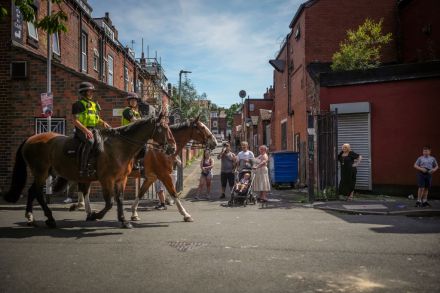
The Harehills riots and disorder, which started last Thursday in Leeds after social services removed several children from a Romani family, is a fine example of people projecting their biases onto complex social events. We are more likely to find the roots of the Harehills disorders in the politics of Central Europe than on the Indian subcontinent Reform UK leader Nigel Farage – no stranger to questionable takes on  integration – labelled the events as a destructive manifestation of subcontinental politics in inner-city England. This is wide of the mark. Harehills in Leeds is not Belgrave in Leicester, where trouble broke out in 2022 after an India–Pakistan Asia Cup cricket match.

Southgate’s strengths were also his undoing

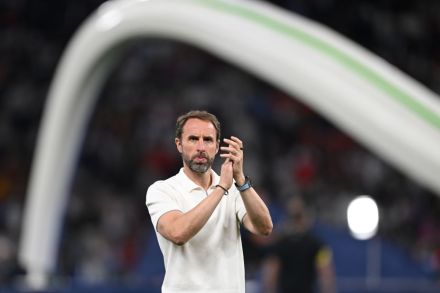
After yet another dose of Euros final heartbreak for England, Gareth Southgate has resigned as manager. Southgate has been manager of England at a time where the overall quality of international football is not as high as it was in the past On paper, Southgate – who led England to two Euro finals and a World Cup semi-final – has done far better than many of his predecessors. One of his vital contributions was successfully managing to move the English national team away from the paralysing culture of club tribalism that defined the so-called Golden Generation of the 2000s. Southgate also naturally understood how the national football team can be an incredible source of togetherness; a force for social unity.

What Nigel Farage gets wrong about British Muslims

Once again, Nigel Farage – arguably the most influential politician in recent British political history – has sparked a furious debate.  What I take issue with is the grand-sweeping generalisations of British Muslims On Sky News and interviewed by Sir Trevor Phillips, Farage said there are a growing number of Muslims who refuse to subscribe to so-called ‘British values’. He took aim in particular at young Muslims at pro-Palestine demonstrations, appearing to suggest that they could in no way be considered British patriots.

Akhmed Yakoob’s West Midlands result should worry Labour

While Labour has gained councillors across England, and won bellwether councils such as Nuneaton and Bedworth and Milton Keynes, it has also lost some of its traditional Muslim support to George Galloway’s Workers Party of Britain (WPB) and pro-Palestine Muslim independent candidates. From the industrial Lancastrian town of Blackburn to inner-city Bradford in West Yorkshire, the ‘Palestine’ effect has seen a surge of independent Muslim councillors elected – largely at the expense of Labour. But arguably the independent pro-Gaza challenger who has landed the fiercest uppercut to Labour’s chin is one who was not even elected: the West Midlands mayoral candidate Akhmed Yakoob.

A fairytale of Luton: why the Hatters deserve to stay in the Premier League

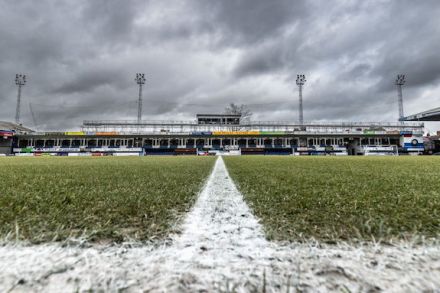
As the Premier League season draws to a nail-biting close at both ends of the table, my hometown club of Luton Town FC is still in with a shout of surviving the drop back to the Championship. The club is one point from safety with four games to play. Staying in the Premier League is vital not just for LTFC but for the town itself. It is safe to say that Luton doesn’t have the most positive reputation; a running joke is that most people visit Luton to fly right out of it from the international airport. My hometown all too often ranks highly when it comes to lists on the worst places to live in England – the perception of it being run-down, crime-ridden, and flowing with various kinds of extremism, is not an uncommon one.

How Galloway won Rochdale

Labour's defeat in Rochdale – following the party's string of impressive by-election victories in places such as Wellingborough, in Brexit-voting middle England – will give leader Keir Starmer an almighty headache. Despite the party's big poll lead, it shows that nothing can be taken for granted when it comes to looking ahead to the general election. The problems in Rochdale started when the Labour candidate, Azhar Ali, appeared to suggest that the Israeli government allowed the October 7 Hamas-led terror attacks to take place, in order to provide the pretext for a full-scale military invasion and bombardment of Gaza. Labour withdrew support for Ali but he remained on the ballot as its candidate.

Why Europe riots

36 min listen

This week: In the magazine we look at the recent protests in France. The Spectator's Douglas Murray argues that racism is not the problem but that a significant chunk of the unintegrated immigrant population is. He is joined by Dr Rakib Ehsan, author of Beyond Grievance: What the Left Gets Wrong about Ethnic Minorities, to investigate why Europe riots. (01:16) Also this week: Journalist Ivo Dawnay and The Spectator’s associate editor Toby Young discuss the plight of 'politically exposed persons' in the magazine this week. This is of course in light of the news that Nigel Farage has had his bank account closed, with many speculating he has been 'debanked' simply because of his political views and associations.

Can a football regulator save the beautiful game?

English football will soon have an independent regulator, with the power to block clubs from joining breakaway leagues and also try and prevent teams from going out of business. The football watchdog is part of plans set out in the government's white paper, published today. For a struggling Tory party, this presents a golden opportunity to stand up for the game’s working-class supporters in provincial towns and post-industrial communities. It will also spark much-needed life into the Tories' flagging levelling-up and social-cohesion agendas. Plans for a regulator to protect the beautiful game are overdue.

The Knowsley disruption shows the UK’s incompetence on asylum

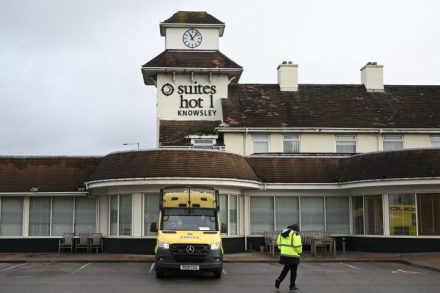
This week’s public disorder outside a hotel accommodating asylum seekers in the town of Knowsley in Merseyside was in some ways inevitable. A total of 45,756 people entered the UK on small boats via the English Channel last year – which, according to the 2021 Census, is a number larger than the entire population of English towns such as Dover in Kent, Boston in Lincolnshire and Kirkby in the Metropolitan Borough of Knowsley. Britain’s asylum regime should be prioritising the world’s most persecuted peoples, especially women and girls at major risk of sex-based violence in their conflict-ridden homelands.

Cornered: what will Putin do now?

41 min listen

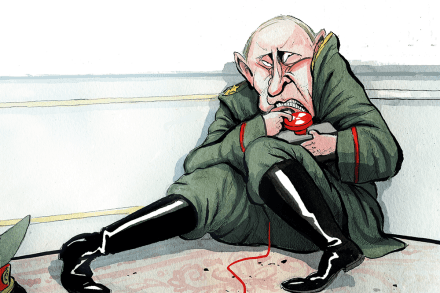
In this week’s episode:For the cover of the magazine, Paul Wood asks whether Putin could actually push the nuclear button in order to save himself?He is joined by The Spectator’s assistant online editor Lisa Haseldine, to discuss (01:03).Also this week:Why is there violence on the streets of Leicester?Douglas Murray writes about this in his column this week and we speak to journalist Sunny Hundal and research analyst Dr Rakib Ehsan about what’s caused the disorder (13:44).And finally:Is three – or more – a crowd?Mary Wakefield discusses the poly-problems or polyamory in her column in The Spectator and is joined by comedian Elf Lyons, who has written about her experience of polyamory before (26:46).

Britain’s problem with illegal Islamic private schools

While some in Britain are understandably anxious about the Taliban’s rapid takeover of Afghanistan and the prospect of the Central Asian country becoming an international jihadist training ground, long-standing domestic problems concerning religious radicalism continue to persist. The issue of unregistered private schools in British Muslim communities is one of them. This has been thrust into the limelight yet again after a headteacher was warned that she faces a prison term after continuing to run an illegal Islamic private school – in defiance of a previous conviction. Nadia Ali, 40, ran the Ambassadors High School in Streatham, South London, for over half a year after being sentenced to community service for operating the unregistered school.

Can Labour afford to continue its culture war?

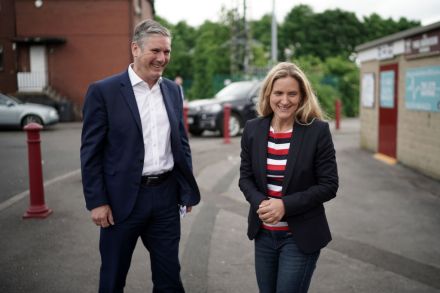
After being soundly beaten by the Tories in Hartlepool and winning a paltry 1.6 per cent of the vote share in Chesham and Amersham, Labour have managed to cling on in the Batley and Spen by-election by 323 votes. While the result gives the party’s under-pressure leader Sir Keir Starmer some breathing space – and will give his party some confidence – holding on to a seat in a by-election with a significantly reduced majority should not be cause for major celebration either. The fact that the left-wing, ‘anti-woke’ firebrand George Galloway won an impressive 22 per cent of the vote in this election should concern Labour’s campaigns team as well. The party still finds itself at the very heart of the British left’s own culture war.

Canada’s disturbing pattern of anti-Muslim attacks

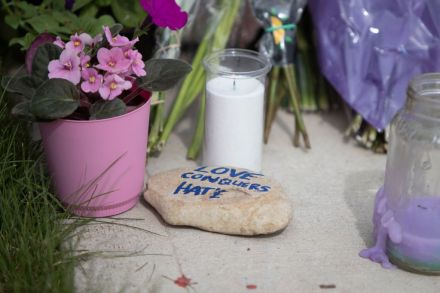
Canada is a vibrant multicultural society. The Great White North has become a shining example of a diverse democracy. It has established itself as a modern nation-state with a relatively altruistic, happy, optimistic population. But it also has a problem. On Sunday, in the city of London in Ontario, four members of a Muslim family were killed in what police have described as a premeditated vehicle attack. Among those who died were two women (aged 74 and 44), a 46-year-old man and a 15-year-old girl. A nine-year-old boy is in hospital. Detective Superintendent Paul Waight said the victims were specifically targeted because of their 'Islamic faith'.