Philip Patrick

Philip Patrick

Philip Patrick is an exiled Scot, who lectures at a Tokyo university and contributes to the Japan Times

How does ‘taking the knee’ help Qatar’s World Cup slaves?

What was going through the minds of England players as they took the knee, yet again, prior to their victory over Poland in their 2022 World Cup qualifier at Wembley last week? George Floyd? Racism in sport? Nothing in particular?  We’ll never know. But it seems unlikely they were thinking too hard about the destination where, if their good form holds, they will be representing their country next winter: the tiny gulf state of Qatar. If they had, they might have spared a thought, and perhaps a gesture, for the 6,500 migrant workers estimated to have died since Qatar won the right to host next year’s tournament. The issue of migrant worker deaths in Qatar has been a running sore, which has become inflamed again as the qualifiers have got under way.

Has the SNP failed to learn from its ‘snoopers’ charter’ debacle?

In the run-up to the French vote on the European Constitution in 2005, Jean-Claude Juncker said ‘If it’s a Yes, we will say ‘on we go’, and if it’s a No we will say ‘we continue’’. Nicola Sturgeon and her SNP government are clearly of a similar mind. Not perturbed by the backlash that greeted the party's most notorious rejected policy, the Named Person Scheme, the SNP appears to be attempting its luck again, albeit in a subtly disguised and rebadged form. The Named Person Scheme was originally introduced as part of the Children and Young People Act (2014). It proposed that a ‘named person’ would be appointed for every child in Scotland up to the age of 18.

Can Alex Salmond’s plan to ‘game’ Holyrood’s voting system work?

Alex Salmond’s reemergence on the Scottish political scene as leader of the Alba party had a pantomimic quality – some cheers, some boos, and a lively mix of interest and anxiety about where the plot would now go with the principal boy back centre stage. But working out how the appearance of Salmond’s new party affects what happens is a considerable challenge, thanks to Scotland’s infernally complex voting system. To paraphrase Lord Palmerston’s reference to the Schleswig-Holstein question, it may be that only around three people truly understand the D’Hondt voting system employed in Scottish parliamentary elections, though there are probably more, who like the fabled German professor, have gone mad trying to figure it out.

Japan’s Olympic ‘scandals’ mark the arrival of cancel culture

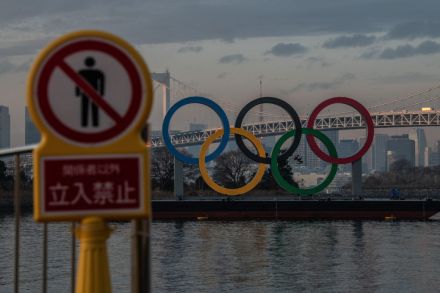
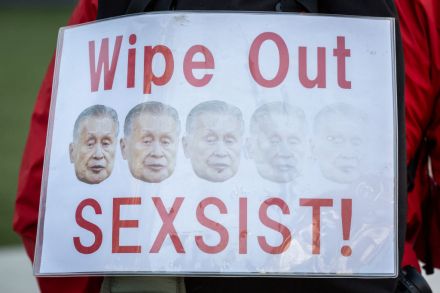
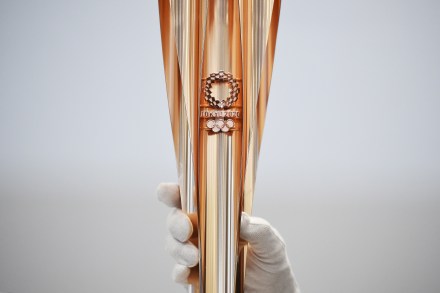
Things are going from bad to worse for Tokyo's cursed Olympics. Just a month after Yoshiro Mori, the former PM, and ex-head of the Tokyo Olympic organising committee was forced to quit for suggesting female members should have their speaking time rationed, along comes another storm in a green tea cup, and yet another resignation.  The latest fiasco concerns comments made by Hiroshi Sasaki, the now former creative director of the opening and closing ceremonies about the actress, comedian and fashion designer Naomi Watanabe. Watanabe, a ubiquitous presence on the inane and exhaustingly upbeat variety shows that dominate TV here, is known as the ‘Japanese Beyoncé’ for the impressions of the American singer, which brought her to prominence.

Will the Tokyo Olympics go ahead?

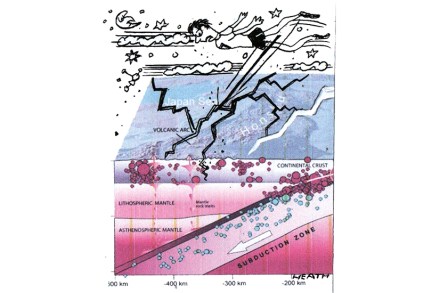
Tokyo This week was the tenth anniversary of the Great East Japan Earthquake, the most powerful earthquake ever recorded in the country. It, along with the tsunami it triggered, claimed an estimated 19,000 lives. I was walking in the Shibuya district of Tokyo when the quake knocked me off my feet. I recall being first puzzled (why am I falling?); then awestruck, as I glanced up at a thin concrete ‘pencil’ building swaying gently like a flower in the breeze. Two women on a balcony seemed to be, bizarrely, unaccountably, laughing. Then I became aware of a man running towards me, gesticulating frantically and, oddly for Japan, swearing. When the tremors passed, I picked myself up and noticed his hard hat, overalls and expression of wonder mingled with relief.

The cautionary tale of the Christian teacher who criticised Ruth Davidson

When Richard Lucas, a maths teacher, uploaded a video criticising former Scottish Conservative leader Ruth Davidson for having what he called a 'fatherless child', he anticipated some controversy. But, nearly three years on, Lucas is still shocked by the reaction it sparked. Lucas, who is a Christian, was hauled in front of the General Teaching Council for Scotland. Finally, this month, a panel threw out allegations that his comments were 'offensive and discriminatory' and allowed him to continue to work as a teacher.

What’s behind Japan’s vaccine scepticism?

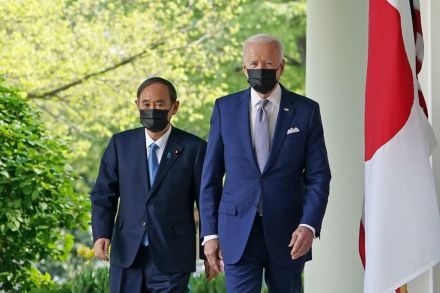
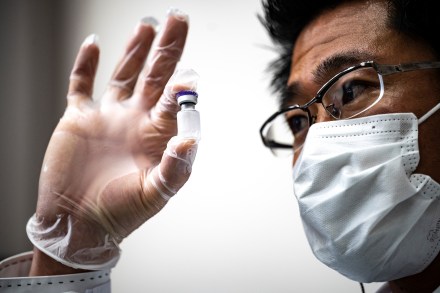
Japan finally began its Covid-19 vaccination programme this week after a consignment of 60,000 vials arrived by charter flight from Europe. Medical staff will be first in line to be jabbed, followed by Japan’s innumerable seniors (presumably starting with the super-centenarians), then those with pre-existing conditions, and finally the general population. A rapid and successful roll out is seen as a last chance to save the summer Olympics and with it, probably, the government of Prime Minister Yoshihide Suga. But a whole host of problems is making that outcome look decidedly optimistic.

Japan Olympic chief resigns over sexism. But did he have to go?

Yoshiro Mori the 83-year-old former Japanese prime minister has resigned from his position as president of the Tokyo Olympic Organising Committee less than 6 months before the games are due to start. Mori’s crime? Making spectacularly unwise comments during a discussion of how to increase women’s representation on the committee. ‘When you increase the number of female executive members, if their speaking time isn’t restricted to a certain extent, they have difficulty finishing, which is annoying,’ he was reported as saying. Along with a litany of other problems and embarrassments, Mori is the second senior Olympic official to quit due to a scandal.

Yoshihide Suga is the Japanese Gordon Brown

‘Analytical intelligence, absolutely. Emotional intelligence, zero’. That was Tony Blair’s withering assessment of his successor Gordon Brown. It is a description which could as easily be applied to Japan’s beleaguered prime minister Yoshihide Suga. The former chief cabinet secretary, long-time right-hand man and ‘brain’ of long serving PM Shinzo Abe is showing alarming Brownite tendencies in his handling of the media and political relationships. Amid plummeting poll ratings the rumour is that he’ll be lucky to make it to his first anniversary in power. Like Gordon Brown, Suga took over as PM from a three-time election winner.

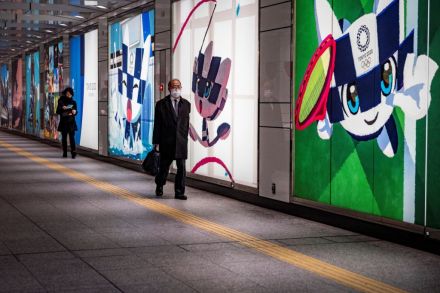
Is it all over for the Tokyo Olympics?

Any long-term resident of Japan will know that ‘reading the air’, as the locals put it, is an essential skill for understanding what is really being communicated behind the glossy lacquer box patina of courtesy and understatement of Japanese discourse. Bad news is never expressed directly and you need to decode the subtle hints embedded in seemingly anodyne comments to get to the truth. For example, if a Japanese doctor ever tells you ‘it’s hard to say’ when you ask about your test results, it might be time to start getting your affairs in order.

Japan’s cherry blossom scandal has tainted Shinzo Abe’s legacy

Japan may have avoided being locked down this winter, but is its longest serving PM Shinzo Abe about to be locked up? That is the alarming prospect that faces Abe as he struggles to explain his role, and that of his advisors, in a scandal that has beset him in and out of office for over two years. The allegation is that events organised for Abe’s constituents and assorted followers, including cherry blossom viewing parties, held between 2016 and 2018, were subsidised by his support group to the tune of around of around 30 million yen (£210,000 pounds). The undeclared payments, it is claimed, were in contravention of election law.

Japan has the answer to Scotland’s drugs crisis

As a Scot, I found the news that my country had registered, by some distance, the most drug-related deaths in Europe last year profoundly depressing. But my sprits sank even lower when I saw the reaction. Rather than provoking a genuine debate about how to tackle this crisis, the dismal statistics merely set off yet another round of the Holyrood vs Westminster blame game. There were wearily predictable calls for more money, more treatment programmes, more ‘consumption rooms’, more methadone, and even, for those under the illusion that it isn’t virtually the de facto situation anyway, legalisation. It seems to be accepted as a fact now that a significant number of Scottish people will become dependent on drugs, that drug abusers, like the poor, will always be with us.

Why lockdown scepticism is growing in Japan

'We all know it’s bull and we’ve had enough.’ This is not the kind of language I have come to expect from the Japanese. But this protester, who lived for twelve years in Reading, which accounted for his excellent, if rather fruity English, was clearly angry. He was one of hundreds outside Tokyo’s Shinjuku station last week, attending the latest in a series of small but significant demonstrations of the growing Covid-sceptic movement. The gatherings may not have been huge, but it is noteworthy that they have taken place at all in a country generally regarded as a Covid success story (‘only’ around 2,000 deaths so far, and limited restrictions).

Nike Japan’s lecturing was bound to backfire

David Ogilvy once said that ‘a good advertisement is one that sells the product without drawing attention to itself’. If so, the new Nike ad currently running in Japan is about as big a failure as you can get. It has certainly drawn plenty of attention to itself, producing more angry denunciations than sales.  The ad snappily titled ‘The Future isn't Waiting’ features scenes of bullying and discrimination directed at mixed-raced athletes in Japanese schools. They then fight back and triumph through the power of sport — and the power of Nike sportswear.

Why academics hold Thatcher and Trump in such contempt

‘Has that orange baboon gone yet?’ asked a senior professor in the teacher’s room at my university yesterday. The remark went down well, despite the unfashionable remark about someone’s skin colour and the dubious zoomorphic comparison. As did an earlier comment from another colleague joking about how he’d like to replace Trump’s corona medication with something more potent (i.e. he wishes he were dead).

Why Japan’s new PM is desperate for the Olympics to go ahead

There is a rare treat for classical music fans in Tokyo this week with the visit of the Vienna Philharmonic Orchestra under their star conductor Valery Gergiev. And it’s even more of a treat when you consider the conditions under which the concerts are taking place, with full audiences rather than the socially distanced half house limits we have become accustomed to. Apart from a requirement for patrons to wear masks, it looks pretty much like a normal series of exorbitantly priced prestige concerts at the Suntory Hall (150 quid in the cheap seats). While very welcome, this does raise an awkward question: how did one of the world’s premier orchestras make it to the venue in the first place, given the supposed two-week isolation period required for visitors from Europe?

Japan’s carbon neutral pledge looks like a load of hot air

Japan's new prime minister Yoshihide Suga is talking tough on climate change. Suga has promised that Japan will become carbon neutral by 2050, a step up from the previous commitment of an 80 per cent cut in emissions. But is this all a load of bluster? While a certain opacity is expected in formal Japanese (a famous anecdote has a journalist having his copy returned with the instruction ‘Could you make it a little more vague?’) Suga was exceptionally unspecific in his so-called climate commitment. He made little reference to how the target would be achieved, or how progress would be monitored. Nor did he mention the Paris Climate Agreement, which mandates a 45 per cent reduction in emissions by 2030.

Meet Japan’s new PM – installed by a grey coup of party insiders

There’s a good chance that nothing that occurs in the new Japanese PM's tenure will be nearly as interesting as how he got the job in the first place. While not quite in the Belarusian league, Yoshihide Suga’s victory in the ruling Liberal Democratic party leadership election was nonetheless a stitch-up of staggering brazenness for a law-governed democracy. Suga (71) the former Chief Cabinet Secretary in Shinzo Abe’s administration, would probably have lost out to rival Shigeru Ishiba had the election been held in the normal way, with all party members given a vote.

Who could replace Shinzo Abe as Japanese PM?

Japan’s longest-serving Prime Minister, Shinzō Abe, has announced that he will step down, as soon as his replacement is selected. This is the second time that Abe has resigned the premiership (the first being in 2007) and ill health has again been cited as the reason. Abe has visited hospital several times in recent weeks and has looked tired on his rare public appearances as his chronic bowel disease has recurred. The news has sparked two debates – the first, urgent one, is over Abe’s successor. The front-runner is probably Shigeru Ishiba, the 63-year-old former defence minister and Abe critic. The hawkish Ishiba is relatively liked by voters, but is less popular with his LDP colleagues; a serious obstacle.

What lies behind the Japanese obsession with face masks?

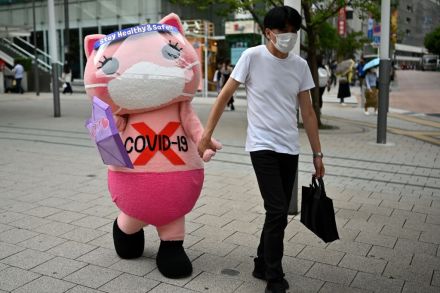
If there is one country where the wearing of face masks in response to the coronavirus outbreak has caused no controversy whatsoever, it is Japan. There is no debate about face masks here, and it often seems as if many Japanese would be happy to don the flimsy cloth coverings all year round, regardless of risk. To understand why, it is necessary to consider the history and the culture rather more than the science.  The Japanese have been wearing masks of one sort or another for many centuries. The origin may have been the covering of the mouth with leaves to prevent unclean breath soiling holy artefacts in Buddhist temples in ancient times, a custom still observed today in Kyoto and Osaka.