Philip Patrick

Philip Patrick

Philip Patrick is an exiled Scot, who lectures at a Tokyo university and contributes to the Japan Times

Is it all over for the Tokyo Olympics?

From our UK edition

Any long-term resident of Japan will know that ‘reading the air’, as the locals put it, is an essential skill for understanding what is really being communicated behind the glossy lacquer box patina of courtesy and understatement of Japanese discourse. Bad news is never expressed directly and you need to decode the subtle hints embedded in seemingly anodyne comments to get to the truth. For example, if a Japanese doctor ever tells you ‘it’s hard to say’ when you ask about your test results, it might be time to start getting your affairs in order.

Japan’s cherry blossom scandal has tainted Shinzo Abe’s legacy

From our UK edition

Japan may have avoided being locked down this winter, but is its longest serving PM Shinzo Abe about to be locked up? That is the alarming prospect that faces Abe as he struggles to explain his role, and that of his advisors, in a scandal that has beset him in and out of office for over two years. The allegation is that events organised for Abe’s constituents and assorted followers, including cherry blossom viewing parties, held between 2016 and 2018, were subsidised by his support group to the tune of around of around 30 million yen (£210,000 pounds). The undeclared payments, it is claimed, were in contravention of election law.

Japan has the answer to Scotland’s drugs crisis

From our UK edition

As a Scot, I found the news that my country had registered, by some distance, the most drug-related deaths in Europe last year profoundly depressing. But my sprits sank even lower when I saw the reaction. Rather than provoking a genuine debate about how to tackle this crisis, the dismal statistics merely set off yet another round of the Holyrood vs Westminster blame game. There were wearily predictable calls for more money, more treatment programmes, more ‘consumption rooms’, more methadone, and even, for those under the illusion that it isn’t virtually the de facto situation anyway, legalisation. It seems to be accepted as a fact now that a significant number of Scottish people will become dependent on drugs, that drug abusers, like the poor, will always be with us.

Why lockdown scepticism is growing in Japan

From our UK edition

'We all know it’s bull and we’ve had enough.’ This is not the kind of language I have come to expect from the Japanese. But this protester, who lived for twelve years in Reading, which accounted for his excellent, if rather fruity English, was clearly angry. He was one of hundreds outside Tokyo’s Shinjuku station last week, attending the latest in a series of small but significant demonstrations of the growing Covid-sceptic movement. The gatherings may not have been huge, but it is noteworthy that they have taken place at all in a country generally regarded as a Covid success story (‘only’ around 2,000 deaths so far, and limited restrictions).

Nike Japan’s lecturing was bound to backfire

From our UK edition

David Ogilvy once said that ‘a good advertisement is one that sells the product without drawing attention to itself’. If so, the new Nike ad currently running in Japan is about as big a failure as you can get. It has certainly drawn plenty of attention to itself, producing more angry denunciations than sales.  The ad snappily titled ‘The Future isn't Waiting’ features scenes of bullying and discrimination directed at mixed-raced athletes in Japanese schools. They then fight back and triumph through the power of sport — and the power of Nike sportswear.

Why academics hold Thatcher and Trump in such contempt

From our UK edition

‘Has that orange baboon gone yet?’ asked a senior professor in the teacher’s room at my university yesterday. The remark went down well, despite the unfashionable remark about someone’s skin colour and the dubious zoomorphic comparison. As did an earlier comment from another colleague joking about how he’d like to replace Trump’s corona medication with something more potent (i.e. he wishes he were dead).

Why Japan’s new PM is desperate for the Olympics to go ahead

From our UK edition

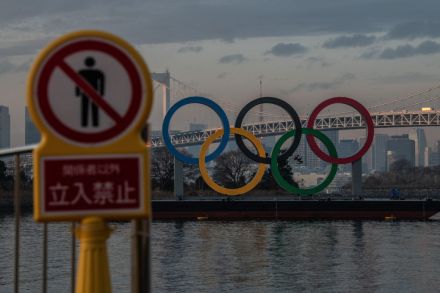
There is a rare treat for classical music fans in Tokyo this week with the visit of the Vienna Philharmonic Orchestra under their star conductor Valery Gergiev. And it’s even more of a treat when you consider the conditions under which the concerts are taking place, with full audiences rather than the socially distanced half house limits we have become accustomed to. Apart from a requirement for patrons to wear masks, it looks pretty much like a normal series of exorbitantly priced prestige concerts at the Suntory Hall (150 quid in the cheap seats). While very welcome, this does raise an awkward question: how did one of the world’s premier orchestras make it to the venue in the first place, given the supposed two-week isolation period required for visitors from Europe?

Japan’s carbon neutral pledge looks like a load of hot air

From our UK edition

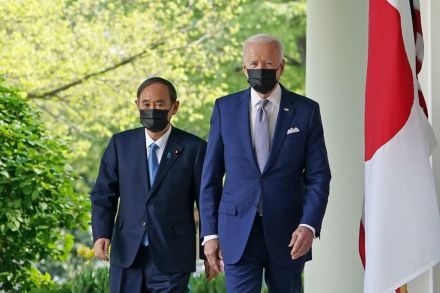
Japan's new prime minister Yoshihide Suga is talking tough on climate change. Suga has promised that Japan will become carbon neutral by 2050, a step up from the previous commitment of an 80 per cent cut in emissions. But is this all a load of bluster? While a certain opacity is expected in formal Japanese (a famous anecdote has a journalist having his copy returned with the instruction ‘Could you make it a little more vague?’) Suga was exceptionally unspecific in his so-called climate commitment. He made little reference to how the target would be achieved, or how progress would be monitored. Nor did he mention the Paris Climate Agreement, which mandates a 45 per cent reduction in emissions by 2030.

Meet Japan’s new PM – installed by a grey coup of party insiders

From our UK edition

There’s a good chance that nothing that occurs in the new Japanese PM's tenure will be nearly as interesting as how he got the job in the first place. While not quite in the Belarusian league, Yoshihide Suga’s victory in the ruling Liberal Democratic party leadership election was nonetheless a stitch-up of staggering brazenness for a law-governed democracy. Suga (71) the former Chief Cabinet Secretary in Shinzo Abe’s administration, would probably have lost out to rival Shigeru Ishiba had the election been held in the normal way, with all party members given a vote.

Who could replace Shinzo Abe as Japanese PM?

From our UK edition

Japan’s longest-serving Prime Minister, Shinzō Abe, has announced that he will step down, as soon as his replacement is selected. This is the second time that Abe has resigned the premiership (the first being in 2007) and ill health has again been cited as the reason. Abe has visited hospital several times in recent weeks and has looked tired on his rare public appearances as his chronic bowel disease has recurred. The news has sparked two debates – the first, urgent one, is over Abe’s successor. The front-runner is probably Shigeru Ishiba, the 63-year-old former defence minister and Abe critic. The hawkish Ishiba is relatively liked by voters, but is less popular with his LDP colleagues; a serious obstacle.

What lies behind the Japanese obsession with face masks?

From our UK edition

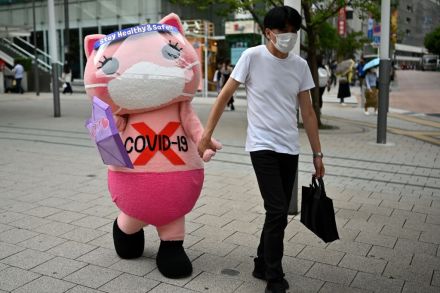
If there is one country where the wearing of face masks in response to the coronavirus outbreak has caused no controversy whatsoever, it is Japan. There is no debate about face masks here, and it often seems as if many Japanese would be happy to don the flimsy cloth coverings all year round, regardless of risk. To understand why, it is necessary to consider the history and the culture rather more than the science.  The Japanese have been wearing masks of one sort or another for many centuries. The origin may have been the covering of the mouth with leaves to prevent unclean breath soiling holy artefacts in Buddhist temples in ancient times, a custom still observed today in Kyoto and Osaka.

Can tourism subsidies save Japan’s coronavirus-blighted economy?

From our UK edition

In a striking contrast of priorities, as the UK government offers discounted fast food vouchers to revitalise the restaurant and hospitality sector, the Japanese have chosen a different, healthier, method of boosting their own Corona blighted economy: half-price domestic travel. The Japanese government anticipates the move will see hordes of travellers roaming across the country indulging in the usual Japanese holiday activities of hiking, camping, making pilgrimages to shrines, and bathing in hot springs – all the while, of course, spending money. The ‘Go To Travel’ campaign, as it has been called, is a bold and expensive (1.35 trillion yen or £10bn) initiative, and is, in theory, a good and potentially popular idea.

Is the handshake ready to bow out?

From our UK edition

Freemasons beware – the traditional handshake may be the latest victim of the coronavirus, cancelled in our post-pandemic quest for a sanitised contactless future. According to testimony before the science and technology select committee, in the interests of public health, the good old-fashioned grip and grin should be replaced with the chaste but benign Japanese tradition of bowing. Baron Peter Piot, a professor of microbiology at the London School of Hygiene and Tropical Medicine, told peers that ‘handshakes are probably out forever’ before citing socially distanced cultural greetings, such as bowing, as more suitable alternatives. Piot was probably inspired by his own experiences of Japan, with which he has a long connection.

Is Yuriko Koike the Nicola Sturgeon of Tokyo?

From our UK edition

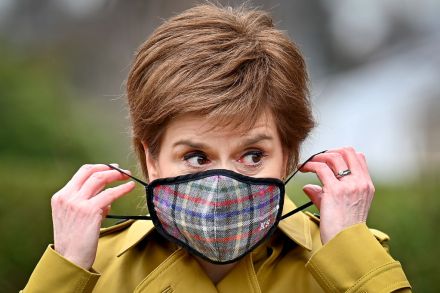
Few politicians have come out of the corona crisis as well as Tokyo Governor Yuriko Koike. As the face of the metropolitan area’s official response to the pandemic, the 68-year-old former cabinet minister has won plaudits for her nightly face-masked updates and guidance briefings. For her efforts, she was rewarded with a landslide in last week’s gubernatorial election. But with a recent surge in cases in the Tokyo area, Governor Koike has become embroiled in a war of words with the national government that could have long-term implications. The latest infection figures in Tokyo (which have risen to around 150 cases a day) have alarmed many, but as ever with corona stats, context is everything.

Will Western economies be ‘turning Japanese’ after Covid-19?

From our UK edition

Japan has announced a colossal stimulus package (£1.75 trillion) as it attempts to breathe life into its Covid-19 damaged economy. But with its finances already in a parlous state before the pandemic struck, economists and policy makers around the world are nervous about where this dramatic intervention in one of world’s most fiscally conservative nations could lead. One of the biggest problems Japan could face is its own currency. The Yen has traditionally been a safe haven in times of global uncertainty but not, it appears, right now. A fall of nearly 10 per cent against the dollar was recorded in March, as investors rushed to the world’s most powerful currency. The Yen has only had a marginal recovery since.

Even Japan could be about to embrace remote working

From our UK edition

A Japanese banker once told me that his company had opened an expensive showcase office block in the centre of Tokyo. The building had a rare employee-friendly additional space and large balconies on the upper floors, where staff could relax and enjoy the views. Despite this apparent sensitivity to their employees, in every other way the bank was a typical Japanese firm, expecting staff to work punishingly long hours in a highly-pressured environment. After a few months, it became clear the balconies might not have been such a good idea after all. Four people jumped to their deaths.

Why doesn’t Japan take child abduction seriously?

From our UK edition

It’s not often that Japanese affairs get a mention in the EU, still less a condemnatory one. But that’s what happened last week when the EU petitions committee unanimously passed a motion censoring the Japanese government for failure to conform to international norms, and comply with international law, over the question of parental child abduction. The issue, provoked by a history of cases where Japanese nationals (nearly always the mother) remove their children and subsequently deny access to their estranged foreign national father, has long been festering. It has been raised by the French and Italian presidents, and the British ambassador in the recent past, though with few tangible results.

Can Shinzo Abe’s Covid bung save the Japanese PM?

From our UK edition

I experienced a novel, if fleeting, sensation last week when I was struck with a powerful urge to vote for Japanese PM Shinzo Abe in the next election, expected within the next 18 months. This warm glow was sparked by Abe’s decision to give every adult resident of Japan a one-off corona ‘compensation’ payment of 100,000 yen (£720). All we have to do to get the money is fill in a form and send it off. However, the document is curious as it contains an option to refuse the handout if you don’t want it. As confusingly arranged as one of those ‘tick this box if you don’t mind us sharing your details, etc, etc.’ options at the bottom of sign-up forms, it is genuinely easy to make an expensive mistake.

Japan’s Covid success is a mystery

From our UK edition

Japan’s Covid ‘State of Emergency’ is now officially over. Tokyo, the last of Japan’s 47 prefectures to be officially released from restrictions, was declared safe(ish) on Monday, meaning its cautious three-step programme of reopening all commercial premises and entertainment venues can begin. The war over Corona may have been won here, but with a host of competing theories and interested parties hoping to claim credit, the battle to decide how it happened is just beginning. Japan’s official death toll from Covid-19 has not yet reached 1,000. This is in a country of 126 million people with densely packed cities, where people live a cheek-by-jowl existence on public transport, in compact offices, snug bars and restaurants, and tiny living spaces.

Why Japan doesn’t clap for its key workers

From our UK edition

There has certainly been no shortage of praise for the NHS over recent weeks, and the speed at which the service has moved to meet the coronavirus threat has undoubtedly been impressive. But it is always worth looking abroad to see how the NHS could improve. And Japan's own version offers a useful model. I had my first real experience of the Japanese health care system last year when I fell down a concrete staircase at my workplace. I was treated at one of Tokyo’s most prestigious hospitals (the one prime minister Shinzo Abe uses, apparently). The treatment I received was quick and efficient, if a little impersonal.