Philip Hensher

Philip Hensher is professor of Creative Writing at Bath Spa University and the author of 11 novels including A Small Revolution in Germany.

How do we greet one another today?

From our UK edition

One of the most striking, and lowering, aspects of lockdown has been the deprivation of human exchange, and especially conversation. We can talk to our immediate families but not properly to a wider range of humanity. The Zoom chat, with so many ordinary conversational features removed, is not the same thing at all. Conversation is fundamental to what we think of as our being, and I don’t believe we could go on long without it.In view of how vital it seems to be, it’s strange that we rarely consider it seriously. About its main substance — the words used — we make all sorts of assumptions, many of which turn out to be wrong.

The 75th anniversary of Brideshead Revisited

From our UK edition

42 min listen

In this week's Book Club podcast we're talking about Brideshead Revisited. Evelyn Waugh's great novel is 75 years old this week, and I'm joined by our chief critic Philip Hensher, and by the novelist's grandson (and general editor of Oxford University Press's complete Evelyn Waugh) Alexander Waugh. What made the novel so pivotal in Waugh's career, what did it mean to the author and how did he revise it -- and why have generations of readers, effectively, misread it?

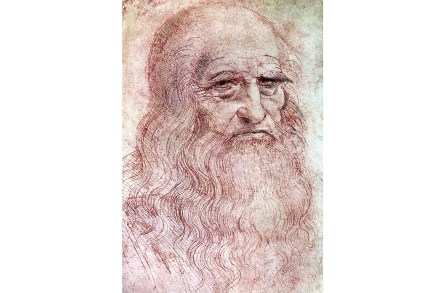
The genuine polymath is still one in a million

From our UK edition

We live at a time of universal polymathy. We don’t know everything, but there’s not much difficulty in being able to discover any given truth. But it’s worth remembering just how hard it used to be to find things out. Thirty years ago if you wanted to research off your own bat it meant a trip to the public library — and perhaps filling out a form for an inter-library loan. Or you could try your luck in a bookshop, new or secondhand. The whole process took a long time, and most people stayed within their professional competence or enthusiasm, frankly admitting to ignorance outside those limits. It was the age of the specialist, memorably captured by Michael Frayn in Donkeys’ Years and the character of Kenneth Snell: Take me, for instance.

Going both ways

Probably most of the world is bilingual, or more than bilingual. It is common in many countries to speak a national language alongside an international lingua franca such as Arabic, Spanish or English. On top of that, there may be a mother tongue that is not the same as a national language. A Nigerian, for instance, may be at once one of the million speakers of Berom, one of the 64 million speakers of Hausa and one of the 1.13 billion speakers of English. The same pattern is repeated across the globe.

bilingual brain

Women of the Raj

From our UK edition

Despite efforts to prevent them, British women formed a part of the Indian empire almost from the start. Although the East India Company warned them off, citing difficulties of climate, disease, morality, religion and culture, a few managed to travel there all the same. By the late 18th century their numbers had increased considerably, making women some of the most interesting witnesses to the British Raj. In this way, the white Christian woman became a significant face of imperial rule. She would usually be caricatured as one who, having failed to find a husband in London, cast her lot in with the ‘fishing fleet’ in Bombay; or portrayed (by E.M.

Short stories to enjoy in lockdown

From our UK edition

In these circumstances there’s a temptation to reach for the longest novel imaginable. If you’re not going to read Proust now, as the days stretch ahead and the horizons shrink to an hour’s walk a day, when is it going to happen? But it seems much more likely that reading is going to contract, and the most you’ll realistically manage is a short story a day. Fortunately, some of the greatest literature of the last couple of centuries has come in the shape of the short story. Here are nine long-standing favourites of mine that manage to repay repeated re-reading — the definition of a classic. Kafka’s The Metamorphosis is one of those classics that most people think they know but which infallibly surprises.

The cult of Sappho in interwar Paris

From our UK edition

I like a book that can put its point in four outrageous words and use it as its title. Diana Souhami might be right. Without the women her book is devoted to, literary modernism would have looked very different. A consciously new approach to writing met a body of women who were being heard for the first time; the results were compelling. At the beginning of a novel by one of them, Gertrude Stein’s The Making of Americans, the terror of masculine traditions is concisely stated: Once an angry man dragged his father along the ground through his own orchard. ‘Stop!’, cried the groaning old man at last, ‘Stop! I did not drag my father beyond this tree.

Gustav Mahler’s bid for greatness: the ‘Symphony of a Thousand’

From our UK edition

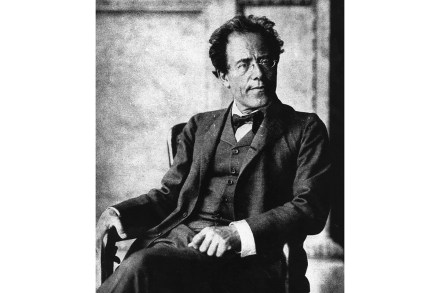
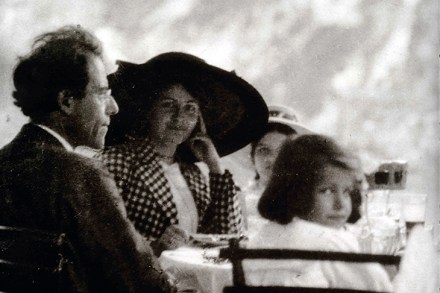
A kind of gigantism took hold of the European mind in the years before the first world war. It shaped everything, from empires to poetry. In the confidence of new technology and new ideas, things could be attempted on a larger scale than ever before. The mental power of the age could be measured in the sheer size of the things it produced. This might be ‘Jacky’ Fisher’s Dreadnought in 1906, which set off a European arms race in huge battleships, or a great construction — the Victoria memorial in front of Buckingham Palace is nothing to the one built in Kolkata.

Babies are aware of bilingualism from birth — if not before

From our UK edition

Probably most of the world is bilingual, or more than bilingual. It is common in many countries to speak a national language alongside an international lingua franca such as Arabic, Spanish or English. On top of that, there may be a mother tongue that is not the same as a national language. A Nigerian, for instance, may be at once one of the million speakers of Berom, one of the 64 million speakers of Hausa and one of the 1.13 billion speakers of English. The same pattern is repeated across the globe.

Lydia Davis, like an inspirational teacher, tempts her readers into more reading

From our UK edition

A good indicator of just how interesting and alluring Lydia Davis’s Essays proved might be my recent credit card statement. It was hard to read very far without being introduced to an unfamiliar author, and the terms of the introduction were frequently so seductive that I found myself breaking off to order several secondhand books. The fee for writing this review had long been swallowed up when I realised that if I read everything that Davis made sound irresistible I would probably never reach the end of this splendid collection — and end up like Achilles chasing the tortoise in Zeno’s paradox.

Vladimir Nabokov confesses to butterflies in the stomach

From our UK edition

Not every novelist has opinions. Some of the greatest have a touch of the idiot savant, such as Adalbert Stifter, Ronald Firbank and Henry Green. And those novelists who do have opinions aren’t always worth listening to. But Vladimir Nabokov’s views are of compelling interest — paradoxically, because he regularly insisted that his novels sent no message, made no moral case and presented no argument. The beauty of his views on literary and other matters rests on his openness to laughter. He used to complain that his lectures to undergraduates at Wellesley and Cornell were greeted in silence; he was sure that if he had heard them he would have been in fits of laughter from start to finish.

The concluding volume of Charles Moore’s life of Margaret Thatcher is – as its predecessors are – a triumph

From our UK edition

This outstanding biography comes to an end, not in an atmosphere of triumph and achievement, but in a welter of frustration, division, anger and conspiracy. There is a widespread view that Margaret Thatcher’s first two administrations, from 1979 and 1983, were huge personal successes; the third, from 1987, was her mad period. That is unfair, and avoids the truth that she was partnered in this last phase with figures who conspired to frustrate policies arising from some accurate and perceptive insights.

Satire misfire

From our UK edition

Kafka wrote a novella, The Metamorphosis, about a man who finds himself transformed into a beetle. Now Ian McEwan has written one about a beetle that is transformed into a man. He’s not the first writer to have thought of doing this, but he might be the first one who thought it was a good idea. Readers will remember that in Randall Jarrell’s classic comedy of a creative writing faculty, Pictures from an Institution, the heroine has a student called Sylvia Moomaw (‘I had remembered her name but had forgotten her’). One day, she hands in a story ‘about a bug that turns into a man…it’s influenced by Kafka’. The hero reads it (‘There was a part where the man said “Could I have ever really been a bug?

No one held Susan Sontag in higher esteem than she did: Her Life reviewed

From our UK edition

Towards the end of this tale of imperial intellectual expansion, Susan Sontag’s publicist goes to visit his shrink and, dealing with some appalling professional trauma or other, mentions her name. The psychiatrist bursts out laughing. The publicist asks what is so funny and is told: ‘You can’t imagine how many people have sat on that couch over the years and talked about Susan Sontag.’ Benjamin Moser’s very substantial life of the cultural critic and writer is capable of detached bemusement at its subject’s unstoppable advance. She took herself extremely seriously. (‘On 3 October, the Nobel Prize was awarded to J.M. Coetzee. The award depressed Susan.

The brutal truth

From our UK edition

Novelists will always be interested in enclosed communities — or the ‘total institution’, as sociologists say. When you separate a group of individuals from larger society with a wall and a controlling mechanism, all sorts of interesting facts about the way people interact become apparent. Convents, hospitals, asylums, schools, universities and prisons all serve the purpose. But different nations tend to prefer one sort of institution over another. It’s a curious fact that where the British will enter into a novel of school life with gusto, Americans show a distinct preference for writing about prisons.

Bona to vada your dolly old eek

From our UK edition

Imagine you’re a gay man living in the year 1950. Not unnaturally, you would like to meet another gay man. How to identify yourself to a potential partner? A confession might bring the police; dressing and carrying yourself in distinctive ways will invite ridicule or violence in the street. The solution is this: you casually remark to a stranger that the pub you are both in is ‘naff’. He looks up, and before you know it, you’re talking like this: ‘Pauline? Can’t swing a cat but hit a cove. She’s had nanti bully fake. Dyed her riah, her end’s a right mess.’ ‘Nanti bona. I hope she vaggeried straight to the crimper.’ ‘Well that’s where she’d been. The palone tried to give her an Irish. Moultee palaver.

Freudian dramas

From our UK edition

I must have seen hundreds of opera productions in my time. Out of these, hardly any made a lasting impression on account of their design: the great Tarkovsky Boris Godunov for Covent Garden; Hockney’s Rake’s Progress for Glyndebourne; Es Devlin’s Les Troyens; the Richard Peduzzi Bayreuth Ring preserved on film. Very few others. For many opera-goers, an interventionist or bold visual approach to an opera is automatically a bad thing, and (I guess) a lot of the musicians involved are visually somewhat conservative. The ludicrous 1980s Met Ring cycle, designed by Gunther Schneider-Siemssen to follow every one of Wagner’s demands, was driven by musicians.

A born rebel

From our UK edition

Running the entire course of the 20th century, Michael Tippett’s life (1905–1998) was devoted to innovation. He was an English composer who worked within established forms —symphonies, oratorios, string quartets, piano sonatas — to startlingly new effect. But his innovation was not just as a composer. He was also a political and social radical, embedded in Trotskyite, pacifist and gay rights ideas. The newness made itself known in a long attempt to find novel ways of living. Oliver Soden’s biography feels like an attempt to answer a series of questions. How, in the 20th century, should a creative artist live? Or be a pacifist? Or a homosexual? The answers were sometimes wrong; the music could be disastrously unsuccessful.

‘Working late at the Bauhaus’

From our UK edition

Walter Gropius (1883–1969) had the career that the 20th century inflicted on its architects. A master of the previous generation in the German-speaking lands, Otto Wagner, could create his entire oeuvre without venturing outside the city limits of Vienna. Gropius found himself thrust into one unprecedented role after another, uprooted and exiled repeatedly. His work was carried out wherever he landed — in Germany, England or America. Despite the huge disruptions of history, he displayed extraordinary single-mindedness. From the 1914 Fagus factory onwards, his buildings argued for the modernist position of function over ornament. By the time of his death, in America, the vast majority of practising architects, if not the public, were converted to his position.

The Many Lives of Calouste Gulbenkian, the World’s Richest Man

From our UK edition

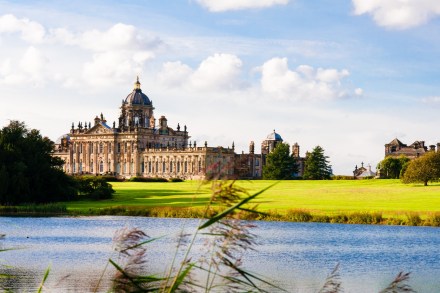
Whenever I find myself visiting some great historic house, I always like to break off from gawping at tapestries to ask the tour guide: ‘How did the family make its money in the first place?’ For some reason, this almost always astonishes and bewilders. It’s as if the devotion of capital to bricks and mortar, acres of commemorative canvas and fresco, marble and landscaping, covers up any roots in the slave trade or the amassing of bribes from Indian nawabs. Money is made, and then it sets about dignifying itself. The Gulbenkian Foundation is a solid organisation based in Lisbon. It dispenses money in improving ways and possesses a very handsome art gallery, full of treasures. It is a blameless thing. But why is it in Lisbon? Why does it have so much money?