Philip Hensher

Philip Hensher is professor of Creative Writing at Bath Spa University and the author of 11 novels including A Small Revolution in Germany.

The phoney mystics who fooled the West

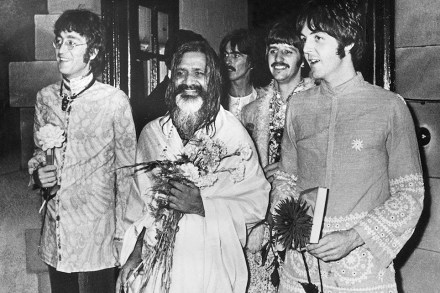
In recent years when we’ve talked about the relations between India and the West, we’ve gone back to stressing the impossibility of interchange. A hundred years ago, E.M. Forster ended A Passage to India with the certainty that Aziz and Fielding could not be friends. Forster thought things would be different after Indian independence, but the spectres of cultural appropriation and the assertion of ongoing imperialist guilt have discouraged equal exchange.  Meher’s spiritual energy was soon devoted to persuading Hollywood to make a massive movie about his life That may explain why the excellent story Mick Brown tells in The Nirvana Express has hardly been covered in the past.

Cheerful meanderings: Caret, by Adam Mars-Jones, reviewed

The novelistic tube or nozzle through which experience is squeezed in order to be bletted on the page in words, and in turn create the illusion of experience in the reader, is a slender one. Novelists have often perversely focused on the narrowest of lives. Xavier de Maistre wrote an entire travelogue in the 1790s about 42 days spent in his room, while Jean-Philippe Toussaint’s debut novel in 1985 was about a character refusing to leave his bathroom.  Should undertakers ever have suntans? And when does ‘mummy’ become ‘mum’ as a form of address? These spectacular exercises in technique present a parallel to what has always been the case, the existence that contains, as it were, few plot options.

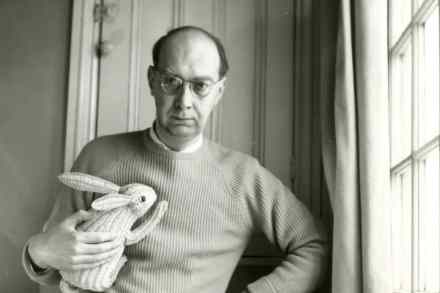
Philip Larkin, the Poet Laureate who never was

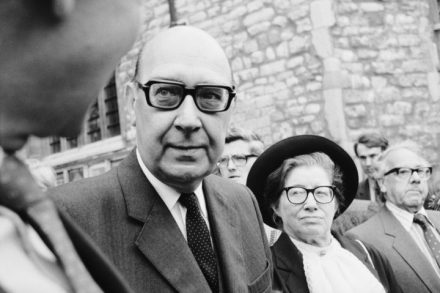
We’ll never know if Philip Larkin, one of the greatest English poets of the twentieth century, would have been a success as Poet Laureate. Larkin, as well as several other poets like WH Auden and Robert Graves, was deemed unsuitable for the role by Downing Street, according to documents released today by the National Archives. No. 10 was warned that Larkin disliked public speaking and that he was a ‘reserved’ man who would not be an ambassador for poetry. While there is no doubt of Larkin’s talent, this is no guarantee that he would have succeeded as Laureate. Twenty men and one woman have been appointed Poet Laureate. Probably only three of those have been a complete success.

Barbie’s world: the normalisation of cosmetic surgery

39 min listen

This week: Ahead of the release of the Barbie movie, Louise Perry writes in her cover piece about how social media is fuelling the cosmetic surgery industry. She argues that life in plastic is not, in fact, fantastic. She joins the podcast alongside the Times’s Sarah Ditum, author of the upcoming book: Toxic: Women, Fame and the Noughties, to discuss the normalisation of plastic surgery. (01:11) Also this week: In anticipation of the BBC Proms Philip Hensher writes in The Spectator that classical music has gone from being a supreme cultural statement, to just another curious musical genre.

The changing face of the BBC Proms

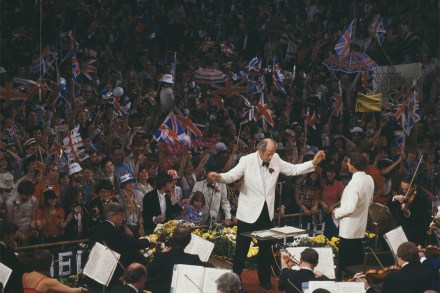
There are two faces of the BBC Proms. The faces are somewhat at odds with each other. The one that everyone knows, whether they have an interest in music or not, is the Last Night of the Proms. It’s a concert consisting of a series of small musical items, or ‘lollipops’ as Sir Thomas Beecham used to call them. It culminates in a sequence of sea shanties, ‘Rule, Britannia’, ‘Land of Hope and Glory’ and ‘Jerusalem’. Classical music has gone from being a supreme cultural statement to just another curious musical genre The other face, much more substantial, is the series of concerts that precede that last one, from mid-July to mid-September, still centred on the Royal Albert Hall. Surprisingly, many people don’t seem to know anything about that aspect at all.

Lorrie Moore’s latest novel is deeply troubling, but also consoling

Sometimes a novel’s means are so strange, however compelling its final effect on the reader, that a straightforward account of it will be most helpful. I’ve read, or part-read, this novel three times now. On the first reading I gave up, shaking my head. On the second I got to the end, but thought it absurdly wilful, self-absorbed and idiosyncratic to the point of whimsy. The third reading – something, after all, must have drawn me back – exerted an appalling power, and I emerged shaken, troubled, but also consoled. Take your pick. This is a book that is going to divide people, and one that can look very different to the same reader in different lights. Finn visits the cemetery – and there is Lily.

In memory of Martin Amis

37 min listen

In this week’s Book Club podcast, we celebrate the life and weigh the literary reputation of Martin Amis, who died at the end of last week. I’m joined by the critic Alex Clark, the novelist John Niven, and our chief reviewer Philip Hensher – all of whom bring decades of close engagement with Amis’s work to the discussion.

The confrontational genius of Martin Amis

Martin Amis had impeccable timing, as anyone who looks at his sentences, paragraphs, chapters, books ought to admit. He died 50 years exactly after the publication of his first novel, The Rachel Papers, and the beginning of this wayward, unflinching, confrontational genius’s hold on us, and on fiction expressed in English prose. Not many novelists, even the very greatest, have a career that lasts 50 years. Dickens’s lasted a little over 30; Henry James the same; Waugh not much more than that, and sometimes it’s very much shorter. Jane Austen’s was over in six years. A novelist who continues to claim our attention as long as Amis can reasonably expect to fall out of fashion, and this certainly happened to him.

Why are we so squeamish about describing women’s everyday experiences?

The way that language is shaped by the facts of biological sex is a rich subject. (The way that biological sex is framed, and sometimes refuses to be shaped, by language is perhaps one for another day.) Some languages have evolved forms which are distinctly those of male or female users. Japanese has speech patterns described as male or female, such as (male) the informal use of da instead of desu. There are scripts used exclusively among women, such as the syllabic Nüshu in Hunan, China. Many languages have gendered grammatical forms in ways that are not just metaphorical. Nouns such as ‘boy’ and ‘girl’ are masculine and feminine in French, but ‘girl’ is neuter in German. Some have masculine and feminine forms of adjectives and other parts of speech.

The new elite: the rise of the progressive aristocracy

40 min listen

On the podcast this week:  In his cover piece for The Spectator, Adrian Wooldridge argues that meritocracy is under attack. He says that the traditional societal pyramid – with the upper class at the top and the lower class at the base – has been inverted by a new culture which prizes virtue over meritocracy. He joins the podcast alongside journalist and author of Chums: How a tiny caste of Oxford Tories took over the UK, Simon Kuper, to debate (01:04).  Also this week:  In the magazine, ad-man Paul Burke suggests how the Tories should respond to Labour’s attack adverts. Released last week, the adverts have caused a stir for attacking the Conservative's recent record on curbing child abuse, and accuses Rishi Sunak directly of negligence on the issue.

The attraction of freethinking humanism

One rather surprising fact emerges from a history of humanism: most humanists were nice people. This might, on the surface, appear a totally fatuous observation. There is not much value in debating whether, say, architects, chancellors of the exchequer, engineers, surgeons or gardeners have been obviously nice people, and we would roll our eyes if a reviewer started speculating whether Wagner or Dickens were personally agreeable. But perhaps humanists are in a different category.

The biography Noël Coward deserves

‘In the prison of his days,’ W.H. Auden wrote, ‘teach the free man how to praise.’ Noël Coward’s last performance, possessing, like so much of his work, a scene-stealing quality, was in the 1969 film The Italian Job. He plays the gangster Mr Bridger, masterminding a gold robbery in Turin from his prison cell. In his final appearance he walks like a Ziegfeld heroine down the central stairs of the jail to the fervent acclamation of the other inmates, acknowledging the ovation to left and right. Coward had abundant worldly acclaim; and he knew very well where the walls lay, and the doors that would not be breached. That knowledge has served him extremely well.

Who’s afraid of Keir Starmer?

41 min listen

This week: Who's afraid of Keir Starmer? In his cover piece for the magazine, The Spectator's Editor Fraser Nelson says that without a Labour demon to point at the Tories stand little chance in the next election. He joins the podcast alongside journalist Paul Mason, to discuss why Keir Starmer is so hard to vilify (01:10).  Also this week: In the magazine, The Spectator's newsletter editor Hannah Tomes exposes the social media campaign targeting young women, such as herself, to freeze and donate their eggs. She joins the podcast alongside Sophia Money-Coutts, host of the Freezing Time podcast, to consider whether it is right to market this as an altruistic undertaking (16:58).

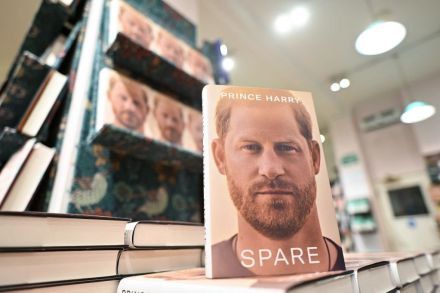
Spare reviewed: Harry is completely disingenuous – or an idiot

A surprising number of royal personages have published books under their own names, and sometimes they have even been written by the purported authors. The first, I think, was the Eikon Basilike, published shortly after Charles I’s execution and presented as his account of himself and of events. The authorship of this highly effective piece of propaganda has been questioned, but its simple, direct, haughty tone is very similar to the king’s recorded speech at his trial. After Prince Albert’s death, Queen Victoria published two journals of her life in the Highlands. We know that she was an enchantingly vivid writer from her diaries and letters, with a novelist’s ear for dialogue.

A sunken wreck of a novel: Cormac McCarthy’s The Passenger reviewed

Is Cormac McCarthy among the last generation of novelists to possess a Style? Of course all writers have a characteristic style, however unassuming; but not many these days have a Style in the grand manner, the sort that Kingsley Amis (I think writing about Nabokov) described as a high level of flutter and wow. There are conversations about what I think of as ‘novelists’ science’, not really intended to be understood The great beasts of American literature have often aimed for prose that couldn’t be mistaken for anyone else’s – Hemingway, Faulkner, Bellow, Updike. Though there were always intensely mannered novelists in England, they had less of a heroically manly quality – Firbank, Wodehouse, Elizabeth Bowen, Henry Green.

The unpleasant truth about Joseph Roth

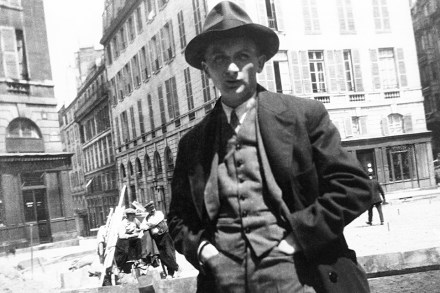
Endless Flight is the first biography in English of the novelist Joseph Roth. This is very surprising, since Roth’s short, violent life traverses some of the most compelling episodes in 20th-century European history. He was a supremely elegant, intelligent and clear-sighted writer, despite living out of suitcases, in hotel rooms, always on the run. If most of his novels are flawed in one way or another, they are all interesting in others. He also wrote what must be one of the dozen greatest European novels, The Radetzky March, translated at least three times into English since 1933. (We are now lucky to have Michael Hofmann’s superb, comprehensive translations, which perfectly convey Roth’s native skill in language.

‘Jerusalem’ is a rousing anthem – but who knows what the words mean?

The spontaneous mass adoption of deep feeling is always interesting. Jason Whittaker has a very good subject, in the journey of the cryptic lyric section of the preface to William Blake’s incomprehensible epic Milton, written and illustrated between 1804 and 1810, to its becoming the de facto national anthem of England. ‘And did those feet...’ only took on its familiar title ‘Jerusalem’ (which has nothing to do with Blake’s poem entitled ‘Jerusalem’) after it was set to music by Hubert Parry on 10 March 1916. The following day, Parry handed over his composition to his colleague Walford Davies, saying insouciantly: ‘Here’s a tune for you, old chap. Do what you like with it.

The intense Englishness of Philip Larkin

The English language has a curious feature, called the phrasal verb. It consists of a plain verb plus a preposition; to go up, to get over, to find out. They are quite often more vivid than their simple synonyms – to ascend, to recover, to discover. New ones are constantly being thought up; they are also totally irrational – get on with or get off with? Most serious writers spend a lot of time thinking about them. One day, the story goes, the poet Philip Larkin was challenged by his secretary at work. She had discovered a cache of pornography in his office cupboard. ‘But what’s it for?’ she asked. Larkin considered. ‘To wank’ – he paused – ‘to wank to, or with, or at.

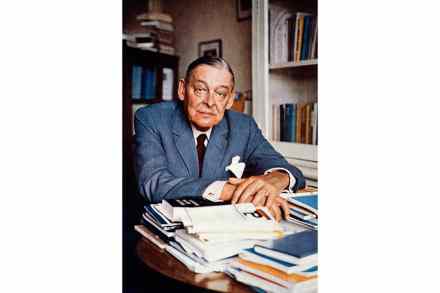
Is T.S. Eliot’s great aura fading?

For much of his life T.S. Eliot was surrounded by an aura of greatness: people accepted it, and behaved accordingly. That kind of consensus is not helpful for a writer or his works, as Eliot himself clearly saw, observing that nobody had ever written anything significant after winning the Nobel Prize for Literature – true at the time and mostly true since. His work is now in the position of Hamlet when he wrote a famous essay on the play: that the universal agreement of its greatness had hidden an understanding of its failures, its strangeness and what it couldn’t do. We take the greatness of Eliot’s poetry pretty much for granted; but in the centenary of The Waste Land, some cracks are beginning to appear in a once unassailable reputation.

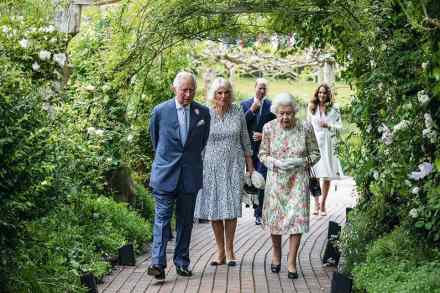
You can make anything up about the royal family and it will be printed as fact

There are quite a few things that Tina Brown doesn’t know: what ‘jejune’ means; when Louis XIV came to the throne; what the passive voice in prose is (not ‘recollections may vary’); what members of the aristocracy are called (Lady Romsey becomes Lady Penelope Romsey) or what members of the royal family are called (the ‘Dowager Duchess of Gloucestershire’ puts in an appearance).