Philip Hensher

Philip Hensher is professor of Creative Writing at Bath Spa University and the author of 11 novels including A Small Revolution in Germany.

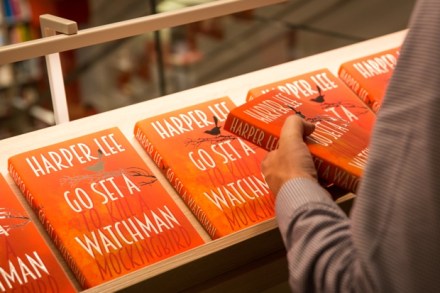
Riddled with clichés, routinely inept: Harper Lee’s Go Set a Watchman should never have been published

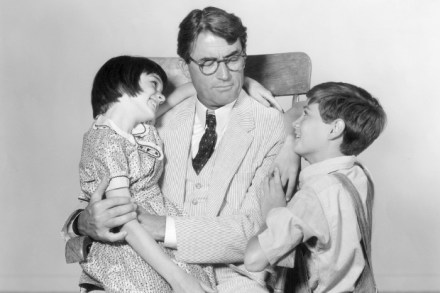
This is an interesting document, and a pretty bad novel. I don’t know why anyone thought it would be otherwise. In 1960, Harper Lee published To Kill a Mockingbird. It was an important statement, as well as a very good novel. Just as it took the southerner Lyndon B. Johnson to make the most significant civil rights concessions, so literary culture needed a novel written by a woman from the south saying all the right things about race in the firmest way possible. The book was compelling, and immediately made its way into classrooms worldwide, where it has stayed. Subsequently, Harper Lee made it very clear that she would not be publishing another novel — neither writing one, nor producing one written earlier.

When we were very young

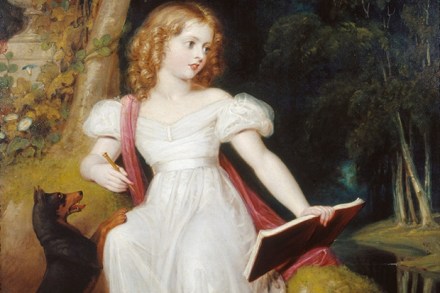
Few monarchs could become novelists. They wouldn’t be able to develop the practice, or possess the necessary temperament. No monarch could sit in the corner of a room observing, or walk the streets unnoticed. They don’t have much of a chance of a long morning working quietly, without interruption, or of seeing what ordinary people are like at their most natural and unselfconscious. (Imagine what changes would have had to take place in Edward VII’s life before he could have thought of writing fiction.) If they are never going to have the chance to observe and to write, they are also unlikely to have the disposition to do so. The future monarch will be assured from birth that his is the existence that matters.

Blown to blazes

The story is an interesting one. Gunpowder had to be manufactured. In 1916 one of the places dedicated to the dangerous and difficult task was remote Kent. A fire broke out and led to a series of huge explosions. Deaths and injuries were not widely specified at the time for reasons of morale, but 109 men and boys were killed. The explosives industry was a necessary, profitable but immensely dangerous one. It took the 1654 Delft explosion — in which Carel Fabritius was killed — for society to realise that explosives should probably not be manufactured in cities. The Kent disaster took place a couple of miles from Faversham, and the works had been built at a safe distance from the town precisely to limit the number of casualties in case of disaster.

That unmistakable touch of Glass

Philip Glass is by now surely up there in the Telemann class among the most prolific composers in history. There must be an explanation, preferably a non-defamatory one, for how his technique has enabled him to produce such an enormous quantity of music. A glance at my iPod shows that Varese’s collected works are over in 150 minutes: Berg, Ravel and Debussy each managed to produce between ten and 15 hours of music at most. Glass’s style, which has been called ‘minimalist’, though he doesn’t accept the label, works on a bigger scale. He has written 25 operas, some, like Einstein on the Beach, as long as Die Meistersinger. He owns up to 30 film scores, although the internet movie database connects him with more than a hundred different films.

A strain of mysticism is discernible in the floating colour fields of Mark Rothko’s glowing canvases

One of the curiosities of western art is that, until the 20th century, few visual artists were of Jewish ancestry. With odd exceptions such as the Pissarros and Simeon Solomon, the culture tended to produce verbal rather than visual imaginations. With the 20th century that changed. The important group of abstract expressionists that came out of New York after the second world war centred on at least two Jewish artists — Barnett Newman and Mark Rothko. Both possessed a specifically Jewish imagination, and both narrowed down their pictorial language to forms that expressed mystical aspects of their ancestral culture and faith. In Newman’s case it was the ‘zip’, a thin vertical stripe in a colour field connecting Earth and Heaven.

Drink, drugs and dressing-up: behind the scenes of the fashion industry

It’s a curious subject, fashion, and those who write about it rarely want to jeopardise future access to it on the altar of clear-eyed analysis. The business must pretend that there is a single genius at work here, whose vision creates not just clothes but the things that actually make the money. The catwalk shows are all very well, but they haven’t been the main business for decades, and it came as rather a surprise to the industry when a great mob of new customers emerged from nowhere, the wives of Russian oligarchs and American hedgefund traders, willing to spend six-figure sums every season on a new wardrobe.

Royal Opera’s Un ballo in maschera: limp, careless and scrappy

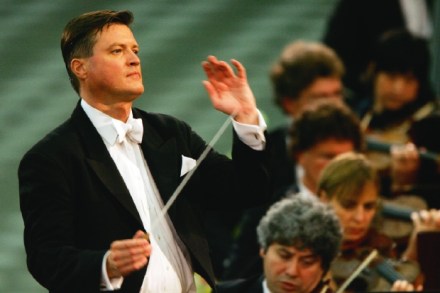
Whether by chance or bold design, the Royal Opera’s two Christmas shows were written at precisely the same moment, between 1857 and 1859, and both mark a high point of refinement in their respective traditions. Both Wagner’s Tristan und Isolde and Verdi’s Ballo in maschera sometimes give the impression of being entranced by their abstract musical fantasy; the drama on stage is suspended, drawn out, barely engaged with as the characters and audience peer down into the writhing or transfixed world being created in the orchestra pit. In my view, neither composer ever did anything better in musical terms. But sometimes you feel that there is no hope for Ballo.

The short story in Britain today: enough to make Conan Doyle weep

I am not sure if it’s properly understood quite what a crisis the short story is now in. Superficial signs of success and publicity — such as Alice Munro winning the Nobel, or the establishment of another well-funded prize — are widely mistaken for a resurgence. But what has disappeared — and disappeared quite recently — is the wide spread of journals willing to pay for a single story. That is what sustained the genre in its glory days. Edwardian magazines such as the Strand happily paid their star writers the equivalent (or even more) of a doctor’s annual income for a single story. There were dozens of such publications between 1890 and the outbreak of the first world war.

Spectator books of the year: Philip Hensher urges you to read We Are All Completely Beside Ourselves before someone tells you the twist

The books I liked best this year were all richly detailed. Why read a book unless it’s going to go into all the nooks and crannies? Everyone is going to recommend Sofka Zinovieff’s The Mad Boy, Lord Berners, My Grandmother and Me (Cape, £25) about the ménage at Faringdon House. And rightly so — it is the story that everyone wanted told, and she was the person to tell it. Stephen Lloyd’s Constant Lambert: Beyond the Rio Grande (Boydell Press, £45) was wonderfully complete, and this composer-conductor, epic drinker and best friend of Anthony Powell is exactly the sort of minor enchanting figure who too often gets fobbed off with a brief skate-through.

Stefan Zweig: the tragedy of a great bad writer

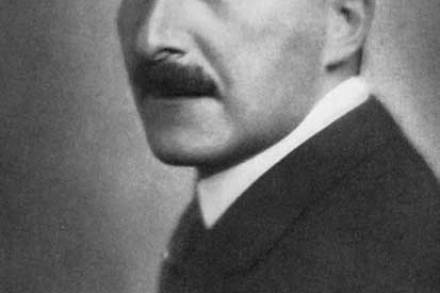
Stefan Zweig wasn’t, to be honest, a very good writer. This delicious fact was hugged to themselves by most of the intellectuals of the German speaking world during the decades before 1940, in which Zweig gathered a colossal and adoring public both in German and in multiple translations. It was like a password among the sophisticated. Zweig might please the simple reader; but a true intellectual would recognise his own peers by a shared contempt for this middlebrow bestseller. The novelist Kurt Tucholsky has a devastating sketch of a German equivalent of E.F. Benson’s Lucia: Mrs Steiner was from Frankfurt, not terribly young, alone and with black hair. She wore a different dress each night and sat quietly to read cultured books. She was a devoted follower of Stefan Zweig.

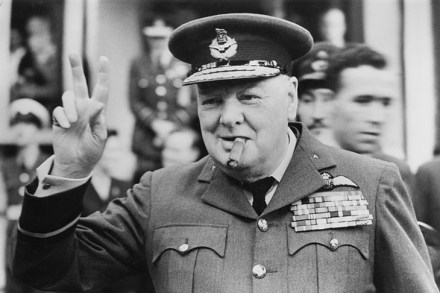
Does Boris Johnson really expect us to think he’s Churchill?

As you would expect, it’s impossible to read this book without drawing fairly direct comparisons between its author and its subject. In promotional exchanges, with the well-worn practice of self-deprecation, its author will of course insist that there is no comparison between the great man and the present humble supplicant.

Nabokov’s love letters are some of the most rapturous ever written

After the publication of The Original of Laura, Nabokov’s last and most disappointing novel in a very sketchy draft, you might have been forgiven for thinking there wasn’t much left to discover in the great novelist’s writings. If the posthumous fiction has been mostly fairly thin, this extraordinary and wonderful collection of letters to his wife restores him to us as the virtuoso of prose. They are some of the most rapturous love letters anyone has ever written, love letters from the length of a lifelong marriage; beautiful performances for Véra, Nabokov’s wife, and incidentally for us. The publishers have immediately issued this volume as a Penguin Classic. I don’t think we will quibble with that.

Germans see the best of their soul in Weimar. Everyone else, on the other hand..

Thuringia, a region of former East Germany, occupies a special place in the thoughts of Germans, who like to regard it as the origin of all their best virtues. It’s an alluring place, full of wonderfully untouched stretches of densely forested hills; the occasional small historic town seems hardly to have changed for decades, and the tourist can spend a happy week pottering from Schmalkalden to Ilmenau to Eisenach in the illusion that none of those unpleasant realities of the last century ever touched this place. I once asked the guide at the Wartburg, the magnificent medieval and mock-medieval castle on a snowy crop outside Eisenach, what this place meant to modern-day Germans.

The age of the starving artist

What remains of art is art, of course; and what chiefly interests us is the creative talents of a painter or a sculptor. What we forget is that the work of art wouldn’t be there without some kind of engagement with the brutal forces of money. James Hamilton’s riveting book is a richly detailed study of how, in Britain in the 19th century, artists and a small army of opportunists, art lovers, collectors and businessmen of all sorts used their ingenuity to turn the visual arts into money.

Thug, rapist, poetic visionary: the contradictory Earl of Rochester

Despite being an earl, Rochester is very nearly a major poet. His poems and letters were torn up by a zealous mother after his death, bent on destroying anything obscene or scandalous. A good deal was lost, but a lot was passed from hand to hand, copied and recopied (it was never printed in Rochester’s lifetime). His full development as a poet cannot be traced, but some of what survives is tantalisingly rich, and has fascinated many subsequent writers. He is one of those rare poets who come to mean much more to later generations. ‘Upon Nothing’ bears a bleak relationship to the end of Pope’s ‘Dunciad’, and, very powerfully, to Hardy’s poem on the sinking of the Titanic, ‘The Convergence of the Twain’.

The wit, wisdom and womanising of Constant Lambert

We owe Constant Lambert (1905–1951) a huge amount, and the flashes of brilliance that survive from his short life only suggest the energy with which he established the possibilities for English culture. What we remember about this extraordinary man are some delightful pieces of music, especially The Rio Grande; the funniest and most cultivated book about contemporary music ever written, Music Ho!; and a few surviving recordings of his work as a conductor. Before his death, aged 46, from chronic alcoholism and undiagnosed diabetes, he had established the Sadler’s Wells Ballet with Ninette de Valois and Frederick Ashton; in the trio, he was not only the conductor and musical expert, but someone who was acutely alive to the possibilities of stage design and drama.

Up close and personal | 24 April 2014

What should a writer write about? The question, so conducive to writer’s block, is made more acute when the writer is evidently well-balanced, free of trauma and historically secure. It is made still more urgent when that writer is solipsistic in tendency and keen to write, not about the world, but about perceptions of the world. Two American authors of the same period arrived at different solutions to the problem. Sylvia Plath, in her husband Ted Hughes’s assessment, first found nothing worth writing about, and then deliberately encouraged demons and hitherto controlled minor difficulties until they flared up and killed her. John Updike, on the other hand, had an immensely long and sustained writing career, with few troubles to cope with other than psoriasis.

Kim Philby got away with it because he was posh

The story of Kim Philby is, of course, like so many English stories, really one of social class. He was one of the most scandalous traitors in history, and from within the security services sent specific information to the Soviets during the early years of the Cold War that resulted directly in the deaths of thousands of men and women. Among them were the Albanian guerrillas, hoping to liberate their country, who found Soviet-sponsored troops waiting at their landing places to shoot them. A list of non-communist opposers to the Nazis in Germany was passed on to the Russians who, advancing into Germany in the last years of the war, summarily executed 5,000 named people.

When intellectuals are clueless about the first world war

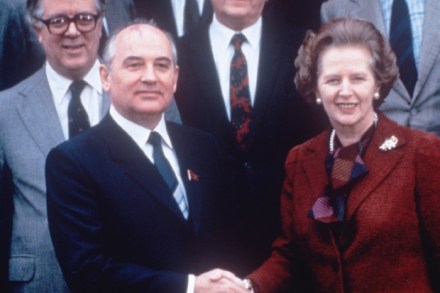
No one alive now has any adult experience of the first world war, but still it shows no sign of respectable ossification; no armistice of opposing historians seems in prospect. It maintains a terrible, vivid, constantly mutable life. Like the French Revolution, its meaning shifts from generation to generation and according to which politician happens to be speaking at the moment. In 1989 Mrs Thatcher took the opportunity to deliver a highly tactless speech to the French on the real origins of political liberty. In recent weeks, Michael Gove, Sir Richard Evans and Tristram Hunt have embroiled themselves in an argument about the significance of the war which showed none of the abstruse nature of most discussions about history.

If only Craig Raine subjected his own work to the same critical scrutiny he applies to others’ 

It’s important not to be too immediately dismissive of poor Craig Raine. Book reviewers and editors like him, who invent rigid literary principles and then dismiss anything that fails to embody them, have been on the decline since the 1970s. It’s true that one would probably sooner go for guidance to a generous reader who tries to discover what an interesting book is seeking to do, and how it achieves it. But the principle-wielder is an endangered species, and however ill-founded the principles themselves may be, as readers we might welcome the existence of one or two. The trouble is, no one is really interested any more.