Peter Phillips

Was Elgar’s The Kingdom an attempt to write a religious Ring Cycle?

From our UK edition

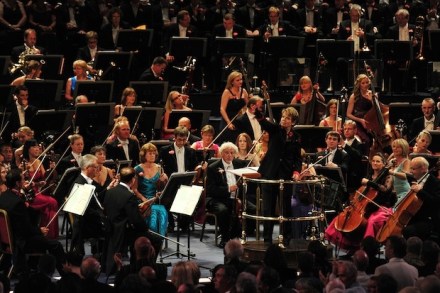
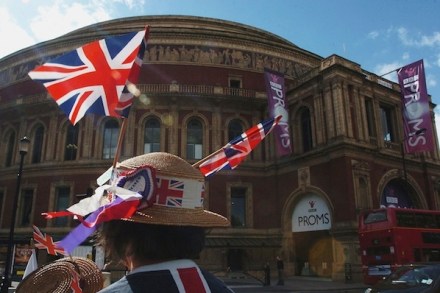
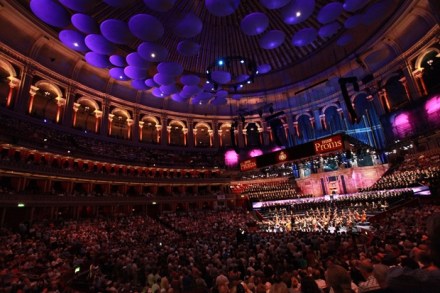
To go from the second day of the England v. India Test match at Lord’s to the Albert Hall for the opening night of the Proms was to make a journey that a chosen few might find enviable. Nonetheless, different though the two activities are, there were some similarities. For example, the arena at the Albert Hall, where the Promenaders stand, fills up more or less to capacity before the seats around it attract a single occupant, these seats being taken at the last possible minute before the start of the concert. Exactly the same thing happens at Lord’s: the pavilion is filled while the rest of the ground remains empty until seconds before the start of play.
Roger Wright’s legacy at Radio Three – and his one big mistake

From our UK edition

Roger Wright’s precipitate departure from both Radio Three and the Proms came as a surprise. At first the news was that he would go at the end of the season, but then it became apparent he was leaving at the beginning of it. Whatever his reasons may have been — and one sympathises with the idea of a carefree summer holiday after all these years — it brings Edward Blakeman, who becomes acting director of the Proms during the interregnum, deservedly into the limelight. Wright, meanwhile, will become the chief executive of the Aldeburgh Festival from September. Wright has been the controller of Radio Three since 1998, and has been in charge of the Proms since 2007.

Why it’s good to remember that Bach could be a tedious old windbag

From our UK edition

When I was first learning about classical music, 50 years ago, the scene was more streamlined than it is now. Beethoven was king, with Brahms and Mozart next in line, and Haydn slowly establishing himself. Mahler was the new kid on the block; Bruckner was largely unknown and mistrusted. If one wanted the full symphony orchestra experience in late romantic music, it was to Tchaikovsky that most promoters turned. Tchaikovsky cycles, Beethoven cycles, Haydn’s ‘London’ symphonies, Mozart’s last three symphonies were the way to guarantee a crowd, with general knowledge of all Beethoven’s music — string quartets, piano trios, Lieder — at an all-time high. Now Bach is king.

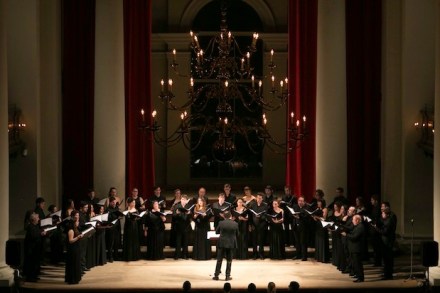
British choirs can’t match up to those from abroad

From our UK edition

To curate a festival these days is to put oneself in the firing line. There is every chance that all one will earn is the charge of stirring up apathy. It is a risk; and there will be no knowing how it has gone until it is much too late to withdraw gracefully. In the recently concluded first edition of the London International A Cappella Choral Competition, held at St John’s Smith Square, it could have gone either way. What will stick in my mind is how the wind got behind it round about day three, so that by the end a packed house could go mad at a Spanish victory.

The mean, bullying maestro is extinct – or should be

From our UK edition

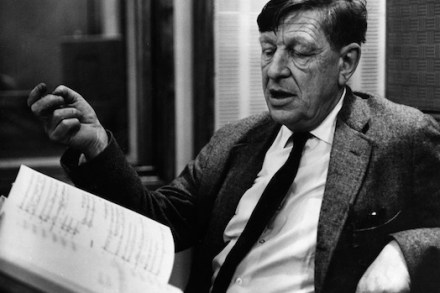
W.H.Auden once wrote: ‘Real artists are not nice people. All their best feelings go into their work and life has the residue’ — which puts those who aspire to be artists in a bit of a quandary. Is it a measure of one’s success as a ‘real artist’ that one is not a nice person? Is it in fact possible to be a real artist and a nice person? And, if it is not, is it better to be a real artist or a nice person? Auden, who was speaking from first-hand experience, implies that it must be one or the other. By the time he wrote this, Auden was sure of his standing both as an artist and as a person. His friends might say that he was a nicer person than he thought he was, but no one was going to say he was not a great artist.

Less subsidy means better music

From our UK edition

One of the unlooked-for side effects of the financial crisis has been what might be called the desocialising of music funding. Whereas once many arts organisations could expect to survive solely on public money, just recently there has been an almost unseemly rush to tap private sources of cash. The time lag between the original catastrophe and the realisation that oblivion may be just round the corner is probably explained by the disinclination of politicians to dump high-profile organisations overnight. But now, finally, there is no escape. Philanthropists the world over are besieged.

How Claudio Abbado bridged old and new

From our UK edition

Not long ago the great conductors of classical music were general practitioners. They expected to give satisfactory interpretations of music written from the beginnings of symphonic composition to the present day, and audiences took it for granted that, if they knew what they were doing with Mozart and Beethoven, they could be trusted with Handel and Stravinsky. Their orchestras adopted the same approach and, within a narrow definition that bespeaks a more innocent age, everyone was content.

Could this be the year of C.P.E. Bach?

From our UK edition

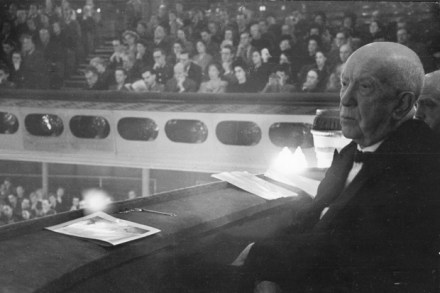
Looking through the list of composers who celebrate some sort of anniversary in 2014 is a depressing business. I don’t think I have ever seen such an anonymous collection of small-time nobodies, and yet for them to appear on a list at all suggests that they did something of note, and that someone has heard of it. The only really big name to qualify is that of Richard Strauss, who was born 150 years ago. Often half-centenaries seem a little forced, not worth the fuss; nonetheless I anticipate there being some fuss about this one, since the cupboard is so bare.

A century before Miley Cyrus, it was male performers — like Nijinsky — who bared all 

From our UK edition

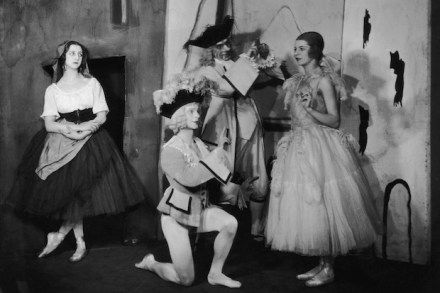
While the airwaves resonate with celebrations of Britten’s birth, I cannot help thinking that what was happening in Paris at that very moment was light-years away, not only from Lowestoft, but also from London. The cultural distance between the two metropolises can never have been greater than it was in 1913, and one can only imagine what Lowestoft was like then. The Britten family home, where Benjamin was born, is still standing, but it gives few clues to the life the family lived — inevitably restricted not only by location but also by lack of money. His father had once had the dream of becoming a gentleman farmer, but in the end had to settle for being a dentist. Cut to Paris, where the most glamorous if not notorious episode in the history of classical music was unfolding.

Peter Phillips: I saw the other side of John Taverner

From our UK edition

When I first met John Tavener in 1977, he was still largely known for his dramatic cantata The Whale, which had been performed at the Proms in 1969. By then both John and his Whale had acquired considerable glitter, partly by having the veteran newscaster Alvar Lidell associated with it, and partly through its eventual connection with the Beatles, who had issued it on their Apple label in 1970. He never wrote anything quite like it again, though one notices that even this early and iconoclastic piece is based on the bible. I always wondered what his now famous religious sense really consisted of. I never fully bought the unsmiling preacher, which became his public persona in later life, since in private he was never like that.

How to conduct a Tallis motet in a cardboard cathedral

From our UK edition

To undertake a concert tour of New Zealand’s cathedrals at the moment is to be constantly reminded of the destructive power of nature and how dogged people can be when the chips are down. The list of buildings that the earthquake of February 2011 destroyed in the centre of Christ-church includes the Anglican cathedral, which, shorn of its bell tower and west end, will have to be entirely pulled down sooner or later. The square outside it looks like a war zone without the bullet holes. Other cities such as Napier, itself rebuilt after an earthquake in 1931 and made into an Art Deco jewel, are facing up to the reality of having to dismantle their principal buildings to make them quake-proof, as has happened in Wellington.

Does London really need another concert hall?

From our UK edition

Does London need another concert hall? Or, to put it more precisely, does London need another chamber music hall? The recent opening of Milton Court in the Barbican begs this question: a pertinent one since we already hold the world record for full-time concert spaces of fewer than a thousand seats, and must come equal first for symphony-size halls. We also, with the Royal Albert Hall, hold the world record for a jumbo-size venue, fully twice the capacity of a normally large auditorium such as, for example, the one in the Sydney Opera House. But even in these financially difficult times there remains a strong thirst for expanding our cultural resources.

Musicians are roasting at the Proms; freezing at the Bachathon

From our UK edition

Gossip that an orchestral player fainted while performing in the Albert Hall during the recent heatwave points to a strange lacuna in the policing of concert conditions. The unions who like to stipulate how professional musicians are treated — Equity and the MU — have long made a big song and dance about minimum temperatures in the workplace. If the temperature falls below the agreed level, we are all entitled to walk out, without any further questions asked, since obviously the management is trying to save money on heating bills, to the detriment of the workers’ health. But global warming has produced a different set of difficulties.

70th anniversary of Composer of the Week

From our UK edition

Mention of the 70th anniversary of Composer of the Week brings to mind a distinguished list of long-running programmes on Radio 3. They all beg the question of how they have managed to survive so long in an atmosphere of constant doubt about the value of a station that has so few listeners. Time and again it has seemed as though dumbing down would be the fate of all these old shows, if not of Radio 3 itself, and every time a peculiarly British mix of grudging respect for the arts alongside a trenchant nostalgia for familiar things — of the kind that has kept The Archers going since 1951 — has saved them. Composer of the Week can outrank The Archers, however, having been launched (as This Week’s Composer) in August 1943.

Fête de la Musique: Couldn’t we just get over ourselves, risk a bit of foreign and join

From our UK edition

One of the many cultural initiatives to have come out of France in the past 50 years — and therefore by definition to have been viewed with suspicion by the British establishment — is the Fête de la Musique. One need look no further than Margaret Thatcher and Unesco to get the flavour of what follows; but so complete has been the disinterest in the Fête around here that even I, Europhile to the core and anyway booked to perform in Paris on 21 June, had no idea what I was contributing to. This Fête began life in 1982 when Jack Lang, then minister of culture in Paris, framed a festival that would put ‘the music everywhere and the concert nowhere’.

Music: the German love affair with all things British

From our UK edition

The current love affair that the Germans seem to be having with all things British has deep roots. It was Schlegel who first claimed Shakespeare for the German-speaking world when he said that the bard was ‘ganz unser’ (entirely ours). Goethe was equally obsessed. There are now more productions of Shakespeare’s plays in Germany every year than in England, with the advantage that he not only translates unusually closely into German but also that the audiences are hearing him in contemporary language. Then there is the instinctive German respect for the British sense of humour, which threatens anarchy, but, by some miracle they dare not trust, never quite delivers it.

Pick of the Proms

From our UK edition

With the publication of this year’s Proms brochure it is clear that what was already large has just become larger; and what was already a smooth production has just got smoother. Whether this is sustainable growth, or even desirable growth, are questions for the future; but I think I’ve discerned one of the main reasons for the current expansion — Wagner’s anniversary. Verdi’s has had less impact. It is inconvenient when two great names share a year. Bach and Handel made 1985 difficult to manage, while Lassus and Palestrina caused some of us agonies of balance and regret in 1994. On both of those occasions, one composer got a larger bite of the cherry than the other, and so it is going to be this year.

The ideal place to hear classical concerts

From our UK edition

What sort of room do you prefer to hear classical concerts in? We have all got used to industrial-strength symphony halls and opera houses, capable of holding 3,000 people, with dry acoustics and omni-look interiors. As with art galleries around the world, once inside you could be anywhere: there is little to tell you which culture any particular one comes from, apart from the signs indicating the lavatories. The general public have come to accept the implicit anonymity of many halls, where individuality has often been sacrificed to size and comfort. Three thousand is a lot of seats, each occupant requiring good sight-lines and good facilities.

Class prejudice is keeping talented children out of classical music

From our UK edition

Musicians have always had an uncertain social status in England, the traditional reactions varying from amused condescension to mild repulsion. The former was the old class-based judgment on men who had chosen to take up a profession which at best was associated with society women and at worst seemed menial; the latter directed towards brass players from rough backgrounds whose lips juggled pint pots with mouthpieces and not much else. The most respectable practitioners were probably organists, often referred to as ‘funny little men’, but taken seriously.

Changing habits

From our UK edition

The question of who is going to buy EMI Classics has arisen once again in the past few days with the collapse of HMV. This followed on from the collapse of Comet, Jessops and Blockbuster, the film rental chain — all indicative of a fundamental shift in our purchasing habits. A spokesman for HMV, while delivering the bad news, characterised this shift as ‘seismic’, going on to opine that ‘it is quite heartbreaking to see all those great brands disappearing from the high street’. Whose heart was being broken was not made clear, since presumably we are all getting what we want by other means, but it is interesting that the HMV story has some of the same ingredients as the EMI one, in particular length of service and all the nostalgia that goes with it.