Peter Jones

The Greeks, not Labour, should be teaching children oracy

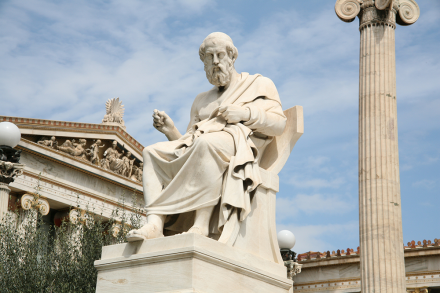
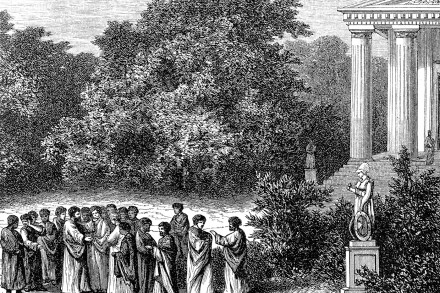
The Education Secretary Bridget Phillipson wants schools to teach oracy, i.e. the ability to present orally a clear and cogent argument on a topic. Presumably the purpose is to teach ‘communication skills’, a vacuous term, well-suited to the modern world, with no interest at all in what it actually is that is being communicated. The ancient Greeks, with their passion for democracy and keen to settle arguments with words rather than fists (even the Homeric heroes understood that), took a far more rigorous approach. For the philosopher Plato (d. 348 bc), the absolutely central question was: in arguing your case, do you know what truth and falsehood, good and evil are, and which side you are on?

Lessons for Keir Starmer from Cicero

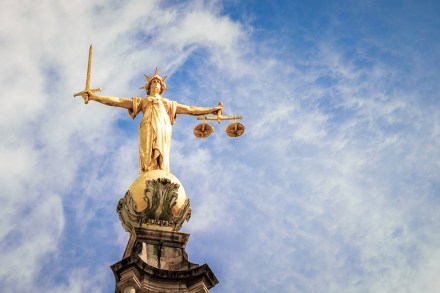
The Prime Minister, Sir Keir Starmer, and his chosen Attorney-General, Baron Hermer, both professional lawyers, seem to take the view that lying is just an aspect of public relations and parliament an irrelevance. As the Roman republic collapsed under the assault led by Julius Caesar and Marc Anthony, Cicero reflected, in those perilous times, on the nature of the relationship between civil law (ius civile, the term given to the bulk of statute law in Rome) and government and how it might be enabled to control the situation. He turned, for example, to the jurists. These freelance experts in law, though they had no professional standing whatsoever, provided opinions on legal matters to anyone who wanted them.

The curious cures of ancient Greek medicine

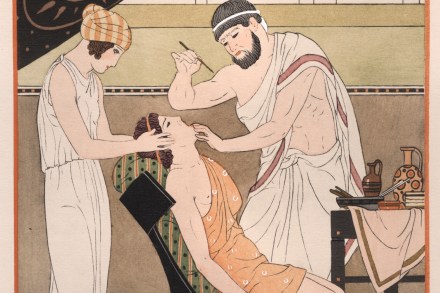
Ancient Greek thinkers tried to explain every natural phenomenon in human terms, without reference to magic or gods. That was a major intellectual revolution. Greek doctors’ contribution was to invent what has been called ‘rational’ medicine, embedding a principle of the highest importance, however hopeless its premise: which was that the health of the human body depended on the proper mixture inside it of four ‘elements’: earth, air, fire (i.e. heat) and water and their associated properties (heat, cold, wetness, dryness and so on). Further, since dissection was mostly forbidden, they knew little about how the body actually worked (they did not know what the heart was for).

How Aesop’s fables apply to today’s politics

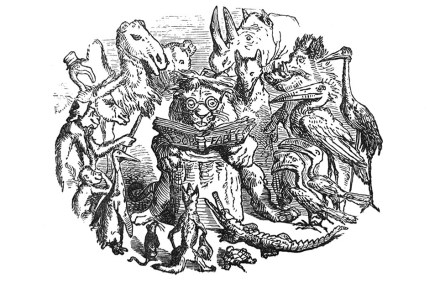
Aesop’s animal fables, as Robin Waterfield points out in his new translation, were certainly not written for children: the animals are ‘brutal, cunning, predatory, treacherous, and ruthless’, despising the weak and mocking people’s misfortunes. The ancients regularly used them against political opponents. Plenty could be so used today. Gnat, who had settled on Bull’s horn, was about to fly off when he asked Bull whether he wanted him to go away. Bull replied: ‘When you came, I didn’t feel you. And when you go, I won’t feel you either.’ Obviously, Nigel Farage or David Lammy with Donald Trump. So: match the following three fables with the late John Prescott, Rachel Reeves and George Galloway. Donkey asked Horse for a little of his barley.

Anger management, ancient Greek-style

A professor of neurophysiology has announced that anger is a good thing with a ‘very useful purpose’, unless it turns to aggression. Top thinking, prof! The first word of western literature is the ‘rage’ of Achilles, which Homer tells us was ‘murderous’ and brought endless grief to the Greeks. What? Come again, Homer old boy, surely you meant ‘the Trojans’? Alas, no. This led directly to the death of Achilles’s dear friend Patroclus and the early death of Achilles. When Achilles realises what he has done, he admits there may be pleasure in anger ‘sweeter than the dripping of honey’ but wishes it would disappear from the face of the Earth. So did many ancient moralists.

There was more to real-life gladiators than fighting

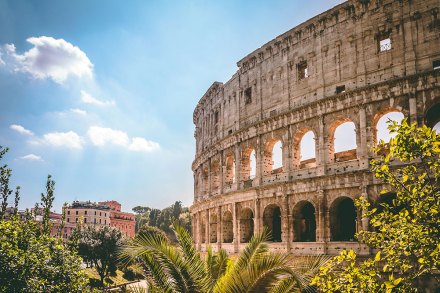
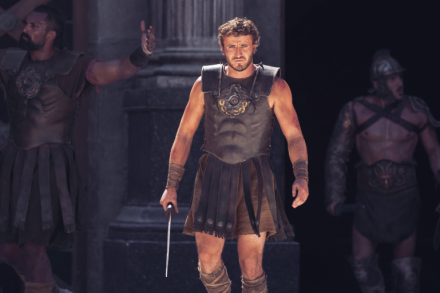
Many commentators have criticised the film Gladiator II on technical aspects of the fighting. But there was so much more to gladiators than that. The gladiator troupes, mostly criminals or enslaved prisoners of war, were housed in cramped cells in secure barracks, made to swear an oath to ‘be burned by fire, bound in chains, beaten and die by the sword’ and then put through the most rigorous training procedures to put on a good show. Their owners wanted to please not only the crowds but also the emperor who saw this as good government – punishing the wicked and thrilling the people all in one go (food for thought, Sir Keir?).

What Kemi Badenoch can learn from her enemies

Kemi Badenoch, in an act of unusual awareness for an MP, intends to learn from her own party’s mistakes as well as Labour’s. She must have been reading the Greek statesman Plutarch’s ‘How to profit from your enemies’, one of his 78 essays and dialogues on a wide range of topics, from the intelligence of animals to old men in politics. Politics, he said, always encouraged spite, envy, and rivalry. These encouraged the wise man ‘to stay on guard, do everything with due care and attention, and lead a more mindful life’. The reason he gave for this was that there was a weakness in us that made us ‘feel more ashamed of our faults before our enemies than our friends’.

The Russell Brand of ancient Greece

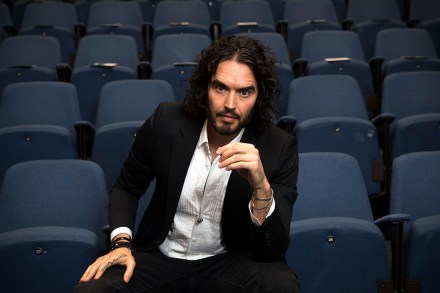
The ‘lifestyle guru’ Russell Brand is now under police investigation and (in desperation?) has taken to hawking magic amulets. Still, it has to be better than his announcement that he had become a Christian. As the Greek satirist Lucian pointed out, such a move did little good for one such would-be ‘celeb’ (Latin celeber, ‘busy, crowded’), Peregrinus. He was born c. ad 95 and, suspected of killing his father, went into exile. In Palestine he linked up with a group of Christians and soon became a figure of some authority, a prophet and church-leader widely admired for his understanding (and invention) of scriptures.

The ancient answer to the welfare state

Such is the increasing cost of the welfare state that at some stage a government – never this one – is going to have the ask the question: ‘Welfare for whom, and what should it cover?’ There was no welfare state in the ancient world. But there was the elite 2 per cent, who owned the land, and hence the wealth, since the land (and sea) provided all human needs – food, fire (warmth), clothing and building materials (including metals), power sources (wind and animals) and international transport. But they also needed hoi polloi, since only by turning them into a fighting force could they protect and expand their wealth and the people keep their minuscule fraction of it. There was, then, an unspoken bond between rich and poor.

Boris Johnson is no Pericles

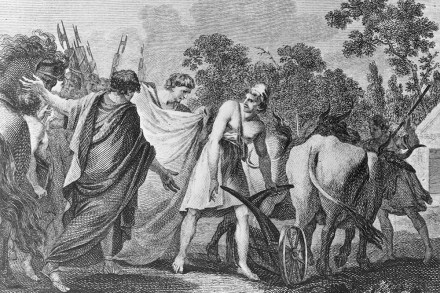
Boris Johnson’s Unleashed imagines him, like Cincinnatus, leaving his plough, saving Rome, and returning to it. But given that Boris is among the international elite, perhaps Alcibiades (c. 451-404 bc) would fit him better. Athenian elites had long had connections with the other power-brokers of the classical Greek world, Sparta and Persia. Born into such a family, the young Alcibiades, at the death of his father in 447 bc, was placed in the care of the great Athenian statesman Pericles, who chose Socrates as his mentor (we are told he tried to seduce Socrates but failed). A charismatic and handsome young man, he led a life of ‘lawless self-indulgence’ but, as a formidable strategist, he built an alliance to sustain the long war against Sparta, though it was defeated in 418 bc.

Plutarch’s lessons for Labour

The lives of those daily in the public eye are bound to attract attention, especially when they are politicians telling us what to do. The Greek essayist Plutarch (d. c. ad 120) wrote at length on this topic. How does Labour match up to his ancient ideals? A politician’s aim, Plutarch said, was to win the trust of the people so that they would accept his authority ‘without being frightened off like a suspicious and unpredictable animal.’ To do this, the politician had to put his private affairs in order since the moral standard of the rulers determined the moral value of their regime. So he had to ensure his life was scandal free, because the public was interested in every aspect of it: ‘dinner parties, love affairs, marriage, amusements and interests’.

Will Rachel Reeves’s Iron Age morph into a Golden Age?

Rachel Reeves seems to be promising us an initial Iron Age of misery which will mutate into a glorious Golden Age. How very classical of her. It is true that some ancient Greeks saw it the other way round. They argued that it was early civilisation that was the Golden Age, inhabited by men who lived ageless and free from hardship, while Nature poured forth its fruits, harvested by men at leisure (comic poets greatly enjoyed imagining a world in which it rained wine and pease porridge, hot sausage slices rolled down rivers and inanimate objects jumped to obey orders: ‘Table, come here! Cup, go wash yourself! Fish, turn over and baste yourself with oil and salt!’).

What would the Romans have made of Keir Starmer’s freebies?

An ancient Greek, counting up the value of the gifts that Sir Keir Starmer had received over his spotless political career, might immediately have thought of the three mock goddesses of bribery that the comic poet Cratinus invented: Doro, St Give, Dexo, St Receive and Emblo, St Backhander. But a gift might be a bribe, or a genuine thank-you, or an act of altruism: after all, what are friends for? (Julius Caesar racked up gigantic debts.) Greeks agreed that gifts from rich to poor strengthened communal bonds and thought statesmen could serve their own interests if they were serving the interests of the people at the same time.

The ancients knew the value of practical education

The welfare state was designed to serve everyone’s needs. But those needs were defined by the state. So schools teach fronted adverbials (but what about hindmost ones, eh?) and trigonometry, and may (absurdly) have to teach maths to all up to 18. Do these really fulfil the needs of all our children, far too many of whom are not (apparently) leading happy, useful lives? In the ancient world education was for the sons of the elite, to prepare them to run the country. But some elite Romans did without it. When Marius, who early on made his mark in battle and was picked out as a likely leader of men, became consul in 107 bc, the historian Sallust put a speech into his mouth in which he contrasted himself, the outsider, with the educated elite.

The lessons of Grenfell

We have been told that committees will meet, urgent discussions will be held, the guilty will be punished, and steps taken to ensure that the Grenfell tower disaster will not happen again. Sophocles was not the only ancient to say that it was a foolish man that counted on the future. Fires were so common in densely packed Rome – perhaps a hundred a day? – that there was no point in talking about preventing them. For the architect Vitruvius (d. c. 20 bc), the collapse of wooden buildings was the main concern. He advised foundations should be as solid as possible, whether on rock, clay or loose ground, ‘of the soundest workman-ship and materials, and of greater thickness than the walls above’.

The first Olympian: what was there to celebrate about Heracles?

However great the achievements of athletes at the Olympic Games – and even more so the Paralympics – there will always be those who have their doubts about their real value. Some ancient Greeks certainly felt like that about their Olympics. Complaints were made that an athlete’s physical fitness did nothing for the public health. No boxer would order the city better or stock her granaries, and surely it was valour in war that counted. A satirist pointed out that naked wrestlers covered in olive oil would not be much use in the front line of battle. Others expressed concern about the character of the Games’ founder, Heracles, the greatest mortal ‘winner’ of them all.

What ‘rot’ is Keir Starmer talking about?

With the elections over, it might be time to reflect on what Sir Keir Starmer means by ‘rot’ in the ‘foundations of this country’. What foundations are those? Political? In the democracy (‘citizen-power’) invented by the Greeks, men over the age of 18 meeting in assembly took all decisions that our politicians take today and, aged over 30, all decisions in the courts. It lasted for 180 years (508-322 bc), but did not survive, being characterised as ‘the rule of the poor, looting the rich’.  The Romans invented republicanism (‘the people’s property’). The Senate, drawn from the elites, both made the laws and occupied the various official positions – legal, financial, military etc. – of government.

Should Labour be messing with the school curriculum?

Labour’s new education secretary wishes, as usual, to change everything. She might consider the advice of the Roman educationist Quintilian (d. c. ad 100). In the ancient world education was for the elites, and its purpose was to prepare them to be statesmen and power-brokers. That required mastery of both history, since that was the only way to understand the future, and verbal persuasion, because power depended upon winning legal and political arguments. The building blocks of education were acquiring a firm grasp of grammar and right usage, and reading widely across history and the best literature, poetry and philosophy. But above all else, that education must produce good men – courageous, just, honest and self-controlled. The teacher was crucial.

How Ancient Greece handled riots

Riots are difficult enough for us to deal with, let alone for the ancients, who had neither police nor prisons; and only late on housed troops in cities. Since Athenian citizens – the poor – made all political decisions, and the state and the rich funded them, there was little for them to riot about. The two riots organised by oligarchs to destroy democracy failed. But in republican Rome, political tensions between the rich and the poor could produce serious rioting, often designed to disrupt the voting. Tiberius Gracchus’ Bill (132 bc) forbade anyone from owning more than 120 hectares of public land (50 soccer pitches), the excess being distributed among the poor at 30 hectares per family. After blood-soaked rioting, it was passed.

The Greek guide to swearing an oath

A lawyer who wished to serve on a jury but was no Christian was given permission to swear his oath in the name of a local river. He saw it as ‘his god’, as people did in the past, when the association between nature and divinity was widely taken for granted. Consider, for example, the ancient Greek understanding of the natural world. The farmer poet Hesiod (c. 700 bc), often drawing on Hittite and Babylonian myths, provided the West with its first account of how the world was made. First there was khaos, he said (that meant, ‘emptiness, void’, cf. ‘chasm’). Then there appeared Earth, Underworld and Eros (without which nothing could be generated), Night and Day.