Peter Jones

Ancient and modern | 25 June 2011

A burning desire to come out on top is bred into the bone of every modern, as it was of every ancient, Greek. Now that the EU is publicly humiliating the country, no wonder there is revolution on the streets. When Achilles went to Troy, his father ordered him ‘always to be best and superior to everyone else’. In another war, another Greek hero Amphiaraus ‘had no desire to be reputed the best: he wanted to be the best’. Victory at the Olympic Games, in the opinion of the poet Pindar, brought a man as close as it was possible to being a god on earth. But if Greeks cared very much indeed about winning,  they cared even more about losing. But at least there was one compensation: if they failed, revenge was always at hand, and that was almost as sweet.

Ancient and modern | 18 June 2011

The footballers Rooney and Giggsy are doing a Donald Trump and spending thousands of pounds on their bald patches. Poor darlings! But they are not alone. The topic was of such interest in Rome that the emperor Domitian even wrote a treatise on it. So too did Cleopatra. The doctor Galen (c. ad 129-216) quotes from Cleopatra’s book on ‘Adornment’ as follows: ‘For bald patches, powder red sulphuret of arsenic and take it up with oak gum, as much as it will bear. Put on a rag and apply, having soaped the place well first. I have mixed the above with a foam of nitre, and it worked well.’ But you can do better than that, she goes on.

Ancient and modern | 4 June 2011

Helen Wood described in last week’s Spectator how she ‘escorted’ a wealthy footballer, Wayne Rooney. He applied for, and got, a super-injunction. So did she, and was refused. What is going on here? The Athenian orator and statesman Demosthenes (384-322 bc) knew. Helen Wood described in last week's Spectator how she 'escorted' a wealthy footballer, Wayne Rooney. He applied for, and got, a super-injunction. So did she, and was refused. What is going on here? The Athenian orator and statesman Demosthenes (384-322 bc) knew. In 348 bc Demosthenes brought a case against a personal enemy, one Meidias, for punching him while on duty at a religious festival. Demosthenes did not argue on the grounds that this violated a ritual or even just himself.

Ancient and modern | 28 May 2011

Abysmally incompetent as Justice Secretary Kenneth Clarke was in attempting to describe some new thinking about the law of rape, it did not merit the outrage of those who argued that rape is rape is rape and that is the end of the question. But the law is all about distinctions. Murder is murder is murder too, but it still has to be defined accurately and culpability assessed before justice can be done. In 287 BC, the lêx Aquilia dealing with unlawful damage was passed in a Roman assembly. It was named after its proposer, the tribune Aquilius. Its opening chapter referred to the unlawful killing of a ‘four-footed beast of the class of cattle’.

Ancient and modern: Philosophy rules

Most universities have decided to pitch their fees at the maximum allowable of £9,000 a year. One hopes this is one part of a Cunning Plan to ensure that Plato’s vision of a real education is realised. Most universities have decided to pitch their fees at the maximum allowable of £9,000 a year. One hopes this is one part of a Cunning Plan to ensure that Plato’s vision of a real education is realised. Plato was once invited by groupies to come to Sicily and try to turn the tyrant Dionysius into his ideal ruler. Plato gave it a go, but it did not quite work out first time round. Some years later, Plato was assured Dionysius was coming on very well in philosophy, and was persuaded to try again.

Ancient and modern | 14 May 2011

If Romans had had such a concept as a ‘right to life’, their jurists would have dealt with the question whether it should be possible to lose it. Given that the salus (safety/security/well-being) of the people should be the ultimate law (Cicero), one can guess what their answer would be. But whatever one’s view of bin Laden’s tragic passing, al-Qa’eda’s preference for settling disputes with the bomb and gun throws up a juicy prospect: there is a vacancy for a new mastermind. The collapse of the Roman republic in the 1st century BC was down to dynasts such as Marius, Sulla, Pompey and Caesar using the might of soldiers loyal to them, and not the state, to impose their own will on the Senate.

Ancient and modern | 7 May 2011

Romans would have been disgusted by the death of bin Laden. They expected better of their enemies, even if mass murderers, than to be supinely dispatched, cowering behind his wife, without a fight or heroic gesture. Mithradates, king of Pontus in Asia Minor (northern Turkey), plotted against Rome for nearly 30 years. In 89 BC he launched his first assault against the Romans there, engineering the slaughter of 80,000 Roman residents on one night of the ‘Asiatic Vespers’. He was finally betrayed by his son in 63 BC while planning an assault on Italy. Having inoculated himself against poison, he ordered a slave to run him through, commenting that he had not guarded against the most treacherous of all poisons — domestic treachery.

Ancient and modern: Roman weddings

It was military triumphs and generals returning loaded with gold and silver that triggered great public celebrations. Marriage in the Roman world was, for the most part, a private affair. A legal digest defined it as ‘a joining together of a man and a woman, and a partnership for life in all areas, a sharing in human and divine law’. So whatever family interests may have been in play — and Roman aristocratic marriage often looks like a business deal — marriage ultimately depended on the personal will of the couple involved, affectio maritalis keeping them together. Naturally, marriages broke down, but the ideal was there. Further, the family home was a holy place, generating strong emotional feelings.

Ancient and modern | 16 April 2011

The war in Afghanistan began on 7 October 2001. Its purpose was to clear the land of al-Qa’eda and Taleban and establish a democratic state. Last week’s Spectator questioned the current military strategy. Alexander the Great could have expanded on the matter. When by 329 bc Alexander had dealt with the Persian king Darius — the main object of his mission — he pushed on into Bactria/Sogdia, a tribal area roughly equal to northern Afghanistan and its borders, to pursue Darius’ successor, Bessus. He met with immediate success, and Bessus was captured and executed. The Americans, too, in 2001 soon drove the Taleban into Pakistan.

Ancient and modern: The two Libyas

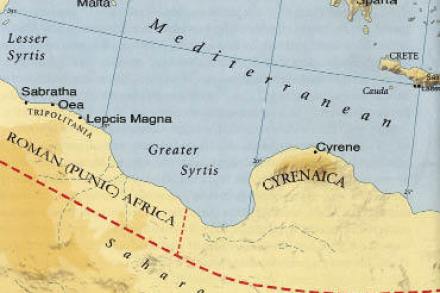
The Foreign Office is contemplating the possibility that — as in Iraq, where the 1992 no-fly zone allowed the Kurds to take control in the north — the current intervention may split Libya. It would revert to what it had always been up till 1911: two entirely separate administrations, one eastern and one western. A very sensible idea, too. In the 7th century bc, Greeks colonised Cyrene on the north African coast. Herodotus tells the story. A deputation from Thera (modern Santorini) had gone to Delphi to consult the oracle on various matters and was told to found a city among the Libyans. By Libyans, Greeks meant the people who inhabited north Africa. But since no attention was paid to this command, Thera suffered a seven-year drought.

Ancient and modern | 19 March 2011

Recent cases over Christians refusing gay couples hotel accommodation and Christian couples wanting to adopt have brought Christian belief into conflict with the law. The Christians have lost. Lord Justice Laws, arguing in 2010 that Christian belief was ‘subjective’, laid a marker for those judgments by drawing a distinction ‘between the law’s protection of the right to hold and express a belief, and the law’s protection of that belief’s substance or content’. In classical Athens, a number of charges could be brought against individuals on religious grounds, under the general heading of asebeia (‘impiety’).

Ancient and modern | 12 March 2011

As the governor of the Bank of England wades into the fray, it does not seem too much to ask of bankers to make it clear they are spending a portion of their bonuses on the Big Society. Those who already are must overcome their modesty and let us know about it. Euergesia — ‘benefaction, philanthropy’ — was a virtue of the well-born Greek. Many inscriptions and statues, erected by the euergetist to himself or by a grateful people, attest the practice. The culture spread to Rome. Over 11 years, Pliny the Younger spent two million sesterces on his home town in benefactions. Discussion about the theory of giving was intense.

Ancient and modern | 5 March 2011

After 40 years of a culture of tyranny, what hope for Libya’s future? After 40 years of a culture of tyranny, what hope for Libya’s future? Plato describes how the tyrant comes to power: he is smiling, affable and promises much. Some enemies he does away with, others he conciliates. The courageous, intelligent and wealthy he eliminates, and appoints a cabinet of creeps. Aristotle pinpoints the general strategy from there on: keep the people demoralised, mistrustful and weak. In that condition they lack the spirit of enterprise, the confidence to put their faith in each other and the sheer manpower needed to force a tyrant out. The problem is that, from that position, the tyrant leaves himself no alternative but to continue.

Ancient and modern | 26 February 2011

The point about crowds, as Gaddafi is now learning, is that there are more of them than there are of him. Romans knew this only too well and, like Gaddafi, went out of their way to prevent large gatherings. Time, therefore, for Libyans to take radical Roman action. In 494 bc, the Roman poor were in conflict with aristocratic landholders because so many of them had been placed in bondage through an inability to pay their debts. The Senate refused to move on the matter and, in the face of riots and disturbances, threatened to bring in the army to quell incipient mutiny spreading among the ordinary people (the plebs).

Ancient and modern | 19 February 2011

The Egyptian people want power in the face of government intransigence. So what happens next? Ancient Rome went through this phase, and very destructive it was.  For 50 years, Romans from aristocrats to plebs had broadly agreed that the final say on all major political matters should be the Senate’s (senex, ‘old man’), an oligarchy consisting of current and retired executive officials (consuls, praetors etc.). But after the defeat of Hannibal in 202 bc and the expansion of Roman power into North Africa, Spain, Greece and Asia Minor (western Turkey), the gap between rich and poor widened radically, and the soldiers who had done the fighting did not feel they had been satisfactorily rewarded for their efforts.

Ancient and modern: The emperor of Egypt

Romans would have regarded Hosni Mubarak as effectively the emperor of Egypt. But they would not have thought he had played a very intelligent hand. The Roman emperor held supreme authority. As head of state (princeps), he ruled the Treasury, controlled all the top political appointments, passed all laws, was final arbiter in all legal cases and selected provincial governors. As pontifex maximus, he led all the major state rituals in honour of the gods. As commander-in-chief (imperator), he ruled over the armed forces, chose all generals and determined military policy, often leading the army himself. To help him he had a circle of hand-picked, trusted advisers and a remarkably small civil service. But life was far too busy to spend his days indulging in orgies.

Ancient and modern | 15 January 2011

Last week Geoffrey Wheatcroft speculated whether a regiment of what he called Gay Gordons might not have something to be said for it, giving a whole new meaning to ‘once more into the breach, dear friends’.  Ancient Greeks would probably have approved, but with some reservations. Plato argued that Sparta and Crete were largely responsible for introducing a homosexual ethos into the military, a practice that came to be imitated elsewhere in the Greek world. In Sparta, for example, boys were removed from their parents at the age of seven to spend their time in common messes where they were trained up as soldiers. Every 12-year-old had to take a young adult warrior as a lover till he was 18, though the purpose was pedagogic as much as pederastic.

Ancient and modern | 8 January 2011

Every year the situation in Afghanistan is reassessed, and every year the conclusion is the same — mixed military progress, but otherwise, zilch. Every year the situation in Afghanistan is reassessed, and every year the conclusion is the same — mixed military progress, but otherwise, zilch. Romans would not have gone there, at least not on the terms that we are there. The Roman empire was a success, for the Romans at any rate, because it was under their total control. When they moved into places like the Greek East, they were dealing with cultures that were largely urbanised. Administrative structures were in place to handle governance and taxation, and an elite ran the show. Romans could convince the elites it was to their advantage to be under light Roman control.

Ancient and modern | 18 December 2010

Last week, David Cameron’s enthusiasm for finding out how happy we all are — as if it were any business of his — led us to consider some Greek views of the matter. Balnea, vina, Venus corrumpunt corpora nostra; sed vitam faciunt balnea, vina, Venus proclaims a neat elegiac epitaph from Rome, expressing a common popular viewpoint — baths, wine and sex may wreck us physically, but they help make life worth living. Roman thinkers, however, were as keen as Greeks to discover the happiness that withstood all onslaughts. Stoicism, a Greek invention, was one answer. The basic tenet was that divinity was rational and omnipresent, suffused through nature, ‘like honey through a honeycomb’. Nature and reason were thus closely linked.

Classic mistakes

In a good omen for the newly announced fund-raising charity ‘Classics for All’, the Education Secretary, Michael Gove, stated in his White Paper the other week that Latin and ancient Greek would, after nearly 25 years, become officially permitted national curriculum subjects. So classics has finally come in from the cold. But why on earth were the languages frozen out in the first place? In 2006, Lord Dearing was asked by the then education secretary, Alan Johnson, to see what could be done about the dramatic slump in the number of pupils taking GCSEs in foreign languages. Languages had been made voluntary after the age of 14 in 2004.