Peter Jones

How to console a Remainiac

Matthew Parris feels that he has become a genuine Remainiac, and kindly readers, fearing for his mental health, have been springing to his aid. The Roman elite, who felt the same sense of disempowerment after the republic collapsed and Augustus became the first Roman emperor in 27bc, might have a solution. The point about Augustus was that he did not call himself ‘emperor’ but princeps (‘first citizen’) or Caesar (as the later emperors did); and he maintained the trappings of the republican system (senators, consuls, etc). But he was now the final source of all authority. Any popular control over laws and appointment of officials was gone. So Romans began to wonder how they should live under a system that allowed them no political say.
Brexit and sovereignty

Brexiteers argue for ‘sovereignty’, i.e. that Brexit should release us entirely from the grip of Europe, leaving us free to make our own way in the world. But it is our democratically elected parliament that is sovereign, and if it decides to hand over some of that decision-making power to external bodies, so be it. Romans would have seen larger issues here. The Latin for ‘sovereignty’ was maiestas (our ‘majesty’) which meant at root ‘superiority’. Cicero said of it that ‘maiestas lies in the esteem accorded to the authority and name of the Roman people’. This maiestas manifested itself in various ways.

A matter of life and death | 10 May 2018

Alfie Evans was seven months old when he went to hospital with seizures. When more than a year later doctors said that nothing more could be done for him, his parents took the hospital to court. They lost a number of cases on the issue, and when the courts ruled he could not be moved abroad, public outrage ensued. The ancient view on such events was very different. In 1931 a well (dated to c. 150 bc) was excavated in Athens and found to be a mass grave into which some 450 babies had been discarded. Recent analysis shows that one third had died from bacterial meningitis, an infection of the brain caused by cutting the umbilical cord with an unsterile object. Others presumably died from common conditions that were often fatal in babies, e.g. diarrhoea.

Transgenderism and the Iliad

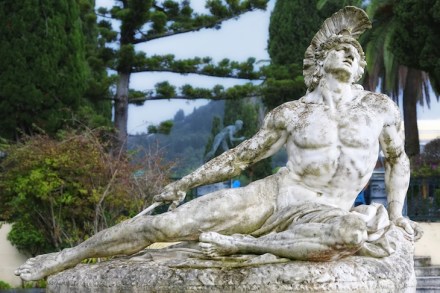
A couple of weeks ago a reader (Emma Lyons) queried Taki, the High Life professor of ancient Greek culture and society, who had argued that Achilles and Patroclus, heroes of the Trojan War, were not gay, and implied that Greeks did not do transgenderism. On both counts a little clarification is required. The 5th-century BC Athenian playwright Aeschylus indeed represented Achilles and Patroclus as lovers, as many ancients did. But professor Taki was talking about the situation in Homer’s Iliad (c. 700 BC), in which they were no such thing. The wrath of Achilles, with which the Iliad opens, was down to Achilles’s loss of his captive woman Briseis, taken from him by the Greek leader Agamemnon.

Rome and the Jews

Jeremy Corbyn, it is said, does not have a racist bone in his body, and therefore cannot, by definition, be anti-Semitic (‘Semitic’ here referring to Jews, not Arabs). The Jewish community, however, begs to differ. Perhaps the problem is that Corbyn and Momentum take a Roman attitude towards the Jews. If racism today relates to defining people as inferior simply because of some unalterable characteristic (e.g. heredity, colour), irrespective of evidence, the Romans, it has been argued, were ‘proto-racist’. The reason is that, like the Greeks, they thought that the environment or heredity made a people what they were.

Could the Russian economy benefit from some Roman history?

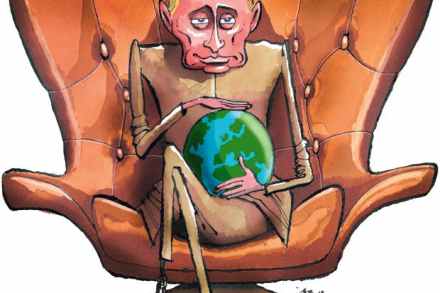
The Russian economy is not in the greatest of shapes. That being the case, one would have thought friendly diplomatic and economic relations with the West would be a priority for Vladimir Putin, given his need for cash to build weapons against threats from superpowers such as Estonia. A little Roman history would help. As has been well documented, the collapse of the Roman Empire in the west in the 5th C ad heralded something of an economic dark age for Europe for some 200 years. The long-nurtured Roman economic networks extending east as far as China simply could not survive the break-up that would create the beginnings of today’s Europe. The ancient sources, as well as the archaeological record, make clear just how connected that world had been.

Putin’s diseased ideology

The Russian economy is not in the greatest of shapes. That being the case, one would have thought friendly diplomatic and economic relations with the West would be a priority for Vladimir Putin, given his need for cash to build weapons against threats from superpowers such as Estonia. A little Roman history would help. As has been well documented, the collapse of the Roman Empire in the west in the 5th C ad heralded something of an economic dark age for Europe for some 200 years. The long-nurtured Roman economic networks extending east as far as China simply could not survive the break-up that would create the beginnings of today’s Europe. The ancient sources, as well as the archaeological record, make clear just how connected that world had been.

Octavian’s poison legacy

Barely a day passes without yet another Russian explanation for the Salisbury nerve agent attack. What’s new? Such disinformation has a very ancient history. After Caesar’s assassination in 44 bc, his old friend Mark Antony and the 18-year-old Octavian, Caesar’s adopted son and heir, emerged as the two contenders for power. In 32 bc, it had become clear that it war between them was inevitable. At this critical juncture, two allies of Antony deserted to Octavian, and revealed that Antony had a will, which had been lodged with the Vestal Virgins. It was illegal to open the will of a living man, and the Virgins told Octavian that they would not touch it.

Kim’s unwise offer

President Trump’s acceptance of talks about denuclearisation must have been as big a shock to Kim Jong-un as his offer was to the USA. So Kim is probably scrambling, too. And if there is a positive outcome, he will live to regret it. In the 2nd century bc the two big Mediterranean players were Rome and the vast Hellenistic ‘empire’ to the east, left behind by Alexander the Great and ruled by assorted ‘kings’ descended from his generals. The Hellenistic king Antiochus IV had ambitions to extend his power west into Greece and Egypt. Knocked back by Rome, in 168 bc he took advantage of disunity in Judaea to establish a power base there, and attacked Jerusalem.

The goods of war

The presenters of the BBC 2 programme on civilisations seem unable to decide what civilisation is. Socrates would therefore wonder how they could make a programme about it. Still, that’s academe for you. Let the Romans help out. First, the root of ‘civilisation’ is Latin civis, ‘citizen’. That implies a law-bound society. Secondly, in his epic Aeneid, Virgil described how Aeneas, fleeing Troy in flames to found the Roman race, consulted his father Anchises in Hades on the future that awaited him.

Article 50 and the Athenians

Europe, a majority of MPs (party loyalties aside), the Lords, the civil service, the BBC and the CBI are all determined to keep Britain in the EU. To that end, emitting crocodile tears, they would welcome a final Brexit deal that is effectively worthless. That, they hope, will cause a second referendum, resulting in a ‘remain’ vote. The Athenians knew how to deal with that sort of situation. Athens from 508-322 bc was a direct democracy, in which all decisions were taken by male citizens over 18 meeting in assembly. But since they could not just turn up and wonder what to talk about, a council of 500, appointed by lot from citizens over 30, acted as the assembly’s steering committee.

Keep the peace

Virgin East Coast, reneging on its franchise, is not in anyone’s good books at the moment, but since it is the only direct service available from Newcastle upon Tyne to London, many in the north-east have no option but to use it. The service in my experience is pretty good, and even better when it is possible to book well ahead and thereby, with use of the Old Gits’ railcard, treat oneself to a seriously cheap first-class advanced ticket. This offers excellent value for money, the food and drink far better than that on the West Coast equivalent. But the icing on the cherry is the quiet coach.

The emptiness of ‘issues’

Jeremy Corbyn is the master of ‘raising issues’. He received an obscure prize last year for his ‘work for disarmament and peace’ — i.e. talking about it. He ‘raised issues about human rights in Iran’, he said, when he worked for TV there. It will be at the ‘centre of my foreign policy’. The ancient Greek for ‘word, speech’ was logos, and words could be regarded as tricky and deceitful: mere talk, no substance. Logos, however had another range of meanings: ‘reason, rational account, argument.’ It was in that sense that Plato saw logos as the sole route to the truth: using debate to produce a reason-based account of the world.

Outsourcing, a long history

The outsourcing business Carillion has gone bust because its bids for government work have been far too low. The problems raised by such contracts are not new. The Romans outsourced a great deal of state business. The Bible’s ‘publicans’ were wealthy publicani (lit. ‘men engaged on public business’). No doubt aided by the occasional sinner, they formed powerful and influential partnerships to bid at auction for state work of every hue — collection of taxes and harbour dues, provision of military and civilian supplies, building and repairing roads, bridges and aqueducts, running the mines, waste disposal and so on. Partnerships raised incredible sums for these operations.

The soldiering life

Advertisements encouraging men and women to join the army emphasise that their religious beliefs, sexual orientation and emotional needs will be no barrier to making a career. Very nice too, but what sort of come-on is that? Is there no positive reason for joining up in the first place? In the ancient world, war was a constant, and men had to be ready to die in battle for the very survival of their country, wives and children. So the motivation was very powerful — self-preservation. There were also rewards: the prospect of booty and honours. We hear of one Spurius Ligustinus, an ordinary foot-soldier from a one-acre farm who ‘four times within a few years held the rank of chief centurion; 34 times I was honoured by my commanders with rewards for bravery.

Madman at the helm

Whatever one makes of the accuracy of the journalist Michael Wolff’s depiction of President Trump, it cannot all be the product of an overheated imagination. What makes it so interesting is that his picture of total dysfunctionality is typical of Roman historians’ accounts of many emperors. Suetonius (d. c. ad 125), for example, was a high-ranking imperial secretary to the emperor Hadrian. In his Lives of the Caesars, he covered the period from Julius Caesar, Augustus and all the other early emperors — most notoriously Caligula and Nero — through to Domitian (d. ad 96). Take his portrait of the viciously self-indulgent Caligula. His desire to humiliate senators and officials and to put on shows, dress up, act, sing and dance, made him very popular with the people.

Changing the culture

This year will be the 100th anniversary of some women over the age of 30 getting the vote, and for the first time all men over the age of 21. One can confidently expect an avalanche of articles about increasing women’s power, with the usual sanctimonious finger-wagging at ancient Athenians, who empowered citizen males in the direct democracy they invented 2,500 years ago, but not females. It is very difficult for people, even academics, to understand the power of culture — a society’s sense of the way things have ‘always’ been done, which is met with a blank incomprehension by other societies who do things differently. The Greek historian Herodotus illustrated the problem.

Regina, a Syrian in South Shields

D(is) M(anibus) Regina liberta(m) et coniuge(m) Barates Palmyrenus natione Catuallauna an(norum) XXX ‘To the spirits of the dead, and to Regina, his freedwoman and wife, of the Catuvellauni, aged 30 years, Barates of Palmyra erected this.’ There Regina sits, in all her Roman finery. You cannot make out her face because the great stone funerary monument in which she has been sculpted is 1,800 years old, very worn in places and the face mutilated. She looks straight out at you from her wicker basket-chair — a nursing chair, perhaps? Uncomfortable, too: she sits on a cushion.

Punished for leaving

Since the EU does not want the UK to leave and will do everything to stop it leaving, it is becoming clearer by the day that the Brexiteers’ hopes of a beneficial or even a remotely satisfactory withdrawal agreement are at an end. Like the EU, Athenians knew how to deal with ‘leavers’. After driving the mighty Persians out of Greece in 479 bc, the Athenians proposed that all the Greek city states unite to prevent the Persians ever returning. The means would be a pan-Hellenic naval force on constant patrol across the Aegean, headed by Athens, the leading Greek maritime power. To bring this about, it was agreed that the city-states would provide Athens annually with either money or ships to build up a sufficiently powerful fleet to ensure Greek security across the region.

Inside the animal mind

Whatever the government decides about post-EU regulations on animal sentience, the Greek biographer and essayist Plutarch (died c. ad 120) was fascinated by the comparisons between man and beast and, almost uniquely, argued for the ethical treatment of animals. Some earlier thinkers contended there was a ‘kinship’ between men and animals because animals had flesh, passions and (being alive) souls. Therefore man should neither eat nor sacrifice them. But then Aristotle (d. 322 bc), who invented the discipline of biology, stepped in. He agreed that animals had desires which caused them to behave in certain ways that looked human, but denied that this was evidence of the ability to reason.