Peter Jones

In the people’s interests

From our UK edition

The Transport Secretary Chris Grayling may be quite right (not words one often reads) to warn that failure to deliver Brexit may end the culture of a broadly moderate politics in the UK and usher in an era of ugly extremism. The Roman republic was destroyed by a similar crisis. In 137 bc, it became clear to Tiberius Gracchus — a grandson of the great Scipio Africanus who defeated Hannibal in 202 bc — that the men who had fought Rome’s overseas wars ‘are called masters of the world but have not a patch of earth to call their own’. So in 133 bc this aristocrat stood for office as a tribune of the plebs in order to bring about a land redistribution in favour of the poor.

New year, old truths

From our UK edition

At this time of year the media urge us all to turn over a new leaf and believe that we can become and do whatever we want. Those tempted by this idiotic advice would be better advised to turn over a 2,500-year-old one with a stiff dose of Aesop’s fables. A shadowy 6th-century bc figure, Aesop turned animals into literary figures by giving them simple black-and-white human characteristics — the timid mouse, the deceitful fox, the stupid donkey, and so on — and putting them in situations illustrating aspects of the human condition. Theon called them ‘fictitious stories picturing a truth’ — usually truths about human folly. One lesson they regularly rammed home was the advisability of knowing who you were.

How the year was born

From our UK edition

Why are our years structured as they are? Censorinus in his de die natali (‘Birthday Book’) for his chum Caerellius (ad 238) revealed all, as follows. The Roman year once had ten months. It began in March, named after Mars god of war, since that was when the fighting season began. April derived from aperio, ‘I open’, because nature ‘opened’ the way for birth (wrong derivation); May from the goddess Maia; Junius from the goddess Juno; Quinctilis meaning 5th (our July); Sextilis meaning 6th (our August); and September to December from the Roman numerals seven to ten. This ten-month year had 304 days: 31 days in March, May, July and October; 30 days in April, June, August, September, November and December.

Educating Jesus

From our UK edition

Around 1 ad a 14-year-old Jewish Arab girl called Maryam, almost certainly in Nazareth in Galilee, gave birth to a son, Yeshua, (Joshua, Greek Iêsous, Latin Iêsus, Jesus). Typically of any such peasant family — the more the merrier — she added four more sons and at least two daughters to the tally. Some 30 years later, while he was being baptised in the Jordan, her first son heard a voice from heaven and his mission began. But what had he been doing in the meantime? The Old Testament is full of advice about how to bring up a child. There may have been schools at this time, but the main responsibility fell on the family and community. Deuteronomy was the key text.

Spoken vs written word

From our UK edition

The country’s champions of free speech — the police — were recently out in force to ensure that the alt-right Trump-supporting Steve Bannon could address the student union in Oxford. The students, inevitably, wanted him silenced. But what were they so afraid of? Plato knew: it was a matter of the difference between the spoken and the written word. In Plato’s dialogue Phaedrus, Socrates told a story that the Egyptian wise man Theuth was responsible for many inventions, but presenting them all to the king Thamus, he claimed that writing was the finest of the lot, ‘the magic key to memory and wisdom’. Thamus disagreed: writing would destroy memory, and therefore internalisation of learning.

Call the polis

From our UK edition

If Brussels is willing to offer the British Parliament only a dog’s Brexit, that should tell Parliament everything it needs to know about any future prospects for a Britain tied in with the EU. It is about time for Parliament to say, ‘Enough is enough’. As every Greek polis (city state), however small, averred, its aim was to ensure that it alone was the arbiter of its own freedom. Antiochus III, a distant successor to Alexander the Great, had ambitions in 196 bc to ‘bring all the cities of Asia under his domination, as they once had been’.

Doctors and death

From our UK edition

The Royal College of Physicians has suggested that doctors should learn to talk to patients about death. But talk about what, precisely? The medical diagnosis? Matters spiritual? Philosophical? In a play about his fate, Prometheus, the mythical champion of mankind, said that he had benefited mortals by preventing them from foreseeing their death. Asked how, he replied ‘I lodged blind hopes in them’. This reflected a school of medical thought which took the view that offering the patient encouragement could prevent them ‘giving up on themselves’ and actually keep them alive. Not everyone took that approach. In a world where anyone could become a doctor (we hear of 18-year-olds starting to practise), it was vital to maintain one’s reputation.

Death and the Romans

From our UK edition

World Mental Health day raised again the issue of suicide, still regarded as happening only among those ‘whose balance of mind is disturbed’. Not necessarily, Romans would have argued. For Romans the manner of one’s death was as important as that of one’s life. As Seneca said, ‘Like a story, the important thing about life is how it is played out. It does not matter where you stop. Stop wherever you want to, but just attach a good ending.’ On his deathbed the emperor Augustus invited those gathered round him to applaud him for acting well his part in life’s comedy. The key was to face death like a man, or a woman. Lucretia won everlasting fame when she committed suicide after Sextus Tarquinius raped her.

Babylon’s NHS

From our UK edition

Financial constraints combined with a shortage of staff have brought the NHS to a situation so desperate that it is proposing that doctors treat patients, not one by one, but in groups of 15 or more. It is good to see the NHS finally catching up with the cutting-edge thinking of the ancient Babylonians. Let the great Greek historian Herodotus (c. 490-c. 425 bc) explain... Herodotus travelled throughout the Near East as part of his mission to discover the deep origins of the conflict between Persians and Greeks that led to the famous Persian wars (490-479 bc). But he was also fascinated by human behaviour and assiduously recorded the customs of those peoples with whom he came into contact.

Corbyn’s false democracy

From our UK edition

At the Labour party conference, Jeremy Corbyn said that he would do whatever his party members told him to. This, apparently, is what he means by democracy. Neither the original nor the modern version bears any resemblance to it. Full-on Athenian direct democracy developed from its origins in 508 bc into a system in which every Athenian male citizen over 18 could attend an official Assembly (usually once a week) and determine, by a majority show of hands, whatever policy was put before them. These policies were presented by the Council, which consisted of 500 citizens aged over 30, serving for one year only and never more than two. They were appointed by lot via proportional representation, from the 139 demes (roughly, parishes) that made up Athens’ city-state.

Quids and quos

From our UK edition

The 5th century bc Athenian historian Thucydides proposed that the driving force behind interstate relations was power and fear. But the soldier-essayist Xenophon (d. 354 bc) thought that humiliation, of the sort that the EU recently heaped on Mrs May, lay at the heart of the problem. In his Cyropaedia, Xenophon wrote an extended essay on the achievements of the Persian King Cyrus the Great (d. 530 bc), founder of a huge empire stretching from Turkey to India. In it, Xenophon invented a conversation between the experienced Tigranes, future king of Armenia, and the young Cyrus on the subject of foreign domination.

The EU’s divide and rule

From our UK edition

‘Divide and rule’ (or ‘conquer’) diplomacy aims to disunite the opposition, the better to control it. The ancients were masters of it. So is the EU, unlike the UK. In the 4th c bc Philip II of Macedon played the game very skilfully as he plotted his conquest of Greece. Taking full advantage of the fact that the Greek city-states spent most of their time quarrelling with each other, he offered the hand of friendship to some, used his powerful army against others, and all the time offered peace terms to Athens. Wisely, he left Sparta alone. (When he told them they would be slaves for ever if he conquered them, they laconically replied ‘If’). He eventually turned Greece (minus Sparta) into a federation of states ruled by Macedon.

The art of persuasion | 13 September 2018

From our UK edition

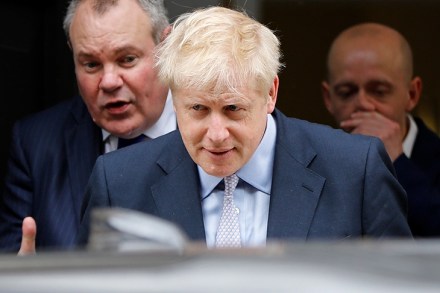
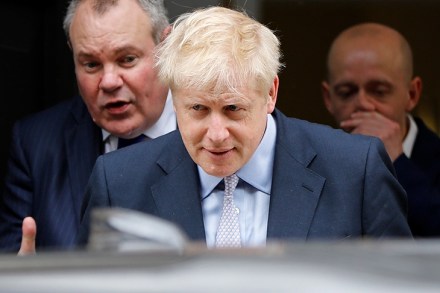
Boris the rhetorician is in full voice at the moment, delighting his followers and infuriating his enemies. But is this the purpose of rhetoric? It was the ancients who invented, or rather deduced, the rules. As the Roman professor of rhetoric Quintilian said: ‘Just as men discovered the art of medicine by observing that some things were healthy and some the reverse, so they observed that, when it came to speaking, some things were advantageous and others not. These they therefore noted for imitation or avoidance, while adding personal hints that logically followed. Experience then confirmed these observations, as a result of which people knew how to teach the subject.

Salmond’s fishing

From our UK edition

The ex-leader of the SNP, Alex ‘Five Pensions’ Salmond, has scrounged nearly £100,000 from the people to help him in an impending legal case. How shameless can you get? In the ancient world, it was commonplace for the wealthy to massage their reputations by magnanimous public gestures — providing the cash to build a library or a school, for example. The 5th-century bc thinker Democritus reckoned that there was nothing like the rich giving to the poor to produce concord that strengthened the community. For politicians, it was essential.

Antigone and algorithms

From our UK edition

Hardly a day goes by without someone making excitable predictions about human progress and how, thanks to AI, we are all going to become algorithms served by robots. The ancients took a different view. All ancient man had available to him was what nature in its raw state offered. Only fire (e.g. cookery, metal-work) or man’s ingenuity (e.g. papyrus, concrete, the arch) could significantly alter it. But men could still fantasise about flying to the moon, or imagine a world in which ‘Every stream ran with wine; fish came to the house, baked themselves, and served themselves up at table; rivers of soup, swirling with meat chunks, flowed by the dining couches; thrushes, served with milk cakes, flew down men’s gullets.

Let’s hear Corbyn’s ‘logos’

From our UK edition

Jeremy Corbyn regularly apologises on the subject of anti-Semitism, yet admits that he has done nothing wrong. So what does he actually mean by ‘apology’? He obviously does not feel the need to repent — the usual implication of the term — because he is convinced, as always, of his own unassailable rectitude. Perhaps it would clarify matters if he were to apologise in the Greek sense of the word. Apologia meant giving an account of what you had done and justifying your reasons for doing it. It was primarily a legal term. Socrates’ ‘Apology’ in 399 bc, for example, was his defence against charges laid at his door of corrupting the young and introducing strange new gods.

Water, water, everywhere | 26 July 2018

From our UK edition

Given that we use only 2 per cent of the rain that falls on these islands, one would not think it an insuperable job to secure our water supplies during the longest dry spells. If the Romans could do it with their technology, surely we can with ours. Since communities in the ancient world could survive only if they had supplies of fresh water available in the first place — rivers, wells and cisterns — aqueducts were not strictly necessary for human survival. Many places never had one (e.g. London). It was the baths, the Romans’ leisure centres, that created the demand. According to a late survey, Rome had 154 public lavatories, 46 brothels, 1,352 water points — and 856 bath buildings.

Strangers and brothers

From our UK edition

Everyone talks about the importance of ‘charisma’ in a politician. But while it may take one a long way with the voters, it does not necessarily cut much mustard in parliament unless bolstered by other strengths. The Romans provided a useful checklist. Boris, still popular in the country but now, despite high office, in self-exile after failing to win over colleagues to his Brexit views, might care to contemplate them. Top priority were amici, political allies among the great and good. These would automatically include those joined by blood, marriage or other associations, but needed to spread much further into networks of relationships incorporating men from a wide range of political, legal and social backgrounds.

On good authority

From our UK edition

Forget David Davis, Boris, the cabinet, the commentariat. It’s time to concentrate on the big picture and the central question: where does final authority lie in the UK? The ancients grappled with this problem too. In the direct, radical democracy of 5th and 4th c Athens, it lay with the male citizens meeting in assembly. Appointed officials were under constant scrutiny by the assembly, and could pay a high price for failure (including execution). Indeed, any citizen who proposed a course of action to which the assembly agreed but which turned out to be a disaster could be impeached for ‘deceiving the people’. It was no defence to say that the assembly had agreed to it. The people were sovereign. They resisted two oligarchic coups.

Rhetorical questioning

From our UK edition

Shadow chancellor John McDonnell has given all his cabinet a copy of Cicero’s advice on how to win arguments. This is a very foolish move. ‘Rhetoric’ (same root as ‘orator’), or persuasive speaking, was the name of this activity. In the 4th century bc, Aristotle produced the definitive guide in his Art of Rhetoric, from which most of Cicero’s advice is drawn. His top tips included: work from the general (is this good in principle?) to the specific (is this example of it practical?). Examine any course of action under four headings: is it possible? Necessary? Advantageous? Honourable (i.e. just, moral, etc.)? Set up arguments from evidence, logic, likelihood, maxims (‘too many cooks’) and parallel examples (usually from the past).