Peter Jones

Roman funerals had real ‘emotional intelligence’

From our UK edition

Today’s funerals, featuring shiny black hearses and top hats, lack (we are assured) ‘emotional intelligence’. Colourful coffins featuring pictures of favourite musicians, leopard print hearses and burials in yurts will apparently correct this sad deficiency. The Romans might well have disagreed. Cremation and interment took place outside the boundaries of Rome (dead bodies were considered a polluting force — contrast the Christian view). The less well-off could for a fee join funerary clubs, meeting regularly to dine together, and have a niche in a highly decorated underground chamber reserved for the urn containing their ashes.

Who advises Dominic Cummings?

From our UK edition

Dominic Cummings, chief adviser to the Prime Minister, thinks that there is no ‘better book than Thucydides as training for politics’. But what does he ‘teach’? His ‘lessons’ are legion. Herewith some possibilities. In his history of the war between Athens and Sparta (430-404 bc), in which he briefly participated, smart one-liners leap off the page: ‘Humans are dominated by three motives: honour, fear and advantage’; ‘Identity of interests is the surest bond between states and individuals’; ‘Men consider what is pleasant to be honourable and what is advantageous, just’; and so on. Typically of a Greek, Thucydides distinguished sharply between thought and action.

Extinction Rebellion proves Aristotle was right about the follies of youth

From our UK edition

Extinction Rebellion is blocking the streets again, foolishly demanding the impossible on a very important issue. But what does one expect from the young? As Aristotle pointed out, since they have no experience of life, they always have exalted notions and think themselves equal to great things. As a result, never having been duped before, they readily trust others and are easy meat for adult exploitation. Platonic criminal theory can help them. The ancients generally argued that society was held together by systems of rewards and penalties, and revenge, recompense and deterrence were the main features of their penal thinking. Plato, however, took a different view. He thought of crime as a disease. The point about a disease was that it was not your fault: no one willingly caught one.

Would the Athenians have held a second referendum?

From our UK edition

The Athenians invented the referendum: after debate in the citizens’ assembly, they voted through all political decisions by a show of hands. They could also demand a revote, as happened on a famous occasion in 427 bc, after Athens put down the revolt of the city-state of Mytilene. Does this justify the proposed second Brexit referendum? The Athenian assembly, angered by the revolt, initially voted to execute all adult males and sell the women and children into slavery. A ship was sent to see to it. But next day, as the contemporary historian Thucydides reported, ‘the people began to think how excessively savage it was to destroy everyone, not just the guilty’. So they demanded a revote.

David Cameron would be a winner in Ancient Greece

From our UK edition

David Cameron is convinced he was right to call a referendum and to promise to enact it. Justifiably: there was a huge turnout and a clear winner. That’s democracy. But he has been lashing out because the referendum did not go as he hoped. This whingeing makes him look like a total loser. An ancient Greek in that position would argue he was a winner: he had kept his promise, and therefore reputation, intact. For a Greek, reputation was of the very highest importance because simply doing or being good was not enough: if people did not know about it, what was the point? As a result, Greeks often explained their motive for action in terms of the honour and renown it would bring them.

Pericles for PM: Boris should forget Augustus and stay focused on his hero | 14 September 2019

From our UK edition

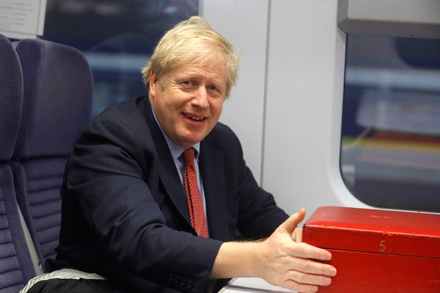
Boris Johnson is a gung-ho classicist. He has supported the subject throughout his journalistic and political career, is a generous donor to the charity Classics for All, and has a bust of his hero Pericles in his study. Indeed, he says his reading of Pericles’s famous funeral speech (431 bc) when he was 12 or 13 had a powerful effect on him, especially Pericles’s statement that ‘Athens is called a demokratia because it runs its house in the interests not of the few but of the majority’. Last week, however, he turned into the Roman emperor Augustus to explain his sacking of 21 rebel MPs. Augustus, emerging as victor in 31 bc in the civil war against Antony and Cleopatra,  did just this, killing potential rivals and ushering in a long and peaceful reign.

Tacitus knew how to handle stories from ‘insiders’ and ‘sources’

From our UK edition

We read much about ‘fake news’ these days and of efforts to rid the internet of it. But what of media that report dodgy stories derived from ‘insiders’ and ‘government sources’ and ‘contacts’? The great Roman historian Tacitus knew what to make of such sources. The first Roman emperor Augustus died in ad 14. It was a critical moment: who would succeed — Augustus’s grandson Postumus Agrippa, banished (by his wife Livia) or Tiberius, Livia’s son by her first marriage? Tacitus reported that Augustus and a companion, Fabius, arranged a reconciliation with Agrippa; that Fabius leaked and paid the price; and Livia at once recalled Tiberius from abroad, and then ‘saw to’ Augustus.

Pericles for PM: Boris should forget Augustus and stay focused on his hero

From our UK edition

Boris Johnson is a gung-ho classicist. He has supported the subject throughout his journalistic and political career, is a generous donor to the charity Classics for All, and has a bust of his hero Pericles in his study. Indeed, he says his reading of Pericles’s famous funeral speech (431 bc) when he was 12 or 13 had a powerful effect on him, especially Pericles’s statement that ‘Athens is called a demokratia because it runs its house in the interests not of the few but of the majority’. Last week, however, he turned into the Roman emperor Augustus to explain his sacking of 21 rebel MPs. Augustus, emerging as victor in 31 bc in the civil war against Antony and Cleopatra,  did just this, killing potential rivals and ushering in a long and peaceful reign.

How to deal with Brexit anger, according to the ancients

From our UK edition

Sir Philip Pullman, tweeting that thoughts of hanging the PM came to mind after the decision to prorogue parliament, later drew back: ‘I don’t apologise for the anger I feel; only for its intemperate expression.’ The ancients were well aware that rage usually removed a man’s judgment and made him look an idiot. In his lengthy treatise on anger, defined as ‘a desire to avenge a wrong’, the Roman stoic philosopher Seneca argued against it on three grounds: it was unnecessary, learned behaviour; it did not lead to desirable conduct; and it made a man prone to violence. Take, for example, one’s reaction to wrongdoing.

For a solution to the backstop, team up like Rome and Carthage

From our UK edition

The EU is demanding that, in return for a new deal, the UK must come up with a solution to the Irish backstop problem. But since the UK will happily leave with no deal, the EU will have to find a solution anyway. Let the Romans help out. Latin foedus (cf. ‘federal’) meant a treaty that guaranteed peace and friendship between Rome and another state, in perpetuity. There were two standard models. A foedus aequum (‘equal’) put both parties on an equal footing. The first we hear of between Rome and the local cities of Latium agreed eternal peace, mutual assistance against enemies, equal sharing of spoils and speedy settlements of commercial disputes. Here both parties wanted exactly the same outcome.

Boris is facing his Sparta moment

From our UK edition

The PM’s hero is the Athenian statesman Pericles, and a Periclean crossroads is now approaching. According to the biographer Plutarch, Pericles’ influence begins during Athens’s golden age, when its power was expanding at the expense of Sparta, its rival city-state. Though an aristocrat, Pericles turned himself into a populist, but took care not become too familiar a figure. He was seen in public only when on political business and generally kept a low profile (as Boris was accused of doing in last week’s Spectator editorial). Pericles then began to ‘borrow’ money on various pretexts, pouring it into public festivals, fees for public services and fabulous major building works (one of which was the Parthenon).

Boris Augustus

From our UK edition

The Tories, allegedly a ‘one-nation’ party, are currently imposing Brexit on a divided nation. As a result, some Tory MPs will vote against Brexit, effectively abandoning the party. This raises the question of political values – the question being, what happens after Brexit? Romans faced the same problem when the republic collapsed (27 bc) and Augustus became emperor. The Roman historian Tacitus, looking back at those events some 140 years later, summarised how Augustus achieved supreme power: he charmed the army with bonuses, the people with cheap corn, and everyone with the beguiling pleasures of peace.

Breaking the deadlock

From our UK edition

It is said that our political system is ‘broken’ simply because the passions aroused by Brexit have effectively created a hung parliament. So what to do about it? Athenians would have dealt with the problem by ostracism. Its purpose was to send one citizen into exile. Once a year Athenian citizens (all males over 18) meeting in assembly got the chance to vote for an ostracism. It was held by citizens inscribing the name of their candidate on a potsherd (ostrakon). As long as at least 6,000 votes were cast, the man with the most votes was sent into exile for ten years. He did not suffer disgrace, lose citizenship or property, just his ability to reside in Athens. About 10,000 such ostraka survive. Some citizens spoilt them.

Persia’s lessons for the PM

From our UK edition

Stanley Johnson suggests his son, the PM, will easily deal with Iran because he is well acquainted with Persian history and knows all about kings such as Darius and Xerxes. But talking ancient history with Ayatollahs could have its problems. Here, for example, is what Herodotus (d. c. 425 bc) had to say about Darius. Distantly related to the royal family, he served loyally under King Cambyses, at whose death in 522 bc a usurper took power. Darius plotted with six others to dethrone him, suggesting they should lie their way into the palace and kill him: ‘Where a lie must be told, tell it. Those who lie and those who tell the truth all have a similar objective, to gain advantage: same end, different means.

A recipe for comedy

From our UK edition

Hardly a week goes by without a cook — sorry, chef — going bananas about the desecration of his hallowed ‘art’ by food reviewers, whose status is now so elevated that there is even a prize for budding initiates in the half-baked genre. Ancient comedians and satirists endlessly mocked cooks’ sense of their own magnificence. Cooks in Greek comedy always regarded themselves as supreme experts. A comic cook explained to the man who had hired him: ‘The complete cook is made on a wholly different level. He is an artist, a geometer and a doctor. This enables him to discover a fish’s true potential.

Rome’s lesson for Labour

From our UK edition

Jeremy Corbyn’s refusal to take serious action against Labour’s anti-Semitic members is no surprise: Marxists know who their friends are. The Roman plebs showed how to deal with such cabals. In 509 bc, Rome’s last tyrant king was thrown out, and the very nobles who had advised him at once took over the new republic as senators and annually appointed leaders (‘magistrates’ such as praetors, consuls, etc). And the plebs? Desperate for change, they found none: poverty, debt and landlessness persisted. So they took action —rioting and withdrawing their labour, especially on the battlefield.

Glimmers of hope

From our UK edition

With parliament irretrievably deadlocked over Brexit and the EU intransigent, there remains little belief that either of the prime ministerial candidates can find an even remotely happy solution to the problem. All they can currently offer are the tender leaves of hope. The ancient Greek farmer poet Hesiod (c. 680 bc) told the story of this ambiguous commodity. The gods, determined that life on Earth should be one of suffering, fashioned an irresistibly beautiful woman, Pandora, and sent her down among men with a large storage jar, which she proceeded to open.

Tragedy and validity

From our UK edition

Rufus Norris, the National Theatre’s artistic director, has revealed that all those tedious ancient plays will from now on be updated with a ‘modern twist’ to ‘bring in a fresh audience’. By way of example, he assures us that the forthcoming reworking of Sophocles’s Philoctetes (409 bc) will still be ‘a very valid Greek play’. Valid? What does he mean by that? The original was pretty ‘valid’, with its chorus and three masked male actors playing all the parts, speaking and singing in complex metrical forms in high linguistic register; and it was a serious, elevated medium, inhabited by high-status characters. Most tragedies were drawn from myth.

Rory’s classic mistakes

From our UK edition

If Rory Stewart had taken full advantage of his education at Eton and read classics at Oxford rather than PPE, he would not have made the basic mistakes that blew apart his short-lived campaign to become prime minister. Not that his failure was one of content: far from it. His views on public services and Brexit were entirely predictable and could be correct. So what went wrong? His failure was one of rhetoric, the skill of peaceful persuasion dissected by Aristotle and further refined by Cicero; and his failure consisted in his being so swept away by his millions of followers on social media that he started to believe his own hype, as if that guaranteed victory. But to win, you must persuade those who are not your followers.

The perils of popularity

From our UK edition

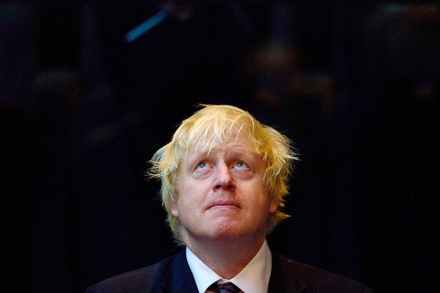
So: Boris triumphans, ready to deliver a 140-seat majority for the Tories and lead the UK out of Europe and on to greater triumphs? The shade of an Athenian statesman might offer a warning. Themistocles (c. 524-459 bc) came from an obscure family, but early on conceived a passion for politics. His father ‘pointing out some ancient triremes, mere hulks abandoned on the seashore, said that was what happened to leaders when the people decided they were irrelevant’. This merely spurred him on. Themistocles flourished in the direct democracy invented in Athens in 508 bc. He built up a following among the poor, was said to know every citizen by name, and helped many with difficult court cases. The elites regarded him with great suspicion.