Peter Jones

Ancient lessons in resilience

In ad 115 Antioch (Antakya) was destroyed, as today, by a huge earthquake, described dramatically by a historian 100 years later. In ad 178, Smyrna (modern Izmir, west Turkey) suffered the same fate. The next day one of its sons, Aelius Aristides, wrote to the Emperor Marcus Aurelius: ‘Smyrna, the jewel of Asia that beautifies your empire, lies low, wiped out by fire and earthquake. In the name of the gods, reach out your hand to the limit of your capacity. Smyrna, the greatest of today’s Greek cities – thanks to the gods, you emperors past and present and the senate – has now suffered the greatest disaster in living memory. Yet for all that, destiny has preserved for us one lifeline of salvation: you. You saw the city, you know what has been lost.

Cyrus knew bullies don’t win

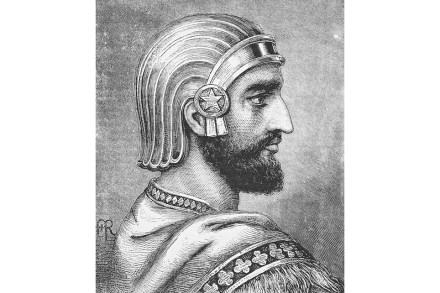
If Dominic Raab has been bullying, he must think it was to his advantage. Agamemnon, leader of the Greek expedition to Troy, thought so too. At the beginning of Homer’s Iliad, he brutally dismissed the old priest of Apollo who had offered a huge ransom for the return of his daughter. So the priest prayed to Apollo, who loosed a devastating plague on the Greek army. In contrast, let Mr Raab contemplate the founder of the Persian Empire, Cyrus the Great (d. 530 bc). Cyrus was grandson of the earlier king Astyages, a Mede. But Cyrus’s father was Persian, not Median, and because it had been foretold that Cyrus would inherit the throne, Astyages ordered that the child be left to die on the mountains.

Plato, Aristotle and the power of music

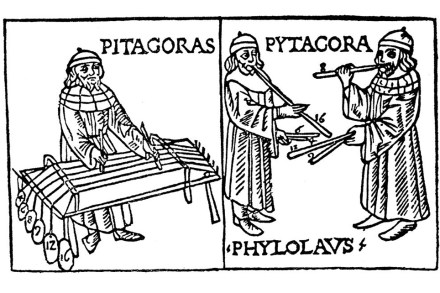
A fast-food restaurant in Wrexham will play classical music during the evenings in a bid to stop antisocial behaviour. While some ancient Greeks denied that music per se provided anything for you apart from an unimportant kind of pleasure (though the words of a song might make a difference), others thought that music could have powerful mood-altering effects, for good or ill. For example, we are told that Pythagoras developed a form of musical therapy, consisting of songs and pieces for the lyre designed to help students get up and active in the morning and sleep well at night.

What the Tories can learn from Cato the Elder

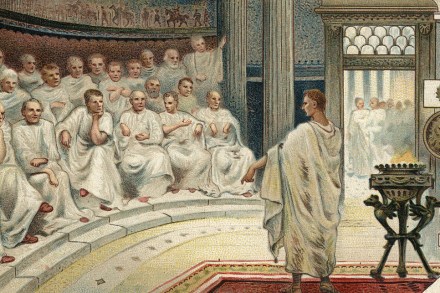
One MP pays a tax fine, one borrows money from a relation and one is accused of bullying staff. More ‘corruption and sleaze’? Romans might have seen it as a matter of basic values. In 443 bc, Rome established the prestigious office of censor, to be held by two men, usually ex-consuls. As well as maintaining an official list of Roman citizens and their property (the census), they were also responsible for the oversight of public morals (regimen morum). Anyone who fell below what the censors regarded as the high standards of a Roman citizen was removed from his tribe, was not allowed to vote and had a mark made against his name on the citizen register.

Where do the Elgin marbles belong? 

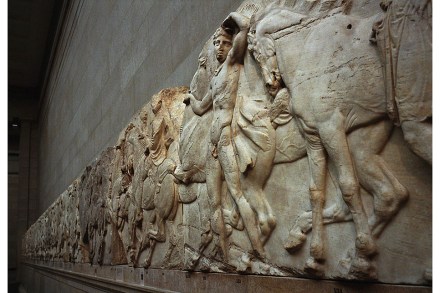
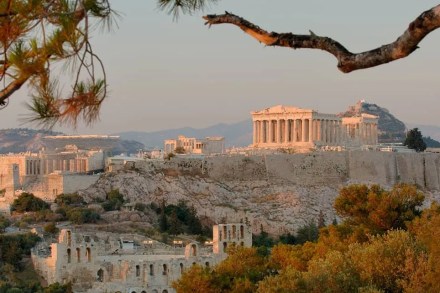
Where should the Elgin marbles be on show? Their display in the Duveen gallery of the British Museum is not impressive. To put it crudely, a Greek temple consisted of a sturdy shoe box surrounded by columns. The purpose of the shoe box (cella) was two-fold: to support the massive weight of the roof, and to provide a secure house for the god, represented by a statue, to live in. People did enter to venerate the statue, but the focus of worship was the altar outside. The external view of the temple, then, was crucial.

What the Romans would have made of ChatGPT

Google provides information easily, which the ancients did as best they could. But what would they have made of ChatGPT? Ancient education drew on information about the past to help deal with the problems of the present. Take the Romans. Future statesmen were taught to scour sources – both myth and history – for learning military strategy as well as how to win political and legal arguments. The cultural elite (poets) learnt the basics of poetry – i.e. verse composition – at school and then ransacked the masterpieces of ancient Greek literature to hone their skills. But that was a long and arduous process, and Google-like reference works eased the problem. Varro wrote extensively on the Latin language, grammar and rhetoric (and much else).

What the ancients would have made of Harry and Meghan

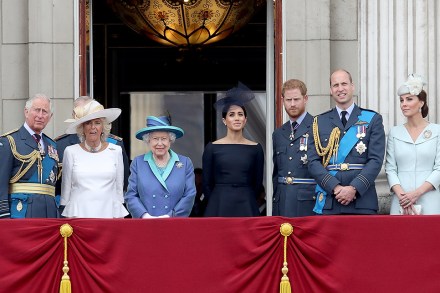
The antics of Harry and Meghan would not have gone down well in the ancient world, where the family and its future flourishing were an absolute priority. Harry’s proposal to marry Meghan would have been a matter of some negotiation – Roman orators argued that the paterfamilias (‘head of the family’, with absolute authority over it) should always be consulted on such matters, but ultimately it was wise to allow the son to have his way – but Meghan’s attitude would not have gone down well. The point is that the family was welcoming into its bosom a female outsider – a doubly dangerous moment – who had to learn the family’s ways.

Putin, Nicomedia and the case for peace

As Vladimir Putin’s war grinds on, how does one make the case for peace? Around ad 100, the ancient Greek orator Dio Chrysostom (‘golden-mouthed’), persuaded the citizens of Nicomedia in the Graeco-Roman province of Bithynia (N. Turkey) to make peace with their bitter local rival Nicaea. His central theme was praise of harmony. While discord splits marriages and households, and war brings death and destruction alike to young and old, harmony lies at the heart of ‘friendship, reconciliation and kinship’. It enables us, he said, to trade freely with Nicaea, with whom we exchange embassies, and enjoy marriage and ties of personal friendship.

The Romans knew the dangers of December overindulgence

Christmas is a time of feasting. So too was the Roman festival of Saturnalia, held in honour of the god Saturn, which took place between 17 and 23 December, when even a poor peasant might kill a pig fattened up for the occasion or, if not, hope to join the company of someone who had. Drinking and riot too were all part of the festivities. Such self-indulgence was fair – or fare – enough once a year, but throughout the year? That was what made Roman moralists reflect sadly on the corruption of that frugal and simple life which they judged to have been the key to Roman greatness.

Plato and the problem with Netflix’s Atlantis

Whatever Netflix touches will almost certainly turn into trash. It’s the only way they know how to make money. In its latest example, it takes the fictional story of a ‘lost city’ called Atlantis and turns it into a ‘documentary’, a crock of evidence-free eyewash about a world-saving intellectual master-race. It was Plato (d. 348 bc) who made up the story, and put it into in the mouth of an old man, who heard it aged ten from his grandfather, who heard it from his great grandfather’s contemporary Solon (c. 590 bc), who heard it from Egyptian priests who were talking of a period 9,000 years earlier. Might that not drop a hint of sorts?

The Roman roots of ‘colony’

From our US edition

The word “colony” meets with a sharp intake of breath these days, but “province” raises no eyebrows. How very odd. The ancient Greeks invented the western notion of the colony. But “colony” is the term the Romans applied to it and is of Latin derivation, from colo, “I cultivate, inhabit” and so colonia. The ancient Greek term was apoikia, literally “a home apart, away”, or perhaps a “home from home.” Greeks established these apoikiai widely around the Mediterranean, mainly from the 8th to 6th centuries BC, clustering along the coasts of Turkey, northern Greece, all around the Black Sea, southern Italy, the eastern Adriatic, Sicily, parts of southern France and Spain, and Cyrene, as Plato said, “like frogs around a pond.

colony

What Gary Lineker could learn from Herodotus

Gary Lineker has unfolded his thoughts on the World Cup in Qatar (Romans called them Catharrei). ‘It’s a delicate balance between “sports-washing” and trying to make change,’ he intoned. Actually, the issue is quite different. Let Herodotus (5th C bc), the first western historian and a man of inexhaustible curiosity and vitality, put you right. Herodotus’ aim was to discover the reason for the enmity between Greeks and Persians that led to the Persian Wars (491-479 bc). Researching Persia’s rise to power took him around the Greek East, Persia, Egypt, Africa and South Russia, and the different cultures he came across filled him with fascination and wonder.

The Greeks’ curiosity extended far beyond the cerebral

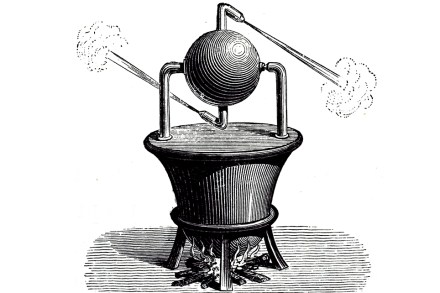
These days technology rules the roost and robots take questions in the House of Lords. In the West at least, the Greeks (as ever) got there first. Like the Romans, they were fascinated by hydraulics, springs, pistons, gears, sprockets, pulley-chains – and experimented with them to produce a whole range of lifting, digging, and propelling devices, especially for military purposes. A breakthrough happened when some Ancient Greeks, observing that the earth and heavens revolved in predictable circles, mimicked them in hand-cranked, bronze mechanisms consisting of complex, linked cogwheels to replicate and predict that movement – the first analogue computers.  The single recovered example is the Antikythera machine (2nd century bc), named after the island off which it was found.

In defence of Alexander the Great

The charity Classics for All staged its annual moot in the Supreme Court on the question of Alexander the Great: hero or war criminal? (Search for ‘Classics for All Moot Trial’.) The prosecution drew masterfully on the Nuremberg trials (1945-6) for war crimes and crimes against humanity to condemn him; the defence thought this anachronistic and that Alexander’s reputation as a hero could be justified by Homer’s Iliad and many other examples of heroism in ancient eyes. The jury found for the defence. The case goes to the heart of the debate about colonialism, imperialism and slavery and raises the question: ‘Through whose eyes are you making your judgments – ancient or modern?’ The two positions cannot be reconciled. The ancient case, at its most basic, goes as follows.

Justice for Boris, ancient-style

Did Boris Johnson lie to the House about partygate? The Privileges Committee decided to investigate, but refused to take Mr Johnson’s ‘intention’ into account. However, Lord Pannick QC (now KC) has since claimed that ignoring ‘intention’ would be ‘unlawful’ in determining whether there had been a violation. The Committee disagrees. Could the ancients help? Argument about the nature of law and justice has ever been at the heart of western thinking. Some early Greek philosophers maintained that only a form of metaphysical ‘justice’ kept a chaotic universe, riven with competing forces, stable. When Socrates (c. 470-399 bc) shifted the emphasis towards the purpose of existence, debates about the meaning of human justice intensified.

The privations of Diogenes

Nine exceedingly passive ‘activists’ glued themselves to the floor of a Volkswagen factory in Germany and complained about being humiliated, left overnight in the cold and the dark and without ‘facilities’. Should they not have rejoiced at such deprivations to which the whole world ought, in their view, to accustom itself if it is to be saved? The ancient cynics could teach these narcissists a thing or two. ‘Cynicism’ derives from the ancient Greek kuôn, ‘dog’, the epitome of shamelessness. Diogenes (c. 410-320 bc) agreed, admitting that he lived in accordance with nature rather than custom and arguing that human conventions – marriage, family, politics, reputation, wealth, power, etc – stifled one’s true humanity.

Liz Truss and the art of rhetoric

Liz Truss was spot-on in arguing that the only way in which a state can flourish is by combining low taxes with economic growth. But she failed to persuade her audience that she knew how this could be achieved. If only Dr Kwarteng, a classicist, had drawn her attention to Aristotle’s Art of Rhetoric (4th century bc), the first full analysis of the means of persuasion, the day and her career would have been saved. First, Aristotle defined two general types of persuasive proof. One he called ‘artistic’, because it depended upon human ingenuity, the other ‘non-artistic’, because it derived from pre-existing evidence, e.g. witness statements, written contracts, etc.

How would the Romans have defined Meghan Markle?

Meghan Markle has been urging women to define themselves as they see fit, with ‘your full, complete, whole-layered, sometimes weird, sometimes awesome but always best and true self… you’re so much greater than any archetype’. But that all depends on the self-definition you come up with. Hers (if she had the slightest self-awareness) would clearly involve her thirst for power, status and revenge. That thirst is something Romans well understood. They took the view that all human beings were personally accountable for their actions and fully responsible for the outcomes. But coming out on top, which they all desired, earned the ultimate goal of it all, public respect, only if it was seen to serve the interests of public order and the common good. Yes, Ms Markle?

A lesson for Rupa Huq from the ancient Greeks

The Labour MP Rupa Huq, of Pakistani heritage, has been suspended for suggesting that Kwasi Kwarteng, of Ghanaian heritage, was only superficially black and did not sound black on the radio. The ancients would have been baffled by her comment. They were fascinated by their world’s many different cultures, but colour held no significance for them. People’s beliefs, however, were a matter of great interest. The widely travelled Greek historian Herodotus (5th century bc) produced a fine example (among many others): while Greeks expressed utter revulsion at the Indian idea of eating their dead, an Indian tribe also did so at the idea of burning their dead. Conclusion: there was no right and wrong way to do it. It was simply a matter of custom.

Peta, Lysistrata and the comedy of a sex strike

The German branch of the ‘green’ organisation Peta (‘People for the ethical treatment of animals’) is demanding that, until men stop eating meat – apparently they cause 41 per cent more pollution than female carnivores – women must deny them sex. The same sanction had its origin, of course, in Aristophanes’s comedy Lysistrata (411 bc), staged during the war between Athens and Sparta (431-404 bc), just after Athens had suffered a disastrous defeat in a failed attempt on Sicily. Naturally, an organisation like Peta might well think the play was in earnest. Was not Lysistrata proposing a noble, female-instigated sex-strike, by the women of both sides, to stop a war?