Peter Hoskin

Brown’s misplaced hope

From our UK edition

In his insightful article on Brown and the forthcoming G20 summit, Francis Elliot writes a sentence which should terrify Labour supporters: "[Gordon Brown] has already decided that his only hope of a comeback in the polls lies with the economy." Sure, we all know that Team Brown has been putting a lot of hope in a green shoots strategy.  But, as we've pointed out on Coffee House before, there's little reason to believe that an economic recovery will deliver a significant boost for the Government.  If that's all that the PM has, then his situation is looking more hopeless than ever.

Brown’s fightback is hampered by the negative stories that hover over him

From our UK edition

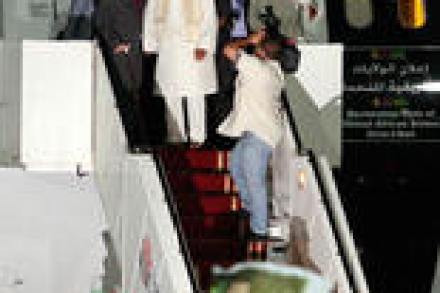
So Brown has said more about the al-Megrahi case, although he hasn't said anything particularly new.  Speaking at an event to mark the government's new "Backing Young Britain" project, the PM claimed that, "There was no conspiracy, no cover up, no double-dealing, no deal on oil, no attempt to instruct Scottish ministers, no private assurances to Colonel Gaddafi".  Which is exactly the message we've heard from a string of ministers, and which has been thrown into doubt by all those published letters.  No word yet on whether Brown agreed or disagreed with Megrahi's release, when it finally came. All this exemplifies the problem that Labour have had for months now, and will continue to have for months to come.

Political viewing

From our UK edition

If you feel like wearing a political anorak on this sunny bank holiday Monday, then here's a video history of the Conservative Party which the Tories have updated for the launch of the new 'History' section on their website. Alastair Cooke introduces the whole project on the Blue Blog, here.

The Libya plot thickens

From our UK edition

So the Sunday Times has got its hands on letters which suggest the al-Megrahi release was tied up with a BP-Libya oil deal, and overseen by the Government with an eye on "the overwhelming interests for the United Kingdom".  The ST article deserves quoting at some length: "Two letters dated five months apart show that [Jack] Straw initially intended to exclude Megrahi from a prisoner transfer agreement with Colonel Muammar Gadaffi, under which British and Libyan prisoners could serve out their sentences in their home country. In a letter dated July 26, 2007, Straw said he favoured an option to leave out Megrahi by stipulating that any prisoners convicted before a specified date would not be considered for transfer.

The Tories’ tax question

From our UK edition

So should the Tories announce tax rises ahead of the next election?  According to Andrew Grice in today's Independent, they're certainly thinking about it: "There is a growing recognition among shadow Cabinet ministers that, if they win power, spending cuts could only be half the picture, as they would also need significant tax rises to fill the black hole in the public finances. That is why Mr Cameron and George Osborne won't rule out tax increases. The big debate among the Tory high command now is whether to announce some tax increases before the general election. Mr Cameron is reluctant to unveil a detailed 'shadow Budget'.

Brown’s hypocrisy over Lockerbie?

From our UK edition

So far, Gordon Brown has refused to specifically comment on the Scottish Government's decision to release Abdelbaset Ali al-Megrahi to Libya.  Yes, we've heard that he was "angry and repulsed" by al-Megrahi's reception in Libya, and that our government had "no role" in the decision.  But there's been nothing on whether he actually agrees or disagrees with the Scottish government's actions. The official excuse has been that Brown has to respect the devolution settlement and can't comment on devolved matters.  But - what's this? - it seems he hasn't had a problem with commenting on another devolved matter before now: the level of health spending set by the Scottish Government.

Another essential entry in the NHS debate

From our UK edition

Last week, I urged CoffeeHousers to read Ian Birrell's heartrending article in the Independent on the struggles he faced getting his disabled daughter treated in the NHS, and on the need for health service reform.  Today, Birrell returns to the subject, highlighting some of the many supportive email responses he has received over the past seven days.  Aside from just how moving many of the cases are, it's striking that many of the voices agreeing with Birrell actually work in the NHS.  As he puts it: "When I last wrote about the NHS four years ago, I received a barrage of criticism from those working within it. Not this time; something significant has changed.

Baltimore: not like Midsomer Murders

From our UK edition

Whether you agree with Chris Grayling's comparison between "Broken Britain" and The Wire or not, it's hard not to smile at Baltimore's mayor, Sheila Dixon, evoking the UK's own bloodsoaked Midsomer Murders in response: "To present a television show as the real Baltimore is to perpetuate a fiction that dishonours our city. It is as pointless as boasting that Baltimore has a per capita homicide rate a fraction of that in the popular UK television show Midsomer Murders." Hat-tip: Liberal Conspiracy UPDATE: Oh, the embarrassment!  Guido reports that this whole quote (and the Mayor of Baltimore website behind it) was an eloborate hoax, by Alex Hilton of Recess Monkey, designed to catch out "churnalists".

Is Theresa May priming a second Freud Review?

From our UK edition

In some respects, Theresa May has delivered an effective speech on unemployment and the benefits system today.  It touches on all the tragic indicators - the 6 million people on out-of-work benefits, the high levels of youth worklessness, the shocking consequences of welfare ghettoes etc. - and re-states, in no uncertain terms, the Tories' commitment to welfare reform.  She even partially responds to those critics who thought she'd been drafted into the shadow welfare role to be "softer" on single mums than Labour, by instead attacking the state for encouraging lone parents "not to bother trying to work until their youngest child was sixteen".

Dan Hannan and Enoch Powell: make your own mind up

From our UK edition

Here's footage of Dan Hannan's month-old US interview in which he cites Enoch Powell as an influence, and which has received quite a bit of news attention today: To my mind, there's little more to add to this than the points made by Spectator's very own Alex Massie and those made in two excellent posts (here and here) by Guido.  To wit: Hannan has always been clear that he doesn't endorse Powell's views on immigration, but has instead been influenced by his views on the size, scope and role of the state.  Whatever you may think of those views, they are hardly controversial.  Indeed, as Guido points out (via Mark Reckons), Tony Blair himself praised Powell as "one of the great figures of 20th-century British politics". But, predictably, Mandelson & Co.

Exam result shock: Balls fails

From our UK edition

You know how it is.  You start reading an article by Ed Balls - in this case, in today's Guardian - and, before long, you've come across so many deceptions, half-truths and tribal slurs that you decide to fisk the whole thing.  So here is Balls's article, with my supplementary comments in bold: The first group of young people to have been entirely educated under Labour pick up their GCSE results today. No doubt this will provoke some commentators into even greater efforts to do down their achievements – claiming more young people succeeding must mean exams are getting easier. In the early years of David Cameron's leadership, the Tories didn't join in this annual "dumbing down" chorus.

The politics of Ted Kennedy’s death

From our UK edition

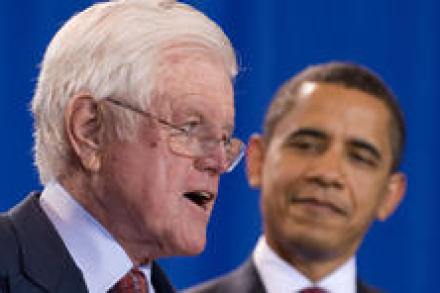
A noteworthy point by Danny Finkelstein, over at Comment Central: "One of LBJ's weapons, of course, was human sympathy. In the days after John Kennedy's death he sought the support of his colleagues to complete Kennedy's legacy. Could Obama now do the same after Ted Kennedy's passing? Health reform was Senator Kennedy's lifelong cause. Perhaps Obama will remind Democrats of this, seeking to rally round the Kennedy name as LBJ did. Don't be surprised if reform is now repackaged as the Kennedy Bill.

April 2007: when Gordon ignored the warnings

From our UK edition

Typically great stuff from the Standard's Paul Waugh, who has delved into how G7 finance ministers - including one Chancellor Brown - were warned about the dangers of US subprime loans back in April 2007.  The guys sounding the alarm, in a briefing to Brown et al, were the hedge-funders Jim Chanos and Paul Singer, and they were left distinctly unimpressed by the response they received.  Here's a key passage from Paul's post: "'We were completely and officially ignored,' said Chanos. When asked if anyone present had subsequently had apologised for failing to heed the warnings, Mr Chanos replied: 'Two people, but they shall go nameless - and unfortunately, nobody still in power today.' That means G Brown was definitely not one of those who apologised for not listening.

On August opinion polls…

From our UK edition

Do check out Mike Smithson's latest post over at Political Betting, in which he relays an email he received from Nick Sparrow of ICM.  Sparrow highlights the close fit between August ICM polls in the years before elections and the actual election results themselves: "August 1996 poll suggested that Labour were ahead by 12%. The result - Labour won by 13% August 2000 poll suggested that Labour were ahead by 10% The result - Labour won by 9% August 2004 poll suggested that Labour were ahead by 3% The result - Labour won by 3% August 2009 poll suggests that the Tories are ahead by 16% The result - ?????????" Of course, this isn't watertight: as Smithson points out, events could always intervene between now and the next election.

The language of political debate

From our UK edition

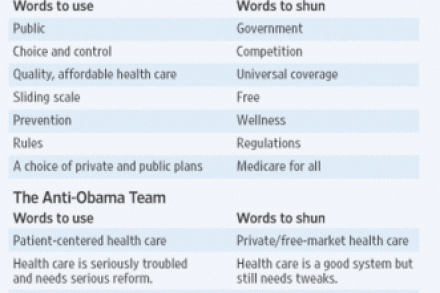
A great spot by Tim Montgomerie over at ConservativeHome, who highlights this Wall Street Journal graphic on the words that both sides of the US healthcare debate should be using to score a rhetorical advantage.  For instance, it suggests that the pro-Obama team should say "rules" rather than "regulations", while the President's opponents should attack the system for being "too profit-driven" and "too bureaucratic": As Tim says, words have power.

Man on wire

From our UK edition

It's a fairly quiet day in Westminster, so Chris Grayling's comparison between Britain and the gangland ghettos portrayed in The Wire is probably getting more attention than it would normally - after all, it's not like the Tories haven't majored on the "Broken Britain" theme before now.  But, even so, I think he may have erred in mentioning the acclaimed US TV series.  While superb, it is, don't forget, the show that the chattering classes love to chatter about.  So, now, much of the coverage is about the TV programme rather than the problems Grayling is highlighting.

Twilight Zone Tuesday: Brown to announce spending cuts

From our UK edition

Now this is a turn up.  According to the Independent, Gordon Brown is going to "issue a list of specific [spending] cuts" as part of his Autumn "fightback".  Here's how the strategy goes: "Initially, Mr Brown will seek to establish in voters' minds the key differences between Labour and the Tories – on policy, government intervention to limit the impact of the recession and preserving frontline services. Then he will acknowledge that the Government needs to go beyond the £35bn of efficiency savings it has already promised. The aim will be to show Labour is serious about reducing the deficit, which is set to rocket to £175bn in the current financial year and to £173bn next year.

Confidence returns

From our UK edition

One of the most significant news stories of the day comes courtesy of the Institute of Chartered Accountants: "Confidence among business professionals has surged, suggesting the recession is at an end, a survey has said. The Institute of Chartered Accountants' index of business confidence rose to 4.8 at the end of June, from -28.2 in March, the biggest rise for two years." Economically speaking, this is encouraging stuff – it's the view from the frontline of the real economy, after all.  And these types of surveys always tend to have a self-fulfilling quality, as more confident companies adopt the measures – spending, hiring etc. – which are likely to drive us out of recession.