Peter Hoskin

Lansley refines his approach on NHS spending

From our UK edition

Sit down, take a deep breath and steady yourself: we've had a change of approach from the Tories on NHS spending.  No, they're not promising cuts.  But they are promising, for the first time, a much slower rate of real-terms spending increases.  Andrew Lansley has said that he can only guarantee "small increases" in the health budget, adding a simple point that we haven't heard too many times from his corner: “We have trebled the amount taxpayers spend on the NHS but we have not seen a real return ... We are determined to turn this situation around. The NHS, just like any other organisation in this recession, needs to focus on getting more for less.
Checking up on the UK’s debt crisis

From our UK edition

Now this is engrossing in a grim kind of way.  It's the Economist's brand new Global Debt Comparison feature, and charts public debt for the entire world ($39.1 trillion dollars, at the moment), while also providing details for individual countries.  If you want a sense of the debt crisis facing this country, then just click on the info for the UK across a few years.  In 2009, it's bad enough: the Economist has us in the highest debt group, with public debt at 79.6 percent of GDP. For what it's worth, that's slightly better ratio than, say, France (83.7 percent) or Germany (87.9 percent).  But by 2011, our public debt-GDP ratio has shot up to 112.5 percent, outstripping France (102.3 percent) and almost equal with Germany (115.8 percent).

On second thoughts, maybe Labour should keep Brown in place…

From our UK edition

Over at his essential blog, Benedict Brogan says that Dave 'n' George deserve some praise for Moody's decision to retain the UK's AAA credit-rating.  His thinking: that because Messrs Cameron and Osborne have been going on about debt and the need to cut spending, investors - anticipating a Tory government - are more confident about Things to Come. A similar point is made by Edmund Conway in a comment piece for the Telegraph today: "Part of the reason the debt markets have remained relatively sanguine in the face of a staggering collapse in tax revenues and increase in the deficit is that they are assuming a Conservative victory: when the prospect of an Alan Johnson leadership challenge briefly made a hung parliament more likely, they panicked.

Will Brown accept the TV debate challenge, after all?

From our UK edition

Kevin Maguire, who is keyed into Team Brown more than most journalists, writes that it's looking more and more likely the PM will participate in a televised party leader debate: "Talking to people in and around Downing Street I reckon the odds are shortening (if you can get odds) on Brown agreeing to a TV election debate. It's a no-brainer for a Prime Minister well behind in the polls. There's a touch of the stunt about the Sky News empty chair threat but the channel deserves credit for helping focus minds. Brown's view, I'm told, is now isn't the moment to decide or announce what he'll do in the campaign and, from where he sits, he's probably right. To say Yes would risk triggering another dose of election fever while to say No would look chicken.

Mission accomplished for Cameron’s cost-cutting speech

From our UK edition

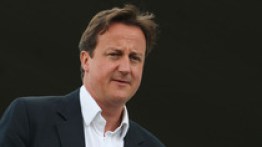
So what has David Cameron achieved with his speech on "cutting the cost of politics" yesterday?  Quite a lot, judging by this morning's papers.  The coverage it receives ranges from wholehearted scepticism in the Guardian to front-page celebration in the Daily Mail, but - more importantly, from a Tory perspective - it steals the thunder from Alistair Darling's public spending speech.  The Chancellor's innuendo about "nasty Tory cuts" is much less resonant when juxtaposed against the Tory leader calling for cuts in MPs' perks, whether those cuts are regarded as populist or not. What's more, Cameron has drawn quotes from Labour and the Lib Dems that may look a little silly in time.

One giant leap for David Cameron?

From our UK edition

It's a busy day here at Spectator Towers, so we'll have more on Cameron's speech on "cutting the cost of politics" later.  For now, here's Sky's edited footage, and you can find a great summary over at ConservativeHome.

Will Polly Toynbee have to eat a rack of hats?

From our UK edition

In today's Guardian, Polly Toynbee sets out a shopping list of policies by which Labour could "set national politics alight"; everything from personal carbon trading to bringing back media ownership rules.  But she adds that she'll "happily eat a rack of hats if any of this happens". In which case, part of me thinks that Toynbee may have to start investing in some hats and some ketchup, as I wouldn't be massively surprised if Labour did put its name to one of her proposals.  Namely, this one: "Spread the pain of the recession: make the coming 50% top tax rate start at £100,000, as those in good jobs are doing well with lower prices and mortgages." Why so?

Sir George Young to replace Alan Duncan

From our UK edition

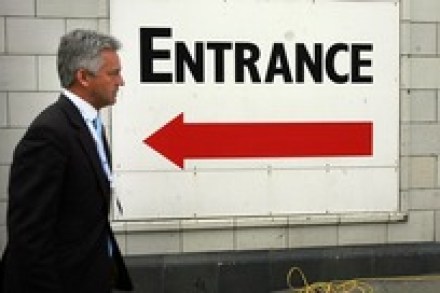
After Alan Duncan's demotion, it's emerged that Sir George Young is to fill the position of shadow leader of the Commons.  It's a canny move by David Cameron: Young is the chairman of the Commons' Standards and Privileges Committee, and was a popular choice among Tories to replace Michael Martin as Speaker.  As Paul Waugh says, Young did get the Telegraph Treatment, but you imagine he'll be seen as a much cleaner pair of hands than Duncan, especially in the wake of the infamous "rations" video.  Now, how long before someone points out that Young is another Old Etonian...

Labour’s cutting confusion

From our UK edition

Yesterday, the Guardian told us that the health and overseas aid budgets wouldn't be spared from Labour cuts.  But, today, Steve Richards suggests that may not be the case: "The preliminary manoeuvring begins today when the Chancellor delivers a lecture on the principles that will guide the Government's approach, in effect arguing that while the Tories 'wallow' in the prospect of spending cuts he will take a more expedient approach, in terms of timing, pace, depth and in his view that the Government can still play a creative role as an enabler in the delivery of public services. But even this early message is hazy.

Alan Duncan demoted from shadow cabinet

From our UK edition

So was the "rations" video a gaffe too far?  The news has just come in that Alan Duncan has been demoted from the shadow cabinet, going from shadow leader of the Commons to shadow prisons minister.  Having spoken to various Tory sources, I understand that the decision was made in an "amicable" meeting between Duncan and Cameron – where the former acknowledged he has become a "lightning conductor" for public anger over expenses – and that, apparently, Duncan is "relaxed and relieved" to be working under Dominic Grieve. Some people might be surprised at the timing: many expected Cameron to hold off until next year, so as not to rile any backbenchers who broadly agreed with Duncan on expenses.

Are the Tories actually doing ok in the North?

From our UK edition

Over at the indispensable UK Polling Report, Anthony Wells runs the rule over the latest Telegraph/YouGov poll: "The Telegraph today has looked at their Yougov poll and decided it shows the Conservatives doing badly in the North. For what it’s worth, it doesn’t even do that - it shows the Conservatives 2 points behind in the North, an aggregate of government regions in which they trailed the Labour party by 19 points in 2005 - so it actually shows a swing to the Conservatives of 8.5 points in the North, marginally better than this poll suggests they are doing in the country as a whole. That, however, is beside the point, since even if the Telegraph had correctly interpreted what the figure meant, it would still be meaningless.

Meekly does it

From our UK edition

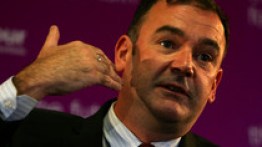
You wait days to see the word "meekly" in print, and then it crops up twice at once.  Today's Sun reports on a Jon Cruddas speech tomorrow, in which he claims that: "[Labour] seem to be meekly accepting defeat, unable to show what we believe in... ...We have only months to get this right, otherwise we will go down to catastrophic defeat." While Jackie Ashley develops the same theme in a piece for the Guardian, highlighting the same Cruddas quote along the way. The Cruddas intervention is significant mainly because of its timing.  The MP for Dagenham has clarified his views on Labour's plight before now (including in the latest New Statesman), but with only a few weeks to go until the Labour party conference, this is bound to ruffle a few feathers.

Labour may outflank the Tories on health and overseas aid spending – but will struggle to do so on reform

From our UK edition

If you want some insights into where Labour are going next, then do read this story in today's Guardian.  The main points are that Brown and Darling have agreed not to spare the health and international development budgets from cuts; that Labour's public spending cuts will be set out over the next couple of months, beginning with a couple of speeches this week; and that Labour wants to frame its cuts as a return to the public service reform agenda.  As one "cabinet source" tells the paper: "The new economic context is a challenge for us, but New Labour in its original form never saw spending more money as the only solution. We need to revisit the original New Labour approach of public service reform.

Another smear plot story to damage Gordon Brown

From our UK edition

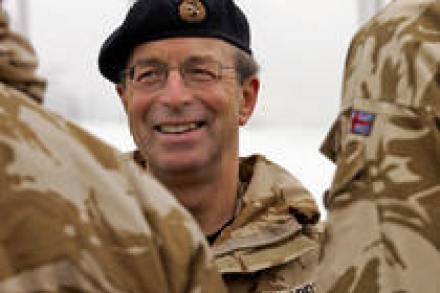
After the abortive plot to smear Richard Dannatt, you'd have thought Labour would have learnt their lesson: that it's often politically foolish, not to mention indecent, to pick petty fights with the military top brass.  But - what's this? - today's Mail on Sunday reports that certain Labour figures may have been priming another smear campaign against Dannatt's successor, General Sir David Richards: "The threat to target the General, who took up his new job just nine days ago, was one of the real reasons that Labour MP Eric Joyce resigned as an aide to Defence Secretary Bob Ainsworth last week.

Question time for the BNP

From our UK edition

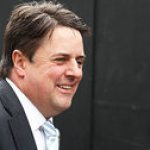
The Beeb's admission that they have invited Nick Griffin onto a future episode of Question Time is causing quite a stir.  Two main questions are emerging from it all.  First, should the BBC give a platform to the BNP?  And, second, should other politicians appear on a show with BNP figures?  The Tories have already said they're "very happy" to put forward a shadow cabinet member to debate Griffin, while Labour are wrestling with their "custom" not to share a platform with the BNP. My take on each question is that, first, the Beeb aren't wrong to give the BNP a platform.  Personally, I find the party's views and its politics repellent, but the fact remains that British voters have given them two seats in the European Parliament.

Another Darling vs Brown battle

From our UK edition

Well done, Alistair.  After taking on Brown over the crude "Labour investment vs Tory cuts" dividing line - and winning - it sounds as though the Chancellor is challenging another of the PM's lies: that the government's "stimulus" measures have "saved 500,000 jobs" during the recession.  According to the Mail on Sunday, Darling has told the PM to stop repeating this claim because it can't be substantiated, and he's resisting having it put in the Budget, too. As soon as the government started mentioning "500,000 jobs", Westminster's lie detectors started sounding; especially as it gradually morphed from "up to 500,000" to "at least 500,000".

Darling lays down the spending gauntlet – but will it be flung back in his face?

From our UK edition

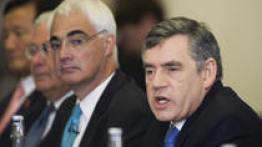
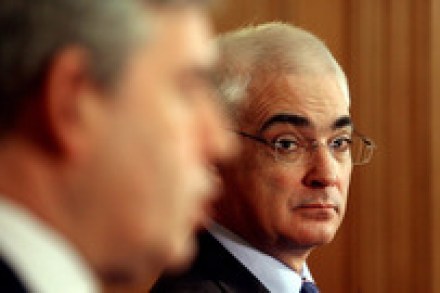
So here it is.  After rumblings that Brown is prepared to set out spending cuts - rather than hiding them away in he small print of the Budget - Alastair Darling confirms the new strategy in an interview with the Times.  He doesn't actually use the word "cuts", but it amounts to that: "'As there is less uncertainty you can decide what your priorities are,' he said. 'This doesn’t mean you are going into some sort of Dark Age but we will have to decide, given what’s happened to the economy, how much we think we can afford to spend on services, how much we should be devoting to making sure we recover our fiscal position. That’s a judgment that I’m going to have to make at the Pre-Budget Report in the autumn.' ...

Obama and Cameron: who thought what about whom?<br />

From our UK edition

Remember that New Statesman article about Obama calling Cameron a "lightweight"?  Well, the Journalist Closest to Obama, Richard Wolffe, has a different take.  Here's what he told the Today programme this morning, courtesy of the ever-alert Andrew Sparrow: "He had a strong impression, a strong reaction, to both Cameron and Brown. It was right at the end of his foreign trip. And he was really taken with Cameron. He and his aides thought that he had energy and verve, a dynamism that suggested he was a good candidate – remember this was a candidate at the time, not a president. And there was bonding that took place which you might not expect of two people at the opposite ends of the political spectrum.

Discontent is in the air

From our UK edition

This morning's political firecracker comes courtesy of Martin Kettle in the Guardian, who claims that a group of Labour figures are moving to oust Brown in October: "An active network of MPs and peers now exists, involving some names you might expect, but also others – including big ones – whose participation would surprise you. This group, like probably the majority of Labour MPs, accepts that Brown is a liability to his party's election prospects. Unlike the majority, though, they claim to think something can be done about it. They believe the window of opportunity, if it comes, will be in the two or three weeks after October 12. If Brown can be pushed, then this is the time. They say they are ready to try.

Getting to grips with spending

From our UK edition

This news in today's FT makes you wonder whether we might see some kind of spending review in the next few months, after all: "A massive data collection exercise across many hundreds of public bodies has been ordered by the Treasury to determine expenditure on IT, human resources, finance and procurement, in a bid to wring better value for taxpayers out of the billions of pounds spent. ... All government departments, agencies and hundreds of other public bodies that employ more than 250 people are being asked to provide the data by the end of next month for publication ahead of the autumn pre-Budget report. In time, the data are to be collected each year and will cover the entire public sector.