Peter Hoskin
Monday
Brown told to repay £12,415.10 of expenses
Here's the statement from the office of the PM, courtesy of Sky's Cheryl Smith: Mr Brown received a letter from Sir Thomas Legg this afternoon. Sir Thomas Legg has issued his provisional conclusions to MPs, asking for further information where necessary before concluding in December. Mr Brown has always supported this process and will cooperate fully and make the necessary repayment. Mr Brown's expenses have always been cleared by the House Authorities as entirely consistent with the rules. He has not claimed the maximum level of expenses. The Review says its findings "carry no implication about the conduct or motives of the MPs concerned".
The costs that come before savings
It's a simple fact of politics that many measures which would save money in the medium-to-long term incur costs in the short term. Normally, this point is brought up in relation to public service reform - e.g. Gove's Swedish Schools agenda. But today's FT highlights a similar effect in relation to public sector redundancies. The important fact is that "civil servants aged under 50 can receive up to three years’ pay if made compulsorily redundant, and those who joined before 1987 more than six years’ pay". This means that there are actually massive upfront cash costs to cutting jobs across the public sector, whatever the potential savings further down the line. To their credit, the government are currently trying to cap these redundancy payments.

Is this the death of another anti-Brown plot?
An eagle-eyed spot by Hopi Sen, who has posted on Barry Sheerman's comments in the Huddersfield Examiner today. If you remember, Sheerman was mooted as a key component in an anti-Brown plot, whereby he'd stand as chair of the Parliamentary Labour Party on a Get Gordon Out platform. Votes for Sheerman, it was thought, would be votes against Brown - and increase the pressure on the PM to stand down. But in the Huddersfield Examiner, Sheerman suggests that, while he will stand for the PLP position, he won't do so as part of a coup: "...Mr Sheerman denied this was part of a move to topple Gordon Brown. He said “If colleagues ask me to stand I will consider it.
Selling assets at rock bottom prices – sound familiar?
So what to make of Gordon Brown's plan to sell off an expected £16bn-worth of assets? Like Charlie Elphicke over at CentreRight, I have my qualms. As he puts it, Brown has form when it comes to selling national assets at rock-bottom prices. And, in the immediate aftermath of the credit crunch and a recession, the prices he gets for our stake in Urenco, say, or the Dartford crossing, are likely to be rock bottom. Besides, there's an unmistakeable whiff of political opportunism about this plan. You can imagine the posturing now: "We're selling off assets we can spare to protect jobs and frontline services, unlike those dastardly Tories..." yada, yada, yada.
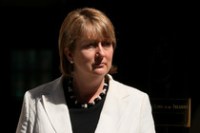
Smith to apologise to Commons
Sky report that the Commons Standards and Privileges Committee have judged that Jacqui Smith was "clearly" wrong to claim that her sister's home was her main residence. Smith has been ordered to apologise to the Commons, which she's expected to do later today. No further action will be taken. Throw in the news about Damian Green's "not proportionate" arrest, and the hubbub over Sir Thomas Legg's letters, and you feel that today will do little to restore the public's faith in the political class...
Sunday
Johnson: Brown will fight the next election
It's worth highlighting Alan Johnson's comments on Marr this morning: "Mr Johnson said there was 'no possibility whatsoever' of Gordon Brown standing down as Labour leader due to problems with his eyesight. 'He'll fight the election,' the Home Secretary said. 'He is fit and well and able and determined'." You imagine this message of support will be better-received on Downing St than Johnson's recent claim that he is "not willing to rule [himself] out" of any future leadership battle.
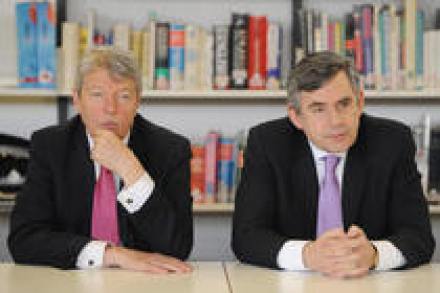
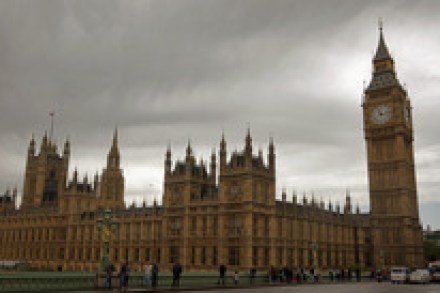
They’ll have to start thinking about expenses again
So expenses are back - and in a fairly big way. Not that they ever really went away, of course. But you'd be forgiven for thinking that the parties had pretty much forgotten about them during conference season, so little was said about the issue. But today it's back on the front pages and, you suspect, back to the top of MPs' priority lists. According to the Sunday Telegraph, "more than half" of the Commons will be either told to repay dubious claims, or provide extra information about those claims, during the next part of Sir Thomas Legg's investigation into expenses this week. Gordon Brown is said to be among the former group.
Thursday
A pledge which Cameron looks set to break
In its preview of Cameron's speech, the Sun highlights the Tory leader saying that "...in a Conservative Britain, if you put in the effort to bring in a wage, you will be better off." The implicit reference, here, is to Labour's combined tax and benefit system, which frequently acts to disincentivise extra work. All too often, effort isn't met by reward - so what's the point? As the Centre for Social Justice's recent Dynamic Britain report showed, this effect impinges, above all, on the least well-off in society - and with tragic consequences. It's all to do with effective marginal tax rates, which measure what proportion of a small rise in earnings would be lost to both tax and the withdrawal of benefits.
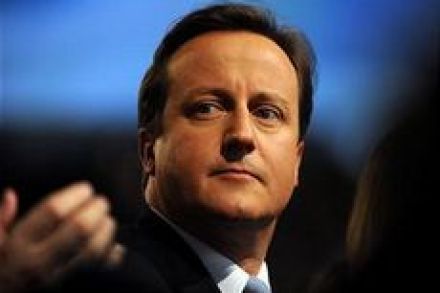

Here lies the General Well-being agenda
Remember David Cameron's General Well-being agenda? You may not. It was pretty nebulous stuff, which he deployed during the decontamination overdrive early in his leadership. We haven't heard much about it since - probably as Cameron & Co. realised it could fuel the worst Notting Hill caricatures of them, at a time when the economy was going south and thousands of people are losing their jobs. Which is why it was striking to see "General Well-being" exumed for this Manchester conference. Yes, the press centre cafe is called the GWB cafe (picture below). Kinda tells you all you need to know about that particular Cameroonian non-starter. P.S.
Contrasting Cameron and Osborne
Judging by the Independent's preview, as well as the quotes that ConHome have managed to get their hands on, Cameron is going to do Hope 'n' Change in his speech today. Yes, he talks about a "steep climb ahead," but he adds that "the view from the summit will be worth it." This sounds like the growth and recovery element which many thought was lacking from the Osborne speech. As it happens, there was actually a growth section in a near-to-final draft of the Shadow Chancellor's address, but it was taken out over concerns about timing. I suspect the double act - Osborne selling pain, with Cameron selling hope - will work out quite nicely for the Tories, and will become their template in the run-up to the election.
Wednesday
Pre-Freudian slip
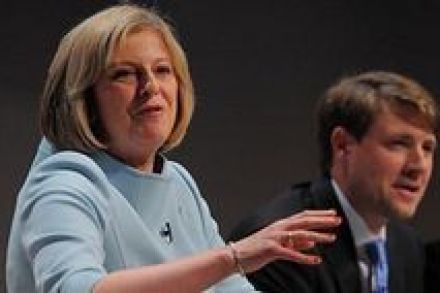
Theresa May is chairing a discussion with a set of Conservative PPCs on 'job clubs', as part of this afternoon's focus on welfare reform. She kicks off asking one of the Tory PPCs on the panel, Maggie Throup, to talk about job clubs in her area: "So, Maggie, tell us about...". Problem is, May addresses her remarks at the wrong PPC, Suzy Davis. Mistake realised, she wheels round and puts the same question to the actual Maggie Throup. Not a good start. It's picked up since. The welfare adviser David Freud, who jumped ship from Labour to the Tories, is now on stage. And he gets a cheer when he says "I've always been a Conservative.". This is a significant time for Freud.
Rolling in it
Well, the Tories will be pleased. According to Channel 4's Gary Gibbon, they've made a tidy £1.5 million profit from their party conference. When you consider how much must have been spent in Manchester - it's a very slick operation with banners, screens and corporate hospitalities everywhere - this news is yet another sign (were one needed) of the Tories' momentum.
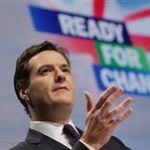
Expect more “fine print” on spending soon
Sifting through this morning's papers, you'd say that it's mission accomplished for George Osborne's speech yesterday. The realigned Sun demonstrates how much it has got behind the Tories, by giving the Shadow Chancellor an absolutely glowing report ("the Shadow Chancellor came of age"). He also receives good-to-medium notices in the Times, the FT and the Independent, while the Guardian is more mixed, but hardly damning. In the Mail, Quentin Letts writes that "Yesterday the Boy became Boss George". And so on and so on. You can see where they're all coming from. As I wrote yesterday, there's much that was impressive in Osborne's speech. But there were also some weaknesses on the policy side of things.
Tuesday
Cameron & Osborne getting into a muddle over 50p tax
When Fraser interviewed David Cameron last week, the Tory leader suggested that the 50p tax rate would be easy to drop, if necessary. If it doesn't raise any money, then - voilà! - it's gone. In fact, here are the Tory leader's words: "If you're right that it raises no revenue, even in the short term then clearly it would be painless and advantageous to get rid of it at an early stage." But George Osborne's policy package today contains this little nugget, taken from the press notes: "The new 50p tax rate and associated changes to the taxation of higher earners should be kept in place for at least as long as the public sector pay freeze, in order to ensure that the richest in our society pay their fair share of the burden of tackling Labour's debt crisis.
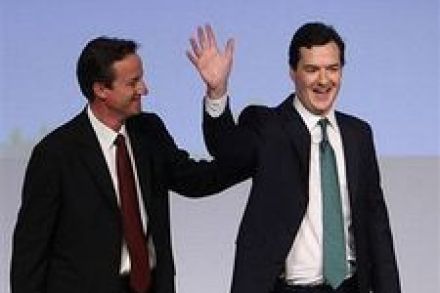
Nothing exceptional, but a job well done by Osborne
They stopped letting people into the conference hall for George Osborne's speech long before the Shadow Chancellor took to the platform - it was packed, not even standing room. There was certainly an anticipatory buzz among Tory supporters, particularly after some of the policy announcements trailed in the papers this morning. One delegate assured me that "this is the speech when George will convince the nation that he's the man to deal with Brown's mess." Everyone seemed pretty breathless. So did he pull it off? Well, my immediate response is "yes and no". Probably more "yes" than "no". There was much that was impressive in the speech. Osborne touched on all the right themes: debt, reform, compassionate conservatism, etc.
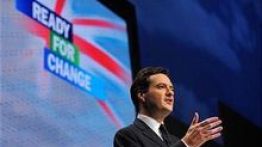
How are the Tories responding to Labour’s pay freeze?
So what do the Tories make of Alistair Darling's limelight-grabbing decision to freeze public sector pay? The ones I've spoken to seem perfectly relaxed with it. A little bit annoyed perhaps: wouldn't you be, if your opponents appeared to cynically delay an announcement that they could have made during their own party conference last week? But they're confident that the public will see through the stunt, and that it will actually reflect badly on Brown & Co. On top of that, the Tories are sure that Labour will make little headway in a news agenda that will be dominated by Tory announcements for the next few days. It's hard to disagree with them.

Will the civil service block Tory Euroscepticism?
Of all the countless leaflets, pamphlets and circulars being handed out in Manchester, one of the most interesting is a glossy collection of essays entitled Cameron's Britain. It has been put together by the folk at Portland PR - who recently hosted that "war game" which James reported back on - and has entries on everything from the NHS to tackling global poverty. As it doesn't seem to be online, I figured it's worth quoting from one of the most insightful essays of the bunch: that by Steve Morris, a former Downing St adviser, on the Whitehall machinery that the next government will have to get to grips with. Norris makes some important points - e.g.
Monday
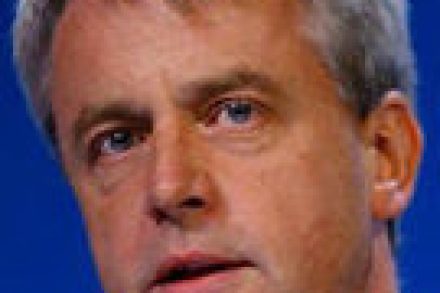
Lansley keeps the spending taps on
Struggles with the conference internet connection prevented me from posting on it at the time, but it's still worth flagging up Andrew Lansley's big speech on the NHS today. Why so? Well, because it exemplifies how the Tory message on health undermines their general rhetoric on public spending. At the heart of the speech was a pledge that I'm sure many CoffeeHousers would cheer: to slash the money spent on NHS bureacrats by a third, from £4.5 billion to £3 billion. Good stuff, you might think. That's what governments should be doing in there difficult times. And you'd be right. But the rest of Lansley's speech was at odds with this basic position. There were, of course, the familiar reminders that the Tories would increase health spending year-on-year.
The need to go further and faster on Welfare reform
I’m on my way to the home city of the best football club in the world (and one of the worst) shortly. In the meantime, it’s worth flagging up this morning’s reports on Tory welfare policy, which we’ll be hearing more about later today. Basically, the Tories are going to re-emphasise that they’d put incapacity benefit claimants through medical tests, to check their ability to work, and that the more effective private-sector wing of the welfare service would be massively expanded. While this is, in essence, an extension of existing government welfare policy, it’s certainly to be welcomed.