Peter Hoskin

IFS: there could be deeper cuts to come

An unfamiliar mood before the Institute for Fiscal Studies' Budget briefing today: many of the gathered journalists, economists and policymakers had decided that, for once, this wouldn't be an exercise in spotting the Chancellor's deceptions, because, quite simply, there aren't many. And they could well be right. In his introductory remarks, Robert Chote, the director of the IFS, said that "the government is certainly to be congratulated for the transparency with which it presented [yesterday's policy announcements]." What we've heard, so far, backs up that tribute.

Osborne winning the Budget PR battle – but VAT remains a thorny issue

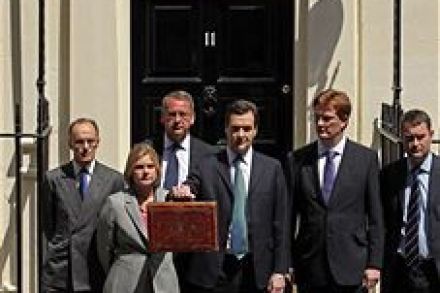
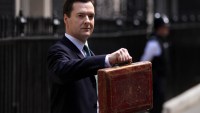
Well, that's gone as well as can be expected for the coalition.  Most of today's newspaper coverage highlights the severity of George Osborne's Budget – but, crucially, it adds that the Chancellor had few other options.  The Telegraph calls it a "brave Budget".  The Times says that it delivers "the best of fiscal conservatism combined with no small measure of social justice".  And even the FT – no friend of the Tories in recent years – suggests that Osborne might be "remembered for doing Britain a great service." The sourest notes chime around the government's welfare cuts and the hike in VAT.  Already, it's clear that the latter will be particularly difficult for the Tories and embarrassing for the Lib Dems.

What Harriet Harman won’t tell you

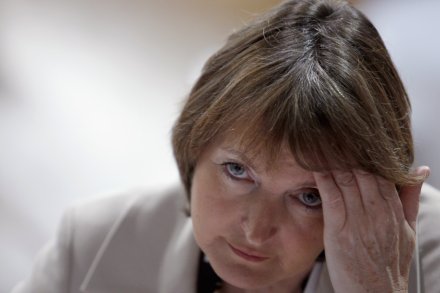
By her usual standards, Harriet Harman was quite effective in her response to George Osborne's Budget earlier.  She was clear, direct and had a few gags at Vince Cable's expense.  And she also benefitted from what, on the surface, was a strong central attack: the Office for Budget Responsibility, she said, has downgraded its jobs forecasts on the back of the Budget.  And so, she followed, this is a Budget which destroys jobs. But there were a few things that Harman wasn't letting on.  First, as Jim Pickard points out at the FT, the OBR forecasts haven't shifted by all that much from their previous incarnation.  And, second, they are still more optmistic than most independent forecasts (conveniently collected by the Treasury here).

Unspectacular, but quite effective

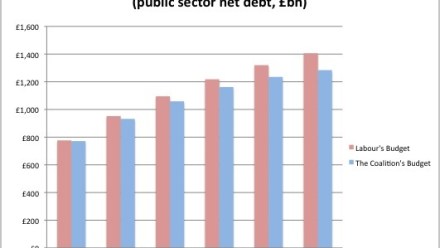
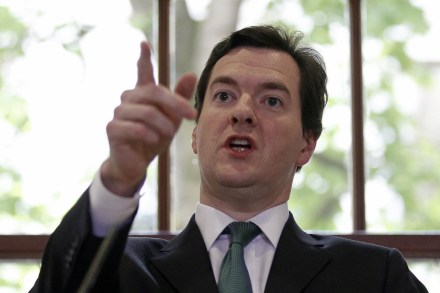
Well, that was excitingly unexciting.  There was little in George Osborne's Budget that we didn't expect, either in terms of rhetoric or policy.  But it still felt new and different nonetheless.  Here we had a Chancellor setting out exactly how much spending he will cut, and putting plenty of emphasis on both our deficit and debt burdens.  It drew a stark contrast with the Brown years, and was a solidly understated performance in itself. There will be plenty of attention paid to the hike in VAT, and rightly so.  But there were some macroeconomic forecasts which were just as eyecatching.

Budget 2010 – live blog

1343, PH: Harman has sat down now, so we'll draw the live blog to a close.  I'll write a summary post shortly. 1342, FN: I wish I could trash Harman's response, but it's actually quite good.  Many a Tory would be secretly cheering her trashing of the LibDems. "The LibDems denounced early cuts, now they're backing them - how could they support everything they fought against, how could they let down everyone who voted for them?" Again, a fair point. "The LibDems used to stand up for people's jobs, now they only stand up for their own." Her main point - that forecasts for unemployment have risen - is a fairly strong one if true. Osborne did indeed shy away from admitting to VAT rise plans in the election campaign.

Osborne makes the “progressive” case

During the Brown years it was "stability," but it looks as though the watchword for Chancellor Osborne's first Budget will be "progressive".  This is the word that's being bandied about behind-the-scenes, and the coalition seems confident that it has the policies to match the rhetoric.  As the Guardian reports today, it's likely that the personal income tax allowance will be raised by £1,000 or so, to help shield the least well-off from tax rises elsewhere.  And the paper quotes a Tory aide saying that the richest will pay more, "both in absolute terms and as a percentage of their income." Whether he drops the p-word or not, the arguments behind it are comfortable territory for Osborne.

Osborne looks to the long-term

There are plenty of details for Budget-spotters to look out for tomorrow, but among the most important is just how far Osborne reaches into the future.  The current expectation in Westminster is that he will offer quite a few glimpses into the long-term.  A possible commitment to reduce the main rate of corporation tax to 20 percent over the next five years, perhaps.  Or similar provisions for making the first £10,000 of income tax-free. There are, of course, economic and political motives behind this.

The two sides of the VAT question

There are two main aspects to the VAT issue: one distasteful, the other less so.  The distasteful one is the issue of whether the government has a mandate for hiking VAT in tomorrow's Budget.  Of course, government is often the art of the unexpected, so we shouldn't be surprised to see measures implemented that weren't explicitly raised in the election campaign – particularly when it comes to tax rises.  But all the claims that there were "no plans" to raise VAT do jar against reports like: "Osborne insisted the budget measures would be spread fairly across society, suggesting capital gains tax will rise and promising a new banking levy.

Who is prepared to cut, and who isn’t?

One of the leitmotifs of this Parliament  – and something which, by many inside accounts, is helping the coalition immensely – is the willingness of the civil service to wield the axe within their own departments.  And now, courtesy of Reform and the Institute of Chartered Accountants, a new survey suggests that this mentality may stretch beyond Whitehall.  It quizzes public sector "finance decision makers," and the headline finding is that: "82 per cent of respondents think further savings can be made within their organisation in the next year without affecting the current level of service they provide.

Nick Clegg’s Big Week

With the cuts comes the candy: the sweet-tasting morsels which, it is hoped, will prevent tomorrow's Budget from being too much of a collective downer for the nation.  We're already hearing that a council tax freeze will be pencilled in for next year, and you can expect a few more treats besides. National insurance, for instance, is looking like an obvious candidate. From George Osborne's perspective, these sunnier measures will serve a two-fold purpose.  Like I say, it will be hoped that they keep the public on board with the government's project: stick with us, the message will run, and you'll get more of this in future.  But they will also be used to bind the coalition together.

What will the Labour attack be in a year’s time?

It's days like this when you realise just how stuck Labour are in a Brownite groove.  Everywhere you turn, there's some leadership candidate or other attacking the government for choosing to cut public spending this year.  Ed Miliband claims that the Lib Dems have been "completely macho … completely cavalier" about cuts.  Andy Burnham says that this year could "damage us in the long run".  And even those who aren't chasing the leadership are getting in on the act: Alistair Darling writes that the coalition has "a fiscal policy that undermines fragile growth". So we already know what Labour's broad response to this week's Budget will look like.  But it got me a-wondering: what will their response to next year's Budget be?

John Hutton: a good man for the job

While we're enjoying a burst of optimism about the coalition, it's worth highlighting the news that John Hutton has been put in charge of a review into public sector pensions.  As I've said before, Hutton was one of the most quietly impressive figures of the New Labour era, and someone who impressed during his time at work and pensions. Even the Tories' current welfare agenda owes a lot to Hutton: he commission the Freud Review which set the parameters for welfare reform in this country, and he fought on its behalf against a reluctant Gordon Brown. In a wonkish sort of way, it will be exciting to see what happens when he turns his mind to the crucial issue of public sector pensions.

Assorted LibDem-ery

Alastair Campbell is right on two counts.  First, that this snippet from George Parker's Budget preview is pretty fascinating: "Senior Lib Dems whisper that Vince Cable, the Lib Dem business secretary, never really believed his pre-election rhetoric that cuts should be delayed until 2011." And, second, that the claim about Cable is downright unbelievable.  I mean, this is the man who attacked Tory spending plans at every opportunity he could, and more venomously than any of his colleagues.  The man, indeed, who pushed the line that "the economy will be plunged back into prolonged recession" as a result of early cuts.  And the man who, by many behind-the-scenes accounts, encouraged his party to adopt the Not This Year stance in the first place.

The Budget: compromise and non-compromise

It's hard to overestimate the significance of Tuesday's Budget. George Osborne's statement won't just determine the course of our economy for the next few years, but also the political life of this government. Spending cuts and tax rises may not inevitably "fracture the coalition," as Peter Oborne puts it in the Mail today. But they certainly have the potential to. Happily for the coalition, the current political mood is so geared towards fiscal restraint that there will be little immediate opposition to Osborne's general plans.  That will come once the effects of spending cuts are felt in individual constituencies  – months, even years, down the line.

Lord Ashcroft clarifies a few things

After all the hoo-haa about Lord Ashcroft's tax status, it's only fair to mention this passage from his interview with the Telegraph today: "He explains that new laws brought in under the Coalition mean that all members of the Lords will have to be fully taxed. Yes, I reply, but when does he plan to come onshore? 'I already am.' Really? There has been no public announcement. So he is now paying all of his taxes, including everything that comes from his businesses around the world? 'Yes. So I say to people don’t go moaning on about it because it is no longer an issue. The point is moot... Can we move on?' We move on.

Cameron previews the austerity budget

Tick, tock, tick, tock: only three-and-a-bit days to go until George Osborne's long-anticipated austerity Budget, and the coalition is gearing up its efforts to prepare us for the worst.  Exhibit A is David Cameron's interview in the Times this morning, which contains few pleasantries and a whole heap of stern talk  – particularly for those in the public sector.  As the PM puts it: "There is no way of dealing with an 11 per cent budget deficit just by hitting either the rich of the welfare scrounger … there are three large items of spending that you can't ignore and those are public sector pay, public sector pensions and benefits.

The schools revolution is under way

There's an historic tinge to proceedings this morning, as Michael Gove prepares to release an application form by which parents, charities and other groups can establish free schools.  In effect, this is zero hour for the policy that The Spectator described as "reason enough to vote Conservative” a couple of months ago. The coalition is hoping that the first of the new breed of schools will appear in September next year. Much of it will come down to take-up: how many schools are set up, and when. So it's encouraging that people and organisations are already expressing heavy interest in the government's plans.

Hayward in the stocks

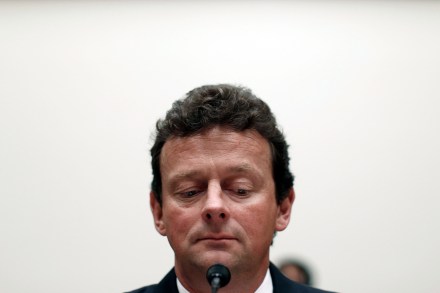
American politics often plays like a bloodsport, but the appearance of BP's Tony Hayward before a congressional hearing today has been in a league all of its own.  Things were already looking decidedly brutal at the start of the morning session, when Hayward was subjected to a solid hour of attacks and accusations from the committee's members before giving his own testimony. But since then we've had everything from pictures of oil-coated birds to protests from the crowd. It has been a compelling, if unenlightening, theatrical event. For his part, Hayward has been neither convincing nor all that unconvincing.  His demeanour is suitably contrite, but his answers have been too evasive to count.  Not that the BP chief exec can really do much anyway.

Cameron’s European balancing act

So David Cameron strides onto the European stage today, with his first EU summit since becoming Prime Minister. And early signs are that it's going to be a peculiar day for him. As Ben Brogan writes in the Telegraph, Europe seems to be liking the (liberal-democratised) Tories more than they thought they would. Sarkozy is, apparently, "smitten" with our PM, while Angela Merkel "has come to admire his directness". So after pitching himself against the Lisbon Treaty, and broadly selling himself as a eurosceptic over the past few years, Cameron now faces the prospect of cuddles over the coffee and croissants in Brussels. Like I say: peculiar. I suspect Cameron will be keen to avoid being hugged too tight, though.