Paul Wood

Paul Wood was a BBC foreign correspondent for 25 years, in Belgrade, Athens, Cairo, Jerusalem, Kabul and Washington DC. He has won numerous awards, including two US Emmys for his coverage of the Syrian civil war

How Syria became the world’s most profitable narco state

From our UK edition

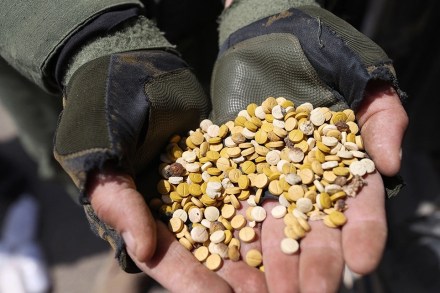
Lebanon Abu Hassan puts down his Kalashnikov and reaches into a pocket on his bodywarmer to hand me a small white pill. ‘Here,’ he says in Arabic, ‘a gift. This’ll keep you awake for 48 hours.’ He grins and adds in English: ‘Good sex!’ The pill is Captagon, an amphetamine known as ‘the poor man’s coke’. It can make the user feel invincible and was taken by fighters on all sides in Syria’s civil war; Isis were said to be big fans of ‘Captain Courage’. It has now spread across the Middle East. You might find Captagon fuelling a party in Riyadh or keeping a Baghdad taxi driver awake through a double shift. It is, of course, illegal. And horribly addictive.

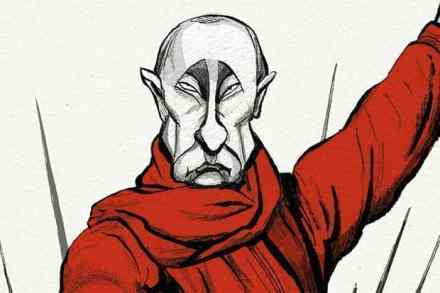
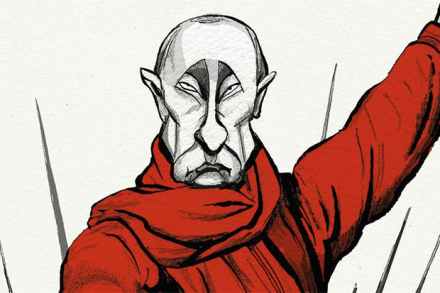
Cornered: what will Putin do now?

From our UK edition

41 min listen

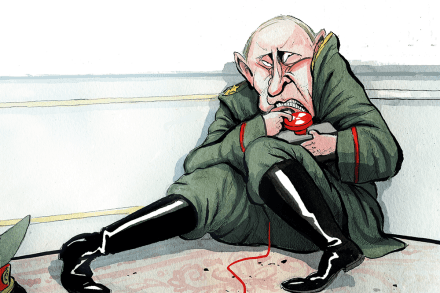
In this week’s episode:For the cover of the magazine, Paul Wood asks whether Putin could actually push the nuclear button in order to save himself?He is joined by The Spectator’s assistant online editor Lisa Haseldine, to discuss (01:03).Also this week:Why is there violence on the streets of Leicester?Douglas Murray writes about this in his column this week and we speak to journalist Sunny Hundal and research analyst Dr Rakib Ehsan about what’s caused the disorder (13:44).And finally:Is three – or more – a crowd?Mary Wakefield discusses the poly-problems or polyamory in her column in The Spectator and is joined by comedian Elf Lyons, who has written about her experience of polyamory before (26:46).

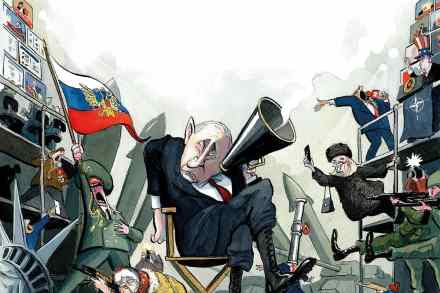
Cornered: could Putin go nuclear?

From our UK edition

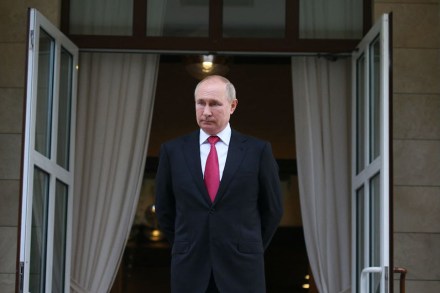
At the start of the war in Ukraine, I was given a recording made by the Ukrainian intelligence services. It was described as an intercepted call from an officer at Russia’s nuclear missile base in Siberia to a relative in Kyiv. The line crackles and a man speaks in Russian: ‘I don’t know what I should do… His [Vladimir Putin’s] finger is hovering over the button. Maybe the commander--in-chief knows he’s got no way out.’ The Russian says his base has been given three hours to put its nuclear weapons ‘into a state of readiness’. And – a terrifying further step – he has been told of orders from President Putin to enter the co-ordinates to target Kyiv and two other Ukrainian cities.

When the Queen worked her magic on the BBC

From our UK edition

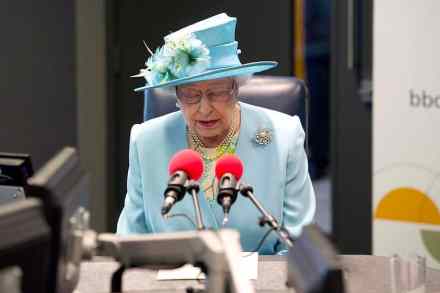
The Queen and Prince Philip had written their names in the visitors’ book at a country house where I was a weekend guest; my hostess, a member of a family with a long and storied lineage, had been an intimate of the Royal Family for decades. But at dinner, I nearly choked on my Beef Wellington when the grand lady turned to me and said she thought the monarchy might not – and perhaps should not – continue after Elizabeth II. This was no criticism of the monarch herself, naturally, but ‘these days, one finds the institution of a hereditary monarchy increasingly hard to defend’. If the aristos don’t believe in the hereditary principle, I thought, perhaps it really is an idea whose time has passed. The monarch herself never displayed any such havering.

Is Biden ready to let MBS get away with murder?

From our UK edition

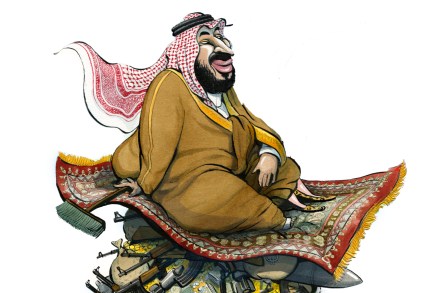
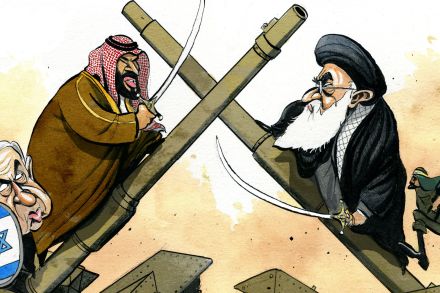
President Joe Biden will have only himself to blame if he feels a little uncomfortable this week when he sits down with the man who runs Saudi Arabia, Crown Prince Mohammed ‘Bone Saw’ bin Salman (MBS). After the CIA accused MBS of ordering the murder of the dissident journalist Jamal Khashoggi – dismembered with a bone saw – Biden said Saudi Arabia had ‘no redeeming social feature’ and should be made ‘a pariah’. This was a satisfying bit of moral posturing during a presidential election campaign, but costly now, in a world where Americans are paying $5 a gallon for gas and Russia is funding its war in Ukraine by selling oil at $100 a barrel. The US needs the Saudis to crank up production.

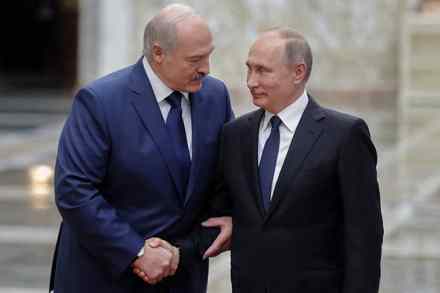
Europe’s last dictator: Lukashenko’s fate depends on Ukraine

From our UK edition

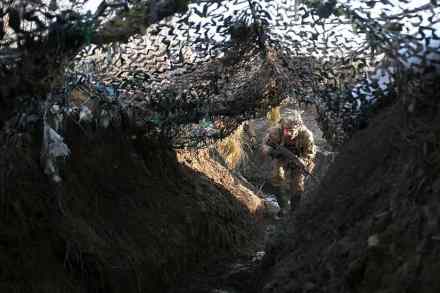
A young man wearing combat fatigues and an extravagant moustache, and carrying a heavy machine-gun over his shoulder, nods towards some burned-out armoured vehicles. ‘We smashed the orcs today,’ he says, using the Ukrainian soldiers’ term for the invading Russians, a reference to the sub-human legion in Tolkien’s The Lord of the Rings. He goes on: ‘Putin, you are a dickhead – your Greater Russia will die together with you.’ The soldier – his uniform has a badge saying ‘Ivanov’ in Cyrillic – is not, in fact, Ukrainian. He is one of a small number of volunteers from Belarus, next door, a country that is certainly part of the Greater Russian project.

Can the west end the Ukraine war?

From our UK edition

45 min listen

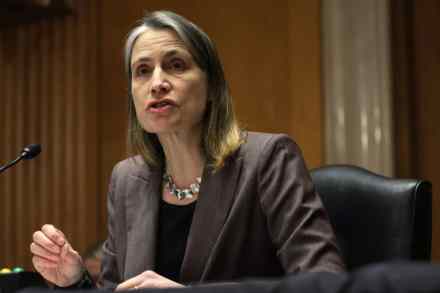
The Spectator's contributing editor Paul Wood interviews Dr Fiona Hill of the Brookings Institution, who also served as a director within President Trump's national security council, where her brief focused on Europe and Russia. This conversation was a joint production with the Institute for War and Peace Reporting. Founded in 1991, IWPR is a non-profit organization that works with independent media and civil society to promote positive change in 30 countries around the world. IWPR has been working with media and civil society in Ukraine since 2016 and has local staff in Kyiv, Lviv, and Bila Tserkva, as well as contacts at more than 50 local media and civil society organizations.

Chernobyl Two?

From our UK edition

The electricity supply to the ruined nuclear plant at Chernobyl in Ukraine has been cut off. According to one knowledgeable source I spoke to, this is a serious problem as power is needed to pump water around spent nuclear fuel rods stored there. There is a back-up diesel generator, but it has just one day’s supply of fuel left and once that runs out, the temperature could start to climb. If the water evaporates, the zirconium metal ‘fuel assemblies’ could start to melt – with radioactive material released into the atmosphere. This would not be anywhere near as bad as the original Chernobyl disaster, in 1986, when a reactor had a power surge and exploded – but still bad enough.

‘Help us, before it’s too late’

From our UK edition

Western Ukraine Outside a military recruiting centre in Lviv, Egor Grushin, one of Ukraine’s most famous classical pianists, was waiting in line to join up. He was tall and slim with a wispy beard, long delicate fingers and large brown eyes that gazed into the middle distance. In other words, he was – as he would admit – no one’s idea of a soldier. He knew he would not be accepted into a frontline unit because, as he explained, so many people were volunteering that there weren’t enough guns to go round: only those with military experience could join the regular army. Instead, he would be part of Lviv’s civil defence forces, ‘hunting saboteurs’ and waiting for the Russian – or Belorussian – tanks.

Meet the 74-year-old British major taking on the Russians in Ukraine

From our UK edition

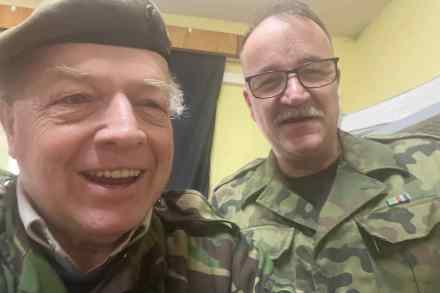
Some citizens of Nato countries are in Ukraine to fight. They are members of the new International Brigade the Ukrainians are recruiting at their embassies. The senior official told me that so far around 3,000 foreigners had signed up. A unit 500-strong had already been formed inside Ukraine, he said, ‘ready to go – except there are no weapons’. I thought these numbers might have been propaganda but it appears that the figures are roughly accurate – and more recruits are arriving all the time. There are apparently a number of British volunteers so far. I managed to speak to one of them, a retired major named Ian Cunningham. At the age of 74, Major Cunningham has the distinction of being the oldest member of the International Brigade.

Will Putin now roll on to Kiev?

From our UK edition

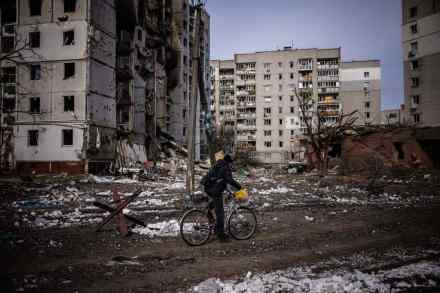
The White House told us with absolute certainty that there would be an invasion of Ukraine this week — instead Vladimir Putin bit off a chunk of Ukraine without firing a shot. Perhaps it seemed to him that recognising the two breakaway territories of Luhansk and Donetsk was a clever move: he had not, after all, ignored the warning that — in Boris Johnson’s phrase — one Russian soldier putting a toe-cap over the border would make sanctions inevitable. But sanctions will come anyway — the issue is only about how severe they will be — imposed because, as Johnson says, there has been a clear breach of international law.

Theatre of war

From our UK edition

34 min listen

In this week’s episode: What is the next act in Putin’s theatre of war?For this week’s cover story, James Forsyth writes about Putin’s dangerous dramatics on the Russian-Ukrainian border and where they might lead. James joins the podcast along with Paul Wood, who writes in this week’s magazine that Putin’s bluff may be backfiring. (00:49)Also this week: How important is gallows humour?The BBC’s new comedy-drama, This Is Going To Hurt, based on the best-selling book of the same title by trainee doctor turned comedian Adam Kay depicts some truly gut-wrenching scenes with a touch of gallows humour.

Russian roulette: is Moscow’s bluff backfiring?

From our UK edition

A bluff only works if you can carry it off convincingly. The massing of some 130,000 Russian soldiers on Ukraine’s borders has led to London and Washington declaring that a full-scale invasion is imminent, but it could still be a feint. The Russians know everything they do can be seen by satellite. On the phone from Kiev, Colonel General Ihor Smeshko says he is not inclined to read too much into the Russian army’s logistics. He was head of Ukraine’s domestic intelligence service and later a candidate for president.

Putin’s big bluff

From our UK edition

My first visit to Ukraine was in 1994. We drove to a village about three hours south of Kiev. The landscape was flat, fields of wheat stretching out in all directions. You could see why Ukraine had been called ‘the breadbasket of the Soviet Union’. An old man in a flat cap waved us over at the entrance to the village. He knelt down to scoop up a handful of the rich soil. ‘Look,’ he said, ‘the black earth of Ukraine’. He spoke about the artificial famine that Stalin had created in Ukraine in the 1930s, the Holodomor. He remembered armed men coming to the village to seize all the grain. The black earth had been a curse as much as a blessing. At dinner that night, there were many rounds of vodka and a main dish of roast potatoes layered with pork fat.

The collapse: how Red Wall MPs turned on Boris

From our UK edition

39 min listen

In this week’s episode: Will the Red Wall crush Boris Johnson? In this week’s Spectator, our political editor James Forsyth and our deputy political editor Katy Balls report on the plot to oust the Prime Minister by Red Wall MPs, and No.10’s battle to save Boris. They join the podcast to give their up to date diagnosis. (00:43)Also this week: How to save the BBC?This week Nadine Dorries announced that she is planning a licence fee freeze. In the Spectator this week Paul Wood, a veteran journalist of the BBC writes about his love-hate relationship with the broadcaster. He joins the podcast now along with Domonic Minghella, writer, producer and former showrunner of the BBC’s Robin Hood. (14:45) And finally: Is it moral to do good with bad money?

Why we still need the BBC

From our UK edition

My first posting as a BBC foreign correspondent was Belgrade in the mid-1990s. Serbia was led by Slobodan Milosevic, practically the only Communist ruler in eastern Europe not to have been overthrown. He survived by reinventing himself as a nationalist, though he kept the Communists’ secret police. Our secretary was accosted one day by a couple of them, nasty-looking thugs in black leather jackets. ‘State Security,’ said one, pushing her into a doorway. They wanted her to inform on me. If she didn’t, they would see to it that her elderly father stopped getting his pension. She told them to get lost, a brave thing to do. To Serbian State Security, I had to be a spy, or at least on the UK government payroll.

Daughters for sale: Afghans are growing desperate

From our UK edition

Shukria Abdul Wahid has nine children, two boys and seven girls. All they had to eat yesterday, she says, were two small pieces of stale flatbread — for the whole family. She and her husband went without. They couldn’t even have tea to quieten their own hunger pangs. The gas bottle used to boil water ran out long ago and there is no money for another one. She tells me it is unbearable having to say ‘no’ to her children all day when she doesn’t have a scrap of food to give them. ‘They are very little. They do not understand the situation, they do not know what’s happening in Afghanistan,’ she says. ‘So they just keep begging — “Give us something to eat. We are hungry” — and they won’t stop crying.

Florence with Dante

The trouble with Florence, says Ricardo, a local journalist, is that we’re just living off our past glories. “Aren’t we all?” I reply. Florence could perhaps be forgiven when it has accumulated such vast cultural and physical capital, built up over centuries. Signs remind you that it’s 700 years since the death of its most famous son, Dante, father of the Italian language. I must admit I’ve always been too intimidated to read his epic, The Divine Comedy, which T.S. Eliot said was “as great as poetry ever gets.” To prepare for my assault on the summit, I have been reading about Dante himself. I hadn’t known he had no more than a passing acquaintance with his great love, Beatrice.

florence

Goodbye, Lebanon

I’m sorry, Lebanon. We love you but we just can’t take it anymore. We’re breaking up with you. We’ve lived in Lebanon, on and off, for almost a decade. Our retreat began over the summer when we decided we couldn’t risk going to the beach with our daughter, who’s almost two. Every year, the Lebanese National Council for Scientific Research puts out a report that says that the seawater around many of Lebanon’s beaches is full of fecal bacteria. Raw sewage is discharged into the sea: you are literally swimming in shit. From some beaches, you can see the pipe and a murky flow of streptococci. We tried. We really did. We visited a private beach club that was supposed to have some of the cleanest water in the country.

lebanon