Paul Wood

Paul Wood was a BBC foreign correspondent for 25 years, in Belgrade, Athens, Cairo, Jerusalem, Kabul and Washington DC. He has won numerous awards, including two US Emmys for his coverage of the Syrian civil war

War tourism is alive and well

In 2004, the BBC sent me to the Iraqi city of Karbala to report on the gathering of Shia pilgrims for the religious holiday of Ashura. American troops knew to stay well away. They were already fighting a Sunni insurgency and didn’t want trouble with Iraq’s Shiites as well. The insurgency’s leader, Abu Musab al-Zarqawi — the butcher of Iraq — had just threatened to attack “the sects of apostasy,” as he called the Shia, and as we entered Karbala, militiamen searched us for weapons. The air hummed with tension. But at breakfast in the hotel, we ran into a gaggle of backpackers: Brits and Americans. Seeing the look on my face, a blonde woman in the group told me not to worry. “Things are much calmer now in Iraq, aren’t they?

tourism

Israel’s challenge

From our UK edition

42 min listen

On the podcast: Anshel Pfeffer writes The Spectator’s cover story this week. He voices concern that support from Israel’s allies might begin to waver if they don’t develop a viable plan after the war finishes. Paul Wood – former BBC foreign correspondent – and Dennis Ross – former Middle East coordinator under President Clinton and advisor to President Obama – join the podcast to debate whether Israel can rely on its allies. (01:18) Also this week: In the Books section of the magazine this week we review Andy Stanton’s new book Benny The Blue Whale. It has a fascinating inception and was co-authored by the machine learning tool ChatGPT.

Is killing civilians ever justified?

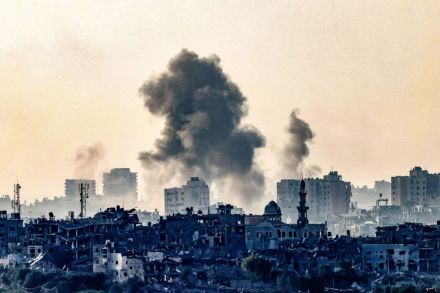
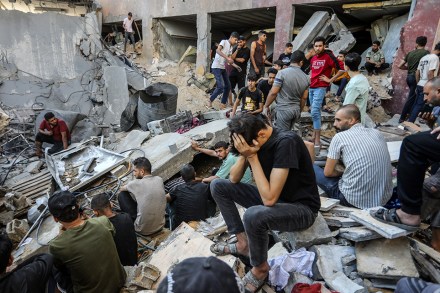
Israel said its tanks had “encircled” Gaza City as this went to press, the ground offensive being stepped up after a tentative beginning — but there’s been nothing tentative about Israel’s bombings from the air. Here’s a report of one incident: at 4:30 p.m. on October 10, an explosion collapsed a six-story building in Sheikh Radwan, a district of Gaza City, killing, it was said, at least forty civilians. A man named Mahmoud Ashour had to dig through the rubble with his bare hands to find members of his family. Buried there were his daughter and her four children, a girl aged eight and three boys of six, two, and six months, all killed. They had fled there thinking it would be safer than other parts of Gaza. But, he said: “I couldn’t protect them.

Israel killing

Alan Dershowitz: when Israel must consider the nuclear option

Professor Alan Dershowitz is one of Israel’s most prominent defenders outside the Jewish state. He has just written — in record time — a book about the events of October 7: War Against the Jews — How to End Hamas Barbarism. It will be published next month and will argue, among other things, that the Hamas attack “has required Israel to consider its nuclear option as a last resort to assure its survival.” I spoke to Professor Dershowitz and asked him first, about another of the book’s arguments, that there should be no absolute distinction between civilians and combatants in Gaza, but instead “a continuum of civilianality.” "It existed in Nazi Germany," he said.

dershowitz nuclear option

Can the killing of innocent civilians ever be justified?

From our UK edition

Israel has made the first, rather tentative, moves of its ground operation against Hamas – but there’s nothing tentative about its aerial bombing. Here’s a report of one incident: at 4.30 p.m. on 10 October, an explosion collapsed a six-storey building in Sheikh Radwan, a district of Gaza City, killing, it was said, at least 40 civilians. One man, Mahmoud Ashour, had to dig through the rubble with his bare hands to find his family. Buried there were his daughter and her four children, a girl aged eight and three boys of six, two, and six months. They had fled there thinking it would be safer than other parts of Gaza. But, he said: ‘I couldn’t protect them. I have no trace left of my daughter.’ Israel’s aim should be ‘the defeat of Hamas and nothing more’.

‘We must defend our territory’: on the frontline of Europe’s migrant woes

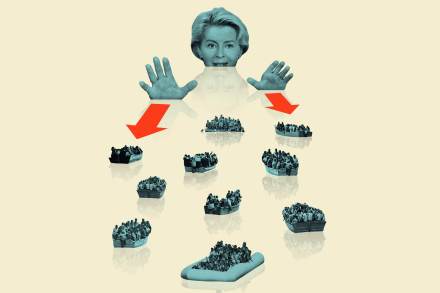
Lampedusa, Italy The motorcade carrying Italy’s prime minister is being held up by a wild-eyed pirate. With a bushy black beard, sun-blasted face, tattooed forearms and a single earring, he stands in front of the convoy of a dozen police cars, extending a flattened palm. Blue lights flash, engines idle and somewhere behind blacked-out windows sit Giorgia Meloni, the prime minister, and her important guest, Ursula von der Leyen, president of the European Commission. The pirate is Giacomo Sferlazzo, leader of the protests that began on the island of Lampedusa after around 100 small boats carrying migrants arrived there on a single day in September. Really he’s a local musician, professional puppeteer and, as he describes himself, a Marxist-Leninist follower of Antonio Gramsci.

lampedusa

Can Israel’s hostages be saved?

From our UK edition

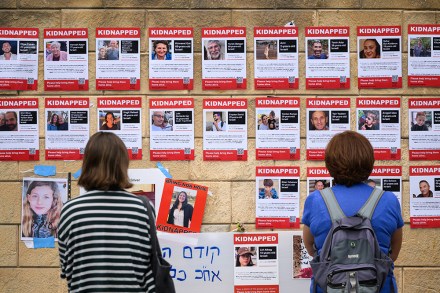
The last message that Shaked Haran saw from her father was just after 7.30 a.m. on the Saturday of the Hamas attacks in Israel. Her parents were in the safe room of their house in Kibbutz Be’eri, just outside the Gaza Strip. The message said that ‘masked terrorists’ were ‘swarming’ everywhere. ‘We don’t think we’ll make it out alive.’ Then nothing. When Israeli soldiers finally arrived, the house was a smoking ruin. But there was no sign of her parents, nor of her sister, her sister’s husband, their daughter aged three and son aged eight, nor of an aunt and her 12-year-old daughter, nor of another aunt and an uncle. Ten members of the family were gone. Hours later, one of her father’s friends got through to his mobile.

Paul Wood, James Heale and Robin Ashenden

From our UK edition

23 min listen

This week Paul Wood delves into the complex background of the Middle East and asks if Iran might have been behind the Hamas attacks on Israel, and what might come next (01:11), James Heale ponders the great Tory tax debate by asking what is the point of the Tories if they don’t lower taxes (13:04) and Robin Ashenden on how he plans to introduce his half Russian daughter to the delights of red buses, Beefeaters and a proper full English (18:36).

Unholy war

From our UK edition

53 min listen

This week: Paul Wood writes for The Spectator about the role that Iran potentially played in the Hamas attack on Israel over the weekend. He says that it is unlikely that the proscribed terrorist group acted alone and joins the podcast alongside Uzi Arad, former national security advisor to Israeli prime minister Benjamin Netanyahu. (01:22) Also this week:  Labour conference in Liverpool has come to end and, as always with conference season, the best events took place on the fringes. Katy Balls our political editor spoke to London mayor Sadiq Khan and they have kindly allowed us to hear a section of their discussion, where they cover anti-seminitism, ULEZ and the upcoming mayoral election in May.

What Iran gains from the conflict in Israel

From our UK edition

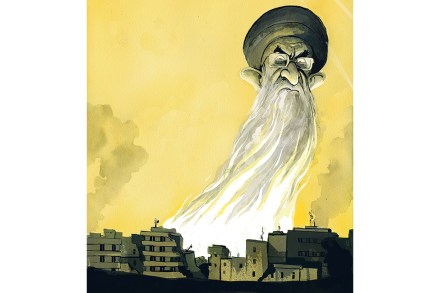
A little more than a week before Hamas carried out its Operation Al-Aqsa Flood, the US National Security Advisor, Jake Sullivan, said: ‘The Middle East region is quieter today than it has been in two decades.’ Sullivan was expressing a consensus view, one apparently shared by the Israeli government. Then came the attacks of last weekend and, as the Israeli President, Isaac Herzog, said, ‘Not since the Holocaust have so many Jews been killed in one day.’ The surprise attacks have been called Israel’s 9/11, its Pearl Harbor, and so the question Israelis are asking is: how could this happen? And of more consequence, perhaps: who was really behind it? The sheer scale of the attack may not have been planned.

Prigozhin sent ‘to hell’, but who gave the order?

From our UK edition

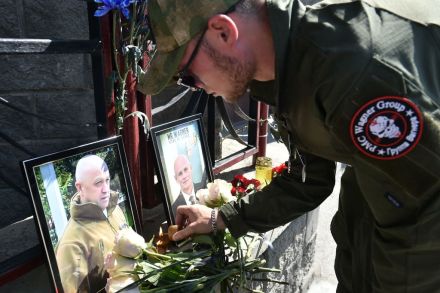
As the first reports came in that Yevgeny Prigozhin had been killed, I spoke to Marat Gabidullin, who was a senior commander in Prigozhin’s mercenary army and for a time his personal assistant for military affairs. Gabidiullin is living in exile in France and well known as a bitter critic of Prigozhin – he was forced to change addresses regularly, worried that Prigozhin would send someone to kill him. In the past, he described his old boss as brutal, greedy, smart, dangerous, and willing to sacrifice his men by the thousand for profit and power. But now he’s almost wistful at the thought of Prigozhin’s passing. He told me that one of Russia’s ‘greats’ had been brought down. ‘It’s the end of an era and the beginning of the time of the small people.

Isabel Hardman, Paul Wood and Alexandra Shulman

From our UK edition

18 min listen

This week: Isabel Hardman examines our curious obsession with glucose monitoring gadgets (01:03), Paul Wood wonders what exactly went on between Putin and Prigozhin (07:11), and Alexandra Shulman shares the contents of her weekly diary (12:15). Produced and presented by Linden Kemkaran.

What really happened between Putin and Prigozhin?

From our UK edition

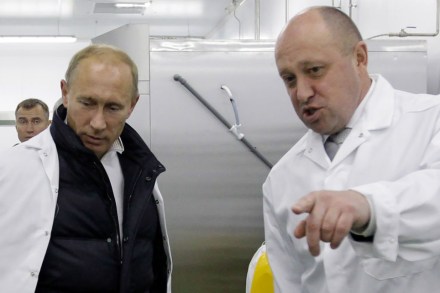
In the absence of facts, it’s hard to understand what got into Yevgeny Prigozhin. I spoke to the former oligarch Mikhail Khodorkovsky about Prigozhin and Putin and their odd relationship. He says that criminality unites and explains the pair. Prigozhin went to prison for almost ten years, for robbery. The legend is that he opened the first hotdog stand in Leningrad (now St Petersburg) and then moved on to luxury restaurants. Khodorkovsky says Prigozhin must have remained deeply connected to the underworld to succeed in the restaurant business in the St Petersburg of the 1990s. And he says Putin was the intermediary between the state security agencies and the city’s ‘mafiya’. ‘Putin is a bandit. He’s a gangster.

Prigozhin’s bid for death or glory

From our UK edition

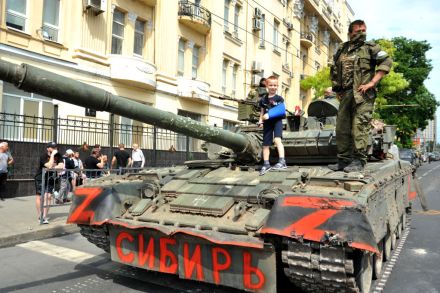
Up until this point, it was possible to believe that Putin was tolerating, or even orchestrating Yevgeny Prigozhin’s increasingly outspoken attacks on the military leadership and ‘the elites’ in Moscow. Vladimir Putin himself didn’t seem especially pleased with his generals. Only a few days ago, he turned his back on his defence minister, Sergei Shoigu, at a ceremony to give medals to injured soldiers. The fact that this was broadcast on state television makes it all the more likely that this was a deliberate, icy snub. Putin is said to like to pit his subordinates against one another, the better to stop an obvious successor from emerging. But Prigozhin’s attacks on the military leadership have slowly but steadily turned into attacks on Putin as well.

James Heale, Paul Wood and Hermione Eyre

From our UK edition

21 min listen

This week: James Heale takes us through the runners and riders for the conservative nomination for mayor of London (1:00), Paul Wood discusses how Saudi Arabia is trying to buy the world (06:02), and Hermione Eyre reads her arts lead on the woman who pioneered colour photography (12:51).  Produced and presented by Oscar Edmondson.

Get Rishi: the plot against the PM

From our UK edition

35 min listen

This week: For her cover piece, The Spectator’s political editor Katy Balls writes that Boris Johnson could be attempting to spearhead an insurgency against the prime minister. She joins the podcast alongside historian and author Sir Anthony Seldon, to discuss whether – in light of the Privileges Committee's findings – Boris is going to seriously up the ante when it comes to seeking revenge against his former chancellor. (01:02) Also this week: In The Spectator journalist Paul Wood writes about how Saudi Arabia is buying the world, after the Saudi Arabia Public Investment Fund negotiated a controlling interest in the main US golf tournament, the PGA. This took many people by surprise.

How Saudi Arabia bought the world

From our UK edition

What do you get for the man who has everything? Saudi Arabia’s ruler, Mohammed bin Salman, is said to have a $500 million yacht, a $450 million Leonardo painting and a $300 million French château. Now he’s acquired a new bauble: American golf. Saudi Arabia’s Public Investment Fund (PIF) has negotiated a controlling interest in the main US golf tournament, the PGA Tour, merging it with a rival league the fund already owns, LIV Golf. There was an appalled reaction from Hatice Cengiz, fiancée of the murdered Saudi journalist Jamal Khashoggi, who was allegedly killed on MBS’s orders. She called it ‘the worst face of sportswashing’, telling journalists: ‘It shows there are no limits to what money can buy.

The dangerous shadow war between Iran and Israel

From our UK edition

Beirut, Lebanon The secret police tail was impossible to miss but easy to lose. Two men in Saudi national dress – white thobe and chequered shemagh – drove a large black American saloon slowly behind me as I walked on the baking hot road. I turned into a shopping mall and they parked outside, not bothering to follow on foot as there was only one entrance. I went into a shop, all the way to the back, and then out through a door for staff to get to the mall’s loading bay, where a local activist picked me up in his car. We felt immensely pleased with ourselves when we got to the house of the Shia dissident we had come to see. He laughed and pointed out a nearly identical black car down the road, one man with binoculars, another on his phone. The dissident was being watched 24/7.

Meet the architect behind ‘Putin’s palace’

From our UK edition

Lanfranco Cirillo, architect and interior decorator to the Russian elite, is shaking his head in horror. ‘Absolutely not. No.’ He is answering my question about whether he put a gold toilet and even a gold toilet brush into a villa he built that the Russian opposition says belongs to President Vladimir Putin – and which they call ‘Putin’s palace’. At one time, protestors used to taunt Putin by waving gold-painted toilet brushes. Cirillo says the whole thing is a calumny. ‘I don’t like gold, first of all, I like marble. And I’m Italian. For an Italian to make a toilet in gold is really anti-historical, anti-cultural. No, no gold toilet, no gold toilet brush.

Is Iran at a turning point?

From our UK edition

Mashhad is Iran’s holiest city; it has the country’s most important shrine. It’s not the place for an Iranian woman to walk around without a hijab. But in September, Katayoun began leaving hers at home, going out with her head uncovered to join the daily protests against the country’s theocratic regime. A policeman struck her with his baton. She didn’t care. Katayoun is, necessarily, an assumed name. She is 35, an accountant, but also a member of an opposition group. She had joined the other ‘uprisings’, in 2009, in 2017 and in 2019, but she tells me: ‘This uprising is very different. People’s fear of the regime has fallen away.’ ‘This uprising is very different.