Paul Wood

Paul Wood was a BBC foreign correspondent for 25 years, in Belgrade, Athens, Cairo, Jerusalem, Kabul and Washington DC. He has won numerous awards, including two US Emmys for his coverage of the Syrian civil war

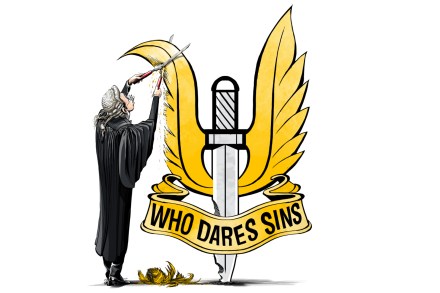
The SAS have been betrayed in the name of human rights

From our UK edition

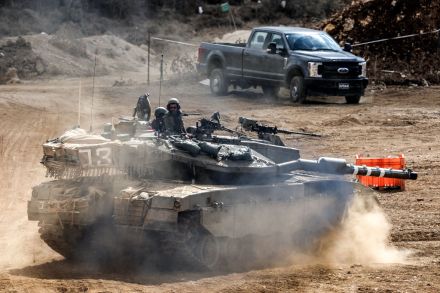
The SAS are worried. Britain’s most elite military unit have come face to face with the IRA, the Taliban and Isis. But the enemy that really concerns them doesn’t carry a gun or wear a suicide belt. It’s the phalanx of lawyers they think are coming for them, armed with a deadly weapon: the European Convention on Human Rights (ECHR). Many SAS soldiers now believe that if they pull the trigger during an operation and kill a terrorist, they’ll spend decades being hounded through the courts. They don’t trust the chain of command to look after them. They accuse politicians of a ‘betrayal’. That’s hurting morale and may eventually hit recruitment. We may all end up being less safe because of it.

Will a ceasefire with Hezbollah last?

From our UK edition

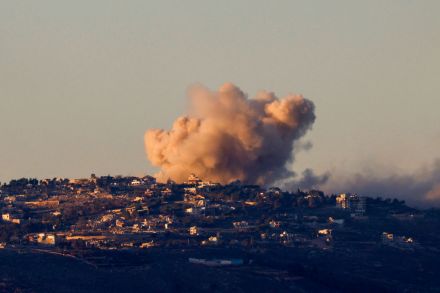
Peace is closer than ever in Lebanon – which is why we’ve seen more bloodshed this week.   As this is published, Israel’s prime minister, Benjamin Netanyahu, is expected to announce his government has accepted a ceasefire with the Lebanese militia Hezbollah, on terms negotiated by US officials. That explains the surge in violence over the past week. Israel has been rushing to maximise its gains, destroying as much Hezbollah infrastructure as possible; Hezbollah has been desperately trying to increase its leverage while the final details of the truce are settled.  On Sunday, Hezbollah sent some 250 rockets into Israel. It was one of the largest attacks since the group started firing missiles in support of Hamas in Gaza more than a year ago.

Paul Wood, Sean Thomas, Imogen Yates, Books of the Year II, and Alan Steadman

From our UK edition

30 min listen

On this week’s Spectator Out Loud: Paul Wood analyses what a Trump victory could mean for the Middle East (1:16); Sean Thomas gets a glimpse of a childless future while travelling in South Korea (8:39); in search of herself, Imogen Yates takes part in ‘ecstatic dance’ (15:11); a second selection of our books of the year from Peter Parker, Daniel Swift, Andrea Wulf, Claire Lowdon, and Sara Wheeler (20:30); and notes on the speaking clock from the voice himself, Alan Steadman (25:26).  Produced and presented by Patrick Gibbons.

How Trump could temper tensions in the Middle East

From our UK edition

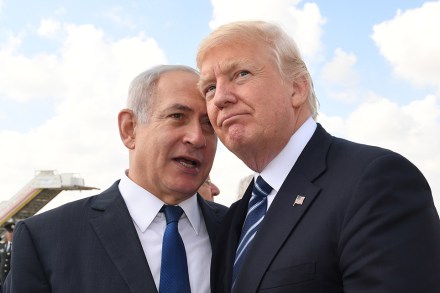
One of Donald Trump’s 2024 campaign ads was aimed at Jewish voters. Three stereotypical New York bubbes are kvetching about the state of the world. ‘Israel’s under attack. Anti-Semitism like I never thought I would see.’ One says: ‘Oy vey… You know Trump I never cared for, but at least he will keep us safe.’ This was a canny appeal, recognising that many American Jews were traditionally Democrats and would have to hold their noses to vote for Trump. But Trump has been – as he says himself – Israel’s ‘protector’ and Israel’s Prime Minister, Benjamin Netanyahu, was the first foreign leader to praise him for his victory: ‘Congratulations on history’s greatest comeback!’ Netanyahu signed off his message to Trump ‘in true friendship’.

Where conflict in the Middle East goes from here

Anything written on the Middle East at this moment in history is almost instantly out of date. As Lenin said: “There are decades where nothing happens; and there are weeks where decades happen.” The Arab-Israeli war in 1967, the Iranian revolution in 1979, the invasion of Iraq in 2003...the region may once again be at one of those forks in the road that dictate the fate of nations for years to come. Journalists’ predictions age like milk out of the fridge. Nevertheless, here are some: Israel attacks Iran. This isn’t a hard one. The question is what form that attack will take. The prime minister, Benjamin Netanyahu, has wanted to bomb Iran’s nuclear facilities before, only to be stopped by the US.

Israel’s revenge, farewell Fraser & the demise of invitations

From our UK edition

37 min listen

This week: Israel’s revenge and Iran’s humiliation. As the anniversary of the October 7th attacks by Hamas approaches, the crisis in the Middle East has only widened. Israel has sent troops into southern Lebanon and there have been attempted missile strikes from the Houthi rebels in Yemen and from Iran. Is there any way the situation can de-escalate? And how could Israel respond to Iran? Former BBC foreign correspondent Paul Wood and defence and security research Dr Limor Simhony join the podcast (1:03). Next: it’s the end of an era for The Spectator. This issue is Fraser Nelson’s last as he hands over the reins to Michael Gove. Having spent 15 years as editor, with 784  issues to his name, what are his reflections on his time here at 22 Old Queen Street?

Israel is reshaping the Middle East in its favour

From our UK edition

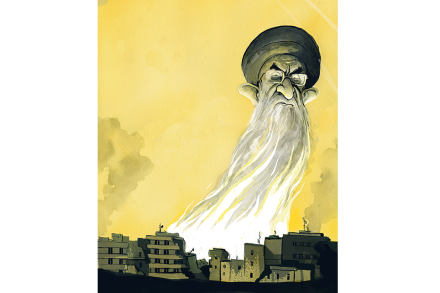
Iran has fallen into the trap set by Israel. It has taken the bait after months of failing to respond to a series of devastating – and humiliating – attacks, which decapitated its Lebanese militia, Hezbollah, and killed the leader of Hamas in Tehran. But the regime may have self-immolated by firing missiles at Israel on Tuesday night, an attack meant to inflict real harm – which inevitably means an Israeli response. Israel’s Prime Minister, Benjamin Netanyahu, may now get the war that some have accused him of wanting all along: a war to destroy the regime in Tehran, fought with American help. The hardliners on both sides are running things. The past week has shown there is no such thing as ‘escalating to de-escalate’ – only escalation.

Rachel Johnson, James Heale, Paul Wood, Rowan Pelling and Graeme Thomson

From our UK edition

34 min listen

On this week’s Spectator Out Loud: Rachel Johnson reads her diary for the week (1:19); James Heale analyses the true value of Labour peer Lord Alli (6:58); Paul Wood questions if Israel is trying to drag America into a war with Iran (11:59); Rowan Pelling reviews Want: Sexual Fantasies, collated by Gillian Anderson (19:47); and Graeme Thomson explores the ethics of the posthumous publication of new music (28:00).  Produced and presented by Patrick Gibbons.
Is Israel trying to drag America into a war with Iran?

From our UK edition

The American general David Petraeus famously asked of the invasion of Iraq: ‘Tell me how this ends.’ That’s the question as Israeli bombs and missiles fall on Lebanon and the few missiles Hezbollah has sent in response are intercepted. Iran’s ‘axis of resistance’ seems paralysed with indecision. Does Benjamin Netanyahu take this as a win, the vindication of the enormous chance he took by opening a new northern front? Or, like a gambler intoxicated by success at the tables, does he press on? More airstrikes, followed by an invasion of Lebanon… and then the bombers fly on to Iran?  Some Israelis commentators are already calling this the Third Lebanon War (after the wars of 1982-2000 and 2006).

Paul Wood, Ross Clark, Andrew Lycett, Laura Gascoigne and Henry Jeffreys

From our UK edition

33 min listen

On this week’s Spectator Out Loud: as Lebanon reels from the exploding pagers, Paul Wood wonders what’s next for Israel and Hezbollah (1:24); Ross Clark examines Ireland’s low-tax project, following the news that they’re set to receive €13 billion… that they didn’t want (8:40); Reviewing Ben Macintyre’s new book, Andrew Lycett looks at the 1980 Iranian London embassy siege (15:29); Laura Gascoigne argues that Vincent Van Gogh would approve of the new exhibition of his works at the National Gallery (22:35); and Henry Jeffreys provides his notes on corkscrews (28:01).  Produced and presented by Patrick Gibbons.

Hezbollah’s exploding pagers are just the start

From our UK edition

Israel’s security cabinet met in a bunker in the ministry of defence in Tel Aviv on Monday night. The main item on the agenda was Hezbollah, the Lebanese militia whose missiles and rockets have forced tens of thousands of Israelis from their homes in the north. The meeting lasted into the early hours of Tuesday. At 2.26 a.m., the Prime Minister’s office issued a statement saying Israel’s war aims had been ‘updated’ – no longer just destroying Hamas in the south, but also the safe return home of everyone in the north. ‘Israel will continue to act to implement this objective.’ This seemed like a bland restatement of existing policy and didn’t excite much interest. But at 3.30 p.m.

The mad, bad, sad world of Ryan Routh 

From our UK edition

Any journalist who has covered a war will recognise Ryan Routh’s type immediately – the war zone nutter. Routh is currently all over America’s front pages, accused of trying to assassinate Donald Trump. The photograph used by most news outlets shows a grizzled-looking character with a flak vest, a stars-and-stripes neckerchief, and a troubled stare. Back in 2022, he travelled from his home in the US to Ukraine, shortly after Russia invaded. He ended up in Independence Square in Kiev, setting up an open-air camp adorned with flags and handwritten placards – open air camps with placards being another reliable sign of nutterdom. But then warzones have always attracted the mad, the bad and the sad.

‘Blood! Blood! Blood!’: the Battle of Fallujah twenty years on

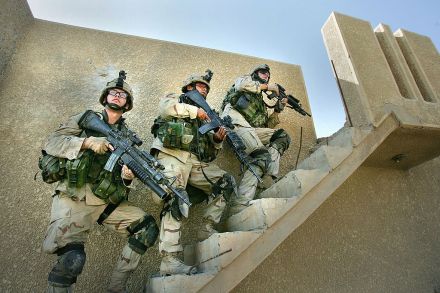
The National Museum of the Marine Corps has built a replica of a street in Fallujah, the Iraqi city that American forces half-destroyed in order to save it, in a battle twenty years ago next month. The exhibit promises visitors an “interactive experience that puts them in the boots of a Marine as he kicks down the door of a suspected insurgent stronghold.” If you have a games console, you can play Six Days in Fallujah, a video game where you take the role of a Marine who narrates the action of a firefight that really happened. Fallujah has become a symbol of gritty heroism and sacrifice — or for critics of the Iraq war, occupation and war crimes. Either way, the battle is deeply lodged in the popular imagination.

Fallujah

Gus Carter, Paul Wood, Jonathan Aitken, Laura Gascoigne and Flora Watkins

From our UK edition

35 min listen

This week: Gus Carter reports from Rotherham (01:10), Paul Wood asks whether anything can stop full-scale conflict in the Middle East (05:55), Jonathan Aitken takes us inside Nixon's resignation melodrama (16:55), Laura Gascoigne reviews Revealing Nature: The Art of Cedric Morris and Lett-Haines (26:08), and Flora Watkins reads her notes on ragwort (31:24).  Produced and presented by Oscar Edmondson.

Can anything stop a full-scale conflict in the Middle East?

From our UK edition

The fact that the Middle East stands on the brink of a catastrophic war can be explained by a scene from The Gentlemen, Guy Ritchie’s preposterous but entertaining series on Netflix about aristocrats and sarf London drug-dealers. The dim eldest son of a duke is in trouble with a vicious gangster, who makes him dress up as a chicken and cluck and dance while the whole excruciating spectacle is filmed. Eventually the humiliation is too much for the aristo: he gets the family Purdey and blasts the gangster in the face – even though he knows that there will be terrible consequences.

AI and the new way of war

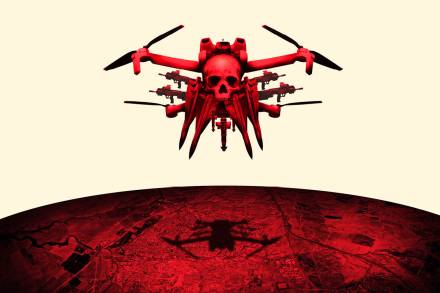
What is happening in Gaza now provides a glimpse of how all wars may be fought in the future — with artificial intelligence. In The Spectator last November, I wrote about an Israeli airstrike that brought down a six-story building in Gaza City, reportedly killing more than forty civilians. One of the residents, a man named Mahmoud Ashour, dug through the rubble with his bare hands, trying to find his daughter and her four children, a girl aged eight and three boys of six, two and six months — all killed. The Israeli military would not tell me why the building was hit, beyond saying that Gaza’s armed groups put their military infrastructure amid civilians, but Amnesty International said there had been a single member of Hamas living there.

gaza ai war

Could a Trump conviction really change the presidential election?

From our UK edition

The first time I heard the name ‘Michael Cohen’ was in 2015, from a Republican political operative who told me: ‘It’s his job to clean up Trump’s messes with women.’ He went on to explain how Cohen, Trump’s personal lawyer and fixer, would pay a large amount in cash to whichever actress-model-stripper-pornstar was claiming to have been screwed, dumped or knocked-up by The Donald. And, crucially, Cohen – Trump’s ‘designated thug’ as he called himself – would scare the hell out of the women concerned to make sure they signed an airtight NDA (or non-disclosure agreement).

Inside the new Arab-Israeli alliance

From our UK edition

As Jordanian fighter jets shot down Iranian drones heading for Israel on Saturday night, there were joyful cries of Allahu Akbar on the ground as some people lent out of their windows to cheer the drones they thought were getting through. King Abdullah II was depicted on social media wearing an Israeli military uniform complete with the Star of David and he must dearly wish that Israelis would shut up about their ‘new strategic alliance’ with old enemies like Jordan, Egypt and Saudi Arabia. Jordan’s foreign minister was forced into an unconvincing declaration that they would shoot down anyone’s drones, not just Iran’s. Yet, the important fact remains: this is the first time, as far as anyone can remember, that Jordan’s armed forces have fought to defend Israel.

Low birth rates are a threat to humanity

From our UK edition

The village we moved to in central Italy is lovely – old stone houses and olive trees on a hillside – but it is eerily deserted most of the time. A neighbour in his forties says that when he grew up here, it was full of children playing in the cobbled streets. There were about 350 people then, he tells me; now the population is precisely 42, and that includes the latest residents, me and my wife. The village is dying on its feet, becoming a perfectly preserved museum piece. My neighbour shakes his head and says how sad it is. There are many villages like this in Italy. First one house is boarded up, then another; the trattoria closes, after that the bakery and other shops, and then people leave all at once because the place isn’t what it was.

Have the Houthis gone rogue?

From our UK edition

The US and Britain really didn’t think they had a choice about bombing Yemen in retaliation for Houthi attacks on ships in the Red Sea – one of the world’s busiest waterways, carrying almost a sixth of global shipping. But the airstrikes overnight are unlikely to stop the attacks and in the short term will probably make things worse.   The decision was taken after one of the most audacious Houthi attacks yet. They sent out a swarm of one-way attack drones and fired cruise missiles into waters where the US military said dozens of ships were crossing at the time. Many of the drones and missiles were shot down by a combined force of four American warships and one British – none found their target.