Patrick Marnham

Némirovsky’s love letter to the France that spurned her and killed her

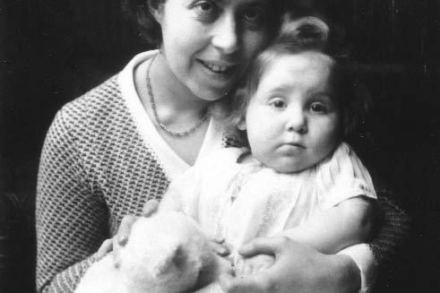
By 1940 Irène Némirovsky, who had arrived in France at the age of 16 as a refugee from Kiev, had become a prominent and successful novelist. In March of that year she celebrated what was to be her final publication day. She was Jewish, and for French publishers under Nazi occupation she had ceased to exist as an author when the German army entered Paris. But she continued to write. She moved with her children to a village in Burgundy, hoping to protect her family from the Vichy government’s manhunt, and she started work on her masterpiece, Suite Française, which would lie undiscovered until 2004. She also started three other novels, two of which she finished. Both were published in France after the war. By then their author was dead.
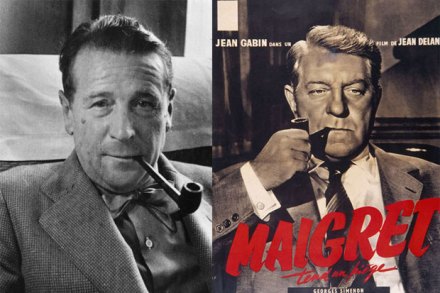
A salute to Georges Simenon

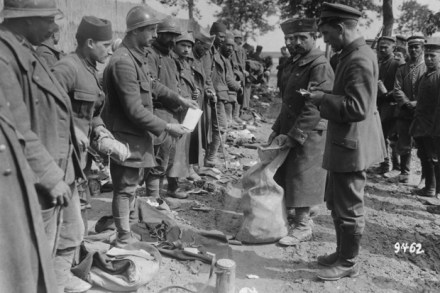
One hundred years ago an 11-year-old boy called Georges Simenon was getting accustomed to the presence of the German army in Liège. Together with his mother and his younger brother he had been forced to hide in the cellar of their terraced house on the island of Outremeuse to avoid the firing squads. The Belgian fortress outside the city had resisted for longer than expected and had inflicted casualties on the invading army. The Uhlan lancers were so angry that 200 of the Simenons’ neighbours were lined up and shot. Once Belgian resistance had ended, the occupation of Liège became a quieter affair. For a while Madame Simenon even took in German soldiers as lodgers. Years later Georges recalled his youthful surprise at the number of German officers who wore corsets.

France’s political system is crumbling. What’s coming next looks scary

[audioplayer src="http://traffic.libsyn.com/spectator/TheViewFrom22_5_June_2014_v4.mp3" title="Freddy Gray discusses the end of the French republic" startat=1844] Listen [/audioplayer]Last week President François Hollande, following his party’s humiliation in the European parliamentary elections (his Socialists won roughly half as many seats as the National Front), decided to cheer himself up. He left Paris and travelled to Clairefontaine to mingle with France’s World Cup football squad. ‘If you do win the World Cup final on 13 July,’ he told the millionaire players (most of whom avoid Hollande’s taxes by being paid outside France), ‘you will deserve a triumphant welcome.

There was good art under Franco

Everyone knows about the Spanish civil war, first battlefield in the struggle that broke out in 1936 and ended nine years later in the ruins of Berlin. It has been immortalised in the work of Hemingway, Orwell and Koestler and commemorated in the heroic deeds of the International Brigades. This is how it is remembered by Camilo José Cela, the conservative novelist and Nobel Prize winner: To the conscripts of 1937, all of whom lost something: their life, their freedom, their dreams, their hope, their decency. And not to the adventurers from abroad, Fascists and Marxists, who had their fill of killing Spaniards like rabbits and whom no one had invited to take part in our funeral… In my copy of the French translation of Cela’s San Camilo, that dedication does not appear.

A bad week for ‘President Normal’ just got worse

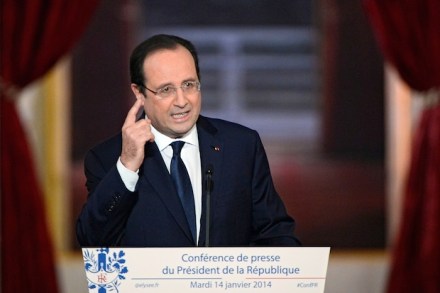
So she’s been fired! We now know why Valérie Trierweiler, the established companion of the president of the republic is currently in hospital suffering from ‘a severe case of the blues’. That must surely be the clear implication of President Hollande’s refusal at his New Year’s press conference to confirm that Valérie is still First Lady of France. This afternoon the most powerful man in France emerged from between the marble pillars and gorgeous tapestries of the Élysée Palace, a dapper little figure in a blue suit, wearing rimless designer specs and dyed brown hair.

When we dropped the Bomb by mistake

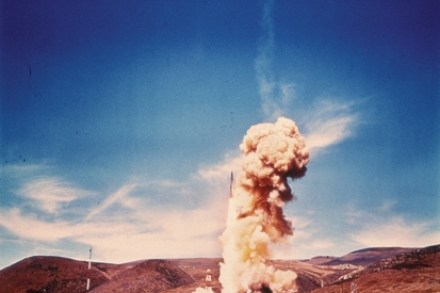
In January 1976 New York’s late-lamented National Lampoon produced a bicentennial calendar as a contribution to the general rejoicing. For every day of that year a selection of disastrous news events was commemorated. Presidents of the United States were cut down, marine life was wiped out by oil spills, native Indian women and children were butchered by the US cavalry, young girls leapt to their deaths from blazing sweat shops, thousands of sheep were felled by army nerve gas shells, 11 military incursions into Canada were ignominiously repulsed — and so on. The calendar portrayed 200 years of American history as one long disaster. Repeated nuclear accidents formed a significant part of the farcical story: 13 were logged in.

Hollande runs into the sand

Will President François Hollande’s decision to send French troops into battle against the insurgent fundamentalists in Mali prove a turning point for his faltering presidency? Not for the first time, a nice little war may serve to rescue a failing political reputation. Hollande’s approval rating jumped from 40 to 44 per cent in the days after the Mali conflict began. Suddenly the man known as ‘Flanby’ — after the French wobbly pudding — looked tough. Pierre Méhaignerie, a former minister under François Mitterrand, applauded Hollande for ‘showing decisiveness, something he has not shown on other issues’. On Monday, the French-led forces reoccupied Timbuktu, and the rebels were reported to be in retreat.

Making the bomb

Of the making of many books about J. Robert Oppenheimer there is apparently no end. There have been 23 previous lives, seven of them published since 2004. This situation, which would have delighted its subject, is now complicated by the appearance of Inside the Centre: The Life of J. Robert Oppenheimer by Ray Monk, previously the biographer of Wittgenstein and Bertrand Russell. In a crisp introduction Professor Monk explains that he is joining the throng because there has been no ‘scientific biography’, and previous work has largely ignored Oppenheimer’s contribution to physics. In fact — as Inside the Centre makes clear — JRO’s major contribution to physics would scarcely have justified one biography, let alone 24.

French farce | 21 April 2012

The first round of the French presidential election is a national carnival that seldom disappoints. If Sunday’s vote follows the opinion polls, only President Nicolas Sarkozy with 28 per cent of the vote and his Socialist party opponent François Hollande (a predicted 27 per cent) will remain in the ring. The country will then be faced with the real choice of who is to run France for the next five years, but the elimination of the eight outsiders will have taken most of the high spirits out of the campaign. The first round is the roll call of true believers. Three of the current candidates are Trotskyists (or ex-Trotskyists) and four have never scored more than 1.5 per cent in the opinion polls.

Sarkozy springs forward

There’s nothing like a crisis to rescue an ailing candidate Yes, he’s back. Just when the French Socialists thought that they were jogging into the Elysée Palace for the first time in 17 years, a discredited president has remounted his favourite war horse, a national security crisis, and with three weeks to go before the first round on 22 April, the left has a fight on its hands. Ten days ago, most commentators agreed that François Hollande merely had to keep his head and events would take their inevitable course. Nicolas Sarkozy, a deeply unpopular president, was about to disappear into the wastepaper basket of history.

Funny old world

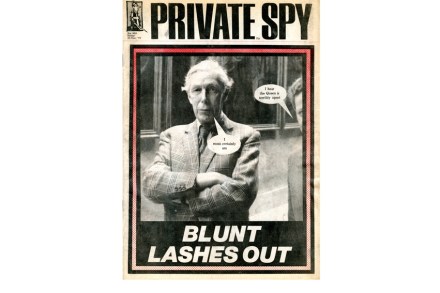
The most remarkable thing about this book is that it should have been published at all. No one could have imagined in 1961 that Private Eye — a blotchy reproduction stapled together on what looked like yellow scrap paper — would still be going 50 years later, selling hundreds of thousand of copies every fortnight and apparently employing about 50 people. Adam MacQueen has not written a history of the paper but has compiled a biographical album of contributors, staff, stories and various dramas in its history. The author suggests that it could be read from cover to cover, but that would be hard work even for a satirical anorak. It is much better approached on a random basis, following the cross-references or just leafing through it.

CONGO NOTEBOOK

Kisangani, capital of the province of Orientale, Democratic Republic of the Congo, once Zaire, is the setting for A Bend in the River, V.S. Naipaul’s grim masterpiece, published in 1979, about post-colonial reality in central Africa. Naipaul’s plot describes a tribal war that threatens the city. This actually happened 20 years later, when Kisangani became a battlefield for the bandit armies of Uganda and Rwanda. The city is now controlled by General Jean-Claude Kifwa, commander of the 9th Military Region of the Armed Forces of the DRC. We arrive to find that the temperature has reached a seasonal 40 ºC. A thunderstorm lasting most of our first night reduces this to a more bearable level. The Congo River is why we are here, filming Snake Dance, a historical documentary.

Amid the encircling gloom

Africa is the setting for several of V. S. Naipaul’s finest fictional stories — In a Free State, A Bend in the River, Half a Life. Africa is the setting for several of V. S. Naipaul’s finest fictional stories — In a Free State, A Bend in the River, Half a Life. And there is a pattern to the themes in the African works: fear, post-colonial disintegration, isolation, approaching catastrophe, a sense of being trapped in a way of life that is hovering on the borders of savagery. It is an unforgettable vision, but it remains that of an outsider. In The Masque of Africa, Naipaul goes deeper; this is the account of a journey through five countries with the purpose of ‘investigating the effects of African belief on the progress of civilisation’.

Kin, but less than kind

About 100 years ago two brothers settled in the same small English town and raised 12 children. Charles Greene was a scholar, destined for the Bar, who blundered into schoolmastering while eating his dinners at the Inner Temple and later became headmaster of Berkhamsted School. His younger brother, Edward (known as ‘Eppy’), declined to go to university and blundered into the coffee trade in Brazil. Having made a fortune, he returned to England and bought a large house in the same town. Shades of Greene is the story of those two families and of what happened to eight of the more interesting children. They included the novelist Graham Greene, whose life occupies the largest part of this account. Graham had three brothers.

Because she’s worth it

The scandal over Liliane Bettencourt’s L’Oréal fortune is exposing the way French high society operates, says Patrick Marnham. And it is harming President Sarkozy in the polls It all started as a banal family squabble over €17 billion. Liliane Bettencourt is heir to the L’Oréal family fortune and among the 20 wealthiest individuals in the world. She is 87 years old, a widow and rather deaf, and she lives alone with half a dozen servants in a mansion in Neuilly, the most expensive suburb in the Paris region. Last year her daughter, Françoise, discovered that her mother had given about €1 billion to a pushy society photographer who had also become a major beneficiary in Liliane’s will.

Is it all over for Sarko?

The French president’s chances of re-election look bleak. But the problem is not his politics, says Patrick Marnham, so much as his embarrassing personal life Gordon Brown is not the only European leader who is regarded as an electoral liability by his own party. With two years to go before France’s next presidential election Nicolas Sarkozy’s chances are not looking good. He is entitled to run for a second five-year term, but in 2012 it will be 24 years since the French chose a president from the left. Many voters think it is time for a change. Mr Sarkozy is now one of the most unpopular political personalities in France.

The reality behind the novels

‘I never knew peaceful times’, Irène Némirovsky once said, ‘I’ve always lived in anxiety and often in danger’. ‘I never knew peaceful times’, Irène Némirovsky once said, ‘I’ve always lived in anxiety and often in danger’. This comment was made during a radio interview in 1934, when the novelist, who would later write Suite Française, was in fact living through the only peaceful period of her life. She had survived the pogroms of her childhood in Kiev and the dangers of her family’s flight from St Petersburg during the October Revolution. In Paris she had gone through a difficult period of resettlement before achieving her childhood dream of becoming a celebrated French writer.

Disastrous twilight

With the opening paragraph of The Dogs and the Wolves (first serialised in France in 1939 and never previously translated) Irène Némirovsky takes us to the heart of her story: the complexities of Jewish life in eastern Europe and France in the first part of the 20th century. The Ukrainian city in which generations of the Sinner family had been born was, in the eyes of the Jews who lived there, made up of three distinct regions. It was like a medieval painting: the damned were at the bottom, trapped among the shadows and flames of Hell; the mortals were in the middle, lit by a faint, peaceful light; and at the top was the realm of the blessed.

Populist preaching

Patrick Marnham visits Brazil’s annual festival of literature Many years ago a wild-eyed Englishman hacked his way into the Amazon rain forest and disappeared, never to be seen again. Since then the fate of Percy Fawcett, known as ‘the Colonel’, has remained a mystery. Fawcett, a heavily bearded pipe-smoker in a deerstalker hat, was a figure of fun to the bright young things of England in the 1920s. This was unfair since he was engaged in work of some importance; he was mapping the Brazilian frontier with Bolivia and Peru. Colonel Fawcett returned to the Amazon many times and over the years, distracted from his science, he became convinced of the existence of a Lost World in the heart of the forest.

Not for the faint-hearted

‘You might be wondering how I end- ed up in the lace business . . . ’, so the hero of The Kindly Ones, a doctor of law and former SS officer, introduces himself to readers of his fictional memoirs. Dr Max Aue, an ingenious Nazi of Franco-German descent, has survived the war and assumed a false identity in order to escape ‘the rope or Siberia’. As Berlin falls to the Red Army he slips out of the city and makes his way to Paris disguised as a returning French STO, an enlisted worker. But the war has reduced him to ‘an empty shell, left with nothing but bitterness and a great shame’. And so he decides to write his memoirs.