Owen Matthews

Owen Matthews

Owen Matthews is an Associate Editor of The Spectator and the author of Overreach: The Inside Story of Putin’s war on Ukraine.

British troops won’t help Ukraine

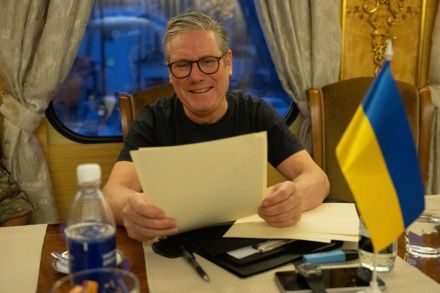
Sir Keir Starmer’s proposal to put British troops on the ground as part of a peacekeeping force in Ukraine is a principled and politically bold move. But the sad reality is that Britain is in no position to act as Ukraine's peacekeeper. Starmer is playing with an empty deck and singing from obsolete songbook.  Starmer has few options left other than gesture politics Starmer’s offer to put British troops on the ground is, in practical military terms, a very small promise. As former British Army chief Lord Dannatt pointed out last night, the UK’s armed forces are ‘so run down’ that we could not lead any future peacekeeping mission in Ukraine.

Rome

Rome is ready for its close-up

From our US edition

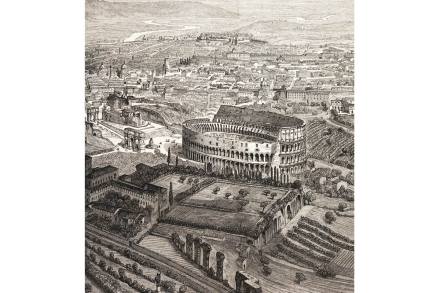
Rome Like a Parioli matron shedding her curlers, pins and hairnet in anticipation of a major family celebration, Rome’s monuments are emerging from shrouds of cladding and scaffolding ready for their close-up. The angels and river gods of the Ponte Sant’ Angelo and the Piazza Navona shine as blinding white as the day they emerged from Bernini’s workshop. The ancient granite basins of the Piazza Farnese fountains shimmer with an ethereal bluish light. The big occasion is the Papal Jubilee year of 2025, expected to draw a whopping 32 million visitors. That’s more than ten times Rome’s population, and half as many visitors again as in a normal year. If you’re planning a visit, do it soon before the city is entirely swallowed by crowds.

The UK’s balancing act over Trump’s ‘Ukraine peace plan’

13 min listen

Leaders from around the world are gathering at the Munich Security Conference, with the UK represented by Foreign Secretary David Lammy. All attention has turned to Ukraine, given statements this week by President Trump that he had spoken to Putin (and later Zelensky) about ending the Russia-Ukraine war. Trump's statements, for example that NATO membership should be off the table, put him at odds with European allies. The UK signed a joint statement with leaders from France, Germany and others, that Ukraine's independence and territorial integrity are unconditional. Is the UK walking a tight-rope between the US and Europe? Where does this leave the NATO alliance? And, with a strategic defence review underway, what should the UK's approach to defence spending be?

Trump might really be a ‘peacemaker’ in Ukraine

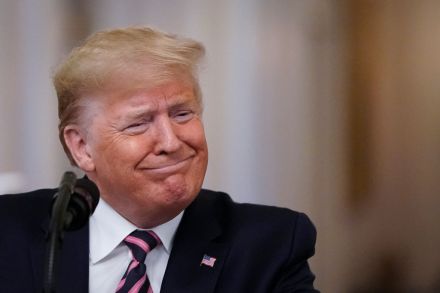
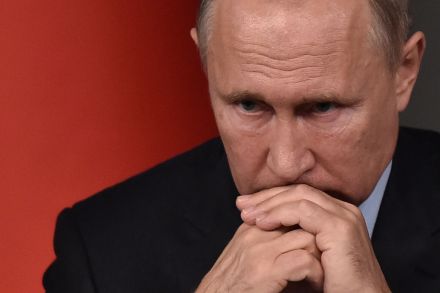
In a move likely to mark the beginning of the end of the Ukraine war, Donald Trump today announced that he had begun talks with Vladimir Putin. Trump has already held a ‘lengthy and highly productive phone call’ with Putin, he announced in a post on Truth Social, adding that they agreed to ‘have our respective teams start negotiations immediately’. The Biden administration promised repeatedly that no peace deal would be negotiated over the heads of the Ukrainians. But that was always, frankly, a lie. Trump at least has sufficient respect for Ukraine to be honest that the endgame of the war was always going to be decided in Washington, not in Kyiv.

Putin’s éminence grise: The Wizard of the Kremlin, by Giuliano da Empoli, reviewed

Occasionally a book is published, perhaps twice in a generation, which is so bad but internationally celebrated that one questions everything one has believed about literature. The Wizard of the Kremlin, written in French by the Italian political scientist Giuliano da Empoli, was awarded the French Academy’s Grand Prix de Roman in 2022. It narrowly missed the Prix Goncourt, France’s equivalent of the Booker, and has since been translated into 30 languages. If a novel this inept is so successful then we have truly entered Spenglerian end times. The book is not just poorly constructed, filled with two-dimensional characters, tin-eared dialogue and inauthentic settings. Its very premise is ridiculous.

Why Trump hates USAID so much

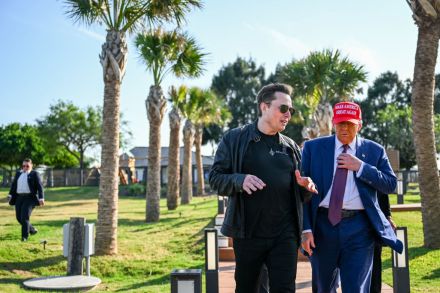
The Trump administration’s takedown of federal spending has begun in earnest with the dismantling of the US Agency for International Development (USAID), an independent government agency that has been funding healthcare, pro-democracy and civil society programmes around the world since 1961. ‘We spent the weekend feeding USAID into the wood chipper,’ Elon Musk boasted on X, describing the agency as ‘a viper’s nest of radical-left Marxists who hate America.

Is Europe about to switch Nord Stream back on?

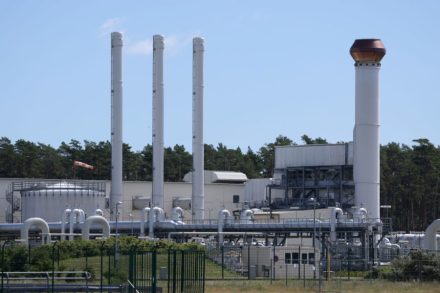
Could Gazprom’s Nord Stream undersea gas pipelines, partially destroyed by saboteurs in September 2022, eventually be reopened? This week, Denmark’s energy agency authorised Nord Stream 2 AG – the Russian-owned company that operates the pipelines – to begin work capping the severed ends of the three destroyed pipelines. That will be the first step to restoring the link that before Vladimir Putin’s invasion of Ukraine used to supply up to a 40 per cent of Germany’s gas.   The move comes just days after Alice Weidel, leader of Germany’s Alternative für Deutschland party or AfD, told a party conference in Riesa that 'we will put Nord Stream back into operation, you can count on it!

Putin’s Middle Eastern house of cards

The Kremlin’s involvement in Syria’s civil war was always, first and foremost, about posing as a great multi-regional power rather than actually being one. Vladimir Putin’s deployment of a single squadron of warplanes to Hmemim airbase in Syria in 2015 brought a gun to a knife-fight. The Assad regime had been fighting insurgents with poison gas and infamous ‘barrel bombs’ rolled out of helicopters. Russian Su-24 and Su-35 fighter-bombers and Kamov helicopter gunships were quickly able to turn the tide against the growing rebellion and undoubtedly saved Bashir al-Assad’s regime.

The deepening unpopularity of Zelensky

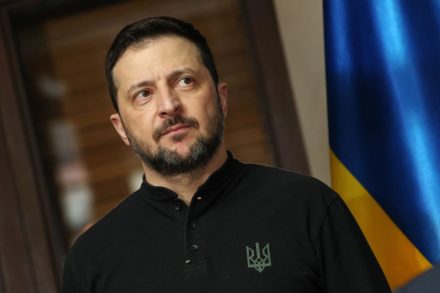
Perhaps all political careers must end, inevitably, in failure. But few politicians have had careers as meteoric, as surprising, as consequential or as heroic as that of Ukraine’s President Volodymyr Zelensky. In just five years he has gone from TV comedian to victor of the biggest presidential landslide in his country’s history to inspiring wartime leader who impressed the world with his resolve and personal bravery. But now with the war entering its third (and probably last) winter, Zelensky’s extraordinary story as Ukraine’s leader has reached its final chapter.

Biden’s missiles will do Ukraine no favours

With just over 60 days left in office, Joe Biden’s White House has significantly escalated the Ukraine war it had tried so hard to contain by authorising the use of US-supplied medium-range ATACMS (Army Tactical Missile Systems) and antipersonnel mines against targets inside Russia. Biden’s U-turn breaks a long-standing convention on US presidential transitions that lame-duck presidents aren’t supposed to make major foreign policy changes – especially not ones that severely constrain the stated policies of their elected successor. The immediate result has been a direct Russian threat to the US embassy in Kyiv and what German defence minister Boris Pistorius has called ‘sabotage’ of undersea internet cables in the Baltic.

The appalling truth about London’s ambulance service

‘An old lady’s fallen down – quick! She’s bleeding. Come help.’ An elderly woman lay on the entrance steps of the block of mansion flats, food from a Tesco bag spilled around her, blood spreading on the stone. It was clear she’d tripped and banged her forehead, opening a large gash over her right eye. The courier had already tried to call an ambulance, but been put on hold. He had to continue his delivery run, so he’d begun ringing doorbells to summon assistance. The lady was groggy but awake. I asked her name – Daphne. I helped her sit up, slowly, and propped her against the doorway’s cold brickwork. Checking she wouldn’t keel over, I ran inside for a box of tissues. We wadded up handfuls and pressed them on the wound to staunch the bleeding.

Can Trump really end the war in Ukraine?

31 min listen

Freddy Gray speaks to the Spectator's Russia editor Owen Matthews about Trump's plan for Ukraine. How much leverage does he have in negotiations with Putin? Plus, what does a Trump presidency mean for the future of NATO itself?

Donald Trump’s win marks the beginning of the end of the Ukraine war

Donald Trump’s election victory heralds the beginning of the end of the Ukraine war – and is likely to leave Vladimir Putin in control of most, if not all, of the territory he has seized in nearly three years of bloody conflict. To many Ukrainians, such an outcome will be a betrayal of their struggle, a stab in the back by the West that will sow decades of anger and resentment. To others, though, a swift end to the conflict before more land is lost and tens of thousands more young Ukrainians die represents the best hope of actually salvaging a decent future for their country before their infrastructure, economy, and an entire generation are annihilated completely.

Meet the western conservatives moving to Russia

Tofurious Maximus Crane was sitting in a barber’s chair in Moscow when he received the greatest news of his life. It was 19 August, the day Vladimir Putin signed a decree allowing foreigners to immigrate to Russia. Now, the 46-year-old native of Virginia Beach, Virginia, could finally achieve his life’s dream of remaining in Russia for ever. ‘For me, the decree is the best thing that ever happened in my life besides, you know, family and children,’ says Crane, a charismatic bear of an American who sports a long Old Testament beard and perfectly coiffed hipster hair. ‘I got the notification about the decree, and I jumped up out of the chair and was crying. I was very excited.

Ukraine’s Nato fantasy

Ukraine’s President Zelensky was in Downing Street last week – as well as Paris, Rome, Berlin and Dubrovnik – asking for Nato membership. In every city, he heard the same ‘not yet’ as he’d received in Washington last month. Some of Kyiv’s western allies believe membership is the only way to guarantee Ukraine’s independence. Russia has never attacked a Nato country, because of the Article 5 guarantee that an attack against one is an attack against all. Therefore, Ukraine will never be safe from Russia unless it joins. The US government wants to avoid the war that Ukrainian membership would oblige it to fight But there’s a fundamental flaw to this logic: Ukraine cannot join Nato in the foreseeable future.

Few rulers can have rejoiced in a less appropriate sobriquet than Augustus the Strong

Augustus the Strong (1670-1733), Elector of Saxony and King of Poland, is often labelled one of the worst monarchs in European history. His reign is billed by Tim Blanning’s publishers as ‘a study in failed statecraft, showing how a ruler can shape history as much by incompetence as brilliance’. Yet this thorough and often hilarious study of Augustus’s life and times reveals these harsh headline words to be exaggerated. Indeed the man comes across as quite a good egg, as much sinned against as sinning.

What does ‘victory’ for Ukraine look like?

This week in New York Volodymyr Zelensky will present Joe Biden with a ‘Victory Plan’ for Ukraine. But how to define what ‘victory’ actually means? A fundamental and fast-widening distance is opening up over that question between Zelensky and his western allies – as well as inside Ukraine itself. Zelensky insists that the bottom line of a Ukrainian victory remains ‘the occupation army [being] driven out by force or diplomatically, in such a way that the country preserves its true independence and is freed from occupation’. He has also rejected the idea of a ceasefire, saying that any ‘freezing of the war or any other manipulations… will simply postpone Russian aggression to a later stage’.

How Wagner mercenaries abused HSBC and JP Morgan

Whatever happened to the Wagner Group, Evgeny Prigozhin’s shadowy army of prisoners and mercenaries? In the wake of Wagner’s abortive mutiny in June 2023 – and of Prigozhin’s own not-so-mysterious death two months later in a plane crash near Moscow – most of the Russia-based units of the group were rolled into the Kremlin’s official armed forces. In Africa, however, where Wagner built an empire not only of guns-for-hire but also of murky mining and oil concessions, Prigozhin’s former henchmen continue their bloody and lucrative business.

Joan Collins, Owen Matthews, Sara Wheeler, Igor Toronyi-Lalic and Tanya Gold

30 min listen

On this week’s Spectator Out Loud: Joan Collins reads an extract from her diary (1:15); Owen Matthews argues that Russia and China’s relationship is just a marriage of convenience (3:19); reviewing The White Ladder: Triumph and Tragedy at the Dawn of Mountaineering by Daniel Light, Sara Wheeler examines the epic history of the sport (13:52); Igor Toronyi-Lalic looks at the life, cinema, and many drinks, of Marguerite Duras (21:35); and Tanya Gold provides her notes on tasting menus (26:07).  Presented and produced by Patrick Gibbons.

What China wants from Russia

On the face of it, the ‘no limits’ partnership between Russia and China declared weeks before Vladimir Putin invaded Ukraine in February 2022 appears to be going from strength to strength. Last week, Chinese Premier Li Qiang spent four days in Moscow and signed off on what Putin described as ‘large-scale joint plans and projects’ that would ‘continue for many years’. Russia’s trade with China has more than doubled to $240 billion since the invasion, buoying the Kremlin’s coffers with oil money and substituting goods sanctioned by the West. Moscow and Beijing have also stepped up joint military exercises.