Owen Matthews

Owen Matthews

Owen Matthews is an Associate Editor of The Spectator and the author of Overreach: The Inside Story of Putin’s war on Ukraine.

Trump has called Europe and Ukraine’s bluff

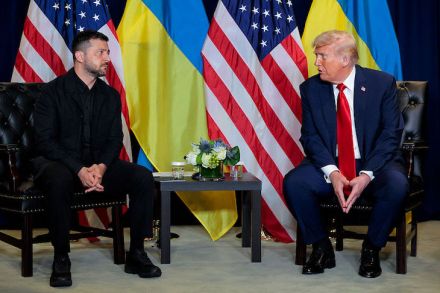
Has Donald Trump just announced the most consequential foreign policy reversal of his presidency? If so, Ukrainian President Volodymyr Zelensky and France’s Emmanuel Macron – the last leaders to speak to Trump just before his epochal announcement – should be careful what they wish for. Despite a reputation in some quarters for being a master manipulator, Putin utterly failed to correctly read Donald Trump In the mother of all flip-flops, Trump on Wednesday posted on Truth Social that ‘Ukraine, with the support of the European Union, is in a position to fight and WIN all of Ukraine back in its original form.’ That’s a position that even Joe Biden, in his most optimistic moments, never dared to take.

The Kremlin had nothing to gain from sending drones to Poland

Provocation, mistake, or something in between? Either Putin sent Russian drones into Poland’s airspace on Tuesday night to test Nato’s reaction, or Ukrainian electronic jamming scrambled the targeting systems on Russian drones and sent them haywire. Or perhaps the Kremlin is playing a grey-zone game, launching an accidentally-on-purpose attack to push Europe’s boundaries.  The problem with the Kremlin testing the boundaries theory is that it doesn’t make much political or military sense Whatever Putin’s intent, the shooting down of several drones marks the first time ever that Nato warplanes have engaged and destroyed Russian weapons in European airspace.

The West can’t afford to shun Russian oil

From our US edition

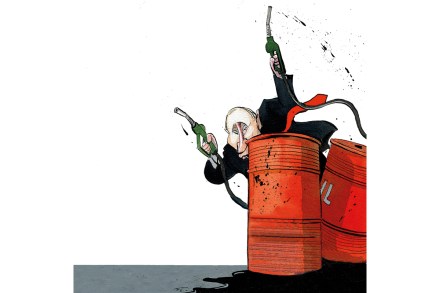
Donald Trump is a radical foreign-policy innovator. Over the past few decades, the US has tried a range of non-military means to nudge, squeeze and occasionally strangle its adversaries. These range from travel bans and banking restrictions, to export controls and trade limitations. But never has the US – or indeed anyone – tried to use import tariffs as a species of economic sanction. Trump has threatened Vladimir Putin with introducing “secondary sanctions” against countries that import Russian oil – a threat intended to strike at the heart of Russia’s war economy. And on August 4, Trump appeared, for the first time, to make good on that threat.

oil

Will Trump fall for Putin’s trap?

29 min listen

Donald Trump has met both Vladimir Putin and Volodymyr Zelensky this week, raising hopes of progress in ending the Ukraine war – but is it really a breakthrough, or a trap? US deputy editor Kate Andrews speaks with associate editor Owen Matthews – author of this week’s cover story Putin’s Trap – and Sergey Radchenko, professor at Johns Hopkins. They discuss why Putin’s charm offensive may be designed to paint him as the 'reasonable' negotiator, leaving Zelensky isolated, and whether Europe or Trump himself will fall for it.

Putin’s trap, the decline of shame & holiday rental hell

50 min listen

First: Putin has set a trap for Europe and Ukraine ‘Though you wouldn’t know from the smiles in the White House this week… a trap has been set by Vladimir Putin to split the United States from its European allies,’ warns Owen Matthews. The Russian President wants to make a deal with Donald Trump, but he ‘wants to make it on his own terms’. ‘Putin would like nothing more than for Europe to encourage Ukraine to fight on… and lose even more of their land’. But, as Owen writes, those who count themselves among the country’s friends must ask ‘whether it’s time to choose an unjust peace over a just but never-ending war’. Have European leaders walked into Putin’s trap? Owen joins the podcast alongside Gideon Rachman of the Financial Times.

Putin’s trap: how Russia plans to split the western alliance

Though you wouldn’t know from the smiles around the table at the White House this week, a trap has been set by Vladimir Putin designed to split the United States from its European allies. In Washington on Monday, Europe’s leaders, plus Sir Keir Starmer and Volodymyr Zelensky, agreed with Donald Trump that the killing in Ukraine should and can be ended as soon as possible. They lavished praise on Trump for reaching out to the Kremlin, despite having themselves treated Putin as a pariah for the past three years. And they even enthusiastically applauded the notion of security guarantees similar to Nato’s Article Five ‘all-for-one and one-for-all’ mutual defence clause as a way to safeguard Ukraine’s borders in the future.

The Ukraine summit ignored the difficult questions

What a lovely meeting Volodymyr Zelensky and his European allies had with Donald Trump. The US President complimented Zelensky on his outfit, German Chancellor Merz on his ‘great tan’, and said that Finnish President Alexander Stubb was ‘looking better than I’ve ever seen you look!’ Everyone – especially Zelensky – laughed uproariously at all Trump’s jokes. And all eight leaders present were at great pains to pretend that they were on the same page when it came to achieving peace in Ukraine.  But there was one small thing missing from this White House festival of bonhomie and mutual flattery, and that was a substantive discussion of the actual nuts and bolts of a deal that Vladimir Putin would be prepared to accept.

The 12 minutes of the Trump-Putin summit that shook the world

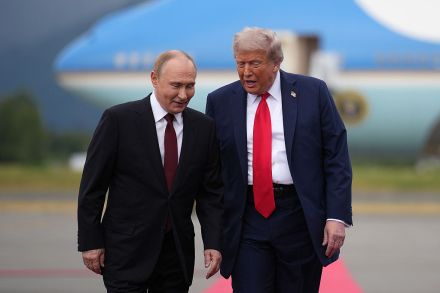
The Trump-Putin press conference in Anchorage was 12 minutes that shook the world. Putin got precisely what he wanted, which was full personal rehabilitation as a respectable world leader. Donald Trump literally rolled out the red carpet for Putin and at the presser said that he had ‘always had a fantastic relationship with President Putin, with Vladimir.’ And though no deal was done over Ukraine, what Putin achieved was something far more valuable – a re-set of relations between Russia and the US. Putin admitted that bilateral ties had fallen to the ‘lowest point since the Cold War’ but called for both sides to move on. ‘Not far from here lies the international date line where one can literally step from yesterday into tomorrow,’ said Putin.

Did Putin get the upper hand in Alaska?

Donald Trump hasn't left his meeting with Vladimir Putin in Alaska with a deal to end the war in Ukraine. He told reporters that 'great progress' was made but 'we didn't get there'. To discuss who really got the upper hand, Freddy Gray is joined by Spectator associate editor and Russia correspondent Owen Matthews.

Trump and Putin fundamentally misunderstand each other

Let the trolling begin. Chicken Kiev was the airline meal served to the first planeload of Russian diplomats, government officials and journalists as they flew to Anchorage, Alaska. Russia’s veteran foreign minister Sergei Lavrov arrived dressed in a white sweatshirt bearing the logo 'CCCP' – or USSR in Cyrillic. Russian State TV viewers have been treated to video montages of the greatest moments of US-Russian cooperation, from astronauts meeting in the Mir space station to soldiers embracing on the Elbe river in 1945. The US side, by contrast, has done their bit to make the visiting Russians feel unwelcome by billeting the Kremlin press corps in a sports stadium equipped with army cots, flimsy cloth partitions, and too few electrical sockets.

Trump’s Alaska meeting is a gift for Putin 

From the Kremlin’s point of view, holding a US-Russia summit in Anchorage, Alaska is an idea of fiendish brilliance. The venue itself determines the agenda. Literally half a world away from the petty concerns of the European continent, Donald Trump and Vladimir Putin can flex the vastness of their respective countries. Anchorage is an eight-hour flight from Washington D.C. and roughly the same distance from Moscow, flying over no other country but Russia for most of the way. By travelling to the point where their countries almost touch in the North Pacific, both leaders can feel justified in prioritising issues that concern just the two of them, from arms control treaties to space cooperation to Arctic mineral rights.

Why are Trump and Putin meeting in Alaska?

Donald Trump and Vladimir Putin are due to meet in Alaska this week. On the table: a discussion on how to end the war in Ukraine. Trump has been pushing hard to end the war. What's the significance of meeting in Alaska, what are the prospects of the war ending, and what are both sides hoping to achieve? Freddy Gray is joined by The Spectator's associate editor Owen Matthews, who writes on the subject in this week's magazine.

What Putin wants from his meeting with Trump

With just a day to go until the expiry of his ultimatum to Vladimir Putin to halt the war on Ukraine or face dire consequences, Donald Trump has once more reset the clock. Trump intends to meet in person with President Vladimir Putin of Russia as soon as next week, the New York Times has reported. That summit will be followed by a second, trilateral meeting including Trump, Putin and President Volodymyr Zelensky of Ukraine, Trump reportedly told top European leaders in a conference call on Wednesday night. The announcement came after Trump’s envoy, real state developer Steve Witkoff, met Putin for three hours of talks at the Kremlin. Trump wrote on social media that he had 'updated some of our European Allies' about the Witkoff talks.

Reform’s motherland, Meloni’s Italian renaissance & the adults learning to swim

46 min listen

First: Nigel Farage is winning over women Does – or did – Nigel Farage have a woman problem? ‘Around me there’s always been a perception of a laddish culture,’ he tells political editor Tim Shipman. In last year’s election, 58 per cent of Reform voters were men. But, Shipman argues, ‘that has begun to change’. According to More in Common, Reform has gained 14% among women, while Labour has lost 12%. ‘Women are ‘more likely than men… to worry that the country is broken.’ Many of Reform’s most recent victories have been by women: Andrea Jenkyns in the mayoral elections, Sarah Pochin to Parliament; plus, there most recent high profile defections include a former Tory Welsh Assembly member and a former Labour London councillor.

Giorgia Meloni’s Italian renaissance

Rome Last weekend, Rome hosted nearly a million young pilgrims to celebrate the Papal Jubilee of Youth. Part Woodstock festival, part giant outdoor mass and all-night vigil, crowds of students from all over Italy and beyond gathered to listen to Christian rock music, sing hymns and receive the blessing of the new Pope. Leo XIV, arriving in a white papal helicopter, was feted like a rock star. The event was orderly, joyous and a sign of a society at peace with itself and proud of its heritage. The way Italians carry on, you’d think the country was booming. The Lombardy and Veneto regions are gearing up to host the 2026 Winter Olympics.

Zelensky’s war on Ukraine’s anti-corruption agencies is a disaster

Cries of 'Shame!' rang out in the Rada, Ukraine’s parliament, today as lawmakers from Volodymyr  Zelensky’s Servant of the People Party, backed by most opposition parties, voted to bring key independent anti-corruption agencies under government control. The new law, which was backed by 263 lawmakers with just 26 opposing or abstaining, has sparked widespread condemnation from many politicians and civil society activists who had previously been loyal champions of Zelensky’s. The dismemberment of the National Anti-corruption Bureau (NABU) and the Special Anti-corruption Prosecutor's Office (SAPO) has also caused deep disquiet among Ukraine's leading international backers. Zelensky’s government seems to have seriously miscalculated the mood of ordinary Ukrainian people.

How the Bank broke Britain, Zelensky’s choice & the joys of mudlarking

49 min listen

First up: how the Bank of England wrecked the economy Britain’s economy is teetering on the brink of a deep fiscal hole, created by billions of pounds of unfunded spending – never-ending health promises, a spiralling welfare bill and a triple lock on the state pension, which will cost three times as much as originally estimated. Although politicians ‘deserve much of the blame for the economic state we’re in’, it’s Andrew Bailey – Michael Simmons argues in the magazine this week – who ‘has enabled their recklessness’. He joined the podcast to discuss who really broke Britain with Kate Andrews, Deputy Editor of The Spectator’s world edition and former Economics Editor. (01:15) Next: has Ukraine lost faith in Zelensky?

Ukrainians have lost faith in Zelensky

Donald Trump this week boosted Ukraine’s air defences with new Patriot batteries, threatened Vladimir Putin with sanctions if he does not agree to a ceasefire, and even reportedly gave tacit approval to more Ukrainian strikes on Moscow. Trump’s newfound support for Ukraine is a welcome lifeline. The question is whether his help will be enough to stop Russia’s relentless attacks before Ukraine is engulfed in a critical military, political and social crisis that threatens to destroy it from within. Putin chose war over peace this spring because his spies and generals told him that Ukraine is on the brink of collapse. Alarmingly, they may be right.

For Trump, solving Ukraine won’t be as easy as Iran

For the moment, at least, the world seems to be going Donald Trump’s way. Instead of setting the Middle East ablaze, Trump’s air strikes on Iran’s nuclear facilities have been met by a single, casualty-free Iranian counterstrike on the US’s al-Udeid Air Base in Qatar. And though Tehran described the attack as 'mighty and successful', it emerged that Iran had actually warned the Qatar authorities in advance of the strikes – a message that they immediately passed on to the Americans. At the Nato summit in the Hague this week, European leaders lined up to support Trump’s demand that they 'pay their way' and boost their defence spending to 5 per cent of GDP.

Owen Matthews, Bijan Omrani, Andrew Hankinson, Laurie Penny & Andrew Watts

29 min listen

On this week’s Spectator Out Loud: Owen Matthews says that Venice’s residents never stop complaining (1:11); Bijan Omrani reads his church notebook (7:33); Andrew Hankinson reviews Tiffany Jenkins’s Strangers and Intimates: The Rise and Fall of Private Life (13:54); as 28 Years Later is released, Laurie Penny explains the politics behind Alex Garland’s film franchise (18:25); and, Andrew Watts provides his notes on Angel Delight (25:09). Produced and presented by Patrick Gibbons.