Owen Matthews

Owen Matthews

Owen Matthews is an Associate Editor of The Spectator and the author of Overreach: The Inside Story of Putin’s war on Ukraine.

Russian roulette: what ‘tactical’ nuclear war would mean

From our UK edition

In 1861 an American seed-drill designer named Richard Jordan Gatling created a super-weapon that he believed would bring an end to war. With his hand-cranked, ten-barrel machine-gun, Gatling did for warfare what his contemporary Isaac Singer had done for sewing, bringing mechanisation to a former handcraft. Gatling’s gun fired more than 200 rounds a minute – as much as an entire battalion of soldiers with muzzle-loading muskets. In his memoirs, Gatling wrote that ‘if a four-man machine-gun crew could kill a thousand infantrymen in five minutes’ then perhaps the terror created by such a weapon would ‘discourage war altogether’.

What Zelensky has taken from his former TV career

From our UK edition

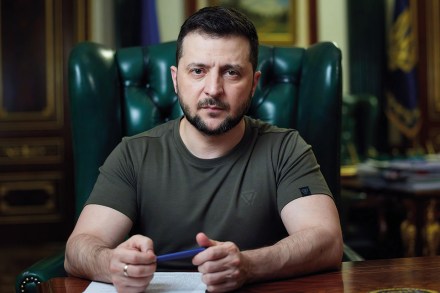
Volodymyr Zelensky is one of the few leaders of modern times whose charisma, determination and sheer cojones can be said, without exaggeration, to have changed the course of history. In the first hours of the Russian invasion the US famously offered to evacuate him from Kyiv to a safer location, to which his response was (in spirit, if not in actual words): ‘I need ammo, not a ride.’ His determination to remain in the heart of his besieged capital seriously confounded Putin’s invasion plans, which were predicated on quickly toppling or murdering him.

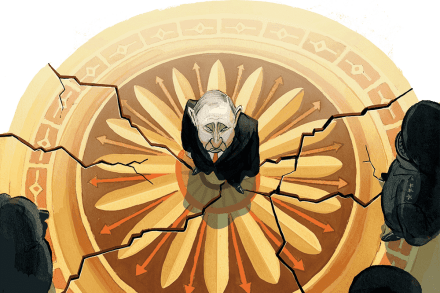
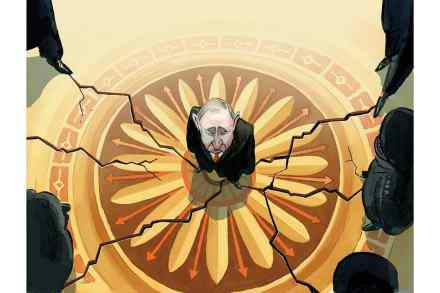
Kremlin crack-up: who’s out to get Putin?

From our UK edition

39 min listen

This week: In his cover piece for the magazine Owen Matthews writes about the power struggle at the heart of Russia. He is joined by Jade McGlynn, specialist in Russian Studies at the Monterey Initiative, to discuss whether Putin might be running out of time (01:00).Also on the podcast: Has America’s pot policy gone to pot? In The Spectator this week Mike Adams says that US cannabis legislation has been a total failure, a view contested by Katya Kowalski, Head of Operations at drug policy think tank Voltface. They both join The Edition podcast to debate the way forward for cannabis legalisation (16:26).And finally: Should we pity privileged men? For our magazine Damian Reilly writes about The Privileged Man, the support group for men that have it all.

Kremlin crack-up: who’s out to get Putin?

From our UK edition

The soldier with the Kalashnikov wasn’t happy. Neither were the hundreds of comrades who had chosen him as the spokesman for their angry complaints as they milled about on a train platform somewhere in Russia. ‘There are 500 of us, we are armed, but we haven’t been assigned to any unit,’ the newly mobilised soldier complained on a video that went viral earlier this month. ‘We’ve been living worse than farm animals for a week… Nobody needs us, we’ve had absolutely no training.’ Other soldiers, most of them masked, chipped in with more grievances. ‘The officers treat us like animals,’ shouted one. ‘We’ve spent a fortune on buying food for ourselves.

Who really blew up the Kerch Bridge?

From our UK edition

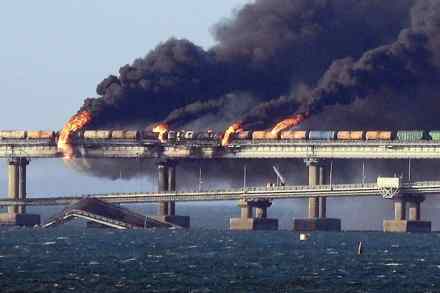
Who blew up the Kerch bridge? One of President Zelensky’s most senior advisers, Mikhailo Podolyak, has suggested that the Russians did it themselves. 'Isn’t it obvious who made an explosion?' he asked on Twitter. 'Truck arrived from RF (Russian Federation).' Officially, the Ukrainian government is saying nothing: its secret service has said it will remain quiet until after the war. Zelensky himself has so far refrained from commenting on the attack, except to say that the 'weather has been cloudy in Crimea.' If indeed they were responsible, why would the Ukrainians not claim responsibility for a sabotage attack of high sophistication that caused widespread jubilation in Ukraine and across the world?

War has come home to Russia

From our UK edition

Moscow A week of somewhat mixed messages from the Kremlin. One day Vladimir Putin opened Europe’s largest Ferris wheel and presided over citywide celebrations of Moscow’s 875th anniversary, full of calm and good cheer and mentioning the war only in passing. A few days later he appeared on national TV telling the world that he was ‘not bluffing’ about using nuclear weapons and announcing a partial mobilisation. Putin has never fought a contested election in his life, so he’s never been a great one for the common touch. But in his latest address he looked as pale and dead-eyed as Nosferatu. Russians know better than most that the more strenuously something is officially denied, the more likely it is to happen.

Europe should welcome fleeing Russians

From our UK edition

In the wake of Vladimir Putin’s surprise announcement of partial mobilisation on Wednesday, thousands of young Russian men decided that the time had come to flee. Google searches for ways to leave Russia (as well as for ‘how to break your own arm’, another way out of military service) spiked. Flights sold out, and long lines of cars formed at usually-sleepy border crossings into Georgia, Mongolia and Kazakhstan – as well as the more conventional transit point to Finland.   But for most would-be refugees, escape from Putin’s Russia and possible involuntary service in Ukraine remains an impossible dream.

Owen Matthews, Cindy Yu and Alicia Healey

From our UK edition

19 min listen

This week on Spectator Out Loud, Owen Matthews evaluates Russia’s ultra-nationalist threat (00:55), Cindy Yu reviews Perhat Tarsun’s The Backstreets (12:36) and ex-royal ladies maid Alicia Healey tells us why a handbag was the Queen’s secret weapon (15:22).Produced and presented by Oscar Edmondson.

More mad than Vlad: Russia’s ultra-nationalist threat

From our UK edition

‘Russia without Putin!’ was the cry of Muscovites who turned out to protest against Vladimir Putin’s return to the presidency for a third term in December 2011. Crowds 100,000 strong chanted their opposition on Moscow’s Academician Sakharov Prospect – as symbolically named a venue as you could wish for – as riot police stood calmly by. There was anger in the crowd. But there was hope, too, not least because the massive protest was officially sanctioned. One after another, prominent opposition politicians such as Ilya Yashin, Boris Nemtsov and Alexei Navalny denounced Putin from a stage provided by the city authorities. Today the memory of those protests seems to belong to a different age of Russia. Yashin and Navalny are in jail.

Nothing is certain in Russia, where the past is constantly rewritten

From our UK edition

Enforced brevity focuses the mind wonderfully. And when the minds in question are two of the West’s most interesting historians of Russia, the result is a distillation of insight that’s vitally timely. Sir Rodric Braithwaite was Britain’s ambassador to Moscow from 1988-92 during the collapse of the USSR (where he was the boss of Christopher Steele, of Trump dossier fame), then chaired the UK’s Joint Intelligence Committee. He went on to write the brilliant Afgantsy, a history of the USSR’s disastrous Afghan war and its impact on the Soviet Union’s collapse, and Moscow 1941, a people’s history of the heroic Soviet fight against Nazism.

The Russian enigma

From our UK edition

Enforced brevity focuses the mind wonderfully. And when the minds in question are two of the West’s most interesting historians of Russia, the result is a distillation of insight that’s vitally timely. Sir Rodric Braithwaite was Britain’s ambassador to Moscow from 1988-92 during the collapse of the USSR (where he was the boss of Christopher Steele, of Trump dossier fame), then chaired the UK’s Joint Intelligence Committee. He went on to write the brilliant Afgantsy, a history of the USSR’s disastrous Afghan war and its impact on the Soviet Union’s collapse, and Moscow 1941, a people’s history of the heroic Soviet fight against Nazism.

A Russian visa ban would delight Putin

From our UK edition

Do you hate Russia, or do you hate Putin? That’s the central question behind a current debate about whether to suspend tourist visas to the EU for all Russian citizens. Ukraine’s president Volodymyr Zelensky started the ball rolling last week in an interview with the Washington Post, where he said that the 'most important sanction' that the EU could impose on Russia was to 'close the borders, because the Russians are taking away someone else’s land'. He added that Russians should 'live in their own world until they change their philosophy.

Sanctions are working – whatever Putin says

From our UK edition

Don’t believe Vladimir Putin’s hype. The Russian economy is not OK. With western sanctions jeopardising up to 40 per cent of the country’s GDP, Putin’s assurances of an economic pivot to the East are a sham. And his weaponising of gas supplies to Europe is the financial equivalent of strapping on a suicide vest. That, roughly, is the message of a major new study published last week by the Yale School of Management about the impact of sanctions on Russia. Yale, working with a team of international economists, has looked past a wall of Russian obfuscation and used real-world data from retailers, energy traders and investors to reveal a picture very different from the rosy image presented by Putin at the St Petersburg Economic Forum in June.

How Russia is holding Ukraine’s wheat exports to ransom

From our UK edition

Starvation is a weapon as old as war itself. But Vladimir Putin has put a perversely postmodern twist on the ancient stratagem. Instead of menacing his Ukrainian enemy with hunger and poverty, he is threatening the whole world. Putin has long used oil and gas as a political instrument, most recently cutting off supplies to Poland and Bulgaria in retaliation for their refusal to pay their bills in roubles. But it is Putin’s blockade of the export of Ukrainian wheat that could prove just as effective in Russia’s war of weaponised commodities. Together, Russia and Ukraine produce 30 per cent of the global wheat exports. Ukraine is the world’s sixth biggest exporter of grains, almost all of it through seven Black Sea ports from Odessa to Mariupol.

Zelensky’s choice

From our UK edition

31 min listen

This week Lara Prendergast and William Moore talk to James Forsyth and the academic, Dr Alexander Clarkson about Zelensky's possible path to peace (00:42). Followed by Owen Matthews, The Spectator's Russia correspondent on Turkey's power over Nato expansion (13:28). Finally, a chat between two bowls fanatics, Michael Simmons, The Spectator's data journalist and Andrew Gibson from the bowls green in Streatham (22:00).Hosted by Lara Prendergast & William MooreProduced by Sam HolmesSubscribe to The Spectator today and get a £20 Amazon gift voucher: spectator.

Cold Turkey: why is Erdogan resisting Nato’s expansion?

From our UK edition

Driving a hard bargain is the Turkish President Recep Tayyip Erdogan’s chief survival skill – one that has kept him in power for nearly as long as his Russian counterpart Vladimir Putin. And the basic principles of bargaining are twofold: never give something away for nothing, and make your threats to walk away convincing. No surprise, then, that Erdogan’s buzz-killing announcement last week that Turkey would oppose Swedish and Finnish membership of Nato was made in characteristically blunt terms. Speaking of a planned visit of Nordic diplomats to Ankara, Erdogan asked: ‘Are they coming to convince us? Excuse me, but they should not tire themselves.

The new White Russians: the fate of émigrés fleeing Putin

From our UK edition

It’s spring in Tbilisi. The fruit trees are in full blossom, the nights are warm. The Purpur restaurant near the Gudiashvili Gardens and Vinzavod No. 1 on Rustaveli Avenue – favourites of visiting Moscow hipsters and creatives for years – buzz with Russian conversation. ‘Everyone I know is here now,’ says Katya, 43, a museum curator visiting from Moscow. ‘It’s like Kvartira 44 [a Moscow café popular with the intelligentsia] on an outing.’ But instead of excitement, the mood among the thousands of Russians who have fled their country for the Georgian capital since the beginning of the war is one of anxiety and barely suppressed desperation.

Cross to bear

From our UK edition

40 min listen

In this week’s episode: How are the people of both Russia and Ukraine processing the war? Our Russia correspondent Owen Matthews writes in this week’s Spectator that he has been stunned at how easily some of his Russian friends have accepted the Kremlin’s propaganda. He joins the podcast to explain why he thinks this is, followed by journalist and author of This Is Not Propaganda, Peter Pomerantsev, who has travelled to Kyiv to celebrate the festival of Passover. (00:48) Also this week: Is Rishi Sunak politically incompetent? Until recently Rishi Sunak was a favourite to succeed Boris Johnson, but this week his popularity plummeted to new lows.

Putin’s war is a cross to bear for all Russians

From our UK edition

‘The photographs of murdered civilians, their hands tied behind their backs, shot in the head and tossed like animals on to the street… we will not forget, and no one will let us forget,’ wrote Russian journalist and author Yevgenia Albats last week. ‘The guilt for this will lie on our children and grandchildren. Bucha, Irpin, Motyzhin – we will now have to live with them for ever.’ Powerful words and moving nostra culpa for Russian atrocities in Ukraine. But they raise a vital question. Who, exactly, is the ‘we’ who is to bear the blame, guilt and punishment? All Russians? The 70 per cent of Russians who official polls claim actively support the war? Russian soldiers responsible for the atrocities?

Turkey’s dilemma

From our UK edition

39 min listen

In this week’s episode: could President Erdogan broker a peace deal between Putin and the West?  For this week’s cover piece, Owen Matthews has written about how Turkey’s President Erdogan became a key powerbroker between Vladimir Putin and the Western alliance. On the podcast, Owen is joined by Ece Temelkuran, a political thinker, author, and writer of the book How to Lose a Country. (1:13)Also this week: a look at Tina, the drug devastating the gay community.Dr Max Pemberton has written about Tina, a dangerous drug often used at chemsex parties. Max joins us now along with Philip Hurd, a chemsex rehabilitation professional and trustee of Controlling Chemsex. (14:02)And finally: Are The Oscars losing their relevance?