Olivia Potts

Olivia Potts

Olivia Potts is the Guild of Food Writers’ Cookery Writer of the Year 2025. She hosts The Spectator’s Table Talk podcast and writes Spectator Life's The Vintage Chef column

Setting the bar too high

‘The first thing we do, let’s kill all the lawyers,’ says Dick the Butcher in Henry VI, Part II. Mostly, this has been written off by literature undergraduates and fridge magnet makers as a joke at the expense of one of the oldest professions; but there’s another interpretation. Dick, although a comic character, was a follower of the rebel Jack Cade, who believed that by disrupting law and order he could overthrow the king and stand in his place. What this line actually means is that lawyers independent of the state are the final bastion of civilised society. Without lawyers, society falls apart.

Recipe: The Perfect Leftover Turkey Curry

Turkey curry, as a means of using up festive leftovers, has become something of a joke: the turkey curry buffet in Bridget Jones is the true low point of Bridge’s festive calendar. The prospect can strike fear into the most Christmas-spirited of souls. But actually, on Boxing Day, or the day after, the last thing you really want is the same meal you’ve been eating for the past two days, looking a little tired and fridge-worn, all the best bits gone. Don’t get me wrong: I’ll be first to the table for cold roast meats and my fifth serving of stilton in 48 hours, and if you hesitate for a moment, you won’t see that final portion of trifle for dust.

Forget the school slop – a true rice pudding is a rare treat

If I had a pound for every person who’s told me they hate rice pudding, I would be a rich woman. It might be the most hated dessert in Britain, and we have our school system to blame for it. The rice pudding that is ubiquitous (and seemingly generation-crossing) in British schools is offensively bland, inexplicably metallic and unbelievably gelatinous. Made with milk powder and water, never introduced even in passing to actual milk, then poured into a quadrant of a battered plastic tray, it is many people’s first dalliance with rice pudding and, understandably, their last.

Fad fury

Anthony Warner is angry. He’s angry about diets. He’s angry about detoxes. He’s angry about pseudoscience — and he has good reason. Fad diets are nothing new: for centuries, there have been charlatans whose dubious diets will help you lose weight, love life and beat cancer. But the rise of social media over the past 15 years has given such charlatans unprecedented reach. Their regimes and recipes, their coffee table books and Instagram posts suck in the young, the gullible and the vulnerable. Anthony Warner’s mission is to set the record straight. Warner has been writing as ‘The Angry Chef’ on his blog and elsewhere for several years.

How to cook slow roast Easter lamb

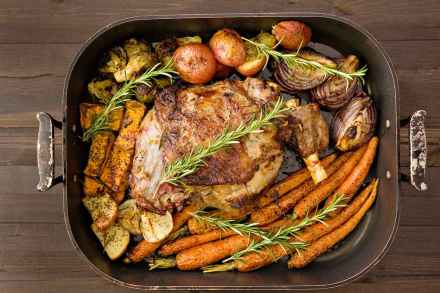
When it comes to the ultimate showstopper for an Easter Sunday lunch, it has to be roast lamb: as Spring has now truly sprung, it’s time to start enjoying British reared lamb, and treating it properly when we cook it. My favourite – and, I think, the easiest – way to cook lamb is to slow roast a leg of it, provencal style. Effortlessly impressive, this dish is left in a low oven for several hours, needing no attention. Lamb, rosemary, anchovies and garlic is a classic match, a combo hailing from the Provence region. It won’t taste fishy (although it might smell that way as it begins cooking), just deeply savoury, and fantastically fragrant from the herbs and garlic.

How to make simple Scotch pancakes

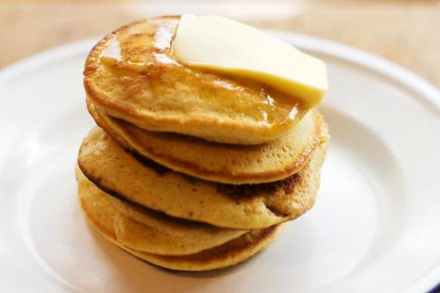
There is something terribly cheering about Scotch pancakes. Even the best normal pancakes are a bit floppy, a bit (whisper it) flabby. They give the cook the choice of eating them one by one as they cook, or resigning themselves to the reality of a mostly tepid, slightly clammy pile. Scotch pancakes are not like this. So let’s get this straight: what are they? A Scotch pancake, sometimes known by its other name, a drop scone, is a leavened and griddled pancake. It is far thicker and smaller than its unscotched sister, and although on the face of it bears a strong a resemblance to its American sibling, it’s really rather different.

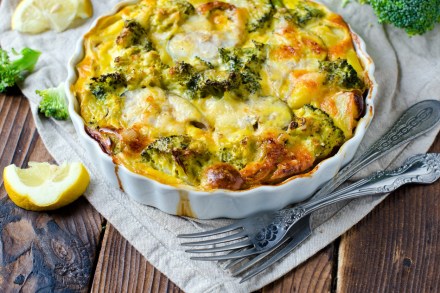
How to cook Stilton and broccoli bake

Finally, I almost have my kitchen back. I feel like during Christmas, we give our kitchens over to a higher power: one who insists that we fill our fridges with enough prosecco to see us through a nuclear winter, that everything is spiked with brandy, and followed with a chaser of cheese. We didn’t even host Christmas this year: we were away for Christmas-proper and bookended it with visiting various friends and relatives. There is, really, no excuse, for such a high proportion of festive leftovers. And yet, for the last week, I’ve found soggy mince pies everywhere, and brandy butter I don’t remember buying. But now, I am starting to regain control.

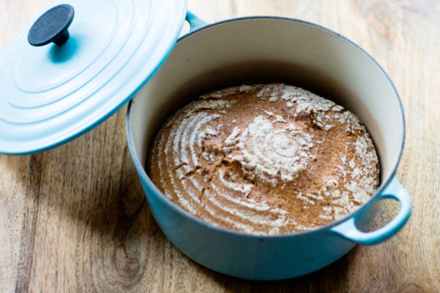
How to bake perfect spelt bread

Sometimes I worry that I’m flighty. And not in a charming, no one can tie me down, I’m-a-free-spirit sort of way. But rather skittish, unreliable, inconstant. When I feel that way, I come home and bake spelt bread. Spelt bread is grounding. It is quick, physical work that you have to do with your hands. It doesn’t require skill, implements or fancy ingredients. I don’t need to set a timer or panic about precision. It transforms me into someone pragmatic, capable and resilient. Spelt bread turns me into the baker I wanted to be when I first started cooking. I love sourdough. I think it’s magical, in the most literal sense of the word.

Blancmange is either ignored or despised: here’s how to make one that’s neither slimy nor bland

Blancmange. Poor, maligned blancmange. The slimy, over-set staple of children’s birthday parties and school dinners, destined to be pushed around a plate and loathed for life. Blancmange has become shorthand for an age of blandness: the dessert equivalent of Chris de Burgh. Even its name sounds heavy on the English tongue. But we do the blancmange a grave disservice. It is, after all, essentially a panna cotta. Shouldn’t a milk jelly by any other name taste as sweet? It is slightly lighter than its Italian counterpart, yes, but that’s all to its credit. So why the bad reputation? The culprit, I think, is packet blancmange. No amount of careful preparation can mask the cornflour. In theory, English blancmange is set with cornflour and French with gelatine.