Nigel Jones

Nigel Jones is a historian and journalist

Why I’m joining the Church of England

From our UK edition

I blame The Spectator. The chain of events that has led me to be christened and confirmed in the Anglican Church began with an article I wrote for Spectator Life in January. I had spent New Year’s Eve with a friend, a former vicar, who had lost his faith and honourably resigned his living as a result. He claimed that most contemporary clergy no longer believe in the basic tenets of Christian doctrine: the divinity and miracles of Christ; the Virgin birth; the resurrection; life after death; even the very existence of God. I wrote an article bemoaning this, and mourning the decline of the Church as an essential element of the nation.

How Mario Vargas Llosa was inspired by Thatcher

From our UK edition

Most writers – like the vast majority of actors, artists and other luminaries of our culture – belong to the political left, but the death aged 89 of the great Peruvian novelist Mario Vargas Llosa reminds us that this is not always the case. Most unusually for a Latin American author, Vargas Llosa, who won the Nobel Prize for Literature in 2010, was not only a proud Thatcherite conservative, but himself came within an ace of winning his troubled country’s presidency after temporarily laying down his pen and entering the political arena.

German tanks always flop. The Leopard 2 is no different

From our UK edition

The much-vaunted German Leopard 2 tank – 18 of which were sent to Ukraine in 2023 after prolonged national debates and foot-dragging by the outgoing Olaf Scholz government – is reportedly proving a flop on the battlefield. According to a confidential assessment by Germany’s own defence ministry, and published by the Daily Telegraph, the Leopards have disappointed their Ukrainian army crews, as they are said to be over-complex to operate and vulnerable to aerial attack by Russian drones. So limited are the Leopards’ capabilities proving in real battle conditions that their range and mobility are restricted. According to the study, they are being used as little more than moderately mobile artillery pieces.

The case for uniting the right

From our UK edition

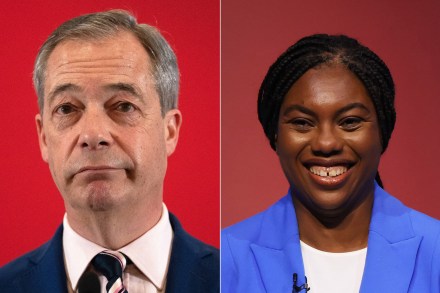
In just three weeks, voters in some 20 local council areas and in the Runcorn and Helsby parliamentary by-election go to the polls. It’s the first major test of voter opinion since the election of the Labour government in July, yet despite Labour’s increasing unpopularity, the official Tory opposition is braced for yet another thumping defeat. Far from anticipating victory, party leader Kemi Badenoch has warned of ‘difficult’ results ahead  – code for ‘defeats’ and the loss of Tory controlled councils and seats to Labour, the Lib Dems and the insurgent Reform UK party. The latter is fielding many former Tory defectors as its candidates, including at Runcorn and in Lincolnshire where former Tory minister Dame Andrea Jenkyns is Reform’s candidate to be mayor.

The BBC is right to restore this paedophile’s sculpture

From our UK edition

The BBC is once again at the centre of criticism – this time for spending more than £500,000 in restoring the vandalised sculpture of Ariel and Prospero from Shakespeare’s play The Tempest, that adorns the entrance to its London headquarters Broadcasting House. The statue was sculpted in 1931 by Eric Gill, rightly described today by both the Daily Telegraph and the Guardian as ‘a paedophile’ who not only sexually abused his two daughters and his sister – but had illicit relations with the family dog as well. But along with his sexual deviance, Gill was arguably the greatest British sculptor of the 20th century, whose name lives on in the Gill Sans typeface font that he designed in 1928.

The University of Sussex has learned nothing from the Kathleen Stock debacle

From our UK edition

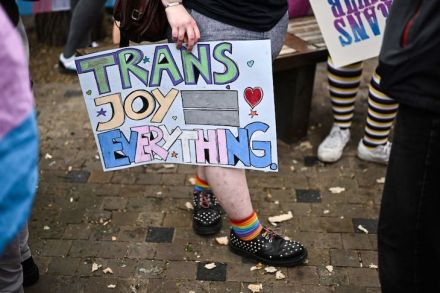
The University of Sussex, one of the leading temples of progressivism in academia, has been fined £585,000 for failing to safeguard free speech following the Kathleen Stock affair. Stock, a philosophy professor, was hounded out of Sussex in 2021 over her belief in biological sex. The Office for Students (OfS)'s investigation into the fallout from that debacle is damning: it criticised the university's policy statement on trans and non-binary equality, saying its requirement to 'positively represent trans people' and an assertion that 'transphobic propaganda [would] not be tolerated' could lead staff and students to 'self-censor'.

Oleg Gordievsky: the double agent Russia never stopped hunting

From our UK edition

The death of Oleg Gordievsky at the age of 86 comes at a moment when relations between his native Russia and his adopted country Britain are just as fraught as they were in his heyday as the West’s most important double agent at the height of the Cold War. Gordievsky’s life story reads like the plot of a John Le Carre spy thriller, and it has indeed been written up as such by the doyen of espionage chroniclers Ben Macintyre. Gordievsky was born into the ranks of the Soviet secret state apparat. Like Vladimir Putin, his father was a member of the NKVD, the name the feared Soviet secret police bore under Stalin.

The JFK files will infuriate conspiracy theorists

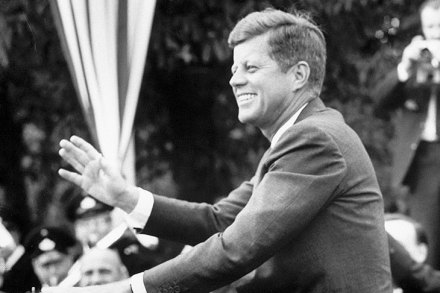
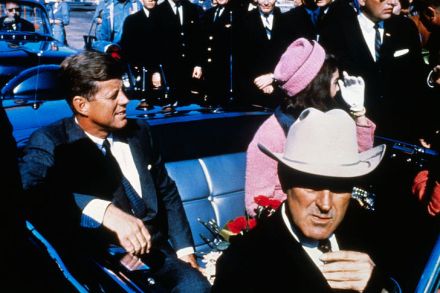
When Donald Trump ordered the declassification of thousands of secret government documents on the assassination of President John F. Kennedy, it seemed like it would be a red-letter day for America’s conspiracy theorists. The reality has been quite different. The JFK files — along with other documents about the killings of Bobby Kennedy and Martin Luther King Jr., which were released on Tuesday — have turned out to be a major disappointment. Around 2,000 documents were included in the release from the US National Archives and Records Administration. But despite Trump’s insistence that the files should not be redacted, many still have blacked-out passages. Others are so faded or poorly photocopied that they are illegible.

jfk

The JFK files will infuriate conspiracy theorists

From our UK edition

When Donald Trump ordered the declassification of thousands of secret government documents on the assassination of president John F Kennedy, it looked like it would be a red letter day for America’s conspiracy theorists. The reality has been rather different. The JFK files – as well as other documents about the killings of Bobby Kennedy and Martin Luther King, which were released on Tuesday – look like a very damp squib. These documents lead to more questions than answers Around 2,000 documents were included in the release from the US National Archives and Records Administration. But despite Trump's insistence that the files should not be redacted, many still have passages blacked out. Others are so faded or imperfectly photocopied as to be illegible.

Reform are setting Labour’s agenda

From our UK edition

No two politicians could be less alike than Sir Keir Starmer and Nigel Farage. But it looks as though the Prime Minister is transitioning into the Reform party’s rumbustuous leader –  or at least stealing his velvet collared clothes. Consider the evidence. Over the past few days and weeks, Labour has adopted a raft of the policies advocated by the right-wing insurgents. These include: Abolishing NHS England, the bureaucratic quango that runs our failing health service Announcing coming swingeing cuts to the ‘corrupt’ benefits system that Reform claims means that money is currently going to cheats and people who are not working.

Save Eastbourne’s bowls club!

From our UK edition

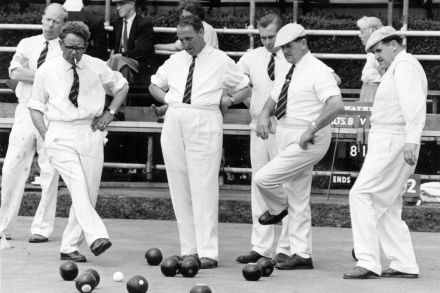
Somewhat unfairly (the actual median age of residents is 45) the East Sussex coastal resort of Eastbourne is known as ‘God’s waiting room’ because of the high number of old people who live in Britain’s sunniest town. Although Eastbourne’s reputation as a paradise for retirees may be overblown, it can’t be denied that the town is quieter and more sedate than the raucous youth culture pervading its coastal neighbours Brighton and Hastings. And now, according to the Times, Eastbourne’s elderly people are facing a new threat to their health and happiness alongside the inevitable aches and pains that accompany the autumn of life: their bowling club may have to close.

The ‘dirty dozen’ who crossed Nigel Farage

From our UK edition

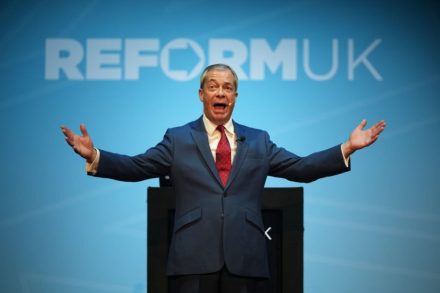
Nigel Farage is a curate’s egg of a politician: good in parts. The good part, at least for a Brexiteer like me, is that it was his tireless campaigning, more than any other’s, that freed Britain from the clammy grasp of the EU. No one else in politics can match his ability to fire up a crowd and put his finger on the popular pulse. But his fatal flaw is his inability or unwillingness to share power and lead a team. For Farage, it is his way or the highway. This dictatorial tendency has manifested itself at every stage of his turbulent career. Many have dared to challenge his authority or disagreed with him, and have then either been forced out or meekly submitted to the imperious Farage will.

Is snobbery behind Rupert Lowe’s row with Nigel Farage? 

From our UK edition

One aspect of the furious row that has split Reform UK which has yet to receive the attention it deserves is the part the good old British subjects of class and snobbery have played. The row erupted last week after Reform MP Rupert Lowe voiced mild criticism of party leader Nigel Farage in a Daily Mail interview, accusing him of being a ‘Messiah’ and voicing doubts about whether he had it in him to become prime minister. The two men’s relative differences in wealth may have added to the animosity between them Farage promptly hit back by saying that Lowe was ‘completely and utterly wrong’. The row then escalated to toxic levels when another two of the five Reform MPs, Richard Tice and Lee Anderson, rallied around Farage.

Rupert Lowe won’t be the last to fall out with Nigel Farage

From our UK edition

It was so predictable as to be almost inevitable: a massive row has erupted within the leadership of Reform UK. Rupert Lowe, one of Reform’s five MPs and the Member for Great Yarmouth – an outspoken keyboard warrior on social media and popular with many grassroots party members for his outspoken online comments – kicked off the row after he launched an open criticism of party founder and leader Nigel Farage. In an interview with the Daily Mail, Lowe, a millionaire businessman, said Reform was still a ‘protest party’ and that it was an open question about whether his ‘messianic’ leader would ‘deliver the goods’ and become prime minister. He suggested that Farage would only do so if he surrounded himself with the ‘right people’.

What Ovid in exile was missing

From our UK edition

A notable recent trend in popular history is the revival of interest in the ancient world. Mary Beard, Tom Holland, Bettany Hughes and Peter Stothard are just some of the historians whose books and television series have cashed in on our thirst for knowledge of distant forebears and their civilisations. Now Owen Rees joins the merry band with a strikingly original take on the subject. He argues that our interest in classical history focuses almost entirely on the Graeco-Roman world, specifically on the capital centres of those cultures. We therefore miss much of what was going on at the periphery of empires, with their vibrant cities and peoples.

Why does Labour loathe ordinary people?

From our UK edition

The jaw-dropping contempt dripping from the reply suggested by Labour’s sacked health minister Andrew Gwynne to a 72-year-old lady in Manchester who had complained about her bin collections may seem shocking but is scarcely surprising. In a WhatsApp chat with Labour councillors, Gwynne proposed to respond with: 'Dear resident, F*** your bins. I'm re-elected and without your vote. Screw you. PS: Hopefully you'll have croaked it by the all-outs.' This is entirely symptomatic of the way that ‘the people’s party' now regard those who elect them. The ‘let them eat cake’ attitude by Labour’s finest towards ordinary voters first came to widespread public attention during the 2010 general election.

Germany’s immigration election is heating up

From our UK edition

These are dramatic days in the usually dull world of German politics. Last Wednesday, midway through a fiercely fought federal election campaign, the Bundestag Parliament narrowly voted to close the nation’s borders and curb the legal rights of immigrants. Two days later, the same assembly reversed ferret and voted a similar measure down. So what on earth is going on? The bills to close the borders were the work of the man likely to become Germany‘s next Chancellor, Friedrich Merz, leader of the CDU/CSU Christian Democrats – the centre-right equivalent of our Tories. Hard pressed in the polls by the hard-right Alternative fur Deutschland (AfD) populist party, Merz took the controversial step of stealing the AfD’s clothes and adopting its anti-migration agenda.

Should the West be worried about DeepSeek’s ‘Sputnik moment’?

From our UK edition

My late mother proudly possessed a curious object: a tea cosy decorated with the image of a Sputnik. In 1957, when Russia launched the world’s first satellite, this item would have been a charmingly incongruous mix of old and new technology. But today, younger readers might struggle to identify the functions of both a tea cosy and the shiny, spiked silver ball that was Sputnik 1.  Back in the day, the world was shocked by the news that the Soviets had beat the West in the race to space. The New York Times mentioned the satellite in 279 articles in October 1957, the month of its launch. So profound was the surprise generated by the launch of Sputnik 1 that the same name ‘Sputnik’ has been applied to the emergence of China’s AI chatbot DeepSeek.

So long, Marianne Faithfull

From our UK edition

Anyone of a certain age is aware of the urban legend that links Marianne Faithfull, a Mars bar and Mick Jagger. But Marianne’s death yesterday at the grand age of 78 (given her lifestyle, how did she get that old?) really does remove one of the last living links with the golden age of rock and roll in its wildest youth. For Marianne embodied every cliche associated with rock excess: the lover of three of the original five members of the Rolling Stones (Mick, Keith Richards and Brian Jones), she also took on David Bowie, but had the good sense or taste to reject the amorous advances of Bob Dylan and Jimi Hendrix.  After the affair with Mick ended, Marianne had a lost weekend in the 1970s lasting for five years while she was deep in the throes of heroin addiction.

Starmer has much to learn from Trump’s Colombia migrant victory

From our UK edition

During Sir Keir Starmer's first phone call with Donald Trump since the President’s inauguration, the two leaders discussed the ceasefire in Gaza and the economy. We don't know if Starmer and Trump touched on the topic of illegal migration during their conversation late last night, but, if not, Starmer missed a trick. He has much to learn from Trump about how to handle this thorny subject. Whether Sir Keir will learn any lessons from Trump’s short way of dealing with illegal migration is doubtful Late last week, as a first taste of the President’s pledge to send ‘millions’ of illicit migrants back to their countries of origin, two U.S.