Nigel Jones

Nigel Jones is a historian and journalist

Nigel Farage is looking unstoppable

From our UK edition

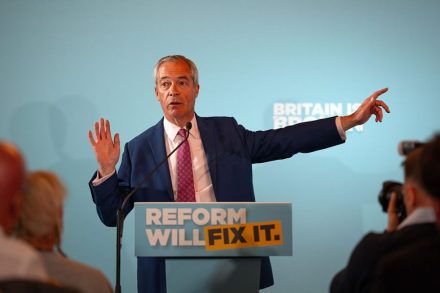
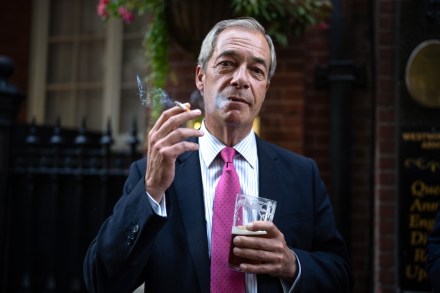
Opinion polls are notoriously a snapshot rather than a prediction, but the latest Ipsos survey of more than 1,100 voters should put a huge spring in Nigel Farage’s step, and terrify both the Tories and Labour, who are placed nine points behind the surging populists. The poll gives the highest ever level of support for Reform The poll states that if a general election were held tomorrow, a Reform government would be elected on 34 per cent of the vote, putting Reform leader Nigel Farage in 10 Downing Street as Prime Minister with a massive majority. Labour would be reduced to 25 per cent, and the Tories to just 15 per cent and a pathetic rump of just ten seats or so in Parliament.

This is Netanyahu’s Churchill moment

From our UK edition

History may not repeat itself, but it certainly rhymes, and Israeli Prime Minister Benjamin Netanyahu now finds himself in precisely the same strategic position as Winston Churchill in 1940: he needs to draw a reluctant USA into a war with a mortal enemy bent on his nation’s destruction. Although some may think it dubious to draw a comparison between the controversial and embattled Israeli Prime Minister and the British statesman widely seen as the saviour of freedom and western democracy, their respective positions today and early in the second world war are practically identical.

Farewell to the Frederick Forsyth I knew

From our UK edition

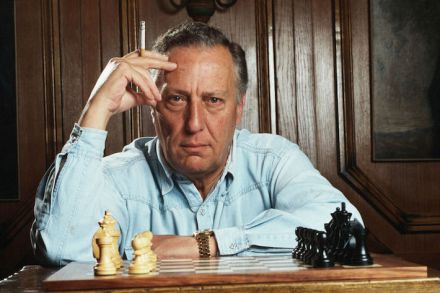
We writers generally live dull and boring lives, tied to our desks painfully wresting words out of mundane experiences: not so Frederick Forsyth, who has died aged 86. Freddie’s life was almost as exciting as the plots of one of his bestselling thrillers Freddie’s life was almost as exciting as the plots of one of his bestselling thrillers, embracing as it did the triple careers of novelist, foreign correspondent, and spy. The other unusual thing about him compared to most other modern writers is that he was a convinced and outspoken small c conservative. Forsyth had a fully justified scorn for the inanities and dangers of the contemporary Left.

Walking, not working out, is the best exercise

From our UK edition

These days almost everyone you meet is a member of a gym, and instead of attending church every week – as they did in days gone by – they make regular visits to these temples of the body beautiful: the new religion of our times. Yet despite these obligatory bouts of body worship, the general health of the nation – physical and mental – does not appear to be improving. The evidence tells us that obscene levels of obesity are at an all-time high, and everyone has heard stories of those struck down in the prime of life by strokes, coronaries or – most common of all – cancer, the plague of our age.

Zia Yusuf’s resignation won’t harm Reform

From our UK edition

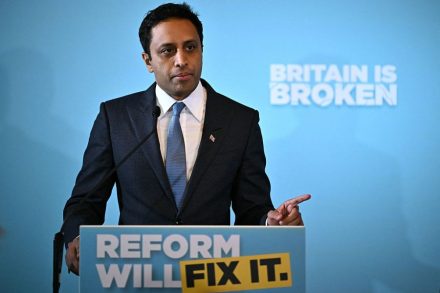
The sudden resignation of Reform UK’s chairman Zia Yusuf came as a shock in Westminster yesterday – but is unlikely to do the party much lasting damage. Yusuf, 38, a successful businessman and a former Goldman Sachs banker, said in a terse and huffy statement that working for the election of a Reform government was no longer a good use of his time.  While Yusuf gave no other specific reason for his departure , the move was almost certainly triggered by his anger at new Reform MP Sarah Pochin’s question to Sir Keir Starmer on Wednesday. Pochin, who won the Runcorn and Helsby seat from Labour last month, asked the Prime Minister if he would consider banning the burqa – the face cover worn by pious Muslim women – as other European countries have done.

Lord Hermer’s ‘Nazi jibe’ at Reform won’t work

From our UK edition

It is an axiom of political debate that once you compare your opponents to Hitler’s Nazis you have definitely lost the argument. That golden rule seems to have escaped the notice of the Attorney General Lord Hermer, who, in a speech to the Royal Institute for International Affairs (RUSI) defence think tank did just that. Hermer, a close friend and fellow human rights lawyer colleague of Sir Keir Starmer, told RUSI that both Nigel Farage’s Reform UK and Kemi Badenoch’s Tories were echoing Nazi ideology that placed national law above international agreements with their threats to withdraw Britain from the European Court of Human Rights (ECHR): But does Lord Hermer really have Britain’s best interests at heart?

Reform must prove to voters they’re more than a protest party

From our UK edition

Reform is now touching 30 per cent in the polls, as Labour lags on 22 per cent and the Tories trail on just 15 per cent. As such, the insurgent party must prepare for more frenzied attacks from the old parties whose dominance it now seriously threatens. Is Nigel Farage’s party ready to face the inevitably detailed forensic scrutiny of its still rather vague policy agenda? One key question that Reform must answer is where they stand on the ideological spectrum: are they Thatcherite free marketeers, or neo-socialists prepared to use the state to mitigate the excesses of unbridled capitalism?

The curious case of Bella May Culley

From our UK edition

I was belatedly baptised last week in the Church of England, and though Christians are enjoined to show compassion to sinners and forgive them their trespasses, my eyes do not fill with tears at the plight of 18-year-old Bella May Culley from Middlesbrough. Bella currently finds herself in Prison No. 5 in the Georgian capital, Tbilisi after she was accused of smuggling drugs into the country. The prison is described in British media reports as decaying and dangerous, but which, from the pictures, looks tough, austere and simply furnished – no worse than one might expect of correctional facilities in the Caucasian republic.

The far right is gaining footholds across Europe

From our UK edition

The relentless rise of the populist right in Europe has been confirmed by provisional first results of elections held yesterday in three different countries: Poland, Portugal and Romania. In Poland, there will be a run-off in the second round of the presidential election. This is after Rafal Trzaskowski, the centre-left candidate close to the Civic Coalition government of Prime Minister Donald Tusk, was run to an unexpectedly close second place by the ultra-conservative candidate Karol Nawrocki, who is backed by the former ruling Law and Justice (PiS) party. Ominously for the Left, the third and fourth places were also taken by ultra right-wing candidates, whose votes are now likely to go to Nawrocki in the second round.

A Dad’s Army won’t save Britain

From our UK edition

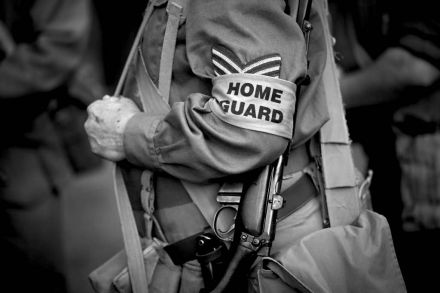
Eighty-five years ago, on 14 May 1940, Anthony Eden, newly-appointed secretary of war in Winston Churchill’s government, went on the radio to appeal for volunteers to join a newly formed defence militia to guard against a German invasion. Originally called the Local Defence Volunteers, this force later became the Home Guard, immortalised on our TV screens as ‘Dad’s Army’. As things turned out, the Battle of Britain ensured that Operation Sealion, the Nazi invasion plan, never took place, but the Home Guard remained in being, and while never tested in combat, they were a morale-boosting reminder that Britons old and young were ready to do their bit in defending the country.

Rupert Lowe faces life in the political wilderness

From our UK edition

Rupert Lowe must currently be the most frustrated man in British politics. The MP has been exonerated of accusations brought against him by Reform, yet his political career appears to be over. The police have said that there is insufficient evidence to justify proceeding with charges after leaders of his old Reform party accused the Great Yarmouth MP of bullying his office staff and threatening party chairman Zia Yusuf. Lowe, who has been expelled from Reform and now sits in parliament as an independent MP, responded to the news of him being cleared with an angry tweet accusing party founder and leader Nigel Farage of being a ‘viper’ and added that he must never become prime minister. https://twitter.com/RupertLowe10/status/1922598164592300389?

Why is the BBC obsessed with rap?

From our UK edition

Two of the top ten stories on the BBC news feed yesterday concerned the travails of leading rap and hip hop stars in different kinds of trouble in the United States. In one case, the 55-year-old rap singer Sean ‘Diddy’ Combs – one of the biggest names in the business – is on trial in New York facing charges of assault and sex trafficking, which he denies. The trial is only the latest in a long line of legal actions Combs has faced over the years, in which he’s been accused of offences of sexual violence. In the second case, a 32-year-old hip hop star called Tory Lanez was rushed to hospital in California from a prison near Los Angeles after being stabbed 14 times by a fellow inmate.

Could the death penalty return?

From our UK edition

The attack on a prison officer by Axel Rudakubana, the killer of the three girls at a dance class in Southport in 2024, has revived calls for a restoration of capital punishment, as many ask why he is serving a 52-year jail term at huge public expense, rather than have been put to death at the time for his heinous crime. Rudakubana is reported to have thrown boiling water from a kettle over an officer from his cell at Belmarsh high security prison in south-east London. Although at the time he made his murderous attacks on the children, he was 17 and was therefore just under the age when killers could legally be hanged when Britain still retained the death penalty, there have been calls for an exception to be made in his exceptionally awful case.

Why the First Sea Lord stepping down is so shocking

From our UK edition

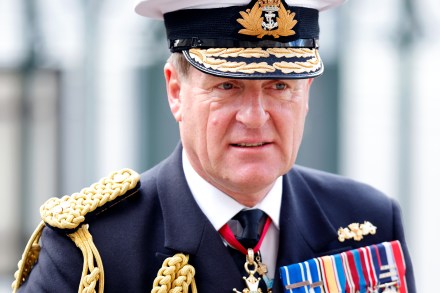
The news that First Sea Lord Admiral Sir Ben Key, the head of the Royal Navy, has stepped down from his job while claims of an alleged affair with a junior female officer are investigated, have come as a shock. The armed forces have been relatively free of the sex scandals that have become so common in politics since the Second World War. Sir Ben, a 59-year -old married father of three, has made no comment on the subject , and his duties have been taken over by Vice Admiral Sir Martin Connell, his deputy. Nonetheless, the Ministry of Defence has confirmed that he has stood aside for 'private reasons'. It is the first time in the Navy's five centuries of existence that its first sea lord has faced a misconduct inquiry.

Nigels may soon go extinct

From our UK edition

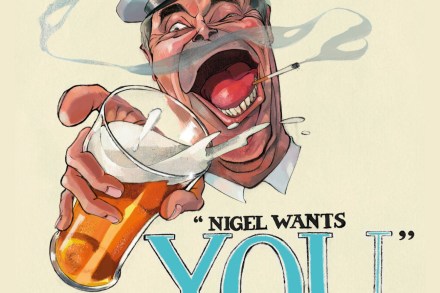
I have never been a big fan of my own name. The name ‘Nigel’ has romantic origins – it means ‘dark champion’ in Celtic lore and Sir Arthur Conan Doyle titled one of his dashing medieval historical novels Sir Nigel. But by the time of my birth the name had become indelibly associated with cerebrally challenged upper-class twits with protruding teeth, and then a silly song about ‘making plans for Nigel’. The most prominent bearers of the name during my lifetime – such as Nigels Lawson, Havers, Mansell and Kennedy – have done little to enhance its prestige.

Donald Trump needs a history lesson

From our UK edition

President Donald Trump has again demonstrated his less than impressive grasp of history with a statement on his Truth Social site on the 80th anniversary of VE Day – the end of the Second World War in Europe – claiming that the US ‘did more than any other country by far’ to win the global conflict. In terms of cold statistics, it was the Soviet Union that did most to defeat Nazi Germany, suffering the colossal loss of 24 million military and civilian lives before the Red Army entered the ruins of Berlin to end the Third Reich. The US lost a total of 418,500 dead in fighting Japan and Germany after Hitler unwisely declared war on America following his Japanese ally’s attack on Pearl Harbor in December 1941.

How great political parties die

From our UK edition

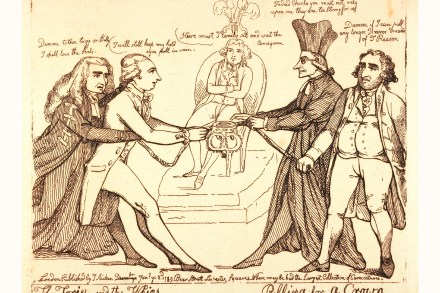
Though local polls and by-elections are notoriously unreliable guides to general elections, and a week is indeed a long time in politics, what happened at last week’s local elections could portend one of the greatest changes in our political system in over a century: the permanent presence of Reform UK, and consequently the demise of our oldest political party, the Tories. The Tories have been around in various forms since the reign of King Charles II, when party politics emerged as a rivalry between the Tories and the Whigs over the issue of whether to exclude James II from the throne on the basis of his Catholic faith. The two parties alternated in government throughout the 18th and 19th centuries and well into the 20th.

Labelling the AfD ‘extremists’ will backfire

From our UK edition

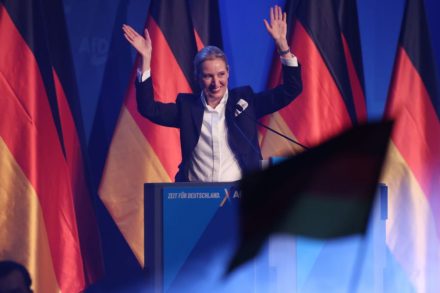
By officially classing the Alternative für Deutschland (AfD) party as 'right-wing extremists', the German establishment may have scored an own goal – or even shot itself in the foot. The domestic intelligence agency, the Office for the Protection of the Constitution (BfV), announced its decision today after keeping the insurgent party under close observation – including by state spies – for years. But the AfD is no tiny sect of secretive neo-Nazis. It is a legal and open party, founded in 2013, that no fewer than 20.8 per cent of Germans voted for in this year’s general election.

Has Reform sent the Tories into a death spiral?

From our UK edition

The Turquoise typhoon that is Reform UK has swept through the English council and mayoral elections – and winning by just six votes the first by-election of this Parliament in Runcorn and Helsby, hitherto in Labour’s 50 safest seats. As Labour narrowly held off the Reform challenge in closely fought mayoral contests in the West of England, North Tyneside and Doncaster, the main losers of the day were Kemi Badenoch’s Tories, who are on course to lose more than half the council seats they were defending. The Tories are caught in a pincer movement In the Brexit stronghold of greater Lincolnshire, Dame Andrea Jenkyns, a former Tory minister who has defected to Reform, is to be the area’s new Mayor, and nearby Hull is also heading into Reform’s mayoral column.

The drama of the Vatican

From our UK edition

Next week, after Francis’s funeral, the College of Cardinals will assemble in Rome to choose the man who will lead their Church through these increasingly troubled times. That gathering has become more familiar to a wider, non-Catholic public thanks to the recent films Conclave and The Two Popes – though these are far from the first time that novels and the silver screen have made a drama out of a conclave. This assembly is unlikely to echo the fiction of Robert Harris’s thriller and its screen version starring Ralph Fiennes.