Nigel Jones

Nigel Jones is a historian and journalist

Is Austria’s far-right Freedom Party heading for victory?

From our UK edition

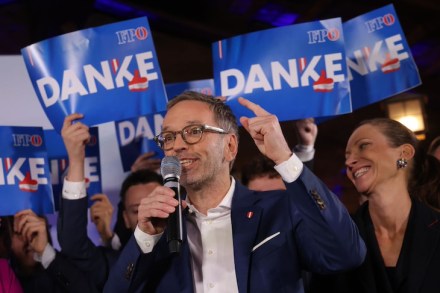
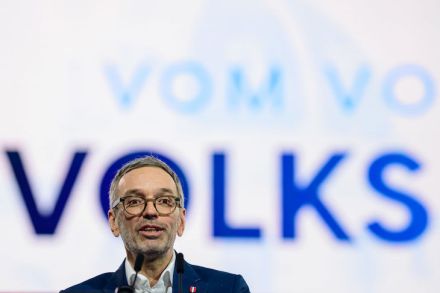
Amidst all the focus on the triumph of Germany’s Alternative für Deutschland (AfD) in Thuringia’s local state elections earlier this month, less attention has been paid to another upcoming European election in which the far-right is expected to do well: the general elections in Austria on 29 September. Kickl has made opposition to immigration the main platform of his appeal to voters Just as the polls in Thuringia and neighbouring Saxony saw a dramatic rise in support for the hard right AfD – with the party also set to win in Brandenburg’s state elections later this month – the Austrian Freedom Party (FPO) is forecast to triumph and hoover up a quarter of all votes cast. As with other recent elections elsewhere in Europe, the issue of immigration has dominated debate.

Nobel winners are strange. I should know, I’ve met three of them

From our UK edition

To meet one winner of the Nobel Prize for Literature would be seen by most bookish nerds like me as a real privilege; to meet two as extraordinarily lucky; but to enjoy extended encounters with three is surely very heaven. Such, however, has been my fortunate fate. The Nobel Prize for Literature is the world's most prestigious – and, as it comes with a hefty cash bonus, the second most lucrative – award for fine writing. Inaugurated at the dawn of the 20th century by the Swedish industrialist and inventor of dynamite, Alfred Nobel (to atone for a lifetime manufacturing munitions) the prize is one of five awarded annually every autumn by the Swedish Academy. The others are for physics, chemistry, medicine and – most controversially – peace.

How long will Germany’s anti-AfD ‘firewall’ last?

From our UK edition

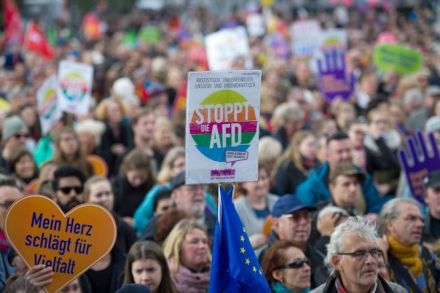
Berlin awoke this morning in a state of shock. Although opinion polls had predicted that the Alternative für Deutschland (AfD) would do well in yesterday’s eastern state elections in Thuringia and Saxony, the cold reality that the anti-immigration, anti-Islamist party has topped the polls in Thuringia and come a close second in Saxony, takes some getting used to, even for cynical Berliners. Mainstream centre and leftist parties in Germany have vowed to form a ‘brandmauer’ (firewall) against the AfD The German capital is a left-wing island surrounded by the sea of states of former East Germany, which are rapidly moving to the far right.

Britain has a long history of authoritarianism

From our UK edition

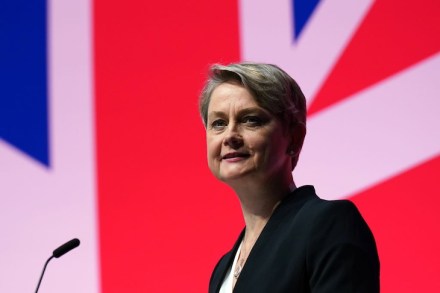
If Home Secretary Yvette Cooper is seriously intending to crack down on ‘hateful and harmful opinions’ – as she has promised to do – she will no doubt need the help of a whole army of narks and snitches to keep tabs on such unwelcome views on social media and report them to the authorities. Fortunately, there is a clear historical example of mass state surveillance for her to draw upon. Indeed, by spooky synchronicity, the last time a senior government minister tried to regulate public opinion by decreeing what people could think and say, he bore the same surname as Ms Cooper. The Tory politician Alfred Duff Cooper was made Minister of Information in Churchill’s wartime government in May 1940.

Did the Prime Minister have an affair with a woman half his age?

From our UK edition

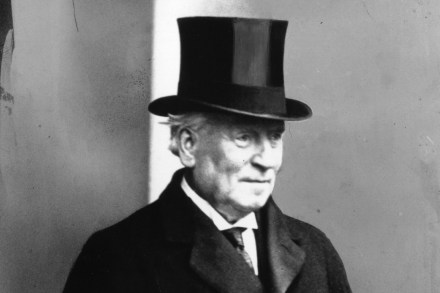
As a connoisseur of British political scandals I have long puzzled over one of the most intriguing of all such affairs: did Edwardian Liberal Prime Minister H.H. Asquith have sex with Venetia Stanley, a woman young enough to be his daughter? She certainly took up huge amounts of his time and attention in August 1914 when he should have been exclusively focused on the conflict that became the first world war.

My friend the would-be killer

From our UK edition

This is a complex tale involving an American murder, the popular British TV series Flipper, and the philosopher Friedrich Nietzsche – but bear with me. Next month sees the centenary of the conviction of two spoiled Chicago boys – Nathan Leopold, 19, and Richard Loeb, 18 – who admitted carrying out what the press at the time dubbed the ‘crime of the century’.  I had always sensed that my friend had a dark side and that he kept parts of his life secret from me The two student friends were sentenced to life imprisonment for murder, plus 99 years in jail for abduction, after admitting kidnapping and killing a 14-year-old boy, Bobby Franks, before mutilating his body with acid to disguise his identity.

How could Hitler have had so many willing henchmen?

From our UK edition

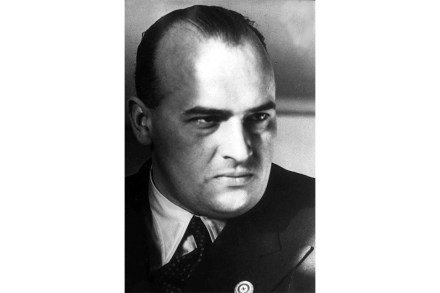
Eight decades after the second world war ended, for how much longer will we produce massive books about Hitler and the Nazis? Richard J. Evans, the former regius professor of history at the University of Cambridge, is one of the senior gardeners in this noxious orchard, having devoted a lifetime’s study to the subject. As a minor under-gardener in the same field, I believe that we now know all we need to about the Führer and the crimes of his vile regime, and, barring the unlikely discovery of something new, it is time that historians moved on. The damning facts can be briefly stated, and are cogently summed up by Evans in his conclusion: Hitler was a fanatic, brought to power by a German middle class traumatised by defeat in the first world war and the economic woes that followed.

In praise of the Olympic champ stamp

From our UK edition

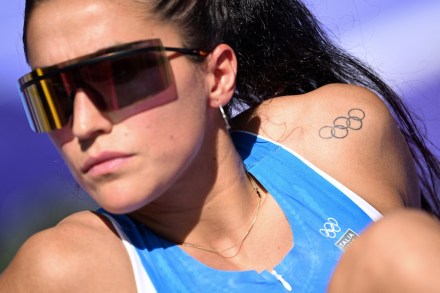
As a confirmed critic of modern tattoos, who sounded off in these very pages about the ugly plague of body tats infesting our streets, I might be expected to disapprove of the latest manifestation of the fashion – the habit of many athletes taking part in the Paris Olympics to adorn themselves with the distinctive five interlocking rings of the Games’ logo: what I’m calling the ‘champ stamp’. In fact, the athletes have such beautiful bodies – young, toned and fit – and the rings themselves have such a pleasing symmetry that I can only approve and applaud the discreet addition of the logo to their rippling musculatures.

The two summers I was nearly killed

From our UK edition

Summer is the season most associated with the enjoyment of life. It’s when people forget their cares, down tools, and head for the beach to enjoy sunny days and sexy nights. That’s how it was for me anyway until I came close to life’s polar opposite – barely surviving two close brushes with death. So for me summers are now indelibly associated with a sudden end that I twice narrowly escaped. Tearing off my soaking shirt, I stood bare-chested in the rain, feeling the same sense of mingled relief and ecstasy as if I were Caesar The first close encounter with Mr Death came in the Dordogne. My wife, daughter, and I had hired a horse-drawn caravan to explore the highways and byways of that enchanting province.

The trouble with ‘spy swaps’

From our UK edition

Yesterday’s exchange of prisoners at Ankara airport in Turkey will have been personally ordered by President Putin. He is a veteran of the Cheka, the Soviet secret police agency, and no doubt aware of the role that swapping agents with the West has played in the troubled history of superpower rivalry. Putin knows that Russian spies look after their own – especially as the Chekists concerned are killers with blood on their hands. Vadim Krasikov, the hitman freed yesterday, was jailed in Germany in 2019 for murdering an exiled Chechen in a Berlin park. Vladimir Putin is as tenacious in exacting revenge on traitors to Russia as he is in protecting his own agents The trouble with these ‘spy swaps’ is that they always benefit Russia more than the West.

I went on First Dates. I wish I hadn’t

From our UK edition

I blame Brexit. In the aftermath of the 2016 referendum, when the whole nation was still in the throes of a collective nervous breakdown, I succumbed to the prevailing mood of madness and went on a TV dating programme. No, it wasn’t Naked Attraction, the Channel 4 show in which participants strip down to reveal all to their prospective partners, but a rather more restrained show on the same channel called First Dates. I hadn’t actually even seen the programme when I noticed an ad in The Spectator appealing for single middle-aged people. I chose a Dover sole, which was an error as I was filmed plucking fishbones from my teeth My 18-year relationship had recently ended, I had moved to a new town, and like Britain freeing itself from the EU, I felt ready for a fresh beginning.

The ugliness of tattoos

From our UK edition

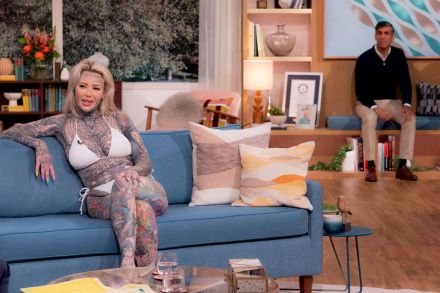
Rishi Sunak devoted part of the last day of his doomed premiership to meeting Becky Holt, Britain’s most tattooed mother, on ITV’s This Morning show. Ms Holt was clad in a bikini which revealed much of the 95 per cent of her body surface that is covered in tattoos. After the brief encounter, she told OK magazine that the PM had been ‘really, really polite’ and had merely inquired how much her tattoos had cost. I once had a close encounter with a woman who had her last lover’s birth sign tattooed in a very intimate spot During the 20th century and earlier, British tattoos were largely confined to sailors who had acquired them in foreign ports.

When the world goes mad

From our UK edition

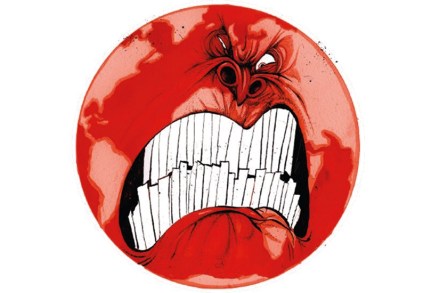
Anyone visiting the small Westphalian city of Münster in north-west Germany may notice three man-sized cages hanging from the handsome St Lambert’s Roman Catholic Church in the city’s main square, the Prinzipalmarkt, and wonder about their provenance. The cages are one of the last visible relics of an episode in which society took leave of its collective senses and went quite mad. It is my impression that the western world is currently undergoing just such a convulsion.

Why the Bolivia coup failed

From our UK edition

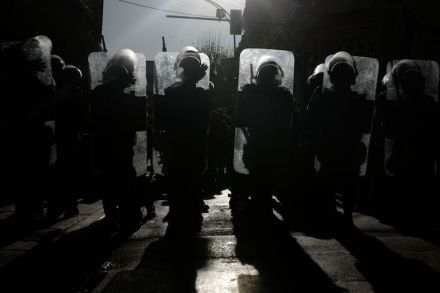
Latin America has long been the traditional home of the military coup – or ‘golpe’ in Spanish – so the sight yesterday of soldiers rushing the presidential palace in La Paz, capital of Bolivia, and ramming its doors open with an armoured vehicle, may not have seemed surprising. The abortive coup attempt was aimed at toppling Bolivia’s left-wing president, Luis Arce After hours of confusion, the leader of the coup, General Juan Jose Zuniga, was led away under arrest, with his attempt to ‘restructure democracy’ having clearly failed. Earlier, crowds had taken to the streets in response to presidential appeals to defend democracy and oppose the coup. The abortive coup attempt was aimed at toppling Bolivia’s left-wing president, Luis Arce.

My doomed run for parliament

From our UK edition

I had always been interested in politics but had not done anything practical until the rise of Nigel Farage’s Ukip. He was proving a thorn in the side of David Cameron in 2013, which attracted my admiring attention, so I decided to try and get involved. Despite having done my bit for European unity by fathering a half-French daughter and a half-Austrian son, I had always been fundamentally hostile to the EU – an artificial and undemocratic structure inimical to British interests and traditions – so it seemed obvious that Ukip was the party for me. A large poster of me was defaced with a Hitler moustache – an episode I found deeply humiliating I was summoned to a hotel in Gillingham, Kent, for a test to see if I was suitable for the approved list of Ukip candidates.

Labour purges are nothing new

From our UK edition

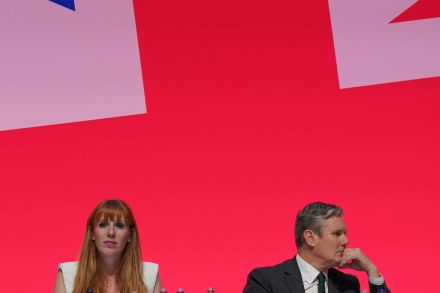
Sir Keir Starmer’s determination to prove to voters that Labour has changed, by purging the party’s far left, may look like cruel contemporary opportunism to his opponents. However, it actually fits a pattern that has recurred throughout the party’s history. Ever since Labour’s foundation in 1900, the party has been an uneasy coalition between a minority of mainly middle-class Marxist intellectuals, and the less ideological working-class masses in the trade union movement. Repeatedly during the 20th century, the hard left infiltrated and attempted to take over the party – but just as often they were purged and expelled by the Labour right as a result.

The sad decline of the Evening Standard

From our UK edition

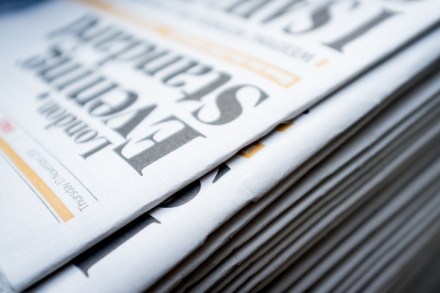
It’s always a sad day for journalists when a newspaper goes to the great printing room in the sky. But for all Londoners, the death of the capital’s last surviving evening paper is particularly poignant. The Evening Standard has announced that it is to cease publication as a daily paper – remaining alive only as a weekly edition. The news is not entirely unexpected: for years the paper has been a shadow of its former self, and was no longer an essential read for home-going commuters. Owned since 2009 by Russian born Alexander Lebedev and his son Evgeny, who has a 63 per cent majority stake, the other 24 per cent is owned by the Daily Mail group, with a 5 per cent minority stake owned by journalist Geordie Greig and 7 per cent by Justin Byam Shaw.

It’s time for Nigel Farage to get off the fence

From our UK edition

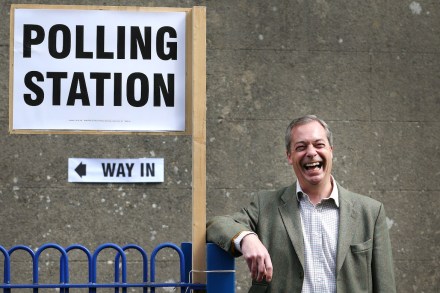
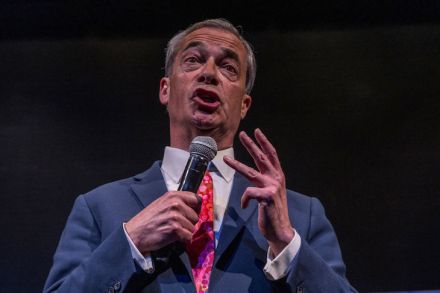
Rishi Sunak's snap summer election means that Nigel Farage faces a decisive moment. For months if not years, Farage has held back from taking a role in the heat of the political fray. Instead, he has preferred to be a backseat driver to his ally Richard Tice as leader of the Reform UK party he created. Sunak is banking on Labour – and Reform – being unprepared for the coming fight Farage, as his fans claim, has ‘kept his powder dry’ as honorary president of the party, and restricted himself to commenting on politics as a presenter on GB News. He has, at times, seemingly put more effort into helping Donald Trump win back the US presidency than into British politics.

Guns, drugs and beatings – I loved boarding school

From our UK edition

My son and various well-meaning friends have been advising me to abandon writing history books and cash in on the trend for boarding school misery memoirs. On the face of it, as someone who was sent away aged seven and remained in these institutions until I was 18, I am well qualified to add my contribution to what has now become a recognised sub-genre of English literature. My problem, though, is that I quite enjoyed my time at boarding schools and I cannot claim – as so many do – that it adversely affected my life; rather the reverse. In his extended essay ‘Such, such were the joys’, George Orwell recorded his awful schooldays at St Cyprians, a snobbish boys preparatory school in Eastbourne.

Slovakia is united after the assassination attempt on Fico. It won’t last

From our UK edition

Somewhat unfairly, Slovakia is often overlooked and ignored as a quiet and peaceful backwater in the often turbulent turmoil of east European geopolitics. The assassination attempt that almost ended the life of its controversial prime minister Robert Fico yesterday has changed all that. Fico was shot five times in the abdomen and arm. After undergoing emergency surgery, he is now said by doctors to be stable, and likely to survive his life threatening injuries. That unity is unlikely to last long if Fico bounces back from his brush with death The suspected gunman, whose motives are still unknown, was arrested at the scene, and has been named as Juraj Cintula, a 71-year-old former security guard and published poet, who ironically once led a group opposing political violence.