Nigel Jones

Nigel Jones is a historian and journalist

The Stuarts were our worst monarchs

From our UK edition

This year marked the 400th anniversary of the death of King James I of England (James VI in Scotland), the first monarch of the generally disastrous Stuart dynasty. By no means forgotten by historians, the anniversary was marked by no fewer than three heavyweight biographies, and headlines devoted to the King in the Times and the Telegraph. James’s son Charles I lost both a civil war and his head; his grandson Charles II presided over the plague, the Great Fire of London, and saw his fleet towed away by the Dutch; his second grandson James II lost the throne entirely and fled into exile. But in spite of this dismal record, of all the Stuart sovereigns, the first James was easily the worst and most disgusting monarch ever to have occupied the throne.

Mexico seethes over cartels, ‘gringos’ and migrants

Mexico has been rocked by massive popular protests as the Hispanic world’s largest nation seethes with a fizzing cocktail of grievances ranging from the fate of 130,000 people who have ‘disappeared’ in the country’s drug wars, to discontent over the ‘gentrification’ of Mexico City in a bid to attract tourists. Hundreds of thousands of people marched in the streets of the country’s major cities on Saturday, many carrying portraits of loved ones who have vanished since 2007 when the then President Felipe Calderon launched a "war on drugs" to combat the narcotics cartels who increasingly dominated the nation of 130 million people.

Mexico

Will Venezuela crisis spill into conflict with US?

The authoritarian left wing regime of Venezuelan President Nicolás Maduro has mobilized his ruling Socialist party’s paramilitary militia in response to US President Donald Trump sending a task force of warships into Venezuelan waters as part of a US crackdown against alleged cocaine trafficking by the poverty-stricken country.Declaring that “no empire will touch the sacred soil of Venezuela “ Maduro sent his militia to reinforce the country’s borders with neighboring Colombia, who he has accused of collaborating with America in a pincer movement against his country.

Venezuela

The rats that predicted our future

From our UK edition

Next month is the 30th anniversary of the death of the American ethologist John B. Calhoun. In the early 1960s, he created an series of experiments to discover the causes of social dysfunction. His most famous work involved a so-called ‘rat utopia’ in which rodents were provided comfortable living quarters with unlimited food, water and warmth, and protection from predators. In this cosy environment, the only bar to ratty heaven was that space was limited. Nonetheless, the happy rats bred prodigiously until their quarters became uncomfortably overcrowded. This lack of space meant they were unable to control with whom or how often they came into social contact.

Is Colombia reverting to chaos?

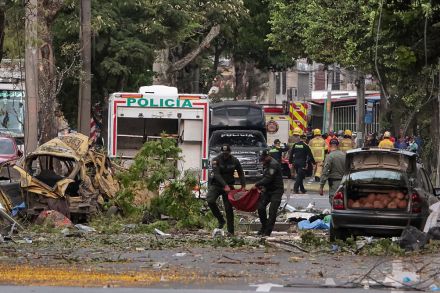
Two terror attacks which hit Colombia on Thursday revealed a scary new level of sophistication among the country’s ever present narco-terrorists – and threatened to return the country to the violence and chaos that many had hoped it had finally escaped.The double terror strikes killed 18 people and involved a car bomb in Colombia’s third most populous city of Cali in which at least six people died, and an earlier drone downing of a police helicopter near the city of Medlllin – long notorious as Colombia’s drugs capital – in which 12 people died.

Colombia

The remarkable life of Peter Kemp, warrior and Spectator writer

From our UK edition

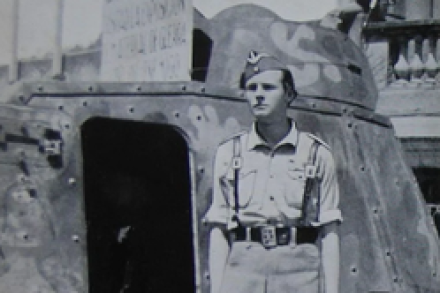
Today is the 110th anniversary of the birth of a former Spectator correspondent who took part in and survived more wars than any other English writer in modern history. Yet he is practically forgotten today because he fought all his life for unfashionable conservative causes. Peter Kemp, the son of a judge in the Indian Raj, was born in Bombay on 19 August 1915. Educated at Wellington, and destined for the law like his father, he went up to Trinity College, Cambridge, the alma mater of the notorious Communist sympathising Soviet spies Kim Philby, Guy Burgess and Anthony Blunt.

Socialism ends in Bolivia after two decades

Bolivia is to be treated to a nail-biting run-off this autumn between two conservatives in the race to be the next president after the spectacular collapse of the socialist movement that has dominated the landlocked state for the past twenty years. A presidential race between two right-wingers is unusual in Latin America whose countries in recent years has been largely run by democratically elected leftists after the fall of the brutal military dictatorships that ruled so many states in the 1970s and 1980s. The second round of Bolivia’s presidential race will be decided on October 19th between the veteran former President Jorge "Tuto" Quiroga, 65, who gained 26 percent of the poll, and his center-right rival Rodrigo Paz Pereira, 57.

The Isle of Wight is an England that time forgot

From our UK edition

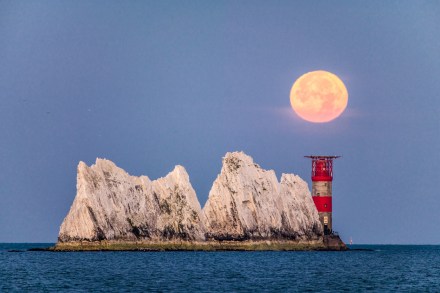
‘August for the people and their favourite islands,’ wrote W.H. Auden. My own favourite island in Britain is the Isle of Wight, even though my introduction to it was less than ideal. I was seven years old and had been sent to the island for the ritual initiation for British middle-class males of my generation: immersion in a boarding school with around 50 other pre-pubertal boys. I was, in fact, the youngest boy in the school and this was the first time I had left home. I have already written in these pages about my five years at a boarding school on the island; bizarre and bewildering rather than the hell of paedophilia and punishment described by others writing about their prep school days. But I want to convey here the curious charm of the island itself.

What if Starmer had been prime minister in the second world war?

From our UK edition

Mike Huckabee, the US ambassador to Israel, has posed a fascinating counter-factual question about our Prime Minister: what if Keir Starmer rather than Winston Churchill had been Prime Minister in World War Two? Huckabee’s characterisation of him as the arch appeaser may be a little harsh, but it does have the ring of truth The undiplomatic taunting of the Prime Minister by President Trump’s chosen envoy in Jerusalem is Huckabee’s response to Starmer’s decision for Britain to recognise a Palestinian state next month, and a reply to his criticism yesterday of Israel’s coming full military occupation of Gaza city, which Starmer says will only lead to more starvation and suffering for the Palestinian people.

I’ve been bitten by the ancestry bug

From our UK edition

Although a historian, until very recently I have been curiously incurious about researching my own slightly peculiar family. How was it, for example, that my grandfather, originally a penniless Welsh peasant, sired a dynasty that in three generations has spread to three continents and includes a squillionaire who founded a multinational club business with 75 branches in 42 cities around the world? And on the dark side of family secrets, why did my father marry a dying woman just released from Holloway jail after killing her own child? What diseases did my immediate ancestors suffer from, and are they likely to kill me too?

Horst Mahler, the far-left terrorist who became a neo-Nazi

From our UK edition

One of the strangest German lives in the post-second world war era closed on 27 July 2025 with the death of Horst Mahler at the age of 89. Mahler’s life epitomises the fatal German tendency for much of the 20th century to embrace extremist politics Mahler’s life epitomises the fatal German tendency for much of the 20th century to embrace extremist politics of the far-left and ultra-right, since he converted from being a hunted and jailed leader and lawyer of the Red Army Faction (RAF) terrorist group, also known as the Baader-Meinhof gang, to become Germany’s most notorious neo-Nazi, an outspoken anti-Semite and a Holocaust denier – activities for which he also spent time in jail in his old age.

Jannik Sinner is a son of lost Europe

From our UK edition

The clue is in his appearance. The sandy-haired, blue-eyed, 6ft 2in star Jannik Sinner is the world’s No. 1 tennis champion and has just clinched his – and Italy’s – first win in the world-famous Wimbledon tournament. Sinner, the new hero of tennis after his victory over the previous reigning Wimbledon champion Carlos Alcaraz, may hold an Italian passport, but he doesn’t look or sound like a typical Italian. In fact, Sinner is a member of one of the many ethnic and linguistic minorities who populate the supposedly united countries of the European Union. The 24-year-old was born and brought up in the Alpine province of South Tyrol – known to Italian Italians as the Alto Adige – 70 per cent of whose inhabitants are, like Sinner, German-speaking ethnic Austrians.

Reform is right to reject Liz Truss

From our UK edition

Reform UK topping the opinion polls and winning local council elections has prompted several leading Tories to defect. But now Nigel Farage’s insurgent party is riding so high that it is getting choosy about which Conservatives it will accept into its swelling ranks. If too many Tories join Reform they will begin to look like a convenient vehicle for rats leaving the sinking Tory ship Sources in the party have told the Mail on Sunday that it would spurn any attempt to defect by former Prime Minister Liz Truss or former Home Secretary Suella Braverman, as both are so unpopular that they would ‘damage Reform’s public image’. Reform leader Nigel Farage confirmed that any approach by the two women would cause a heated debate in his party over the wisdom of admitting them.

There’ll never be another Norman Tebbit

From our UK edition

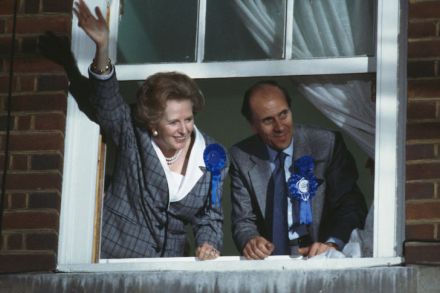
The death of Norman Tebbit at the great age of 94 marks a real ending of an era. They simply don’t make politicians like Lord Tebbit any more: caustic, high principled, Tebbit was a fighter rather than a quitter. The modern day Conservative party would be a very different outfit if it had a man like Tebbit in charge. His death is a painful reminder of what the party he was once chairman of has lost. Tebbit revelled in the insult bestowed on him by Labour leader Michael Foot as a ‘semi-house trained polecat’ Like Nigel Farage, who in many ways is his political successor, Tebbit was an unashamed right winger. He came from a working-class milieu and had a career as an airline pilot and leader of the pilots’ Trade Union Balpa, before entering politics.

Why we wanted to believe The Salt Path

From our UK edition

Like millions of others, I thoroughly enjoyed reading The Salt Path, an account of how a penniless and homeless middle-aged couple found their souls by walking the entire length of the rugged 630-mile South West Coastal Path around the Cornish peninsula. I also enjoyed watching the recent film of the book starring Gillian Anderson and Jason Isaacs, as we all like feel-good stories about plucky people battling against the odds and winning.

History does not favour Musk’s new America party

From our UK edition

The world’s richest man, Elon Musk, has announced that he intends to create a new third party in the US called the America party. After his own poll on X showed that two out of three favoured the venture, the outspoken billionaire has now put his money where his mouth is and taken the plunge to found and finance his new party. Although the 54-year-old owner of X, Tesla, SpaceX and other hi-tech enterprises has been a US citizen since 2002, because he was born in South Africa he cannot run for president himself. But he says he will fund the new party after spectacularly falling out with President Trump in May following Musk’s short stint as Trump’s Doge tsar with a brief to cut government waste, largely by sacking federal employees.

Venice is a city of love and menace

From our UK edition

Jeff Bezos has brought much tat into the world, along with the undoubted convenience of Amazon’s services. But in at least one respect, he is a man of good taste. In choosing Venice to plight his troth with his lovely bride Lauren Sanchez at the weekend, Bezos picked the best possible location: La Serenissima is indeed a veritable miracle. It is a logic-defying wonder, and despite my frequent visits, I still don’t understand the physics of its construction. How can a city of hundreds of heavy palaces and churches, resting on petrified wooden piles driven into mud, continue to exist centuries after the Venetian lagoon was first settled by terrified refugees?

Why we still lust after gold

From our UK edition

On Tuesday, as the world teetered on the brink of war in the Middle East, the Financial Times’ front page focused on the possibility that holders of gold from France and Germany were considering moving their investments out of New York due to Donald Trump’s erratic policy shifts and general global turbulence. We are regularly told that the only safe way to preserve and save our wealth in the event of a total financial and economic collapse is to buy gold. Gold has long been the basis of national currencies, and even in the age of bitcoin it retains its age-old attraction, summed up in the phrases ‘gold standard’ or ‘gilt-edged’.

Oxfam’s Gaza propaganda

From our UK edition

An astonishing email from Oxfam, one of Britain’s oldest and biggest humanitarian charities, dropped into my inbox this week. Dramatically titled (in blood scarlet) ‘Red Lines for Gaza’, it demanded that if I am as outraged by the ‘horrors that Israel is inflicting on Palestinians in Gaza’ as Oxfam is, and I want to do something about it, I should scrawl a red line across the palm of my hand and send the image to the charity. They will then use it to make a striking design for their campaign on the Gaza issue in the coming days.

The tyranny of mobility scooters

From our UK edition

I live in a small cathedral city in southern England. The chances of having my mobile phone snatched from my hand by an opportunistic thief, or my Rolex watch wrenched from my wrist by a brutish thug are still mercifully small. But another menace to life and limb has recently emerged here: the mobility vehicle mob. It is almost 47 years since the first modern mobility vehicle was delivered to a customer in July 1978. In the past half-century, they have become a now ubiquitous nuisance on our streets and pavements. Originally intended to aid those genuinely unable to walk, such as the elderly or physically handicapped, mobility vehicles have become merely an easy means of transport for the lazy and terminally indolent.