Nigel Jones

Nigel Jones is a historian and journalist

Anthem for groomed youth

From our UK edition

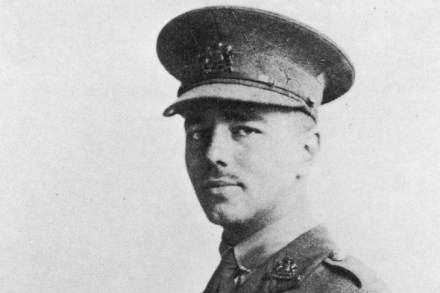
This year is the centenary of the Armistice to end what Siegfried Sassoon called ‘the world’s worst wound’: the first world war. A bare week before the conflict concluded in a grey November, another poet, Sassoon’s friend and protégé Wilfred Owen, whose work now epitomises the waste and futility of that struggle, was cut down by a machine-gun as he tried to lead his men across the Sambre-Oise canal in one of the war’s last battles. Owen’s sombre verse, the ‘poetry of pity’ as he called it, came to represent the disillusion and despair that set in as casualties climbed into the millions and the blood of Britain’s youth drained hopelessly away in the Flanders mud.

Sex scandals ain’t wot they used to be

From our UK edition

The death last week of Christine Keeler, a central player in the Profumo scandal which helped bring about the end to thirteen years of Tory rule in the early 1960s, can be seen as another salutary reminder of Britain's decline. To put it simply: even sex scandals ain't wot they used to be. British decadence is usually measured by such dull yardsticks as GDP, the fall in value of the pound, withdrawal from the far flung outposts of Empire, and the decision – taken by the then Prime Minister Harold MacMillan just before the Profumo affair broke – to apply for membership of the Common Market, today's European Union. But the drop off in quality of the sex scandals that regularly embarrass our ruling caste is an equally valid sign of  decline and fall.

The revolution devours its children

From our UK edition

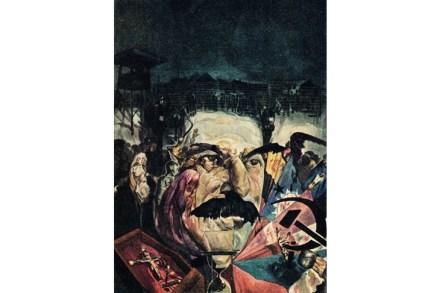
He stood five feet seven in his boots — the same height as Napoleon and an inch shorter than Hitler. He had webbed toes, a grey face pitted by smallpox, a stunted arm, soft voice, yellowish eyes and an awkward rolling walk. He swore like a trooper, smoked a pipe, drank the sweet wines of his native Georgia, and was an avid reader of history, novels and Marxist-Leninist theory, marking the pages of the 20,000 books in his library with expletives scrawled with the same coloured crayons with which he signed mass death warrants and international treaties: ‘Rubbish!’, ‘Piss off!’, ‘Fool!’, ‘Scumbag!’, ‘Ha-Ha!

Holidays with Hitler

From our UK edition

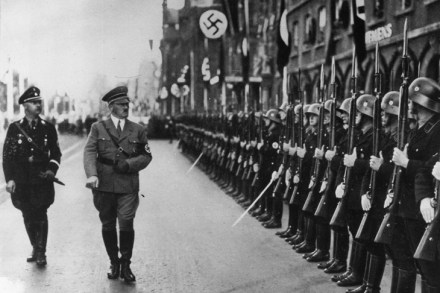
We don’t usually think of Hitler’s hated henchman Heinrich Himmler, architect of the Holocaust of European Jewry, as a comic turn, but the diary of Admiral Sir Barry Domvile, a former chief of British Naval Intelligence and fanatical admirer of Nazi Germany, proves otherwise. Domvile’s description of his visit to Himmler’s ‘hunting box’ high in the Bavarian Alps in 1935, reproduced in Julia Boyd’s fascinating book, is a treasury of thigh-slapping humour, including hearing Himmler wake him at 3.20 a.m. with his rendition of ‘God Save the King’; complaints about the Reichsführer’s primitive ‘bog’ — a deep hole in the ground; and finishing with a ‘regular Bavarian evening...

Burning issues | 4 May 2017

From our UK edition

Set discreetly into a wall in Smithfield, amid the bustle and bars of this rapidly gentrifying part of London, is a memorial raised by the Protestant Alliance in 1870 commemorating the men and women who died agonisingly nearby, roasted alive for refusing to abjure their new-found reformed religion. Nimble intellectual footwork was needed across the 16th century of Tudor rule to keep the fires of Smithfield at bay. In the reign of Henry VIII, orthodox Catholicism was temporarily set aside to allow the monarch a divorce, in order to get his thigh across the reform-minded Anne Boleyn. Henry himself, however, remained resistant to the new faith.

The puppet queen

From our UK edition

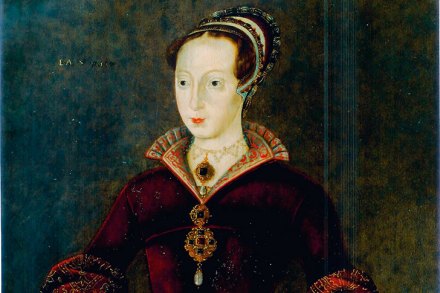
It is easy to see why the bare century of the Tudor dynasty’s rule has drawn so much attention from contemporary women historians. Without breaking sweat, I can think of at least ten — four of whom garland this book with advance praise — who have written biographies or studies of the Welsh upstarts, leaving aside the acclaimed fictional efforts of Hilary Mantel. For of the six Tudor monarchs who steered England’s destinies through the tumultuous 16th century, three were female. The half-sisters Elizabeth and Mary — who both loom large in Nicola Tallis’s stunning debut — need no introduction, but the third, Lady Jane Grey, the subject of her searching biography, has until now remained in the shadows.

Eden’s folly

From our UK edition

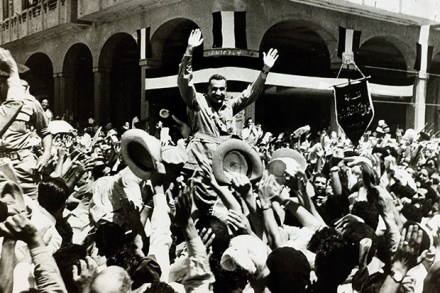
Until it was overtaken by the still more disastrous debacle in Iraq, the Suez Crisis of 1956 was widely judged to be Britain’s worst postwar foreign blunder. Not only, to use Talleyrand’s phrase, a crime, but an error of monumental proportions. The deceitful plot by Britain and France, in secret collusion with Israel, to invade Egypt disguised as peacemakers; restore the recently nationalised Suez Canal to western control; and overthrow Egypt’s charismatic nationalist leader Gamal Abdel Nasser into the bargain, went horribly and fatally wrong. Britain’s humiliating retreat, forced by a disapproving United States, marked the effective end of both the British and French empires, and raised the US to undisputed hegemony over the non-communist world.

Win some — lose too many

From our UK edition

In this centenary year of the Somme, it is refreshing to read a book about the Great War that is not yet another dreary recital of the tragic and over-familiar facts, but successfully gets to grips with the dilemmas facing the commanders and politicians mediating the gargantuan conflict. Historical debate about the war now boils down to two views. Either the conflict was conducted by bone-headed generals guzzling champagne in their chateaux while sending a generation to certain death against chattering machine guns and impenetrable barbed wire. Or the said generals have been much maligned, and eventually achieved a stunning victory after intelligently using tactics learned in a very hard but sadly necessary school of battles.

Richard III: a bad man — and even worse king

From our UK edition

When archaeologists unearthed the battered mortal remains of King Richard III beneath a council car park in Leicester in 2012, they not only made the historical find of the century (so far) but unleashed a veritable frenzy of media attention on a ruler already the most notorious in English history. A stream of books, articles (both scholarly and popular), documentary films and newspaper opinion pieces poured forth, and Richard’s troubled life and times became front-page news until his bones were once more laid to rest earlier this year.

The continent in crisis

From our UK edition

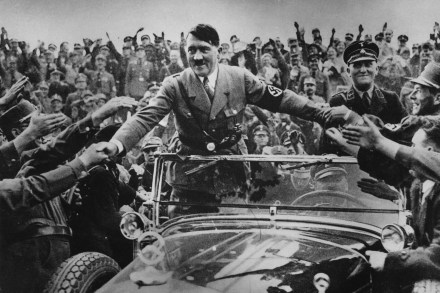
Sir Ian Kershaw won his knight’s spurs as a historian with his much acclaimed two-volume biography of Hitler, Hubris and Nemesis. He is now attempting to repeat the feat with a two-volume history of modern Europe, of which this is the opening shot.Inevitably, the figure of the Führer once again marches across Kershaw’s pages as they chronicle the years dominated by Germany’s malign master. First the Great War that gave Hitler his chance to escape obscurity, and then the greater one he launched himself. Opening with the continent’s catastrophic slide into generalised conflict in 1914, Kershaw apportions blame or the disaster more or less equally to all the combatant nations.

Foaming with much blood

From our UK edition

According to Francis Bacon, the House of York was ‘a race often dipped in its own blood’. That being so, one wonders what Bacon made of Rome’s Julio-Claudian dynasty, the gore-spattered family that gave the empire its first five rulers, and the subject of Tom Holland’s latest popular history of the ancient world. Recounting one of the era’s many fratricidal civil wars, Holland rightly observes: ‘The aptitude of the Roman people for killing, which had first won them their universal dominion, was now unleashed upon themselves.’ And no one was more adept at such incestuous slaughter than the imperial family itself.

Polymath or psychopath?

From our UK edition

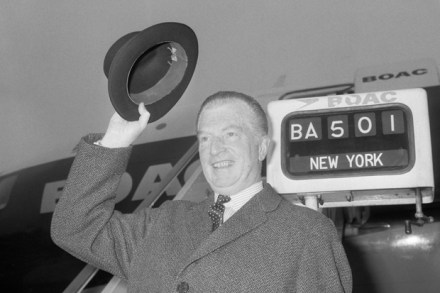
They don’t make Englishmen like the aptly named John Freeman any more. When he died last Christmas just shy of his centenary, the obituaries — once they had expressed astonishment that this titan from the age of Attlee and empire had still been around —paid tribute to a polymath whose achievements could fill nine more ordinary lives. Freeman was a pioneer of television, virtually inventing the TV celebrity interview. He was a leading politician — the last surviving member of the 1945 Labour government; a diplomat — at one time our man in Washington and High Commissioner in India; a much decorated war hero; and — not least — a renowned swordsman between the sheets, boasting four wives and innumerable girlfriends.

The devil’s devoted disciple

From our UK edition

It is ironic that this weighty biography of Hitler’s evil genius of a propaganda minister is published on the day of a general election filled with Joseph Goebbels’s hallmarks: mendacity, media manipulation and the big lie. Seventy years after the spectacular suicide of Goebbels and his wife Magda, and their murder of their six children, in the Berlin bunker, the ‘little doctor’ is still a byword for the black arts of political spin and politicians regularly accuse each other of telling fibs ‘worthy of Goebbels’.

The knives come out of the cabinet in Churchill’s wartime government

From our UK edition

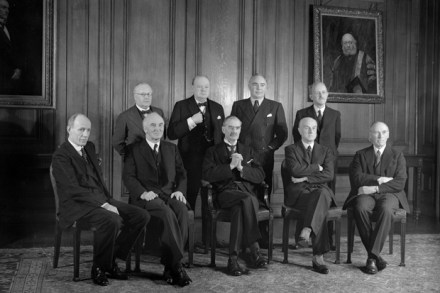
Coalitions, as David Cameron has discovered, are tricky things to manage. How much more difficult, then, was it for Winston Churchill as he struggled to survive, then win, a world war, while at the same time managing his fractious three-party administration at home. In this scholarly, yet grippingly readable study of the wartime coalition, Jonathan Schneer, an Anglophile American academic, reveals how much of a myth the popular legend of a political class and nation united behind their belligerent war leader truly was.

From prince to pauper: a dramatic overview of Britain on 18 June 1815

From our UK edition

Of all the big battalions of books marking the bicentenary of the battle of Waterloo that have come my way, this has to be the best. David Crane has used the bloody campaign as a telescope, bringing into sharp focus not just the carnage along the Brussels road, but the state of Britain itself: a country on the cusp of vast, irreversible change. He achieves this within the compass of a single summer’s day — Sunday, 18 June 1815 — devoting a chapter to each hour and cutting cinematically between the three armies slaughtering each other in Belgium and the citizens at home. Some anxiously await news of triumph or disaster; others are utterly oblivious of what the cannonade rolling across the Channel, clearly heard by Kentish churchgoers, portends.

Game of thrones: five kings spanning five centuries launch a new series on royalty

From our UK edition

It is a strange paradox of our egalitarian age that a progressive publisher like Penguin should commission — at considerable expense, since the series editor Simon Winder has netted some top academic authors — brief lives of all 44 English, and later British, monarchs, from Athelstan to his distant descendent, our own Queen Elizabeth. The 45th book in the series is devoted to our sole non-royal ruler, Oliver Cromwell. The biographies — each costing £10.99 — though not exactly ‘potted’, are necessarily squeezed by space — none is longer than 150 pages — into extended essays that can be comfortably devoured in a couple of hours; ideal for a railway journey or a short-haul flight in our cash-rich, time-poor era.

Terror plots, threats to liberties, banks in crisis: welcome to Britain during the Napoleonic Wars

From our UK edition

In our own troubled times it is useful and comforting to recollect that ’twas ever thus.  Violent threats against prominent politicians? Jenny Uglow reminds us that in 1802 Colonel Edward Despard, a British officer turned radical agitator, was the last person in England to be sentenced to be hanged, drawn and quartered, for a plot to kill King George III and the cabinet; while in 1812, the wildly unpopular hardline Tory Spencer Perceval became the only prime minister (so far) to be assassinated, the victim of John Bellingham, a deranged bankrupt. Threats to civil liberties?

From slaves’ rectums to porn vids, there are few places people haven’t tried to conceal secret messages

From our UK edition

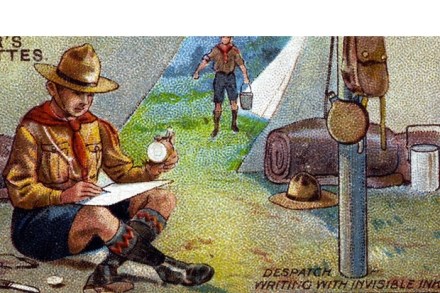
John Gerard, a Jesuit priest immured in the Tower of London in 1597, and tortured by being hung from manacles until he temporarily lost the use of his arms, was a resourceful as well as courageous fellow. Dependent on the kindness of his jailer, a warder named Bonner, for such intimacies as washing, dressing and shaving, Gerard also persuaded the turnkey to bring him a bag of oranges. Regaining the use of his hands, he employed the fruit for two purposes: to fashion crosses and rosaries from the discarded peel, and to make invisible ink from the juice.

The poet who welcomed war

From our UK edition

Today, 23 April, the world celebrates the 450th anniversary of William Shakespeare's presumed birth (and marks with less joy the date of the Bard's death in 1616). That double date obscures another: the 99th anniversary of the death of a less celebrated Warwickshire-born literary lad, the poet Rupert Brooke. Brooke, like many of his friends and contemporaries, died in the First World War. But unlike most of them, he perished not in action, but as a result of septicaemia from an infected insect bite to his upper lip. En route to the bloody beaches of Gallipoli, he fell ill in Egypt, died on a French hospital ship moored off the Greek island of Skyros, and - fittingly for a classically educated poet - lies buried in an isolated olive grove overlooking the wine-dark waters of the Aegean.

The one-man spy factory who changed history

From our UK edition

With two new biographies of Kim Philby out, an espionage drama by Sir David Hare on BBC2, and the recent revelation that the aristocrat superspy John Bingham was the model for George Smiley, there is little doubt that Britain is currently going through one of its fitful bouts of spy fever, and this book can only add to the excitement. Philby has a walk-on role in Jason Webster’s gripping and stylish new account of the extraordinary career of Juan Pujol, aka Agent Garbo — and a multiplicity of other monikers — arguably the second world war’s most successful double agent apart from Philby himself.