Nigel Jones

Nigel Jones is a historian and journalist

Is Boris channeling Churchill in his response to Russia?

From our UK edition

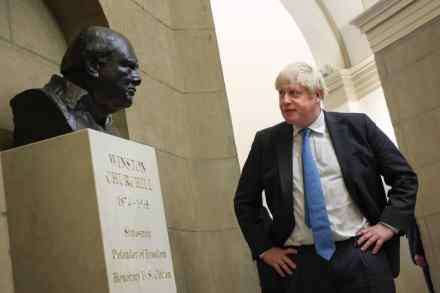
Boris Johnson’s hero – apart from himself – is Winston Churchill, who led Britain through the dark valley of World War Two. Our present PM has even written an adulatory biography of the great man, and clearly would like to channel Churchill as a war leader and emulate his success. Will the war in Ukraine give him the opportunity? Although Britain is not – yet – a direct belligerent in the current conflict, it is already playing a major role. It is supplying anti-tank NLAW weapons and missiles to the Ukrainians; it is ramping up diplomatic support for the invaded country; and – albeit unofficially – British Army veterans and volunteers have travelled to Ukraine to join the fight against the Russian invaders.

Putin’s taste for terror is nothing new

From our UK edition

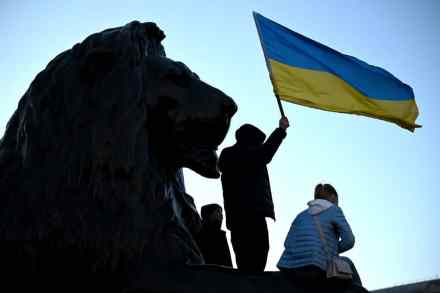
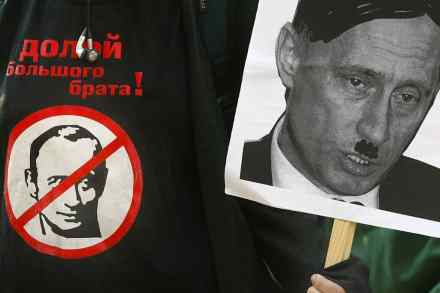
There is tragically nothing new about the scenes of indiscriminate terror unfolding in Ukraine: bombing and shelling unleashed by Putin’s forces in the streets of Kharkiv and Mariupol against civilians today is a familiar tale – almost a reflex action – of what Russia does whenever it is faced with opposition or the defiance of a smaller nation. We have been here before. In fact anyone born in 1952, the year of Vladimir Putin’s birth, has been here many times: East Berlin in 1953, Budapest in 1956, Prague in 1968, Kabul in 1979, Grozny in 1999 and Aleppo in 2016.

Could a Kremlin assassin get to Putin?

From our UK edition

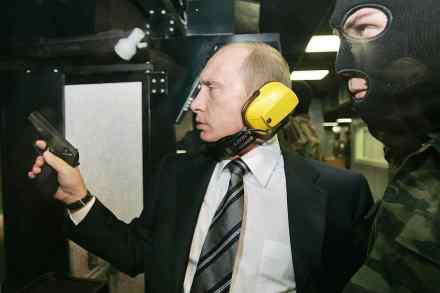
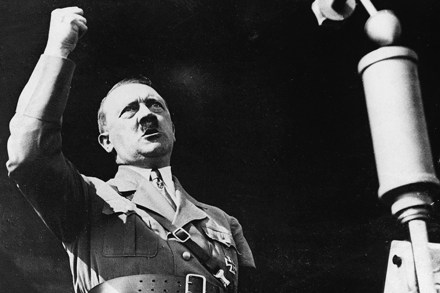
Could an assassin kill Putin? Just as the second world war would not have happened without the demonic will and agency of Adolf Hitler, so the invasion of Ukraine – and its horrific bloodshed and unspeakable human misery – is Putin’s war. Can he be stopped? The bad news is that the chances do not look good at the moment. Putin is protected 24/7 by one of the world’s strongest security details, who have sealed him in a closed bubble. All access to him is strictly – almost manically – controlled, in much the same way as it was for Stalin and Hitler.

Scholz’s token military gesture won’t undo years of neglect

From our UK edition

Chancellor Olaf Scholz’s announcement that Germany is sending weapons and missiles to Ukraine – and is increasing its defence budget to two per cent – marks the mother of all U-turns. But it comes too late, too late for Ukraine. Years of Germany allowing its military to atrophy cannot be done overnight. Compromised by her cosy relations with the tyrant in the Kremlin, open to economic blackmail by being stretched over an oil barrel and a gas pipeline, and guilt-stricken by her Nazi past, today's Germany is in a very bad place indeed. Yet you might not realise it from the fawning reaction to Germany's renewed interest in militarisation.

Why Ukrainians fear the Russians

From our UK edition

The Ukrainian word 'Holodomor' meaning 'death by hunger' is not as well known in the West as the word 'Holocaust', but it should be. In 1933, a decade before the Nazis began to deliberately murder some six million European Jews, Stalin's Soviet regime starved to death – equally deliberately – some four million men, women and children in the Ukraine. That this epic crime has largely disappeared from public memory, mostly forgotten except by historians and the Ukrainian diaspora, is partly down to the second catastrophe that overwhelmed Ukraine in 1941-45 with its invasion and conquest by Hitler's armies. This terrible episode was also successfully covered up and concealed from the world by both Stalin's regime and its western apologists.

How Putin is following Hitler’s playbook

From our UK edition

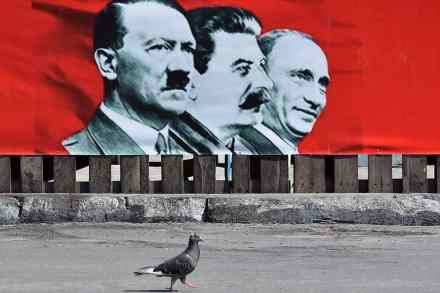
Like many rulers of Russia before him, especially Stalin, Vladimir Putin is a keen student of History. Judging by his current actions, it seems as though he has been particularly brushing up on the story of 1938, when another dictator, one Adolf Hitler, deliberately provoked the destruction of an independent European state – Czechoslovakia – by inflating the grievances of an ethnic minority within its borders to undermine and eventually obliterate it. So has Putin been following Hitler’s playbook in his confrontation with Ukraine? It looks very much like it.

Get well soon, your Majesty

From our UK edition

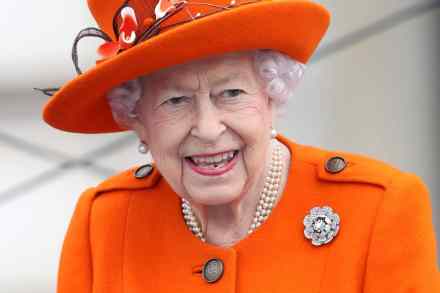
The news that the Queen had tested positive for Covid must have sent a shiver of dread down the spines of all but a tiny minority of hardhearted Republicans. Most of us don't want to even imagine a country bereft of the monarch who has been a seemingly immortal part of the fabric of the lives of all but the very old. Yet the brute fact of human mortality means that we will have to face a world without this indomitable 95-year-old woman at some point. How will we cope? Under the Treason Act of 1351 it was a capital offence to 'imagine' the death of a reigning sovereign, but in our time whole departments of state have long not only 'imagined' our Queen's passing, but have planned for it down to the finest detail.

Boris vs the Blob: the real reason John Major can’t stand the PM

From our UK edition

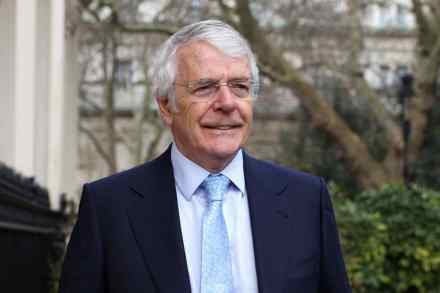
The embattled denizens of Downing Street must be quaking in their loafers as another incoming missile streaks in. This one – typically late in the day – is fired by one of our growing squad of embittered ex-prime ministers, Sir John Major. It takes the form of a speech to the Institute for Government titled ‘In democracy we trust?’. Sir John’s sense of irony in choosing this subject is clearly not strong considering he spent much of his spectacularly undistinguished premiership struggling to subsume British parliamentary democracy under the proudly undemocratic European Union. Nonetheless he chips in with the usual tropes of the anti-Boris brigade: the PM is demeaning standards, undermining probity, telling fibs. We all know the familiar words of the song.

Are Tory MPs too ‘frit’ to bin Boris?

From our UK edition

Boris Johnson is in the midst of the bleakest period of his premiership, but he can at least nibble on a crumb of comfort from history. Contrary to conventional wisdom, the Tory party is not at all ruthless in dispatching their prime ministers when they have fallen out of favour with voters, or appear to have passed their sell by dates. If Boris is on his way out, he might still be able to look forward to one of the very long goodbyes experienced by his Conservative predecessors in No. 10, thanks to the marked reluctance of Tory MPs to wield the fatal knife. Let’s start with Johnson’s hero, biographical subject, and the man he is said to have modelled his political career upon: Winston Churchill.

Stalin the intellectual: the dictator cast in a new light

From our UK edition

The link between mass-murdering dictators and the gentle occupation of reading and writing books is a curious one, but it definitely exists. Mao was a much- praised practitioner of traditional Chinese poetry; Hitler was widely if haphazardly read, dictated Mein Kampf and was a fan of Karl May’s Wild West stories; and Stalin, as Geoffrey Roberts shows, took books at least as seriously as the purging of foes, real and imagined.

Germans – not Brits – are the ones who keep mentioning the war

From our UK edition

The German ambassador, Peter Ammon, leaves Britain this month and retires after a distinguished diplomatic career as Berlin's man in Paris, Washington, and finally London. Before packing his koffer, Herr Ammon issued the traditional plangent lament that every single German envoy to our shores in my adult lifetime has voiced: Why, oh why, must Britain keep mentioning the war? In a valedictory interview with the Guardian (where else?) Herr Ammon appealed to the UK to stop 'fixating' on World War Two, instancing the huge success of the films 'Dunkirk' and 'Darkest Hour' as examples of our deplorable tendency 'to focus only on how Britain stood alone in the war, how it stood against dominating Germany. Well, it is a nice story, but does not solve any problem of today'.

Robert Harris on Boris Johnson, cancel culture and rehabilitating Chamberlain

From our UK edition

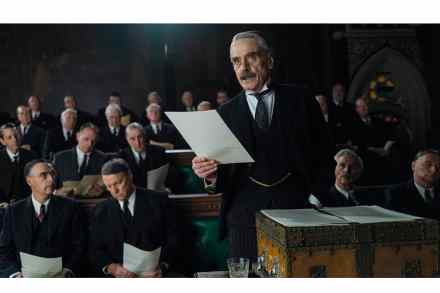
Robert Harris has long been on a one-man crusade to reverse history’s negative verdict on the architect of appeasement. He argues that it was Neville Chamberlain’s duty to go the extra mile for peace and give Britain the moral authority to fight Hitler in the second world war. ‘There seems to be a general feeling that he couldn’t have done much else. He bought us precious time.’ Now the appearance of an acclaimed Anglo-German Netflix film Munich — The Edge of War, starring Jeremy Irons as Chamberlain, and based on Harris’s 2017 novel Munich, gives him the chance to bring his quixotic campaign to a mass audience.

Any beggar woman was a potential scapegoat during the European witch craze

From our UK edition

In the three centuries between 1450 and 1750 in Europe it is estimated that up to 100,000 women were burned, hanged, drowned or put to death in other ingenious ways on suspicion of being witches. John Callow’s thoroughly researched book tells the story of three such women, the last judicial victims in England of what has been dubbed ‘the great European witch craze’. Craze is an appropriate word for a phenomenon which spanned a period when the Continent was supposedly emerging from the dark ages of superstition into the sunlight of the Enlightenment. But in the dawning Europe of Kant, Voltaire and Newton a cloud of unreason persisted, of which the Bideford witch trial was a small but significant example.

How Hitler’s great gamble nearly paid off

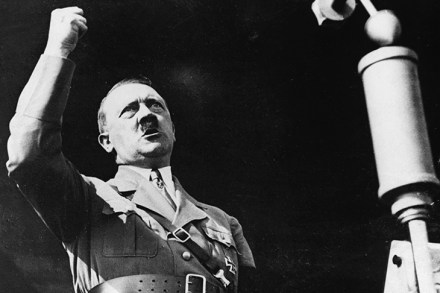
Do we need another wrist-breaking book about Adolf Hitler, the Third Reich and World War Two? What is there left to say? To gain attention, any new study has to have a thesis: some fresh angle that previous writers have overlooked or played down. For Frank McDonough it is the insane impossibility that Germany could ever have won the struggle it launched against the combined powers of the US, USSR and the British Empire that was the Führer’s fatal flaw. McDonough is an academic specializing in Nazi Germany, and he writes clearly and readably, with just enough detail, on the huge canvas that he covers.

hitler

Stalin as puppet master: how Uncle Joe manipulated the West

From our UK edition

Of the two dictators who began the second world war as allied partners in crime but ended it in combat to the death, there is no doubt who has received more attention from historians and in the popular imagination. So much so, indeed, that the conflict is often labelled ‘Hitler’s War’. In this unashamedly revisionist account, the American academic historian Sean McMeekin asserts that we have been looking at the war through the wrong end of the telescope. The tyrant who, while not launching the conflict, took advantage of the circumstances that it presented at every turn, and certainly ended up by winning it, he says, was the man he constantly calls the Vozhd (the boss): Joseph Stalin.

A phoenix from the ashes: 17th-century London reborn

From our UK edition

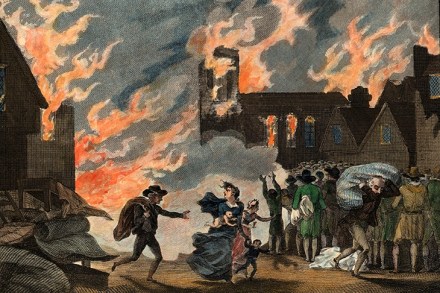
Tragically, the current pandemic lends this sparkling study of London in its most decisive century a grim topicality — for the city, during the most explosively expansive phase in its growth, also experienced the arrival of two of the four horsemen of the Apocalypse — war and pestilence — riding in to wreak havoc on an unprecedented scale. The 17th-century city may have narrowly escaped conquest and famine, but another Apocalyptic outrider — fire — also visited in 1666, leaving medieval London, with its filthy warren of narrow, timbered streets, in ashes. The upside, as Margarette Lincoln demonstrates, was that the cleansing inferno cleared the ground for London to become, as her subtitle claims, ‘the world’s greatest city’.

How Hitler’s great gamble nearly paid off

From our UK edition

Do we need another wrist-breaking book about Adolf Hitler, the Third Reich and the second world war? Since Ian Kershaw published his two-volume biography of the Führer 20 years ago, there have been at least a dozen similarly weighty tomes on the war by historians including Max Hastings, Andrew Roberts, Antony Beevor and Kershaw himself; not to mention more recent massive lives of the Nazi dictator by Brendan Simms and the German historians Peter Longerich and Volker Ullrich. So what is there left to say that we do not already know? To gain attention, any new study has to have a thesis: some fresh angle that previous writers have overlooked or played down.

A dead letter

From our UK edition

When lists are compiled of our best and worst prime ministers (before the present incumbent), the two main protagonists of this book usually feature, holding the top and bottom positions. Attempts are periodically made to revise these verdicts, most recently in John McDonnell’s description of Churchill as a villain; and by Robert Harris’s sympathetic portrayal of Chamberlain in his thriller  Munich. By and large, however, the general view of the two PMs remains fixed: Churchill was a hero who saved his country and arguably freedom and democracy worldwide, while Chamberlain was a purblind and arrogant fool who let Hitler stomp his jackboots all over him.

The luck of the devil

From our UK edition

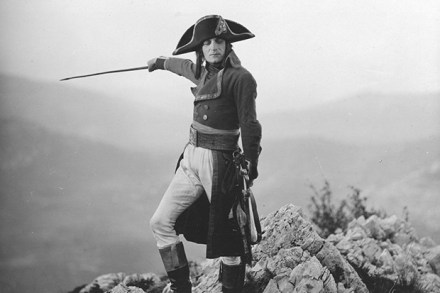
Who says that the ‘great man’ theory of history is dead? Following hard on the heels of Andrew Roberts’s magnificent biography of Churchill comes this equally well-written life of another superman who bestrode his era and all Europe like a colossus. Although Adam Zamoyski is at pains to insist that his subject was an ordinary mortal like any other, the simple facts of Bonaparte’s career somewhat belie any attempt to cut the little fellow down to size. How could this second surviving son of an impoverished minor nobleman from an obscure island come, within a few years, to dominate the entire continent, dictate terms to emperors, kings and popes, and set his own siblings on the thrones of the countries he had conquered?

Europe ‘resurgent’

From our UK edition

When I reviewed the first volume of Sir Ian Kershaw’s wrist-breaking history of the last 100 years of Europe, To Hell and Back, in these pages exactly three years ago, I compared our continent in 1945 to a punch-drunk boxer rising from the canvas with both eyes blacked. How, I wondered, would Kershaw handle the battered old bruiser coping with a not-so-brave new world in which he was no longer the undisputed champ? The image of the wounded fighter, I think, was apt, for the red thread running through Europe in the first half of the century, as Kershaw rightly saw, was violence. States waged catastrophic war on each other and on their own citizens. Belonging to the ‘wrong’ race, religion, or political persuasion could mean imprisonment, torture and violent death.