Nigel Jones

Nigel Jones is a historian and journalist

What the Queen’s funeral tells us about Britain

From our UK edition

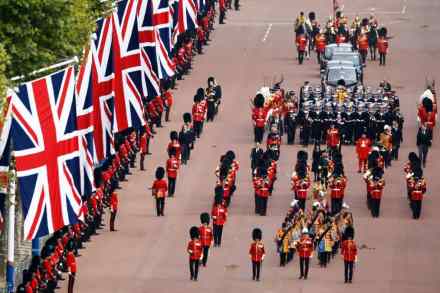
State funerals say a lot about the country in which they take place – and one of the things in which Britain still indisputably leads the world are the magnificent final farewells that we arrange for our leaders. How very different are some of the send offs seen in less fortunate lands. When Stalin died in 1953, hundreds, possibly thousands, were added to the toll of his victims when they were fatally crushed queuing in Moscow to view the dead Soviet dictator. In 1989, after the death of Ayatollah Khomeini in revolutionary Iran, the chaotic funeral culminated in the dead Supreme Leader’s body actually falling out of its coffin, while Revolutionary Guards fired into the crowd of more than a million mourners, killing at least eight.

The nondescript house that determined the outcome of the second world war

From our UK edition

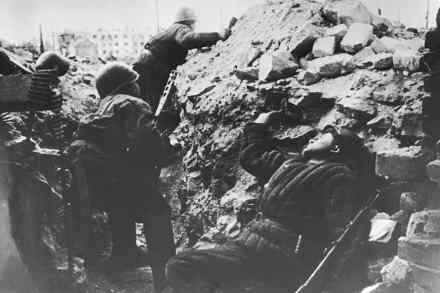
Sometimes the struggle for a single small strongpoint can tip the whole balance of a greater battle. One thinks of the closing of the gates of Hougoumont farm at Waterloo, or the bloodless German seizure of Fort Douaumont at Verdun – an error it took an estimated 100,000 French lives to reverse. According to Iain MacGregor, this role at Stalingrad was played by a non-descript four-storey building in the city’s central district, codenamed ‘the Lighthouse’, but subsequently known as ‘Pavlov’s House’, after one of its garrison’s leaders, Sergeant Yakov Pavlov.

A divided Tory party is destined to lose the next election

From our UK edition

I think that I may be able to claim credit for being the first writer to question the once universal assumption that Rishi Sunak would be the next Prime Minister. Back in March, after the then-Chancellor’s disastrous Spring budget statement, in a piece for this site headlined ‘How Sunak Sunk Himself’ I pointed out the dents in the smooth billionaire’s shiny armour that have now become gaping rusty holes, and turned ‘Dishy Rishi’ into ‘Fishy Rishi’. Too rich during a cost of living firestorm, too out of touch with ordinary people struggling to make ends meet, and too prone to making basic political errors, Sunak’s flaws have been brutally exposed by his nakedly ambitious grab for the Tory leadership.

Is Putin using a body double?

From our UK edition

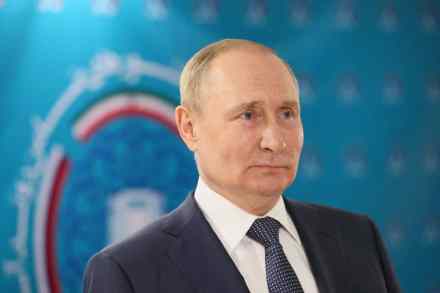
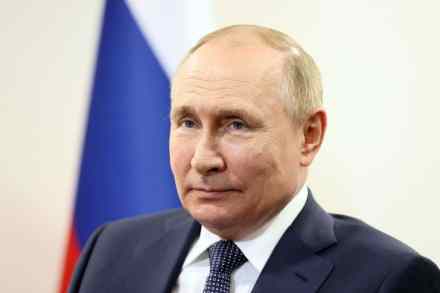
Ever since his invasion of Ukraine in February, the world’s media has been awash with rumours that Vladimir Putin is seriously – perhaps terminally – ill. There has been constant speculation that the Russian President has cancer, or Parkinson’s Disease, or both. Now Ukraine’s Head of Military Intelligence, Major General Kyrylo Budanov, has thrown another rumour into the swirling mix – claiming on TV that Putin regularly uses one or more body doubles, and may even have been impersonated by one of them at his recent summit meeting in Tehran with Turkey’s President Erdogan. As proof of his theory, Budanov cited the shape of Putin’s ears which he claimed has changed over the years, along with his height.

Is the death penalty making a comeback?

From our UK edition

It’s been a busy week for hangmen. In Japan, Tomohiro Kato, a 39-year-old man, was hanged at a Tokyo prison for killing seven people and injuring ten others in a 2008 murderous rampage in which he drove a truck into a crowd before stabbing several other random victims. Kato admitted his guilt and blamed his crime on his alienation from society and insults he had received on social media. It was the second execution in Japan ordered by the government of prime minister Fumio Kishida, who took office in 2021, after the death penalty had been held in abeyance for several years. However, it’s unlikely to be the last.

Is Putin really in good health?

From our UK edition

Soon after Vladimir Putin launched his invasion of Ukraine in February a rash of stories appeared in the western media speculating that the Russian president was dying, or at least very seriously ill. The evidence offered was circumstantial but superficially compelling. This ranged from the absurdly long tables the dictator uses to keep his distance from his aides, to analysis of such symptoms as his awkwardly shaking limbs and puffy face. There were also reports that Putin keeps a top cancer specialist in his entourage at all times. Now, no less an authority than the boss of the CIA, William Burns, has poured a douche of cold water on such wishful thinking.

Boris Johnson is irreplaceable

From our UK edition

It has been less than a fortnight since Boris Johnson’s premiership exploded so spectacularly just three short years after his triumphant election victory, and he became the latest Tory PM to perish at the hands of his own party. Yet two weeks on, the people who brought him down are already wondering if they hit the right man and what, or who, on Earth will follow him. This outbreak of assassins’ remorse is scarcely surprising given the parade of political pygmies and snake oil salespeople who have been demonstrating their dubious wares on our TV screens in recent days. The sad truth is that for all his manifold faults and flaws Boris Johnson is irreplaceable.

Do Tory MPs still represent their members?

From our UK edition

As the Tory party leadership race enters its next stage this weekend, one thing is becoming very clear: the two candidates that MPs will select for party members to vote on may not be the people that, if it was up to them, the grassroots members would pick themselves. The yawning gulf between Westminster and Tory foot soldiers is nothing new. Ever since her cabinet overthrew Margaret Thatcher, and still more so since David Cameron imposed his A list of diverse and celebrity candidates on local associations – many of them not even nominal conservatives – the gap between central office and ordinary Tories has grown ever wider. Take the great Brexit debate, the most divisive issue to rend the party (and nation) in recent years.

Is Rishi too rich to rule?

From our UK edition

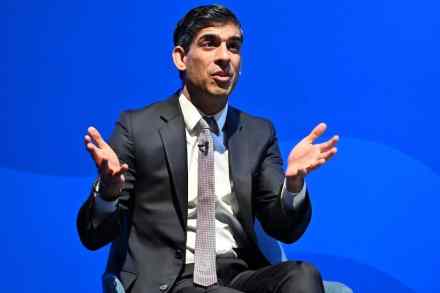
In Shakespeare's Julius Caesar, Caesar says of Gaius Longinus Cassius, the chief conspirator: ‘Yon Cassius has a lean and hungry look: he thinks too much. Such men are dangerous’. None of the eight Tories fighting like ferrets in a sack to succeed our own fallen Caesar, Boris Johnson, looks leaner or hungrier than the former chancellor in his crisply laundered snow white shirt. But would what is beginning to look like his inevitable triumph as prime minister be good or dangerous for the Tory party, and the country at large?

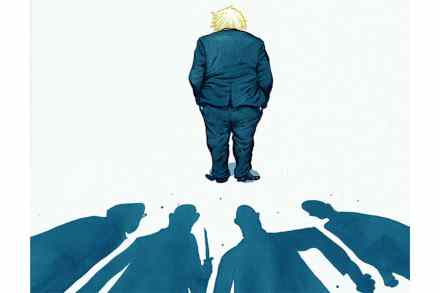
Boris’s Tory assassins have learnt nothing from Thatcher’s downfall

From our UK edition

John Stuart Mill once dismissed the Tories as ‘the stupid party’. When a reader queried the insult, Mill qualified it, but not by much. ‘I never meant to say that Conservatives are generally stupid,' he wrote. 'I meant that stupid people are generally Conservatives’. More than a century and a half later as the party implodes once again, today’s Tory MPs are still living up to Mill’s derogatory description. Sitting securely with their huge parliamentary majority, and with at least two years to go before they need to face the voters again, the Tories are going all out to make sure that they lose.

Disloyalty is the true Tory secret weapon

From our UK edition

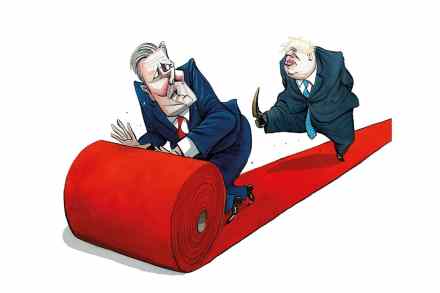
It is a very long time since David Maxwell Fyfe, a Tory home secretary in the early 1950s, said that ‘Loyalty Is the Tory party’s secret weapon’. It may not even have been true when he uttered the quote, and as the party messily defenestrates its latest leader, it is certainly not true today. In fact, of Britain’s two major parties, it is Labour which has proved most reluctant to dump a failing leader, while the Tories have frequently been ready to unsheath the daggers and ruthlessly despatch their leaders to oblivion, often at the first sign of political stumbling or unpopularity.

Keir Starmer has got the Zzzz…Factor

From our UK edition

Is it a fatal handicap for a politician to be dull? Since he became Labour leader two years ago, there has been a growing feeling that Sir Keir Starmer not only lacks the magical ‘X Factor’ that makes for political success, but is in proud possession of its polar opposite – what might be called the ‘Zzz.. Factor’: that he is, in a word, boring. This week, Labour’s fears about the soporific nature of their chief finally surfaced with a report in which unnamed Shadow Cabinet members accused Starmer of ‘boring everyone to death’. Earlier, in a coded rebuke of her boss, his deputy Angela Rayner begged him to put more ‘welly’ in his political style. Finally, the pollsters J.L.

Boris looks doomed, but can he escape the inevitable?

From our UK edition

Is Boris Johnson’s government about to fall apart? Twice since World War Two, Tory governments have broken up after a prolonged period of rule. They have died not because of a single crisis, but slowly expired due to sheer exhaustion, disunity, and lack of purpose or ideas. Now Boris’s regime, after another lengthy Tory period in power, looks as though it may be heading towards a similar exit. But can it avoid its fate? The parallels between today’s events and those of 1963 and 1992-7 are inescapable. In all three cases we have a tired team of Tories bereft of ideas simply running out of steam. In all three we have a derided Prime Minister becoming the butt of media jibes and popular dislike.

Is this the week Boris Johnson’s luck finally runs out?

From our UK edition

'Is he lucky?' Napoleon demanded to know of one of his generals. When Sue Gray's partygate report is released in the coming hours, we'll soon find out if the luck Boris Johnson has enjoyed during his rise to the top continues. Given that Boris managed to escape from the Met police investigation into the festivities that played out in Downing Street during the pandemic with just a single fine, it seems unlikely the PM's luck is about to run out. It marks a miraculous turnaround from just a few months ago when it looked almost certain that partygate would bury Boris.

Pestminster’s return spells trouble for Boris

From our UK edition

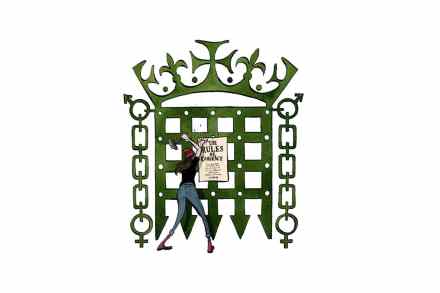
Some male MPs behave ‘like animals’. In the wake of the recent spate of bad behaviour among our lords and masters, Attorney General Suella Braverman's comments confirm what many of us already knew. So what is going on down at the Westminster farm? Whoever is to blame for the moral degradation in SW1, this string of stories should trouble Boris Johnson. After all, political scandal is often followed by political upheaval. Female MPs have claimed that a Tory MP has been openly watching porn on the green benches.

Putin, Bucha and a tale of two Russias

From our UK edition

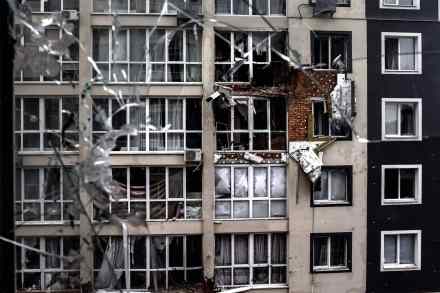
The scenes of butchery and barbarism in the liberated Ukrainian towns of Bucha and Irpin and nearby villages – civilians tied up, tortured, mutilated and shot; women raped, burned to death in their cars, and buried in a mass grave – have been compared to the worst slaughters of World War Two. The West struggles to comprehend how such savagery can occur in 21st century Europe. We should certainly be shocked but not surprised. The red thread running through Russia's unique history, from Tsarist times until today, is a recurring motif of mass murder and massacres that have no parallel in other modern European states, with the exception of the dozen years when the Nazis ruled Germany.

History must at least be readable if we’re to learn anything from it

From our UK edition

Richard Cohen was once one of our foremost book editors as well as being an Olympic sabre champion. Since moving to New York 20 years ago he has turned author himself, writing books on Tolstoy, the sun and his own sport of swordsmanship. Now he focuses his attention on historians. His aim, he tells us at the outset of this superb survey from Herodotus to Mary Beard, is to discover the opinions, biases and open prejudices of those who chronicled the past and thus shaped the way we view it. Making History is very much a compendium of his own tastes and enthusiasms, and cheerfully omits such masters as Clarendon and Carlyle, whose histories of the English Civil War and the French Revolution laid the foundations of all subsequent historiography of those events.

How Sunak sunk himself

From our UK edition

Whatever his myriad faults and foibles, Boris Johnson has the one essential quality that Napoleon demanded of his generals: luck. A few weeks ago, the Prime Minister was on the point of being dethroned by his own MPs. Today, thanks to two men, Vladimir Putin and Rishi Sunak, he strides the stage again, basking in the praise of president Volodymyr Zelenskyy as Ukraine’s most doughty and effective international defender. Johnson owes his survival and resurrection to his firm response to Putin’s brutal invasion, but also to the abrupt political implosion of the colleague who was being lined up – not least by himself – to succeed him: Chancellor Rishi Sunak.

What Ukraine can teach Britain about patriotism

From our UK edition

I live near the small Sussex seaside town of Selsey. It’s the sort of place that gets right up the well-bred nose of Labour’s Emily Thornberry with her famous disdain for flag wagging patriotism. For in normal times the many flagpoles in the tidy gardens of the resort are flying the St George’s flag of England, or sometimes the Union Flag. Not this month however. Suddenly, most of the same poles are sporting the blue and yellow flags of Ukraine. In a touching show of solidarity with that faraway country of which we now know all too much, the patriots of Selsey are putting out more flags to demonstrate their disgust at Putin’s barbaric invasion. In Ukraine itself, displaying the national flag is ubiquitous: it is everywhere.

Is Zelensky’s party crackdown his first mistake?

From our UK edition

The news that Ukraine’s president Volodymyr Zelensky has banned eleven opposition parties – including the pro-Russian ‘Opposition – Platform For Life’ which holds 44 seats in the 450-member Ukrainian parliament and has spoken out against the Russian invasion – may be the embattled leader’s first major mistake in the month since Putin launched his brutal invasion. Zelensky coupled the decree suspending the activities of the parties, decided on by Ukraine’s national defence and security council, with a ban on private TV stations – merging them all into a single state-run TV channel. And that could be his second big error.