Nigel Jones

Nigel Jones is a historian and journalist

Is Wilfred Owen’s poetry any good?

From our UK edition

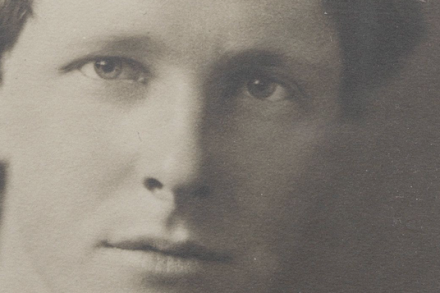
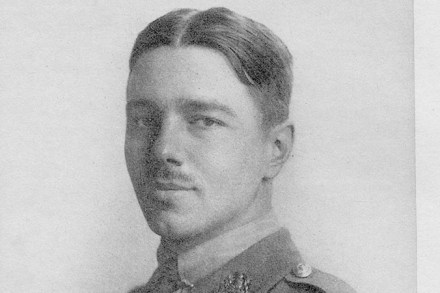
Wilfred Owen, the poet whose work epitomises the horror of the First World War for most people in modern Britain, was born in Oswestry in the Shropshire Marches, close to his Welsh ancestral homeland, one hundred and twenty-one years ago today. His brief life ended just a quarter of a century later, on November 4th 1918, when he was cut down by a German machine gun as he heroically led his men across the Sambre-Oise canal in the sort of suicidal attack that his poetry had implicitly criticised. Famously, the telegram announcing his death arrived at his parents' home in Shrewsbury at the exact moment when the bells were ringing out to celebrate the Armistice ending the war.

It’s not just the Tories who ought to fear Ukip – Labour and the Lib Dems should too

From our UK edition

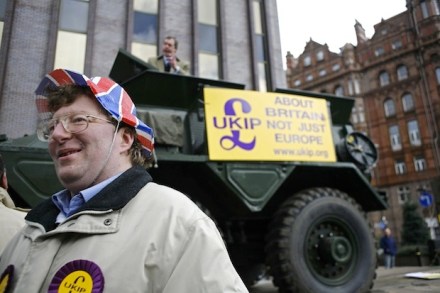
Listen! The sound you hear in the damp Tory grassroots as they gather in Manchester for the party conference this weekend is not the noise of a questing vole, but the first, faint squeals of panic as the General Election nears and the cry goes up : 'What on earth are we going to do about Ukip?' Already, commentators of a Cameroon bent have started to scratch their heads and gnaw their knuckles as they contemplate the awful truth: without those lost Ukip votes the Conservative party will not win re-election, yet if Cameron remains as their leader, that support will never be forthcoming.

Amy Winehouse and the 27 Club, by Howard Sounes – review

From our UK edition

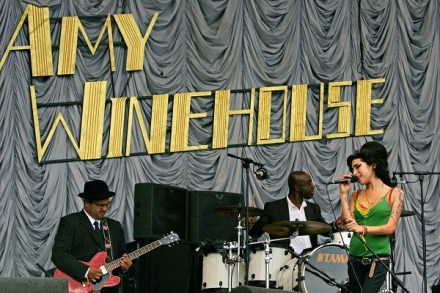
As an early dedicated fan of the Doors, who ran away from boarding school just so that I could catch my idols playing the massive Isle of Wight festival (a gathering of the Hippie tribes that in retrospect marked the end of the peace 'n love era) I approached this book with more than casual interest. I saw and heard two of its subjects - Jimi Hendrix and my hero Jim Morrison - give what turned out to be their swansongs that sweaty August night on the island. Both were dead within the year. Both were aged 27, as were rock biographer Howard Sounes's other subjects: Brian Jones of the Rolling Stones in 1969; Janis Joplin in 1970; Kurt Cobain in 1994, and most recently Amy Winehouse in 2011.

Ceremonies of Bravery: Oscar Wilde, Carlos Blacker, and the Dreyfus Affair by J. Robert Maguire – review

From our UK edition

The life of Oscar Wilde is so wearily familiar that we assume that there is nothing new to think or say about him. This book proves us wrong. Carlos Blacker - the central figure of  J. Robert Maguire's research for more than half a century - rates, at best, a bare mention in Wilde's many biographies. Yet, as Maguire conclusively demonstrates, he is no footnote. Blacker, a handsome man of Latin extraction, knew Wilde in the days of his London pomp, was a witness at the writer's wedding to the long-suffering Constance Lloyd, and often saw his friend on a daily basis.

Atlas of History’s Greatest Military Victories, by Jeremy Harwood – review

From our UK edition

Final proof - if any were needed - that Englishmen are not made of the same mettle as their rough, tough ancestors is provided on the website of the Towton Battlefield Society, who have cancelled their annual re-enactment of England's bloodiest battle this Sunday 'for safety's sake...' on the grounds that the battlefield has been waterlogged by this year's unremitting wet weather. This is an irony of ironies. For those who fought the original battle on the high Yorkshire plateau of Towton on Palm Sunday, March 28th 1461, during the Wars of the Roses, were not constrained by the same health and safety fears. Instead, between 50-80,000 men stood toe to ironclad toe for around ten hours in a driving snowstorm, shooting, hacking, stabbing and clubbing each other down.

A tale of two colonels

From our UK edition

This week, March 11th, marks the 50th anniversary of the shooting by firing squad near Paris of the last person (so far) to be executed by the state for political offences in France. 36-year-old Lieutenant-Colonel Jean Bastien-Thiry, a brilliant young officer of the French Air Force, was a rocket scientist (he invented the SS-10 anti-tank missile) - involved at the highest levels of France's attempt under President De Gaulle to forge a path independent of US hegemony in developing its own defence capability.

Richard III should be reburied under Leicester council’s car park

From our UK edition

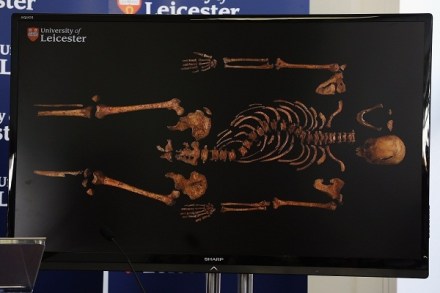
Anyone who watched last night's Channel 4 Documentary Richard III: The King Under the Car Park will need no reminding that members of the Richard III Society tend to be delusional fantasists rather than serious historians. Although we should doubtless be grateful to the Society for funding the dig that discovered the monarch's bones, that very fact tends to slant the coverage of Richard's resurrection. There has been much talk about 're-writing history' and countering 'Tudor propaganda'; but the inconvenient truth (for Ricardians) is that the late king's spine was indeed twisted by scoliosis and one of his shoulders was noticeably higher than the other. Those particular pieces of Tudor and Shakespearian “spin” were no more than the plain truth.

Two angry old men

From our UK edition

Though lasting literary friendships between natural rivals are not rare — Byron and Shelley, Coleridge and Wordsworth and Edward Thomas and Robert Frost spring to mind — few have been as durable as the one that began in the Front Quad of St John’s College, Oxford, one afternoon in May 1941 when a mutual friend introduced what their biographer calls ‘the odd couple’ by pointing his fingers at Kingsley Amis while imitating the sound of a gunshot. On cue, the fair-haired freshman yelled in pain, clutched his chest and staggered back to fall on a convenient pile of laundry sacks.

The Fuhrer was not amused

From our UK edition

‘The German sense of humour,’ Mark Twain famously observed, ‘Is no laughing matter.’ Although many Greeks, stretched on the Euro's rack at Berlin's behest, may be inclined to agree, Rudolph Herzog's intriguing study of humour in and against Hitler's Germany, Dead Funny: Telling Jokes in Hitler's Germany, proves conclusively that the Teutonic funny bone, while it may be difficult to locate, definitely exists.

Let’s not be beastly to the Germans

From our UK edition

The question of how Europe stumbled into the horrific abyss of  the First World War, the catastrophe which The Economist once called 'the greatest tragedy in human history' is obviously of much more than purely academic interest. (Though it is chiefly academics who have been arguing about it ever since). As we approach the centenary of the conflict's outbreak, one of them, Christopher Clark, Professor of Modern History at Cambridge University, has written a magnificently detailed study of the diplomatic dance that led the continent up to and over the edge. The Sleepwalkers should be required reading for politicians and decision-makers fumblingly steering the world in our own age, an epoch perhaps even more dangerous than the era of 1914.

War of the world

From our UK edition

Of the writing of books on the Second World War, and the reading public's appetite for them, seemingly, there is no end. And the past few months have seen a particularly rich crop from some of our finest and most senior historians of the conflict; their books representing the considered summation of their thoughts on the worst disaster humankind has yet to experience.   Of the quartet under review, David Edgerton's Britain's War Machine offers the boldest revisionist argument that seeks to overturn some of our most treasured assumptions about Britain's role in the war.

Darkness visible | 10 April 2012

From our UK edition

We all know the names Auschwitz, Treblinka, Belsen, and Dachau. But what about Pechora, Vorkuta, Kolyma and Norilsk?  Why are the camps to which Nazism's victims were deported household words, while the Gulag archipelago – the far flung network of Soviet labour camps and penal colonies where the victims of Stalin and Communism suffered and died – remains terra incognito to most of us.

Uneasy allies: de Gaulle and Churchill 1940-44

From our UK edition

Anyone wishing to understand the tortuous, love-hate relationship between David Cameron and Nicolas Sarkozy today will find all they need to know in Peter Mangold's gripping study of the wartime Anglo-French relationship, which is really the story of Winston Churchill and Charles de Gaulle. Not that today’s pygmy politicians can measure up to their titanic forebears, but the dynamics of the cross-Channel partnership — brutally exposed here by the strains of war — remain essentially the same. Neither of these proud, ancient nations can stand the other — but they cannot do without each other either. De Gaulle's rise to power in the war is one of the most extraordinary transformations in 20th century history.

Missing the point | 1 February 2012

From our UK edition

The reviewer of Alain de Botton’s books runs a grave risk. For behold what happened to the New York Times critic Caleb Crain in 2009 when he suggested that AdB’s 2009 book The Pleasures and Sorrows of Work ‘succeeds as entertainment, if not as analysis’. The philosopher replied: 'I will hate you till the day I die and wish you nothing but ill in every career move you make'. Not exactly Marcus Aurelius, is it? So it was with trepidation that I closed AdB’s new book, Religion for Atheists, and began to write. Religion for Atheists is AdB's attempt to prove that not all non-believers have to be like Richard Dawkins. AdB, by contrast, is the sort of atheist you could take home to meet your father if he happened to be the Pope.

At the going down of the sun

From our UK edition

Vernon Scannell, a poet who fought in North Africa in the Second World War, observed in his poem 'The Great War': 'Whenever the November sky Quivers with a bugle's hoarse, sweet cry The reason darkens; in its evening gleam Crosses and flares, tormented wire, grey earth Spattered with crimson flowers, And I remember, Not the war I fought in But the one called Great Which ended in a sepia November Four years before my birth'. Everyone in Britain, to an extent barely believable across the rest of Europe, has grown up in the shadow of the Great War — and particularly the trench lines that cut across the fields of Flanders and France for four hundred miles and four long years.

Bonfire boys

From our UK edition

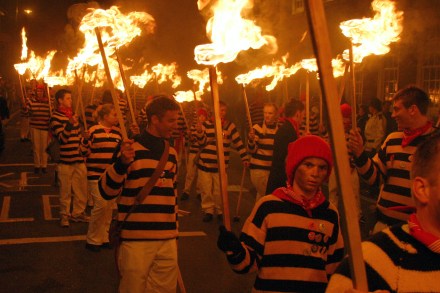
We so enjoyed Nigel Jones's last contribution to Coffee House that we thought we’d invite him back to describe the rather eccentric Bonfire Night celebrations in Lewes... Here in Lewes near the Sussex coast we were awoken this morning at 6am by a flash in the sky followed by an ear-splitting explosion. The shock waves reverbrated around the South Downs that cup the town in chalky hands, setting off barking dogs and car alarms. On any other day I would have feared that an incoming airliner had fallen short of the Gatwick runway. But this is November 5th – Guy Fawkes day, or as we call it here simply "Bonfire". In Lewes, you see, we take Guy Fawkes and his plot to blow up the entire Establishment seriously. Very seriously indeed.

The building of our history

From our UK edition

Athens, for all its current woes, still has the Parthenon. Rome has the Colosseum, Paris the Louvre, Berlin the Reichstag, Beijing the forbidden city, Moscow the Kremlin and Washington the White House. But where in London is there a structure that sums up and encapsulates the sweep of  English History from 1066 and all that, to the Second World War and beyond? The answer is certainly obvious to the 2-3 million mainly overseas visitors who flock to the Tower of London every year, making it easily Britain's top tourist attraction.