Nigel Jones

Nigel Jones is a historian and journalist

King Charles must learn from Spain’s Juan Carlos’s mistakes

From our UK edition

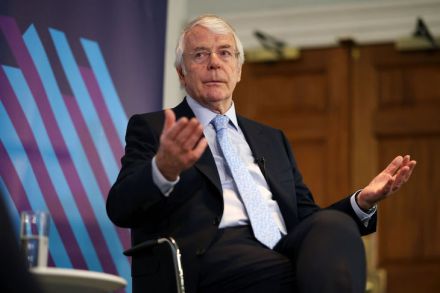
As he basks in the warm glow of respect, and even affection, surrounding his coronation this weekend, King Charles should recall the story of his distant cousin and near namesake ex-king Juan Carlos of Spain as a warning of how speedily a popular monarch can go from hero to zero. The ties between Spain’s Royal Family and our own are close in blood and warm mutual regard. Both families are direct descendants of Queen Victoria, with Spain’s current King Felipe calling our late Queen Elizabeth ‘Aunt Lilibet’; our new monarch reportedly had a private lunch with Felipe’s disgraced dad Juan Carlos only last month.

Is Joe Biden really fit to run in 2024?

From our UK edition

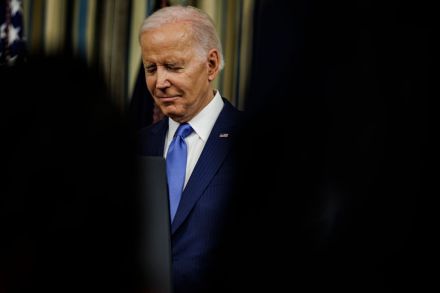
Kim yo-Jong, the powerful and influential sister of North Korea’s leader Kim Jong-un, has launched a savage personal attack on US President Joe Biden after he signed a new nuclear cooperation deal with America’s ally South Korea. The female Kim said that 80-year old Biden was ‘in his dotage’, calling him an ‘old man with no future’ who was unable to complete his term of office, and ridiculed his threat to destroy North Korea should it launch a nuclear strike against the US or its allies. Beyond the war of words over nukes, however, the question that must be raised is: why does it take a leader of a brutal dictatorship to tell a truth about the President that most of the ‘free’ Western media is reluctant to even mention?

Britain’s bloody history in Sudan

From our UK edition

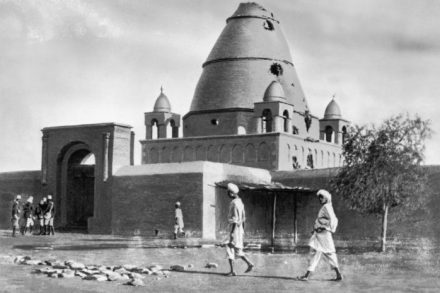
A 72 hour truce between rival military factions has been brokered in Sudan’s civil war by US Secretary of State Anthony Blinken. But whether this one holds, or falls apart like the previous ones, the history of one of Africa’s largest countries is a troubled one. It is also not the first time that an emergency evacuation of British citizens has caused a British political storm.  In 1884, just as today, a British prime minister was under intense pressure to rescue British citizens from savage fighting in Sudan’s capital Khartoum. So violent was the criticism of the ‘dithering’ in Downing Street then, that it almost destroyed the career of the grand old man of Victorian politics, the great Liberal statesman William Gladstone.

Russia’s long history of female assassins

From our UK edition

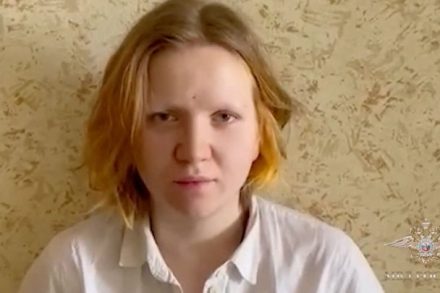
The news that a young woman anti-war activist, Darya Trepova, is suspect number one in the bombing assassination of Russian pro-war blogger Vladlen Tatarsky may shock those schooled to believe that political violence is an all-male preserve. But it will come as no surprise to anyone with the sketchiest knowledge of Russian history. For in Russian politics, as Rudyard Kipling wrote, ‘the female of the species is more deadly than the male’. Since the days of the Tsars, women have always been at the forefront of political violence in Russia.

What has Putin done with Ukraine’s missing children?

From our UK edition

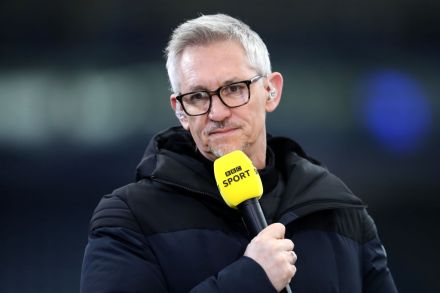
Vladimir Putin’s crimes against Ukraine are often facilely compared with those committed by Hitler’s Nazis during World War Two. As Gary Lineker has crassly demonstrated, the unique crimes of National Socialism are the gold standard of evil that careless people reach for all too easily when they wish to comment on, or criticise, a contemporary issue. In one under-reported way, however, Putin is indeed imitating the hideous crimes Nazi Germany carried out in Eastern Europe’s badlands 80 years ago: by abducting Ukraine’s children from their parents and taking them abroad. An arrest warrant has today been issued against Putin by the International Criminal Court in the Hague. Among the war crimes Russia's leader is accused of is the unlawful deportation of children.

Humza Yousaf and the SNP’s curious stance on the monarchy

From our UK edition

Humza Yousaf, the frontrunner in the contest to replace Nicola Sturgeon, says Scotland could ditch the monarchy if it leaves the UK. 'I’ve been very clear, I’m a republican...Let’s absolutely, within the first five years (of independence), consider whether or not we should move away from having a monarchy into an elected head of state,' he told the National. Yousaf is seen as the SNP's continuity candidate. But his pop at the monarchy marks a sea change from the official line under his predecessor, Nicola Sturgeon: that an independent Scotland should retain the institution. As the coronation of King Charles on 6 May approaches, this difference, with the potential for another split in the party, takes on a more than theoretical interest.

Gary Lineker’s offensive Nazi Germany comparison

From our UK edition

When a prominent left-wing celebrity wants to attack a conservative person or policy they very often make a comparison with Hitler’s Germany or his Nazi party. The latest person to draw this invidious, ignorant and downright offensive parallel with the gold standard of political evil is the former footballer turned Match of the Day BBC commentator Gary Lineker. Presumably, the star has calculated that his fame and popularity with football fans make him unsackable In Tweets attacking the government’s new Bill attempting to crack down on illegal migrants crossing the Channel, Lineker said that it was an ‘immeasurably cruel’ policy that was ‘beyond awful’ and that it used language directed at the migrants ‘not dissimilar to that used by Germany in the 30s’.

Justin Welby is wrong: Russia should be punished for its war in Ukraine

From our UK edition

As the world marks the grim first anniversary of Russia’s invasion of Ukraine, Vladimir Putin should give thanks that there appears to be at least one of what Lenin called ‘useful idiots’ left in the West. Step forward – after removing your foot from its usual place in your mouth – the Archbishop of Canterbury, the most Reverend Justin Welby. Fresh from presiding over a schism in the worldwide Anglican Communion over gay marriage, the Archbishop is now favouring us with his deeply misguided views on Putin’s aggression and its possible consequences. It may not sit well with Welby’s milk and water theology Welby has said that 'when the time comes' and 'provided a just peace between Russia and Ukraine can be achieved', Russia must be allowed to 'recover'.

Why ‘spy wars’ are back in the open

From our UK edition

The news headlines this week brought a warm glow of nostalgia to anyone brought up during the 20th century’s Cold War. The US shot down four UFOs which are suspected Chinese surveillance balloons. Not to be outdone, China accused the US of violating its airspace with spy balloons of its own. It was widely known that embassies on both sides of the Iron Curtain maintained ‘diplomats’ whose real mission was to spy In Britain, Prime Minister Rishi Sunak reassured us that the RAF were quite capable of dealing with hostile UFOs threatening our security, thank you very much.

Ukraine shouldn’t cancel Russian culture

From our UK edition

It is entirely understandable that the barbaric attack on Ukraine launched a year ago by Vladimir Putin has sparked enraged reactions among Ukrainians as they endure Russian missile strikes and await Putin’s much anticipated spring offensive. Attacking the culture of an enemy nation has a long and ignoble history, and it rarely ends well But in spurning and destroying Russia’s incomparable musical and literary culture the long-suffering Ukrainians are hitting out at the wrong enemy. The Times reports that Kyiv Opera House is deleting the music of the Russian composers Tchaikovsky and Prokofiev from a ballet, The Snow Queen, that is currently in rehearsal.

Why Nadine Dorries walked away

From our UK edition

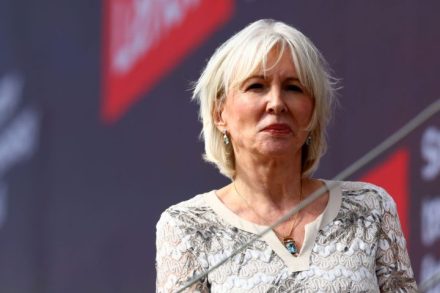
Plop! That was the sound of another rat leaving the sinking Tory ship as Nadine Dorries announced on her Talk TV show that she will quit parliament at the next election. The former Culture Secretary and unashamed Boris Johnson fan joins a lengthening list of departing Tory MPs who have read the writing on the wall and know that inevitable defeat and years in opposition await after their appointment with the voters next year. The only remaining question is the size of that defeat: will it simply be a narrow victory for Sir Keir Starmer’s reinvigorated Labour party? Or a wipeout on the scale of Tony Blair’s 1997 New Labour landslide that left the Tories out of power for more than a decade?

Rishi Sunak’s reshuffle won’t save him

From our UK edition

Winston Churchill had a stamp on his office desk reading ‘Action this day’ with which he marked documents demanding immediate attention from his officials and ministers. It seems that Rishi Sunak has exchanged this stamp for one reading ‘Inaction this day’ to judge by his government’s paralysed inactivity in the face of pressing events. His answer to the multiple strikes, walkouts and disputes plaguing Britain is, erm, carrying out a mini-ministerial reshuffle of the same tired old faces. Such a massive irrelevancy is unlikely to impress public opinion or do anything  to close the Tories’ 20 point lag behind Labour in the opinion polls. Nor are many of the appointments so far exactly ‘new’.

Is Germany the West’s weakest link?

From our UK edition

At the height of the Cold War, it was Britain that appeared to be infested with Russian spies and moles. From the 1950s to the 1980s a series of security scandals, from the defections to Moscow of the Cambridge spies Burgess, Maclean and Philby, to the exposure of the Queen’s art advisor Anthony Blunt as a Soviet mole, made Britain in the eyes of her allies the weakest link in confronting Communist Russia.  Today, with a real war involving Russia raging in Ukraine, that dubious ‘honour’ belongs to Germany. The Daily Telegraph has named a man arrested in December on suspicion of supplying secrets to Moscow as Carsten Linke, a 52-year-old ex-soldier turned a top official in the BND, Germany’s equivalent of our foreign intelligence service MI6.

Why Putin is channelling his inner Stalin

From our UK edition

Vladimir Putin has journeyed to the southern city of Volgograd – better known by its former name of Stalingrad – to take part in the 80th anniversary celebrations of the great Soviet victory in the city this weekend. The battle was the turning point of the second world war. While there, the Russian president specifically linked his invasion of Ukraine with the Nazi attack on Russia – turning history inside out as he did so. ‘It’s unbelievable but true,’ Putin said. ‘We are again being threatened by German tanks. Again and again we are forced to repel the collective aggression of the West.

Who governs Britain? Not Rishi Sunak

From our UK edition

Almost half a century ago, on 28 February 1974, Britain went to the polls in a general election called by Tory prime minister Edward Heath. The election was called in the midst of a crisis eerily resembling the situation that confronts Rishi Sunak today. Britain was ‘working from home’ on a three day working week announced by Heath in a bid to cope with the crisis, which included a full blown strike by the National Union of Mineworkers. Then, as now, the country was also suffering an energy crisis after a foreign war. Oil prices had rocketed following the 1973 Yom Kippur War between Israel and its Arab neighbours.

Rishi Sunak is no John Major

From our UK edition

As the skies darken over Rishi Sunak’s embattled government, with ministers being fired or placed under investigation, opinion polls dire and few signs of better times ahead, Tory optimists are (somewhat desperately) searching for signs that all may not yet be irretrievably lost for their party. The hopeful precedent that they have come up with is the 1992 general election. That year, things did not look good for John Major, the man who had replaced Margaret Thatcher under controversial circumstances just two years before. The opinion polls predicted a narrow but clear victory for Labour leader Neil Kinnock until Major, then a much-mocked figure, got on a soapbox – literally – and appealed to the public to be given a chance.

Nadhim Zahawi and the end of honour

From our UK edition

Nadhim Zahawi, who has been sacked by Rishi Sunak after days of headlines over his tax affairs, could learn a lot from the example of one of his predecessors as chancellor. Labour chancellor Hugh Dalton entered the House of Commons to deliver his autumn Budget on 10 November 1947. On his way in, he was accosted by a journalist who jocularly asked him what he was about to say. Equally jovially, Dalton confided a couple of sentences on the changes in taxation he would announce within minutes. Before he finished his speech, the tidbits he had disclosed to the nosy hack were in the evening papers and the London stock market was reacting. Dalton’s indiscretion – it was hardly an offence – cost him his front bench career.

Is sloppiness our new national vice?

From our UK edition

The Germans have a word for it. When they wish to criticise their Austrian cousins’ alleged tendency towards carelessness and inefficiency they call it schlamperei. The rough equivalent in English is ‘sloppiness’ – and a flurry of current cases suggests that it may be Britain’s new national vice, too. How many times in recent years and months have we witnessed some public service official go before the cameras to express doubtless heartfelt – but utterly futile – apologies for failing to carry out their basic elementary duties? Failings that, all too often, have cost a human life.

The whiff of decay hangs over the Tories  

From our UK edition

‘To suffer one scandal,’ as Oscar Wilde didn’t quite write, ‘may be regarded as a misfortune. But to suffer three at once looks like carelessness.’  ‘Careless’ is indeed the very word used by Tory party chairman Nadim Zahawi to describe his handling of his own tax affairs – just one of several potential scandalettes gathering around the government like flies around a carcass.

Germany is paralysed by pacifism

From our UK edition

Germany’s marked reluctance to supply Leopard 2 tanks to help Ukraine repel the brutal Russian invasion has very little to do with the feeble evasions and excuses offered by Berlin, and everything to do with the long shadows cast by German history. January 30 sees the 90th anniversary of Adolf Hitler becoming Germany’s Chancellor, yet the 12 brief years of Nazi rule inflicted such deep wounds on the country and the wider world that they have dictated German policy ever since.