Nick Tyrone

Nick Tyrone

Nick Tyrone is the research director of the Jobs Foundation. He is also the author of several books including Politics is Murder.

How to fix Britain’s energy policy

‘If nothing happens, it will be too late’. That’s the dire warning from an academic I spoke to recently in Aberdeen about Britain’s energy independence. He’s right to worry: last year, 44 per cent of the energy used in the UK last year was imported. This month’s Budget could be one of our final chances to save the UK from becoming increasingly reliant on energy from overseas, and to improve the lot of Britain’s suffering energy firms. One quick solution Rachel Reeves should reach for is scrapping the Energy Profits Levy (EPL).

Why liberals ignored the grooming gang scandal

For many years, liberals refused to talk about the grooming gangs scandal. The systematic sexual abuse and rape of hundreds, possibly thousands, of vulnerable children by offenders from ethnic minorities was a story that too many people were happy to ignore. There was an effective prohibition on discussing it in left and liberal circles. Grooming gangs was a subject guaranteed to silence a dinner party. So, we decided to pretend that it wasn't happening. Finally, the so-called great and the good have woken up to a scandal that was happening in plain sight Finally, the so-called great and the good have woken up to a scandal that was happening in plain sight in towns and cities across Britain.

Zia Yusuf’s departure spells trouble for Reform

Zia Yusuf has quit as Reform Party chairman. Nigel Farage and other power brokers within the Reform fold took to social media in an attempt at message control not long after Yusuf announced the parting of ways this evening. “Politics can be a highly pressured and difficult game and Zia has clearly had enough. He is a loss to us and public life,” Farage said to the nation about Yusuf's decision to walk away. “I no longer believe working to get a Reform government elected is a good use of my time, and hereby resign the office,” Zia Yusuf wrote But Yusuf's choice of words in his resignation statement suggested there may be more to this story.

Why this centrist dad is (probably) voting Reform

I am a liberal, centrist dad Remainer. I desperately wish we could rejoin the European Union. I really don’t like Donald Trump. I could go on. But if a general election were held tomorrow, I would seriously consider voting Reform. In fact, Nigel Farage's party is increasingly likely to get my support. Reform's success in last week's elections was no fluke: the latest YouGov survey puts the party on 29 per cent That I'm flirting with voting Reform might surprise you, but I'm not alone. Reform's success in last week's elections was no fluke: the latest YouGov survey puts the party on 29 per cent. The reason why is simple: the other parties are offering more of the same when Britain is badly in need of change. Let’s start with Labour.

Reform’s rise seems unstoppable

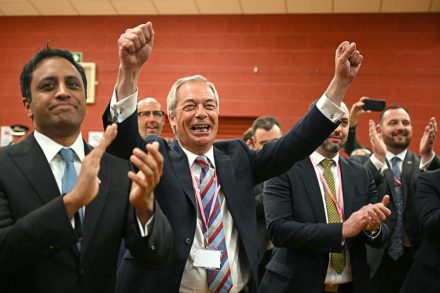
The Reform party has won the Runcorn and Helsby by-election. It was announced this morning that they had captured the seat by a mere four votes, the closest result in British by-election history. Labour asked for a full recount – after which, it turned out that the Reform party had actually won the by-election by six votes (still making it the closest by-election result in British history). This is a huge result in British politics. Reform has proven that electorally, they are for real. The polls aren’t wrong or soft – people will turn out and vote for them. Nigel Farage’s party is a genuine, massive threat to the British political order. By-election wins are also a sign that a smaller party is on the rise.

Ed Davey’s Lib Dems need to grow up

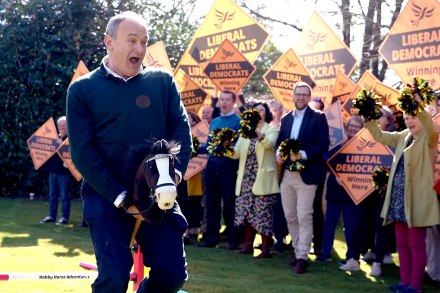
The Liberal Democrats launched their local election campaign yesterday in what has become their fashion: not with a serious speech delivering a flurry of policies designed to change the country, but with Ed Davey riding around on a wooden horse, while jumping about on a toy horseracing track. Just another one of Davey’s stunts, designed to get him and his party some attention without actually having to say anything of substance. Lib Dem leader @EdwardJDavey launches his party's local election campaign by attempting hobby horsing pic.twitter.com/ARDZ0AUqri— ITVPolitics (@ITVNewsPolitics) March 31, 2025 I understood during the general election campaign why the Lib Dems wanted to focus on these sorts of goofy moments.

Reform’s rockstar rally should trouble the Tories

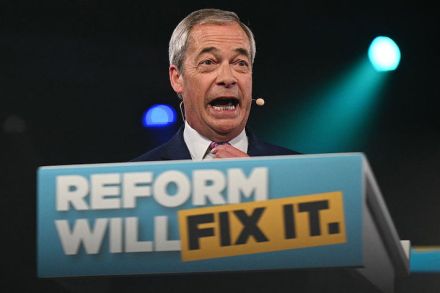
The Reform Party’s local election campaign launch in Birmingham was more rock concert than political rally. Thousands of the party’s supporters packed out the 10,000-seat arena on Friday. The Tories – and indeed the other parties – could learn a thing or two about inspiring their party faithful. The contrast between Reform’s local election campaign launch and the Tories' is stark There were people at the event in Birmingham of all ages and ethnicities; from those committed to the Farage cause for years, back to the Ukip days, to the merely curious. I spoke to a couple of guys in their mid-20s who had come all the way up from Jersey for the event. They weren’t members yet but wanted to see what the fuss was all about.

Should the Lib Dems be conservative?

Having won 72 seats at the general election, political pundits have been asking what the Lib Dems are going to do with their vastly increased presence in the House of Commons. The answer so far: not much. It’s remarkable how quiet the party has been, both in parliament and in the media. However, the Budget has seen them spread their wings a little – and what they have revealed is interesting. They have attacked Labour from the right: decrying the rise in employers NI; attacking the government’s policy on inheritance tax; criticising VAT on private school fees. So, does this mean that the party is going to position itself to right of Labour on economic issues, and to the left of the Tories and Reform on culture? Sort of. But it’s not as simple as that.

Sunak’s summer election gamble is bound to backfire

The general election we’ve all been waiting for has finally been called. The Prime Minister announced the election date – 4 July – in the pouring rain, his suit jacket becoming drenched as he spoke, all while someone blared 'Things Can Only Get Better' outside Downing Street. The whole scene was so on the nose, no satirist would have ever thought of staging it. It should be clear already that Rishi Sunak has made a terrible mistake. Barring a miracle, Sunak is about to lead his party to an historic defeat The PM has clearly been advised that going early with his election announcement is preferable to being seen to 'do a Gordon Brown' and holing up in No.10. The inflation figures yesterday may have also been a factor. But while it's true that inflation has slowed to 2.

George Galloway’s Rochdale victory is nothing to celebrate

George Galloway has won the Rochdale by-election. The new MP for the town announced the result as a 'shifting of the tectonic plates' in his acceptance speech, but that’s not an accurate way of describing what’s just happened. It’s more like a blip and an unpleasant one at that. No one who hopes for the best out of British politics can look at Rochdale with any joy. Certainly not celebrating this morning will be the Reform party, who came a shocking sixth, behind even the Liberal Democrats. Richard Tice was campaigning heavily in the constituency himself yesterday, with various Reform figures having talked up the candidate Simon Danczuk’s chances of winning. To get a measly 1,968 votes after all that, barely clinging on to the deposit, is laughable.

After last night Sunak is heading for electoral wipeout

And so Keir Starmer’s bad week comes to an end, just like that. Labour has won two by-elections in a single night in seats that had Tory majorities of over 10,000 after the 2019 general election. The heat now returns to Rishi Sunak, as inevitably it was always going to. To be fair, no one expected the results of these by-elections to be any different. For that we should credit No. 10 with decent expectation management, if nothing else. In fact, let’s not credit No. 10 with anything else here: most of the way these by-elections were run looked shambolic from beginning to end.

Why aren’t the Lib Dems doing better?

16 min listen

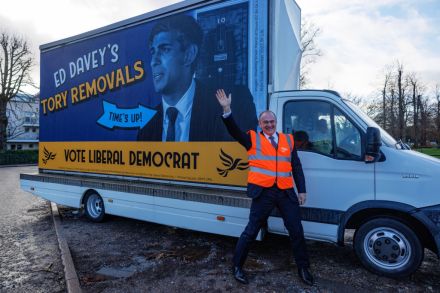
The Liberal Democrats began their 2024 campaigning this week by unveiling a huge poster branding them as ‘Ed Davey’s Tory Removal Service’, but they will have to be more than just the 'none of the above party' if they hope to make a difference come the election. What do the Lib Dems stand for? And can they turn by-election success into election success?  Oscar Edmondson speaks to James Heale and Nick Tyrone, author of the This Week in Brexitland substack. Produced by Oscar Edmondson. The Spectator is hiring! We are looking for a new producer to join our broadcast team working across our suite of podcasts – including this one – as well as our YouTube channel Spectator TV. Follow the link to read the full job listing: https://spectator.

Losing Tamworth and Mid-Bedfordshire is a disaster for Sunak

What an epically horrible night for the Conservative part, one of the worst in the party’s long and storied history. Tamworth and Mid-Bedfordshire, before yesterday the 57th and 98th safest Tory seats in the country respectively, fell to the Labour party. As if that weren’t enough, these by-elections also revealed that Rishi Sunak is in an even worse position than the current polls suggest – and the current polls suggest something approaching electoral apocalypse for the Prime Minister. The Lib Dems in Mid-Bedfordshire claim that they helped Labour win the seat yesterday. The theory they have posited is that, with their tireless campaigning in the more rural portions of the seat, they helped flip a score of people who were previously solid Tory voters.

Where ‘Rejoiners’ are going wrong

'Rejoiners' – who want Britain to once again be a part of the EU – took to the streets of London this weekend. It was a sorry sight. 'We want our star back,' the protesters yelled, as they waved EU flags and donned Brussels-branded berets. But who do they think they are actually persuading to change their mind? I think Brexit was a grave mistake and I hope to one day see the United Kingdom enter back into the fold. But the plain truth is that continuity Remain – those campaigners who want the democratic result reversed – are doing the hard work for Brexiteers. It sometimes feels like the best case for staying out of the EU is made by the 'Rejoiner' campaign groups themselves.

Does the Somerton victory mark the return of the Lib Dems?

Set against the expectation of a triple by-election defeat, last night will be seen as cause for optimism by some Tories. Labour failing to take Uxbridge and Ruislip is an unexpected boost for Rishi Sunak – and a result that will be seized upon by Keir Starmer opponents, not least those in the Labour party. Given the Boris baggage and the national polling, this is a seat Labour should have taken and probably with a reasonable majority. However, there is still plenty to glean from yesterday that should concern the Tories. Losing a seat like Selby is alarming, particularly doing so to Labour by a margin of more than 4,000 votes. The Lib Dems romping home with a 10,000+ majority in Somerton and Frome is also deeply worrying to Sunak and his team.

Why aren’t the Lib Dems doing better?

This weekend, the Liberal Democrats announced that they are mounting a ‘blue wall’ offensive, a campaign aimed at affluent voters in Tory-held seats located in the south of England. The theme of this campaign will be the Tories’ handling of the NHS, which the Lib Dems have done local polling on and discovered might be a vote winner in these areas. ‘Might be’ is key here because if you look at nationwide polling, you have to wonder how many seats the Lib Dems are actually capable of winning, even if the Conservatives do fall apart before the next general election. Rishi Sunak hasn’t turned the polls around for the Tories – at least, not yet.

The Chester by-election marks the end of Sunak’s honeymoon

The biggest question in British politics at the moment is whether the massive poll leads Labour has over the Conservative party will hold. With Labour polling as high as 51 per cent and the Tories as low as 21 per cent in the past month, the next election could see a 1997 style result – or even worse, from a Conservative perspective. The prospect of existential oblivion can’t be totally discounted. That’s what makes yesterday’s City of Chester by-election so interesting. It was Sunak’s first electoral contest as prime minister. A chance to see if he could beat the bad news expressed in every national survey of voting intent. A moment for him to show that things aren’t as bad for the Conservatives as they seem.

Why the Lib Dems want Boris back

Suddenly, out of the blue, comes a saviour. The Lib Dems have failed to capitalise on the downfall of Liz Truss. As the Tories’ polling hits record lows, all of the gains are going to Labour. This weekend, Ed Davey and his colleagues will be praying for the return of Boris Johnson. Boris was gold dust for the Lib Dems. In Ed Davey’s coveted Blue Wall seats across southern England, Boris was their greatest asset near the end of his premiership. These seats are traditionally Tory but lean Remain and socially liberal. They are also filled with the type of voters who would respond most warmly to Rishi Sunak’s ‘sensible’ calm-the-markets style of leadership.

The problem with Penny

I’ve been thinking for the past couple of days about who can beat Penny Mordaunt in the contest to be the next Tory leader. Despite the shaky start to her campaign, I still think she’s the favourite. Rishi Sunak has too many people trying to stop him; most importantly, a lot of the membership. Truss has too many detractors within the parliamentary party (although she could possibly overcome this and win). Kemi Badenoch is a real possibility but has a lot of ground to make up during the course of the contest. The rest are either too underbaked, have too much baggage, or are beset by other issues. Mordaunt’s appeal is pretty obvious: she’s articulate and outwardly confident.

These by-elections were not a revolt against Brexit

The optics this morning could not look any worse for the Conservative party. They have been defeated by Labour in a red wall constituency – demonstrating how vulnerable they are to losing seats newly won in 2019. And they have suffered a crushing defeat against the Lib Dems in a formerly (very) safe seat. The Tories appear to be in danger of leaking seats in several different directions at the next general election. There are clearly lessons to be learned and things the party can do to turn this around. The problem is the Tories don’t have any solutions at the moment. There are some who are saying that these two by-election losses look worse than they actually are.