Nick Tyrone

Nick Tyrone

Nick Tyrone is the research director of the Jobs Foundation. He is also the author of several books including Politics is Murder.

Has Covid killed the EU’s dream of open borders?

‘All non-essential travel should be strongly discouraged both within the country and of course across borders,’ Ursula von der Leyen, head of the European Commission, has said. As a result of the Covid crisis, the dream of open borders across the continent of Europe has never seemed so imperilled. Meanwhile, a post-Brexit Britain has the ability to flex its borders as much as it chooses. To some Brexiteers, this alone makes Brexit worth it. The Schengen agreement was signed in 1985 and became pan-EU in 1999, meaning that, from then on, any country without an opt-out needed to allow free movement of people from any other signatory country (almost all of the rest of the European Union).

Ed Davey is leading the Lib Dems to extinction

Ed Davey became leader of the Liberal Democrats almost five months ago. Since then, his party has achieved nothing. The Lib Dems currently poll at around five per cent, meaning that a party that only six years ago was in government now enjoys less support than the Greens. If this is embarrassing, it isn't surprising: the Lib Dems have had little to say for a very long time and certainly not since Davey took the reins.  Davey fought hard to become Lib Dem leader. But it seems that his ambition stopped there. So why did he ever want to become leader in the first place? Don't get me wrong: I have something of a fondness for a party I was a member of for ten years.

Why attempts to cut red tape almost always fail

Rishi Sunak has been appointed to chair a new committee that will be tasked with cutting red tape, particularly anything that originated from a European Union directive. Part of me thinks Boris has tasked Sunak with this as a means of taking some shine off of his Chancellor’s star — this latest venture to cut down on red tape is bound to fail as badly as the many other attempts that have been made over the years to drastically change the regulatory environment in this country. A lot of the thinking around regulatory reform in the UK is deeply wrongheaded, not from a left-wing or Remainer standpoint but from the perspective of anyone who really wants to make doing business in the UK easier and better.

Why does Keir Starmer always play it safe?

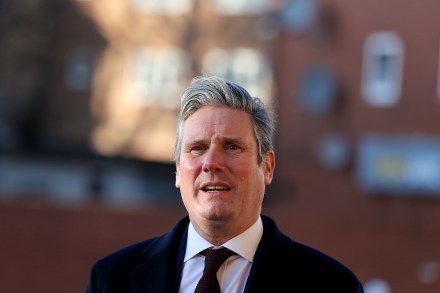
Keir Starmer’s keynote speech at the Fabian conference today was focused almost completely on foreign policy. The thrust of the Labour pitch was that Starmer is ‘pro-American but anti-Trump’. Given Corbyn’s tendency to see the United States at the Great Satan, this marks a huge shift in Labour’s foreign policy outlook. However, the speech was also classic Starmer and not in a good way: correcting the most obvious mistakes from the Corbyn era but going absolutely no further. I should take a moment to applaud Starmer for at least pivoting Labour back to a foreign policy position that is sensible and won’t stand in the way of the party trying to win elections again.

Tories should start taking Starmer’s new Labour seriously

The shadow chancellor Anneliese Dodds's speech last night has received little attention. But it would be a big mistake for the Tories to ignore what Dodds had to say on the new direction she hopes to steer the Labour party in. Don't laugh, but in years to come, last night could be seen as a significant turning point for Keir Starmer's party. For a start, the lecture was entirely free of sanctimony, which in and of itself marks a huge break with recent Labour history. Gone were blank attacks on 'austerity' or weepy complaints about the Tories being heartless; instead, Dodds put forward a case for why a social democratic approach to the economy would work in clear, clinical terms.

Tony Blair is deluding himself on a ‘De Gaulle-style comeback’

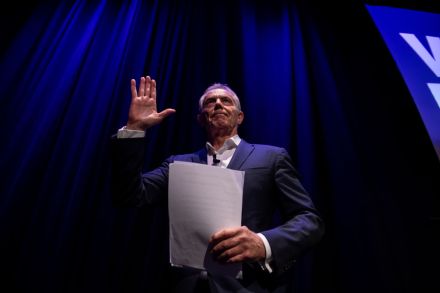
Tony Blair has made a tentative return to the heart of British politics by offering Matt Hancock strategic advice on the vaccine rollout. But does the former prime minister’s ambition stretch further than this? More than a decade after leaving office, Blair is said to keen on a 'De Gaulle style comeback'. For Blair's critics, it's an apt comparison. De Gaulle was the so-called 'father of Europe', who led Free France during the war years of the Vichy government. He later disappeared into the political wilderness after 1946 before staging a dramatic return a little over a decade later, eventually becoming president for ten years. So could Blair emulate De Gaulle? You can see why Blair might be keen on a comeback.

This lockdown is the worst yet for parents

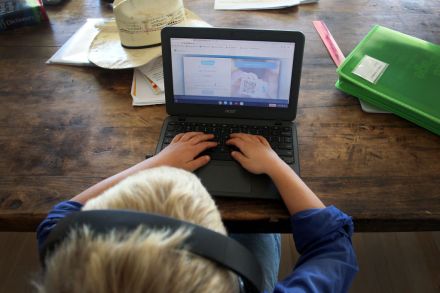
Lockdown is no fun for anyone, but spare a thought for those of us with kids. The third lockdown has, once again, made full-time teachers of parents. But this time, things are much harder. Why? Because during the current restrictions, teachers have been turned into a sort of truancy police force.  ‘Important information. If your child is working from home, they MUST register online daily by 9:00 by submitting at least one assignment….a follow up attendance phone call will be made for those pupils who have not submitted.’  This was the text I received several times last week from my two elder children’s school. Of course it's right that kids still received their education.

Starmer’s problem? He cares too much about Labour

There is a thought in some Westminster circles that Keir Starmer has lost the next general election already. Whether it be because of Brexit or Brexit and a bunch of other stuff, including leftover Corbyn baggage, Starmer is doomed as he stands. I believe this view is naïve and the smarter Tories I know don’t buy it for a second. Labour could still win the next election, particularly if the Conservatives get complacent. Yet if they do end up losing their fifth general election in a row, I already know why that will be. There was a moment in the 2015 Labour leadership contest that stands out for me, as it did for many at the time.

Why haven’t we shut the UK border already?

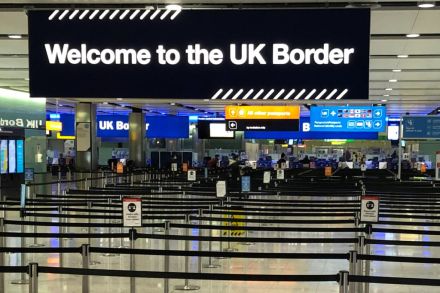
‘This country has not only left the European Union but on January 1 we will take back full control of our money, our borders and our laws,’ said Boris Johnson in October last year. The transition period is now over; we are out of the single market and customs union, which means freedom of movement of people is at an end. The UK has total control over its borders (other than the one on the island of Ireland, but let’s not go there today). So it is worth asking why the government is choosing not to exercise this right in anything approaching an appropriate manner at present, particularly when such a power is obviously of use given the harrowing Covid situation.

My fellow Rejoiners are living a fantasy

On New Year’s Eve at 11 p.m., the United Kingdom departed both the single market and the customs union, making the end to the country’s former membership of the EU complete. It was a moment to celebrate for Brexiteers; the commemoration of sadness for some Remainers. Or should I say 'Rejoiners' — there is no remaining now, Great Britain having departed the European Union. Many Rejoiners have set out their stalls already. ‘When they tell you to "move on" DO move on — to the long, strong, campaign to rejoin,’ tweeted Simon Schama, the historian and noted fan of the UK’s membership of the EU, ‘However hard the road, however long it takes; it starts now.

Starmer is about to make a big mistake in backing Boris’s deal

Keir Starmer has announced he is whipping his Labour MPs to vote for Boris’s Brexit deal in the House of Commons today. There are two likely reasons behind this decision: firstly, to make himself seem like a Labour leader who is a grown up, after Corbyn’s teenaged politics; secondly, to demonstrate that Labour accepts Brexit in order that it may win back Leave voters in red wall seats at the next general election. But there is a big problem with this calculation. While all of Starmer’s Brexit options are difficult ones, he may be about to enact the worst of the lot. A no-deal situation would have allowed Keir Starmer to claim that as prime minister he would be able to get the Brexit deal from the EU that Boris evidently could not.

How the Brexit deal demonstrates Boris Johnson’s genius

I have never cared for Boris Johnson as a politician. Despite that, I voted for him twice as London mayor. That actually says a lot about Boris for me. I can point to the fact that what I really did in 2008 and 2012 was vote against Ken Livingstone. Boris was just the lucky recipient – he was in the right place at the right time. Yet when a politician is always in the right place at the right time, there comes a moment when you have to stop putting it down to simply luck. Getting the trade agreement with the EU completed this week is nothing short of political genius on the part of Boris Johnson. If Dominic Cummings were still working for him, a lot of political journalists would right now be crediting him for getting this over the line; but no, it was down to Boris.

Boris now faces a terrible choice over Brexit

Ten thousand lorries usually travel through the port of Dover in the run-up to Christmas. Now, Dover is completely shut. Over the weekend, this crucial supply chain into Britain has stopped. In the coming days, as Brits stock up ahead of Christmas, there is likely to be some pressure on UK supply chains. And as James Forsyth writes on Coffee House, the coming weeks will inevitably mean a crisis for Britain. As such, it begs the question: can Boris really go for a no-deal Brexit now? Can he go through with it at a time when political crises are piling one on top of each other?  Despite the potential risk, I'm still convinced he will. Why? Because the EU knows that Britain is under particularly acute pressure right now. It is fighting difficult battles on a number of fronts.

No deal might be the best outcome for remainers

Plenty of Labour figures who voted Remain are now urging the government to complete a trade agreement with the European Union before the end of the transition period. ‘There isn’t a choice between a fantasy deal and no deal,’ says Liam Byrne. ‘It’s this deal versus no deal, and we will not have a manufacturing industry left unless there is a deal.’ Although there is still a battle within the shadow cabinet on what to do should a UK-EU trade agreement come to parliament, the consensus seems to be that Keir Starmer would whip the party to vote for Johnson’s deal. This marks a big shift in Labour's Brexit strategy for two reasons – and might well come back to those Labour remainers cheering on Boris to do a deal.

Boris Johnson has allowed himself to be snookered by the EU

The UK-EU trade negotiations have heated up again, albeit from a very cold state. Boris seems to have conceded ground on the 'evolution clause' to the European Union, making a path to an agreement on the level playing field issues at least plausible. The UK has accepted that divergence should come at some cost — although the details of how that cost should be managed appear to still be a live issue. With that comes the last hurdle: fishing. Boris Johnson has allowed himself to be snookered by the EU. More than anything else I could point to, leaving fishing to the very end demonstrates the folly of Johnson’s overall negotiating strategy.

No deal won’t ‘get Brexit done’

Brexit talks between the two sides are deadlocked. Boris Johnson's latest bid to 'divide and conquer' – pledging to visit Paris and Berlin to try and talk Macron and Merkel round – looks set to fail. The EU, it seems, has stayed united on Brexit, all the way to the end. We shouldn't be surprised.  Like it or not, this is what the country voted for in 2016. Unless something huge happened subsequently to prevent it, this is always the situation where we were likely to end up. Why? Because the EU was never going to back down on anything they perceived as a genuine threat to the single market. Brussels was also more relaxed about no deal once the Northern Ireland protocol had been agreed.

Blame Theresa May, not Remainers, for our Brexit crisis

Are Remainers to blame for the looming hard Brexit? The theory goes that had Remainers compromised and accepted soft Brexit, none of what is about to unfold would ever happen. It’s true that the behaviour of some Remain campaigners in the aftermath of the referendum has hardly been exemplary. The whole Russian conspiracy thing was deeply alienating to anyone who might have listened to their case otherwise. These campaigners helped turned Brexit into a skirmish in the culture was, unconsciously saying that Brexiteers weren’t just wrong but a malign force in British politics. Some remain campaigners also sucked up to Corbyn in a fruitless and embarrassing manner. Yet hard Brexit isn’t their fault for a very simple reason: it is the fault of one person alone.

If Boris agrees a Brexit deal, Labour should vote it down

It now seems more likely than ever that the UK will leave with no deal at the end of the year. But let’s imagine for a moment that I’m wrong and the UK and the EU manage to overcome their substantial differences. It would then have to be voted on in Parliament – and Labour should vote it down. Why? Because the deal put before the Commons would not be between Brexit and Remain. That ship has long since sailed. It would instead be between the thin deal Boris Johnson will have agreed with the EU and the choice of leaving with no deal whatsoever. Whichever way Parliament votes, we leave the transitional arrangements on 1 January in full.

When will Red Len learn?

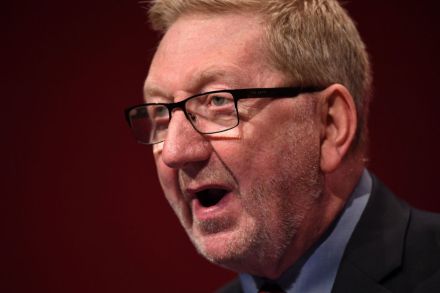
Few will be surprised that Unite has reportedly given no money to the Labour party since Keir Starmer took over as leader. Unite boss Len McCluskey and those around him were hardly thrilled at Starmer’s victory in the leadership contest. Why? Because they knew that it represented the end of the far left’s control over Labour. But if McCluskey is seeking to undermine Labour’s new leader, this will end badly and ultimately benefit only one person: Boris Johnson. It will also make the prospect of another thumping Tory win at the next election more likely. And, what’s worse for McCluskey, is that it could speed up the death of unions like his.

Labour’s abstentions show Keir Starmer at his worst

A vote will be held in the House of Commons today, which will decide the freedoms Britons will have from this week, possibly until spring. Yet the official opposition is planning to abstain. There have also been rumours that if Boris Johnson does somehow get a Brexit deal with the EU this week, Labour will abstain on that vote as well. Two of the biggest Commons votes of our era – one built around the greatest health crisis of our times and what that means for individual freedoms in this country, the other about our future trade relationship with our immediate neighbours – and Labour appear to have decided not to decide on either. This demonstrates the worst of Keir Starmer’s leadership. Starmer has done a lot for Labour since taking charge.