Nick Tyrone

Nick Tyrone

Nick Tyrone is the research director of the Jobs Foundation. He is also the author of several books including Politics is Murder.

Labour has stumbled into the royal culture war

Given Starmer’s aim of getting red wall voters back on side, Labour should not have touched the Harry and Meghan debate with a bargepole. It is a massively loaded cultural issue that can only hurt them. And yet it seems they couldn’t help themselves. Kate Green, the shadow education secretary, has said in a television interview that Meghan’s claims of racism should be ‘fully investigated’ by the Palace. This is exactly the kind of move that leaves only confustion when trying to work out about what Starmer is trying to accomplish. I feel like I’m the only person who lives in Great Britain who doesn’t really care that much either way about the whole Harry and Meghan ordeal.

Starmer’s Labour is doomed but it’s not his fault

Keir Starmer has caught a lot of flak this week for his response to the Budget. The complaints are that he wasn’t strong enough, his opposition to corporation tax rises was a mistake and that he had nothing to really say that managed to stick with the public. It has added to a sense of Starmer’s leadership of the Labour party being on a downward spiral. Yet Starmer has probably done as well in his opening year as Labour leader as anyone could have. He isn’t the problem – it’s his party. The reality is that Labour couldn't win the next election with anyone in charge. The problem goes well beyond the legacy of the Corbyn era (although his time in charge certainly didn’t help).

What can Laurence Fox hope to achieve with his bid for London mayor?

As if the politics of the Western world wasn't well past parody already, this weekend sees Laurence Fox throwing his hat into the ring to be London’s next mayor. Before I start making fun of this idea, let’s try and give Mr Fox the benefit of the doubt. The London mayoral contest, which should have been put out of its misery last May, has been dragged into 2021 on account of the coronavirus crisis. The extra year hasn’t made the contest any more inviting to those of us who live in the capital. We still have an incumbent Labour mayor who is a disappointment on every possible level, but who is up against such a terrible flock of competitors, re-election is all but in the bag for him. The Tories chose very poorly in Shaun Bailey.

Labour is right to be scared of Rishi Sunak

Labour is terrified of Rishi Sunak. Today's Budget showed exactly why. The Chancellor put in an impressive performance: It was assured and hit the right notes at the right times. It also laid the groundwork for a narrative on the economy that will work very well for the Tories. Sunak told voters that George Osborne's cuts created the money that comprised the Covid recovery spending. This ties together the whole of the last decade of Tory rule in a neat package – something Boris Johnson has avoided doing with his ‘I’ve only been Prime Minister for five minutes’ routine. Labour folk will now complain and shout ‘Tory austerity!’ until they are blue in the face.

Scotland could become the EU’s next great problem

It is generally acknowledged, even by diehard Remainers, that the European Union’s handling of Cameron’s attempted renegotiation of the UK’s membership, as well as the EU’s subsequent interventions leading up to the 2016 referendum, was mishandled. It turned out they only added fuel to the Eurosceptic fire by appearing more as a foreign power attempting to interfere in British affairs rather than as a club of which the UK was an equal member. With Scottish independence seemingly the next constitutional tussle for the United Kingdom, with another referendum very possibly hovering into view, how should the EU be involved in this debate, if at all? A newly independent Scotland would have huge implications for the EU.

What’s the point of Nigel Farage?

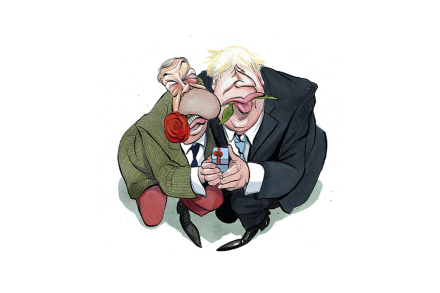
Nigel Farage is in some ways a victim of his own success. It was the political threat he posed during the coalition era that more than anything else caused David Cameron to pledge to hold an in-out referendum on EU membership if he won a majority. It is safe to say that without his persistence, we would never have left the European Union. Yet Farage is now politically redundant and what’s so strange about that is that he did it all to himself. When Farage declared that the Brexit 'war is over' after the government announced its trade deal with the EU on Christmas Eve, my first thought was that he must have decided to pack the whole Reform party project in.

The worst political speeches of the decade

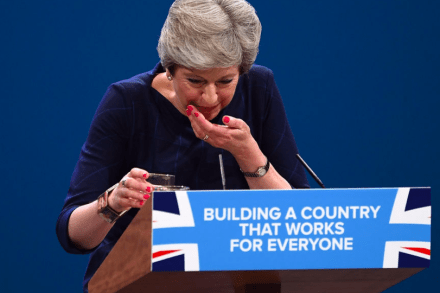
In thinking about the worst political speeches delivered in Britain, I reached for lectures that weren’t just technically poor but epoch defining in their badness. Each one had to have said something larger about the inherent problems of the political class in our beleaguered age. With that in mind, in descending order, here are five that fell flat: Jeremy Corbyn’s 2015 Labour conference speech https://www.youtube.com/watch?v=iFo5a3PFn1M In his first conference speech as party leader, the reasons for Corbyn’s eventual defeat are all here, on full display. The speech itself is relentlessly boring and substance is remarkably absent throughout.

Labour’s Brexit trauma may have only just begun

Keir Starmer is desperate for Brexit to be done. To that end, he whipped his MPs to vote for the Boris Brexit deal at the end of last year, fearing that to do otherwise would be to prolong Labour’s long running agony on the subject. The only problem with this plan is that Labour’s trauma with Brexit may only have just begun. So much so, I think it could be one of the main causes of defeat in 2024, should that take place. The genius of the Brexit deal is that in one real sense it does ‘get Brexit done’, while in another it leaves open the fact that there will still be plenty to work out between the UK and the EU over the coming years – all of which can be spun to the Tories’ advantage.

Boris is the true heir to Blair

Boris Johnson’s political recovery in the last couple of months has been nothing short of remarkable. Not that he was ever down and out, of course, but having got a Brexit deal that both Farage and Starmer backed, followed by the success of the vaccine rollout, the Prime Minister once again looks unassailable.  As for the Labour leader, things look much less rosy. But what hasn't been said in the criticism of Starmer is that what has mostly caused the leader of the opposition’s dip is not his own incompetence but the Prime Minister’s recent good form. This has made me realise something about Boris: he bears a lot of comparison with one former prime minister many wouldn’t immediately reach for – Tony Blair.

Keir Starmer is attacking a Tory party that no longer exists

There has been a bit of a commentariat pile-on against Starmer in the last couple of weeks; not just from the usual suspects but from centrist types who might normally be supportive of the Labour leader. Given that as background, one would have hoped that Keir Starmer would have used his speech today on a ‘New Chapter for Britain’ to launch something of a comeback. Unfortunately, the speech didn’t really work as I think it was intended. On the whole, it felt a little like something the Labour leader had been chivvied into delivering due to recent negative press, as opposed to a set of ideas that had ripened enough for public consumption. Basically, there just wasn’t enough substance in it to warrant a whole set-piece event.

Where are Keir Starmer’s ideas coming from?

Exactly what a Keir Starmer government would look like in terms of policy still remains a mystery to most people. During his leadership campaign Starmer ran on a platform consisting of ‘ten pledges’, which were essentially just reheated Corbynism. Without publicly disavowing them, Starmer seems to have been trying to move away from these pledges toward something that represents a solid break with his predecessor since winning the leadership contest. Yet we still don’t have a clear idea on what that would look like in real terms. Starmer has defined himself so far not on who he is, but rather, who he is not. To this end, Starmer’s people are talking about a ‘policy blitz’ in the coming weeks.

Mandelson’s return is a sign of Labour’s problems

It is instructive that, faced with his first wobbles as leader of the opposition, the person Keir Starmer has reached for is Peter Mandelson. From the sounds of things, Mandelson is working with Starmer’s team on communications and strategy. I certainly don’t think this is a bad idea by Starmer, at least as far as recent Labour party appointees go, but I can’t help but feel that Mandelson’s return to the top says a lot about Labour’s problems, how they got into their current mess and where those issues might lead the party from here. Part of the problem is that the Labour party has been hollowed out talent-wise.

Has Starmer’s Labour found the Tories’ weak spot?

A leaked email from Keir Starmer’s director of policy that hit the headlines this week contained an interesting line: that Labour must become ‘unashamedly pro-business’ in order to ‘be the party of working people and their communities’. This has caused predictable outrage on the left of the party. At the other end of the political spectrum, the Tories have been quick to mock the whole idea. At this week’s PMQs, Boris reminded Starmer that at the last election Labour wanted to dismantle capitalism – now it wants to be the party of business? Really? But the Tories need to be careful about how hard they laugh at this one.

Green scare: Labour should stop chasing the eco vote

Should the Labour party be worried about the Greens? Some Labour activists think so. The Greens have just become the third most popular in British politics, if the latest IpsosMORI poll is anything to go on. The party won eight per cent support in the survey, putting them ahead of the Lib Dems. It's enough to give even the staunchest Starmerite cause for concern. But the reality is that Labour needn't sound the alarm. In fact, the very last thing Labour should be worried about at the moment is losing potential voters to the Greens. Why? Because we've been here before. In early 2015, support for the Greens went as high as 11 per cent in some polls.

After Starmer: Labour’s liberals should plan for a new party

Labour's left appears to be licking their lips at the thought of Starmer’s ignominious end as leader, something which they now seem to hope will be coming sooner than they could have ever dreamed back in the summer. Should the party do poorly at the May local elections, the plan seems to be to agitate for a change at the top and unite around John McDonnell as Corbyn’s true successor. If the Labour party was taken over by the far left again, this would leave liberals in a difficult position. Since Keir Starmer took over, most liberals have folded into Labour, correctly seeing that they are the only vehicle for ousting the Tories from government in the relatively short term.

Keir Starmer is Labour’s last hope

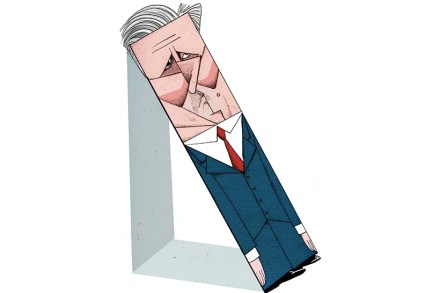
Only a few months ago, Keir Starmer was hailed as a prime minister in waiting who was giving Boris Johnson serious jitters. Now the shine appears to be coming off Labour's leader.  Starmer's 'forensic' approach can only get him so far. And there are serious questions about whether he has what it takes to get the Labour party back to winning ways. The postponement of last year's elections hasn't helped, as it meant Starmer missed a chance to show what his party could achieve without Corbyn at the top; everything about how a Labour party with Starmer at the helm might fare with the electorate remains theoretical. For his critics, the worry is that Starmer could be Ed Miliband 2.0: a leader, not without strengths, but just simply not good enough.

Why are some Labour supporters embarrassed by the Union Jack?

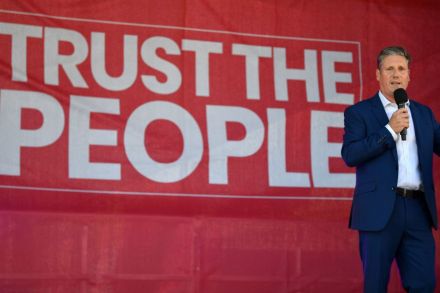
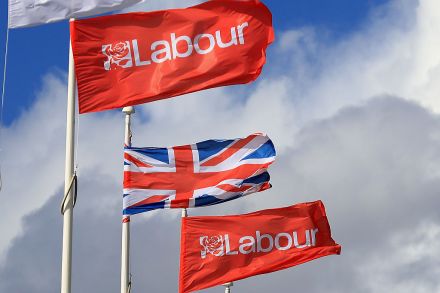
How does Labour plan to win back the Red Wall? A leaked internal Labour strategy document gives one answer: it says the party must make 'use of the flag'. This sounds like a sensible way to woo those voters put off by Jeremy Corbyn. But the deranged backlash from some Labour activists suggests that not everyone agrees. It also shows why the party is doomed to fail in its bit to change its image for the better. Labour activists took to social media yesterday to decry Keir Starmer on the strategy, asking why the Labour leader is risking alienating so many of his party’s core support.

Starmer needs to be more like Blair to beat Boris

If Keir Starmer has a strategy, it's this: to paint his party as more competent than the Tories while keeping his head down on almost everything else. The aim of this is to ensure Labour can crawl across the line come the next election, winning a majority with a bit of help from the SNP. There's a big problem with this approach though: it's the same one that failed to work for Ed Miliband. To beat it, Boris Johnson need do little more than recycle the Tories' 2015 campaign, which depicted Miliband in Salmond's pocket, substituting Sturgeon in his place. The other problem with the 'do as little as possible' strategy is that it will almost certainly result in the break up of the Union. And what then for Labour?

The EU vaccine debacle poses a dilemma for Remainers like me

There is no question about it, at least if you want to evaluate things objectively: the UK has handled Covid vaccine rollout well (at least so far) and the EU has dealt with it badly. For a Remainer like me, this raises a difficult question: does this prove that Brexit was a good idea after all? Compared to the EU27, the UK has been able to act nimbly in vaccine negotiations. While Brussels has been held up by various delays and supply issues, these have not affected the UK. This is thanks in large part to the fact that its contract with AstraZeneca was signed three months before the EU vaccine deal. The UK also took a gamble, betting on a vaccine that had not yet passed clinical trials.

The sad state of Scottish Labour is bad news for Boris

Nicola Sturgeon has laid down the gauntlet to Boris Johnson over Scottish independence: if the SNP wins, as it inevitably will, in May's Scottish parliamentary elections, a 'legal referendum' should be held. How should the PM respond to the First Minister? The uncomfortable truth for Boris and the Tories is that there may be no good way out of this situation. Douglas Ross, the leader of the Scottish Conservatives, has so far offered his riposte: the Scottish Tories will boycott the whole thing. As counterattacks go, it’s not without its strategic merits. However, one thing looks set to completely undermine this plan: the weakness of Scottish Labour and the other opposition parties in Scotland.