Nick Hilton

Nick Hilton

The Spectator Podcast: Queen of Scots

From our UK edition

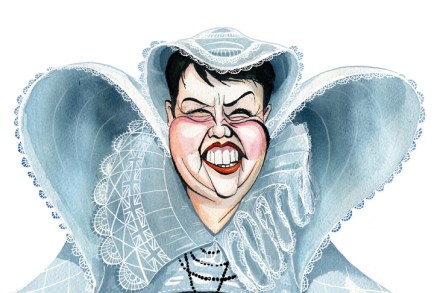
On this week’s episode, we look at the rebirth of the Scottish Conservatives, ask whether it’s helpful to call Marine Le Pen a fascist, and consider what the future holds for Britain’s opposition parties. First, in this week's magazine, Alex Massie profiles Ruth Davidson, the leader of the Scottish Conservatives, who has overseen an extraordinary regeneration for her party in the last two years. Are the Tories the Unionist force du jour in Scotland? And can they make significant gains off the SNP, in a country that has had a frosty relationship with their English siblings? Ruth joins the podcast to discuss their campaign, along with Fraser Nelson. As Alex Massie writes in his cover piece: "...
In praise of Jeremy Corbyn’s campaign

From our UK edition

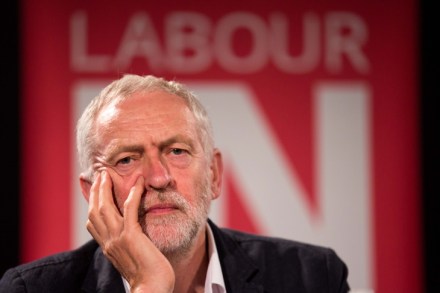
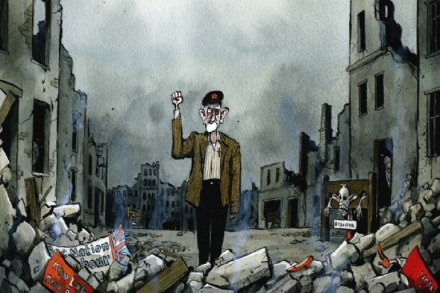
Almost two weeks in, and before the short campaign has even started, people are starting to wise up to Theresa May's conjuring trick. Last week, Philip Collins of the Times tweeted 'I am usually a strong defender of politics but this empty, choreographed, stale, boring Tory campaign essentially implies we are all idiots' (which was retweeted four and a half thousand times). This was then followed up by a performance on Marr that Fraser Nelson judged to have 'perfected the art of saying nothing'. At the same time, people are still picking holes in the Labour effort. On Thursday, a video emerged of Jeremy Corbyn heading to address a crowd, before he was spun around by a lackey in order to face the gathered cameras.

The Spectator Podcast: Europe’s new emperor

From our UK edition

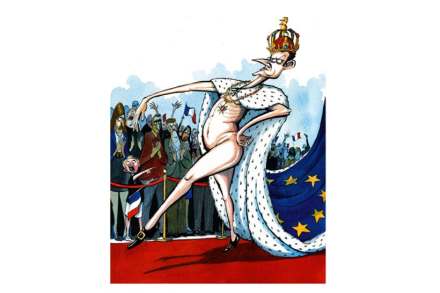
On this week’s episode of The Spectator Podcast, we discuss whether France is voting for the lesser of two evils in Emmanuel Macron, consider whether Tim Farron made a mistake by bringing God into politics, and look at how the spread of Mayism across Britain could alter the Conservative party. First, following Emmanuel Macron's stunning victory in the first round of the French elections – taking a seemingly unassailable popularity into the run-off with Marine Le Pen – Jonathan Fenby considers, in this week's magazine cover story, whether Macron is in fact headed for disaster. He joins the podcast along with Anne-Elisabeth Moutet, to discuss whether the 39-year-old sensation is all he seems.

Labour’s decimation would be a disaster for Britain

From our UK edition

Today's polls suggest that Theresa May could be on track to secure a Commons majority of 150, reversing – in just 20 years – the landslide that was inflicted on the Tories in 1997. These figures, from the Daily Telegraph, reveal no fresh agony for Labour: already the worst case scenario being floated in Labour circles would involve a catastrophic loss of about 100 MPs. This is an apocalyptic vision, mainly propagated by centre-leaning folk who have seen their influence wane over the past two years, and is something of a long-shot (the bookies currently favour a Labour seat band of 150-199, but only price 100-149 at 5/2). But let’s say it does happen: what happens next?

The Spectator Podcast: Election special

From our UK edition

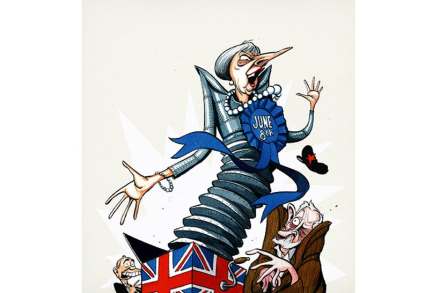
On this week's episode, we discuss the two European nations that are are heading for the polls in the next couple of months. First, we look at Theresa May's shock decision to hold a snap election, and then we cross the channel to consider the French election as they get set to whittle the field down to just two. With British news set to be dominated until June 8th by election fever (yet again), there was no place to start this week but with the fallout from the Prime Minister's stunning U-turn on an early election. It's a gamble, James Forsyth says in his cover piece this week, but with a portentially enormous pay off. James joins the podcast along with Bobby Duffy from Ipsos MORI and Richard Angell director of Progress.

Even a crushing election defeat might not spell the end of Jeremy Corbyn

From our UK edition

After the referendum, Jeremy Corbyn said that Labour was ‘very, very ready’ to contest a general election. Which is good news, because that’s precisely the task he now faces. In the world of Corbyn’s most ardent supporters, the snap election has been greeted with something like glee. Their greatest fear – that Corbyn may not survive in the leadership long enough to face the public at large – has been alleviated. Momentum's Michael Chessum tweeted that there ‘absolutely is a path to victory for Labour... We'll have to be bold, but it's there’, while Paul Mason said that ‘a progressive alliance can beat the Tory hard Brexit plan’. That jubilation on the hard left is typical of the movement’s resilience.

Forget the Garden Bridge – and let’s destroy our existing bridges

From our UK edition

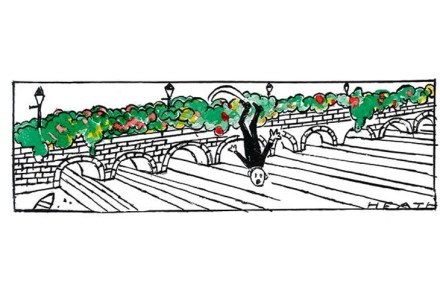
The Garden Bridge project, loved by Joanna Lumley and no-one else, has been roundly criticised by Dame Margaret Hodge in a report for the Mayor of London. In her review, Hodge says it would be ‘better for the taxpayer to accept the financial loss of cancelling the project’, a perspective that the Garden Bridge Trust have today condemned, calling it ‘very one-sided’. With £40 million already spent and an estimated £200 million required to complete the project, now seems a good time for City Hall to debate Hodge’s findings. But beyond the question of cash, we should also be interrogating whether the traditions of the city are being undermined by this prospective white elephant.

The Spectator Podcast: Keeping the faith

From our UK edition

On this week's episode, we discuss the future of Christians as a minority group, consider whether Trump has found an ally in Britain, and dissect the 21st century phenomenon of the 'flake'. First, with Easter just around the corner, the fate of Christianity in an increasingly secular Britain came under scrutiny. In this week's magazine cover story, Rod Dreher advocates for 'the Benedict option', where Christian communities develop stronger personal identities. But Matthew Parris argues against this proposal, and they go head-to-head on the podcast. As Rod writes: "The collapse of religion in Britain has been perhaps the most striking feature of the last generation.

Ed Miliband needs a second act, not a comedy act

From our UK edition

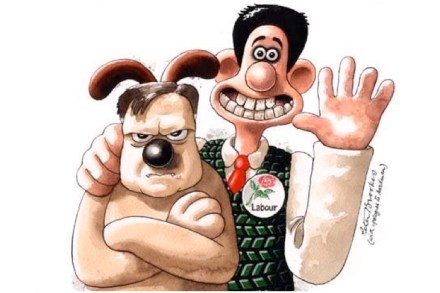
When a shell-shocked Ed Miliband stepped down as Labour leader following the party's defeat in the 2015 election, he concluded his speech by saying that: 'The course of progress and social justice is never simple or straightforward. Change happens because people don’t give up, they don’t take no for an answer, they keep demanding change' The change that party members demanded from the blank slate of Labour’s election defeat turned out to be Jeremy Corbyn; and Miliband slunk back to Doncaster to not ‘take no for an answer’ - from the scenic climes of the backbenches. But it doesn't have to be this way. Last week, I voiced my frustration that Miliband was appearing more on Twitter than in Hansard.

The Spectator Podcast: Trump’s wars

From our UK edition

On this week's edition of The Spectator Podcast, we consider President Trump’s growing military ambitions, dissect the problem of radical Islam in our prisons, and judge what makes a perfect marmalade. First, this week's magazine cover depicts Donald Trump in full Kaiser Wilhelm II costume. The reason for that image is Andrew J. Bacevich's assertion that far from being a modern-day Hitler, a better analogue for the new American supremo is the last German emperor. The isolationist image that Trump cultivated during the campaign is beginning to melt away, leaving the possibility of war with North Korea, and even China. Professor Bacevich joins the podcast to discuss the complex military situation, along with General Sir Richard Barrons and Dr Heather Williams.

The Spectator Podcast: A new Europe

From our UK edition

On this week’s bumper episode, we say farewell to the EU, look at the most high-profile mismatch in boxing history, and speak to two living legends: actor and director Simon Callow and explorer John Hemming. First, with the trigger pulled on the Brexit starting gun, we gathered to reflect on the process so far and how divorce proceedings are likely to go. In this week's magazine, James Forsyth advocates for 'a Brexit that works for everyone' and he joins the podcast to discuss this, along with Fraser Nelson and Hugo Dixon, Chairman and Editor-in-Chief of Remain-supporting InFacts.

Ed Miliband’s sassy Twitter reinvention is bad news for Labour

From our UK edition

I really liked Ed Miliband. I thought he would make a great Prime Minister. He was wide-eyed and striving, the less hip or handsome of the Miliband brothers, but undeniably a fine man. In recent months, however, he has tried to shed that image. He now wants to seem cool. This morning, for example, Miliband responded to the Daily Mail’s controversial ‘Legs-it’ cover by tweeting ‘The 1950s called and asked for their headline back’. He then proceeded to engage in a back-and-forth with James Blunt (another of Twitter’s surprise rehabilitations) who wrote ‘It's been such a pleasure guest-editing @Ed_Miliband's Twitter page these last couple of weeks.

Labour can only survive by pretending Corbyn has gone

From our UK edition

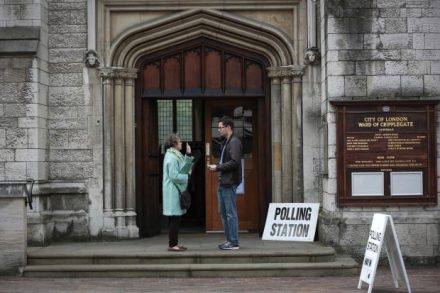
In spite of everything against them, the Labour party scored an historic victory last night in the City of London. Five Labour councillors were elected in wards that are traditionally contested by ‘independents’ (usually retiree residents who are inclined towards the pomp and ceremony). It was their highest ever total. People will, of course, be quick to point out that the City of London is the 325th smallest authority in England, out of a total of 326. It has 25 wards covering the area that would, in most authorities, be designated to a single ward. Labour also only has 5 Commoners (the antiquated term the City uses in favour of ‘councillors’) out of a total of 100, so is hardly stamping its authority on the area.

The Spectator Podcast: Aid isn’t working

From our UK edition

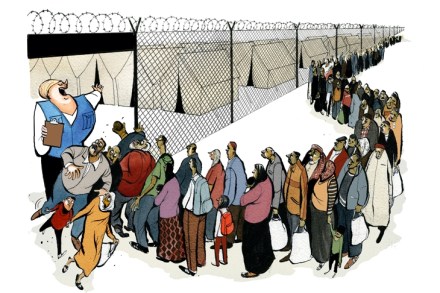
On this week's podcast, we consider how refugees could be better aided, whether David Cameron might be envious of George Osborne's 'retirement', and why getting trolled can be good for your career. First, as the government ends the Dubs amendment scheme, we ask whether there are better solutions to the refugee crisis. Paul Collier writes this week's cover piece, arguing against camps and in favour of getting refugees into jobs, as soon as humanely possible. Paul joins the podcast this week, along with Kevin Watkins CEO of Save the Children. As Paul writes in the magazine: "Refugees nowadays do not have the luxury of a short-term solution. The problems they are fleeing are likely to last for a very long time.

The Spectator podcast: Double trouble

From our UK edition

On this week's edition of The Spectator Podcast, we discuss Theresa May's double bind in Edinburgh and Brussels, Milton's cultural relevance in 2017, and the slaughter of Cypriot songbirds. First, Lara Prendergast spoke to James Forsyth about his cover piece in this week's magazine. Have Theresa May's negotations with the European Union been hamstrung by this latest intervention from Holyrood? And will she be able to find a version of Brexit that soothes the fears of pro-Remain Scots? Time will, of course, tell, but in the meantime James joins the podcast along with the Spectator's Scotland Editor, Alex Massie. As James writes in his piece this week: "Theresa May is a cautious politician.

The Corbynistas abandon Corbyn

From our UK edition

Last night Jeremy Corbyn gathered with thousands of supporters on Parliament Square to protest against the government’s failure to guarantee the rights of EU migrants in the UK. Upon hearing the chants of ‘Say it loud, say it clear – all EU migrants welcome here!’ Theresa May performed a sensational U-turn. Britain now has an open doors policy to anyone with a pulse and a dream. Or so might have been the case, had Jeremy Corbyn bothered to turn up to his own rally. Instead, a motley rabble of speakers from such august institutions as Stop the War, the Socialist Workers Party, and the National Union of Students, preached to an assembled crowd of a couple of hundred people in the murky gloom of Westminster.

The Spectator podcast: The plot against the Pope

From our UK edition

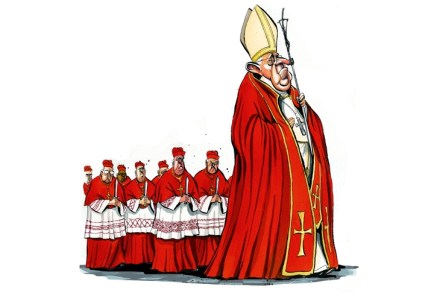
On this week’s episode, we take the Pope to task over his leadership of the Roman Catholic Church, ask whether Canada has got the right answers on drugs policy, and lament the death of spontaneity. First, Pope Francis has come under increased scrutiny in recent weeks after a controversial intervention with the ancient Order of Malta and a decree which has been interpreted by some as a liberalising of the Church’s views on remarriage after divorce. Following the resignation of Pope Benedict XVI in 2013, a new precedent has been set and Damian Thompson argues, in this week’s magazine, that the knives are out amongst Cardinals who hope to see Francis going the same way.

Coffee House Shots: What’s in Philip Hammond’s Budget box?

From our UK edition

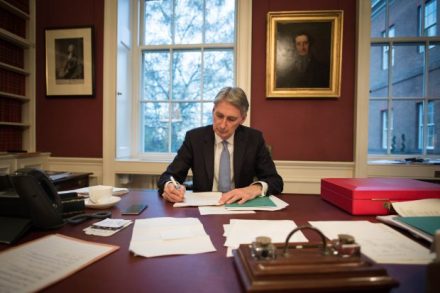
There has been precious little excitement surrounding Wednesday's budget announcement, which will be Philip Hammond's first as Chancellor. The man nicknamed 'Spreadsheet Phil' has played down expectations, indicating from the off that he will leave major announcements to the new Autumn Budget. But whilst casual observers may find Wednesday less scintillating than under George Osborne, anticipated revisions to education, business rates and social care will still significantly affect the country's fiscal position. On this episode of Coffee House Shots, Fraser Nelson is joined by James Forsyth and Isabel Hardman to shine a light through the gloaming of Hammond's caution.

Philip Hammond dismisses exorbitant divorce bill as ‘negotiating strategy’

From our UK edition

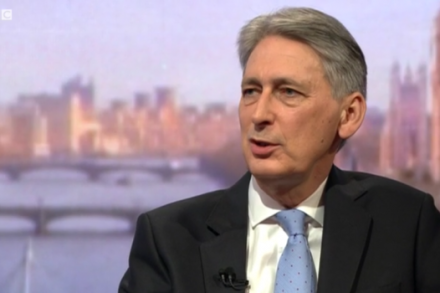
Ahead of his budget announcement this week, Philip Hammond has told Andrew Marr that the UK may continue to face EU contributions after Brexit, though he dismissed claims of a £60bn divorce fee as 'a piece of negotiating strategy'. The Chancellor looked relaxed as he shrugged off the potential failure of a trade deal with the EU, stating simply that 'we will forge new trade deals around the world'. In a typically uncharismatic performance, Hammond also poured cold water on the Resolution Foundation's findings that the so-called 'just about managing' are going to be severely squeezed over the next three years. 'I don't recognise these numbers,' he said, 'various bodies publish various numbers, which exclude certain things.

The Spectator podcast: Sturgeon’s second stab

From our UK edition

On this week’s episode we question whether Nicola Sturgeon might be tempted by a second independence referendum, consider the increasingly frosty relations between the USA and Russia, and ask whether city dogs are a menace to sheep. First, Theresa May was in Scotland this week for meetings with Nicola Sturgeon ahead of Scottish Tory conference. Thanks to Brexit, the Scots appear to have another opportunity to try and go it alone, but with support for independence still routinely polling below 50 per cent, will she pull the trigger?