Nick Hilton

Nick Hilton

Will the immigrant vote risk everything to take on Donald Trump?

From our UK edition

Since 1996, federal law has prevented non-citizen US residents, like myself, from voting in elections. We pay taxes, hold down jobs and own property, but don’t get a say in the leadership of the nation. This isn’t uncommon: in the UK, only Irish and Commonwealth citizens get to vote in the general election, on top of those already qualifying as British. But in the US, the discourse is polarised between citizens and illegal immigrants, with little discussion spared for the people caught somewhere in the middle. And with just a day left in the race, President Obama has created another small furore – in certain circles – with his ambiguous statements about non-citizen voting.

The Spectator podcast: Breaking the Bank

From our UK edition

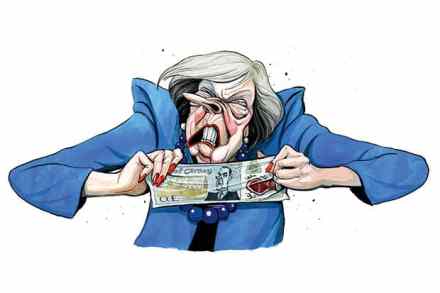
On this week's podcast, we discuss the fraught relationship between Mark Carney and Theresa May, the similarities between the sieges in Mosul and Aleppo, and why we all have to wait so long at the airport. First up, this week saw Bank of England Governor Mark Carney announce that he would be stepping down from his post in June 2019. This was the conclusion to a troubled few weeks that started with the Prime Minister’s party conference speech, in which she spoke of the ‘bad side effects’ to recent monetary policy. So what’s the future for Carney and the Bank of England? And will May need to recalibrate her relationship with the central bank?

The Spectator podcast: Le Pen’s victory

From our UK edition

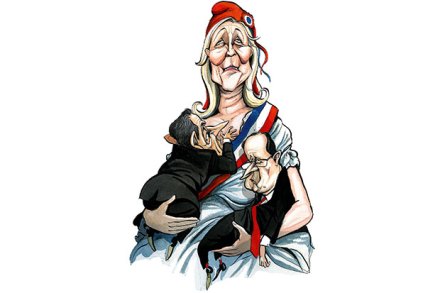
On this week’s podcast, we discuss the rise of Marine Le Pen, how murder is handled on social media, and how a cake has changed the debate about gay rights. Marine Le Pen’s Front National has surged in the polls and it now looks likely that she will make the run-off in 2017 French presidential election. In this week’s cover feature, Jonathan Fenby looks at how Le Pen has changed the French Right, and considers the prospects of her rivals Francois Hollande and Nicolas Sarkozy. On the podcast, Agnes Poirier tells us that: "Her great success is that she's not her father. Here's a woman who was born in 1968, she's twice divorced, she's a single mother, she's pro-gay rights, she's distanced herself from the ultra-Catholics.

OUP and the Marlowe truthers are pandering to the lowest form of Shakespeare populism

From our UK edition

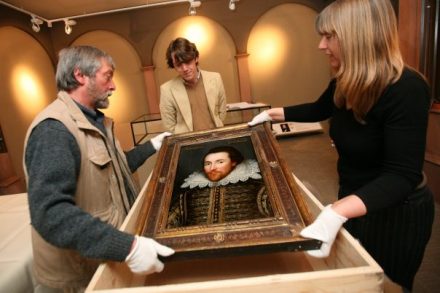
Back in 2007, Derek Jacobi and Mark Rylance delivered a petition, pompously titled ‘Declaration of Reasonable Doubt’, to that august seat of learning, Brunel University. The petition was the continuation, and perhaps culmination, of centuries of debate over what is known as the ‘authorship question’, an obsessive pursuit – undertaken almost entirely outside of academia – of the real author of Shakespeare’s plays. For conservative folk, that answer has always been, simply, Shakespeare, but for the clear-sighted geniuses of the Shakespeare Authorship Coalition, the answer has ranged from Edward de Vere to Sir Francis Bacon.

Suzanne Evans and Paul Nuttall announce Ukip leadership bids

From our UK edition

Suzanne Evans, former deputy chairman of Ukip, has announced her intention to run for the leadership of the party. 'I think I'm the right person to lead Ukip into the challenges ahead,' she told Andrew Marr, adding, 'first and foremost, I think I'm absolutely the right person to champion the cause of those 17.4 million people who voted to leave the European Union.' Nigel Farage's former deputy, Paul Nuttall, also announced his intention to run telling Andrew Neil that he would 'stand on a platform of the unity candidate – Ukip needs to come together.' [embed]https://youtu.be/EKpAs4FTKmA[/embed] Evans and Nuttall are the latest candidates to join a field that includes Raheem Kassam, Farage's former spin doctor and now a blogger for Breitbart UK.

The Spectator podcast: Putin vs the world

From our UK edition

This week saw the controversial move by RBS to freeze the bank accounts of the broadcaster Russia Today. The decision has subsequently been reversed, but the relationship between NATO and Vladimir Putin remains tense. This is the subject that Paul Wood and Rod Liddle tackle in this week’s cover piece, and which is addressed on the podcast by Dmitri Linnik and Ben Judah. Linnik, a former BBC and Voice of Russia journalist, says: "This is completely out of this world. This is completely irrational. Anybody with any indication of an idea of what's going on in Russia, any understanding of what Russia's about and what Russia's thinking is, cannot think that Russia is about to invade the Baltic states.

The Spectator podcast: Lights, camera, politics

From our UK edition

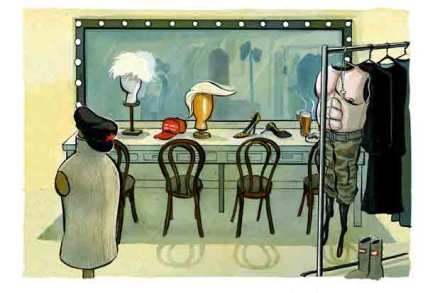
A decade ago, Donald Trump was best known for his gleeful firing of aspirant entrepreneurs. Now, however, the reality TV star is tackling an even bigger stage. The USA is not alone in this merging of showbiz and politics: two of the three Apprentice presenters in the UK have been elevated to the House of Lords. So, are we living a golden age of televised debate? Or should we be more concerned about the trash politics infecting our most serious issues? These are the questions Douglas Murray tackles in this week’s cover piece and he is joined on the podcast by Xenia Wickett, Director of the US Project at Chatham House.

We should celebrate the killer clowns

From our UK edition

All over the world, people are dressing up as clowns to scare unsuspecting members of the public. Sightings began in South Carolina but quickly spread to Canada, Australia and the UK. Not everyone is happy about this craze: the Met Police are the latest to pour cold water on the so-called 'killer clowns', warning people 'to act in a responsible manner'. But even though dressing up as clowns is an unusual way for people to spend their time, I can’t help but admire them for their commitment to the performance. After all, they are not the progenitors of this craze. The clash between 'killer clowns' and 'classic clowns' is an inversion of an idea that tells us more than we might think about the world. Clowns were the ones we used to laugh out.

The Spectator podcast: Syrian nightmare

From our UK edition

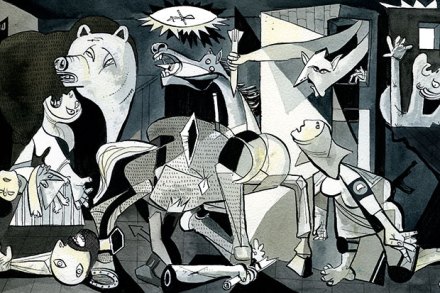
The Syrian initiative to retake the last remaining rebel stronghold of Aleppo, following a two week ceasefire, has proved controversial in the international community. Images of children bloodied, bruised and painted with masonry dust have decorated the front pages of British newspapers, but is there anything that can help ease the pain of ‘Syria’s Guernica’? These are the issues raised in Paul Wood’s cover piece this week. Speaking to the podcast from Washington, he said: "This has been going on for five years now and there have been surges from both sides. We happen to be in the middle of a surge by the regime attempting to take the last bit of rebel held Aleppo.

The Ryder Cup is Europe’s great sports project – and it’s feeling the friction

From our UK edition

Golf isn’t the biggest thing in Minnesota right now – that privilege belongs to the knife-edge presidential race – but for this weekend, at least, it will be a close second. The Hazeltine National is playing host to the 2016 Ryder Cup and while the American fans are busy preparing their ballot papers for Hillary Clinton, the European team will be convening for the first time since Brexit. The Ryder Cup is the only major sporting event that involves Europe playing as a team, as they take on the United States in a series of golfing challenges. If the event ought to have more symbolic resonance this year, there has been surprisingly little discussion on it. The European team, led by Northern Ireland’s Darren Clarke, are getting on with business.

The Spectator podcast: The age of May

From our UK edition

The Conservative party conference starts this Sunday in Birmingham. It will be the first time that Theresa May has addressed the membership at large as leader, but in the background there are rumblings of division. Are the Cameroons preparing a rebellion on grammar schools? Are any cabinet positions currently vulnerable? And how long can the honeymoon last for Theresa May? Isabel Hardman is joined in Liverpool by Fraser Nelson and Matthew Parris, and from London by James Forsyth, who says on the podcast: "I think the intriguing thing about Theresa May is this is a politician who's been on the Tory front bench for 17 years, but everyone – from cabinet ministers to civil servants – is still trying to work out what she is going to do as Prime Minister.

Coffee House Shots: The verdict on Jeremy Corbyn’s conference speech

From our UK edition

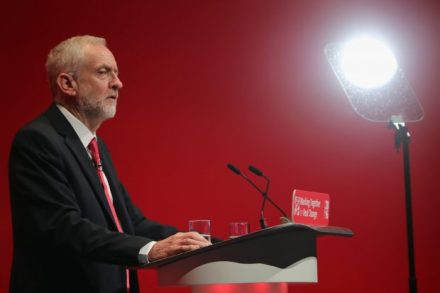
Labour conference is over for 2016 and it concluded with a barnstorming speech from Jeremy Corbyn. After rumours that he would only be speaking for half an hour, Corbyn addressed the audience for almost an hour, receiving a rapturous ovation in the conference hall, along with unified approval from Labour MPs. Andy Burnham called it a 'strong speech', whilst even Chuka Umunna had praise for Corbyn's economic policies, calling them 'well put'. The analysis from The Spectator's Isabel Hardman was also positive, as she told the podcast: "I thought it was a much better speech than the rambling one he gave last year. He had two clear aims.

In defence of Sam Allardyce

From our UK edition

A gastropub in Manchester is a fitting venue for the latest corruption sting on England manager Sam Allardyce. While his poncey European counterparts are busy nosing the bouquet on a glass of dry white wine, Big Sam, who only took up the top job back in July, is laid back in his seat, the buttons on his shirt bulging as he swigs from a tall pint glass. This is the image that you’ll see on the front cover splash of today’s Daily Telegraph. A 10-month undercover operation has concluded with the brassy headline: ‘England manager for sale’.

The Spectator podcast: The indestructibles

From our UK edition

This weekend, the Labour party will convene in Liverpool for its annual conference. By that point it will have a new leader who, if all current polling is to be believed, will be the same as its old one. Jeremy Corbyn looks set to defy the wishes of his fellow MPs and strengthen his grip on the party. In his cover piece this week, James Forsyth looks at the whole of the far left movement, from the leader’s office to the grass roots activists, and observes that ‘they are tightening their grip over the party from top to bottom, something the Blairites never did.’ So, what’s next for the Labour party? Does it have a future appealing to moderate social democrats? Or has it truly been lost to the momentum of this new movement?

The Corbyn détente is coming

From our UK edition

By the time Labour party conference begins on Sunday in Liverpool, the party will have announced its new leader. And it is likely to be its old leader, Jeremy Corbyn. For those who have nailed their colours to Owen Smith’s mast, it is quickly becoming clear that Corbyn is about to consolidate power. As a result, there will need to be a mass rethinking of the anti-Corbyn strategy. Most analysis of Theresa May’s decision to fight for grammar schools has focused on the internal politics of the Conservative party, but the debate has also inadvertently played into Jeremy Corbyn’s hands. Finally, after more than a year in the job, Corbyn has a domestic policy that he actually cares about.

The Spectator podcast: Trump’s people

From our UK edition

It’s been a difficult week for Hillary Clinton. Not only was she diagnosed with a bout of pneumonia but she also found herself under fire for labelling half of Donald Trump’s supporters as ‘a basket of deplorables’. Those so-called deplorables are the subject of Christopher Caldwell’s cover piece, in which he argues that Trump’s pandering to the ‘large group that is loyal to him’ is a more efficient strategy that making a play for a minority, amongst whom gains will only ever be marginal. So, was Clinton’s choice of phrasing a conscious attempt to stifle insecure middle-America? And how can Trump convince America’s forgotten majority to turn out for him?

Jeremy Corbyn has decided to campaign like New Labour

From our UK edition

Jeremy Corbyn has today announced the launch of the Labour Organising Academy, a new body designed to look at methods of turning the party’s newly engorged membership into an effective campaigning body. In the pamphlet he produced, Corbyn observes that ‘Labour is now Europe’s biggest political party’ and that the ‘party’s membership will transform how Labour campaigns’. The launch of this might feel somewhat hasty. After all, the leadership campaign won’t be concluded until the announcement at party conference in Liverpool on 24 September – but it represents a big change for Corbyn.

Coffee House shots: David Cameron quits backbenches and Witney

From our UK edition

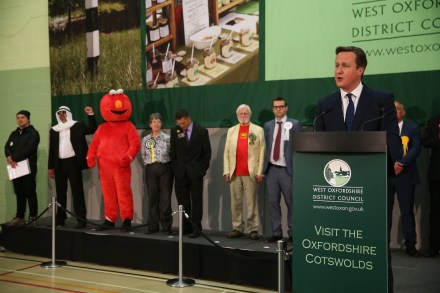
David Cameron chose a rather blustery Oxfordshire afternoon to announce that he was stepping down as MP for Witney with 'immediate effect'. Cameron had previously suggested that he would stay on in Parliament, telling the BBC it was 'very much [his] intention' to continue as an MP. Pundits have linked Cameron's surprise u-turn to Theresa May's announcements about grammar schools at the end of last week, which undermined a key feature of Cameron's social policy. So what should we make of this move? And where does it leave May and the remaining Cameroons in the Commons? In this edition of Coffee House shots, Fraser Nelson tells Isabel Hardman that: 'I guess he's stopped caring about what people think about him. He's checked out from politics mentally.

Coffee House shots: Is Theresa May right to expand grammar schools?

From our UK edition

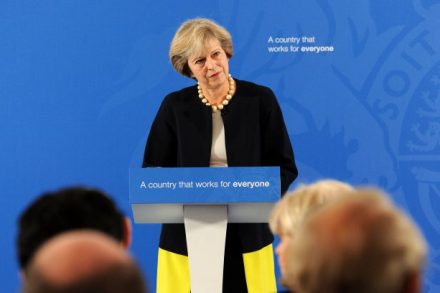
With her first major speech since standing on the steps of No. 10, Theresa May has set out plans to radically reform the education system. Introduced by new Education Secretary Justine Greening, May outlined overhauls to the grammar school system, offering expansion to existing ones and giving state schools the opportunity to select. Her policy ambitions also touched on allowing faith schools to be filled entirely on grounds of religion. And she wants to make private schools justify their charitable status. But how revolutionary are these plans? And are selective schools really the way to go?

Transfer deadline day is a countdown to zero and that’s what makes it great

From our UK edition

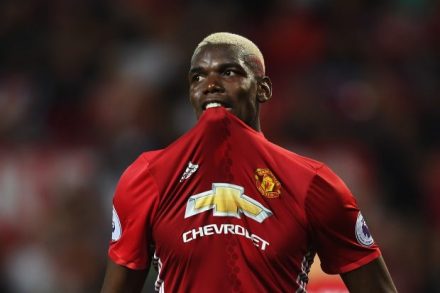
For football fans, today is a special day: it's Transfer Deadline Day – a branded, almost to Hallmark levels, moniker. It's a day of bathos and unfulfilment. Your club will miss out on a top target, sign some underwhelming alternative, and clog up social media with pictures of them holding a shirt in a car park. Transfer Deadline Day is the great dance of performative capitalism for the working classes. We call it a ‘window’ because it is supposed to be a ‘window of opportunity’ for clubs and fans, but there is also a voyeuristic element. We spend the summer hidden in the bushes, watching the attractive Athletico Madrid winger or Bayer Leverkusen centre-half preening in front of the mirror.