Nick Cohen

Nick Cohen

Nick Cohen is the author of What's Left and You Can't Read This Book.

Scientologists trap us in the closet

From our UK edition

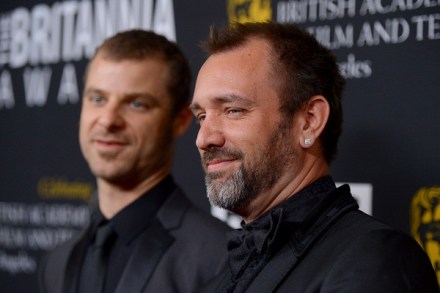
Whenever I give lectures on my book on censorship – Whaddya mean you haven't read it? Buy it here at a recession-beating price – I discuss the great issues of the wealthy to silence critics, the conflict between religion and freedom of thought and the determination of dictators to persecute dissenters. These themes have animated great philosophers. None more so, I continue, than Trey Parker and Matt Stone, the creators of South Park, who managed to get them all into one cartoon. In a 2005, they broadcast an episode entitled Trapped in the Closet. The little boy Stan goes to one of the Scientologists' personality testing centres.
A coalition of the complacent

From our UK edition

I don’t like to think that I am rich. In theory, I know that in comparison to the vast majority of the world’s population, I am. But perhaps because of my politics, or perhaps because of journalists’ perennial pretence that we are tribunes of the people, I cannot see myself as wealthy, and would protest if others said that was just what I was. And in everyday dealings with others, I don’t feel as if I’m rich. I don’t have a car. My wife and I watch what we spend at the shops. I wish I could wine and dine every night, but, alas, I cannot. So I go on thinking that I am an ordinary member of the British middle class, until I start talking to people who are 25 years younger than me. I have learned to be careful about what I say.

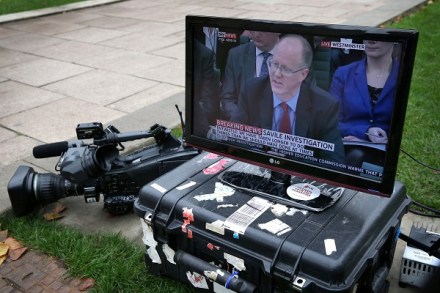
If they can frame a Chief Whip, they can frame anyone

From our UK edition

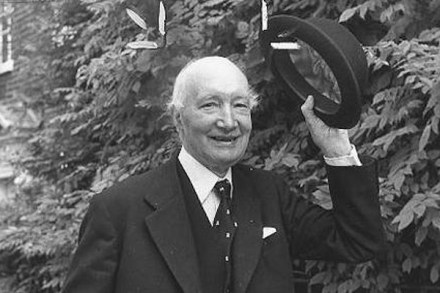
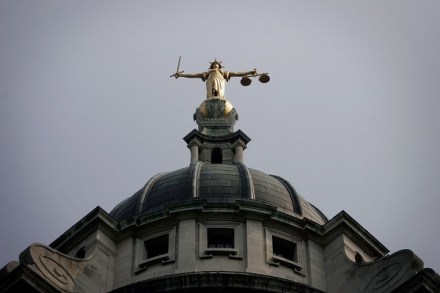
Lord Denning was perhaps the most beloved judge of the 20th century. He even inspired a Lord Denning Appreciation Society. But I and many others found something sinister behind his charming Hampshire accent. We noticed that his professed concern for the victims of injustice never extended to the victims of police fit-ups. In 1980, he heard an appeal by the Birmingham Six, the men falsely convicted for the IRA’s massacre of drinkers in two Birmingham pubs in November 1974. The six were suing the police for damages for the beatings they said they had received. Although it was not a full appeal, Denning understood the implications, and rejected the claim: 'Just consider the course of events if their action were to proceed to trial ...

In praise of the bloody-minded Paul Chambers

From our UK edition

What freedoms we have in Britain have not come as a rule from revolutions and thunderous declarations of the rights of man. More often than not, our liberties have come because bloody-minded and obstinate men and women have squared their shoulders and decided to fight an arbitrary decision, when others would have surrendered. Paul Chambers has the right to claim a good deal of credit for compelling the Director of Public Prosecutions to stop treating offensive but harmless remarks as crimes. I won’t go through his case in detail because I have told his story elsewhere. But in brief Paul was planning to fly to Belfast to visit a woman friend. He saw on the news that snow had closed Robin Hood Airport and tweeted to his friends, “Crap! Robin Hood airport is closed.

Lord Justice Leveson and the baby killers

From our UK edition

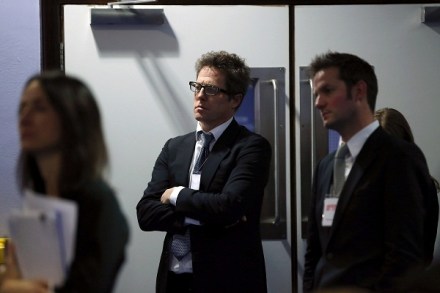
I have worried about Hugh Grant's understanding of power ever since he started bringing up baby. I first saw him reach for the innocent child at one of the party conferences, where he was on stage arguing for statutory control of the press. He had his stock reply ready when someone asked whether he wasn't being naïve about the likelihood of politicians or politicised bureaucrats seizing the opportunity to censor. ‘The phrase that is always used is 'don't throw the baby out with the bath water'. I have always said I don't think it is that difficult to tell what is bath water and what is a baby. To most people it is pretty obvious.’ 'Is it really, comrade?' I thought to myself. It seems to me that it depends where the red lines are drawn and who is doing the drawing.

Tyranny’s fellow travel writers (Part 3)

From our UK edition

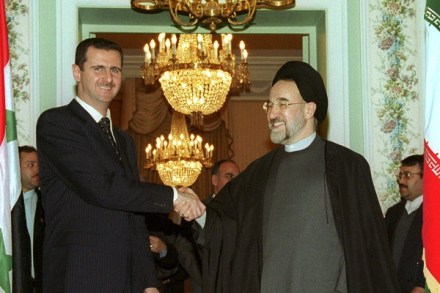
Earlier this year I noted a piece by Michael Moynihan in Foreign Policy. He looked at how the authors of the Rough Guide and Lonely Planet guide books were producing apologias for tyranny. I argued that the kind words for Assad’s Syria, Gaddafi’s Libya and the Khomeinist Iran, were a result of the capitalist leftism – or politically correct capitalism – of the last decade. The whitewashing of dictatorial crimes could appear left-wing because the regimes opposed the West, or more specifically Bush’s America.

Export-only justice

From our UK edition

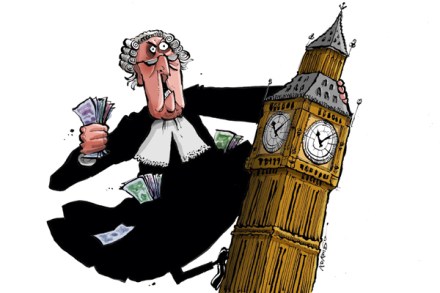
In the last few years lawyers have begun to gush about the ‘Sumption effect’. They were not thinking of Jonathan Sumption QC’s fine legal mind — which was of such a quality that the Supreme Court elevated him straight from the Bar to a seat on the highest court in the land. Nor were they praising his history of the Hundred Years’ War, a conflict of such violence and duplicity that perhaps only an English lawyer could do justice to it. Rather, his peers gazed on his wealth in wonder, and hoped that his riches would flow into their pockets too. Sumption had collected about £7 million for representing Roman Abramovich in his fight with Boris Berezovsky.

The internet is proving to be a tool of censorship, not emancipation

From our UK edition

The case of Adrian Smith, the Christian the Trafford Housing Trust demoted for politely expressing his opposition to gay marriage on Facebook, is one of the most disgraceful I have come across. Much will be written about the contempt for freedom of speech and conscience Mr Smith's po-faced and prod-nosed employers showed. Mr Justice Briggs was clearly upset that legal technicalities prevented him from giving Smith more money. 'I must admit to real disquiet about the financial outcome of this case. Mr Smith was taken to task for doing nothing wrong, suspended and subjected to a disciplinary procedure which wrongly found him guilty of gross misconduct, and then demoted to a non-managerial post with an eventual 40 per cent reduction in salary.

A black, bloody insurrection of the hard-working, over-taxed and unbenefited

From our UK edition

If you want to understand the mood of modern Britain, James Hawes’s novels of middle class fury are not a bad place to start. Hawes’s heroes are middle-aged men, whose dreams have collapsed. They want the nice, “normal” middle-class homes and secure jobs their parents received as a matter of course. But Britain is not offering them normal anymore. Normal is a foreign country to which they can never return. They are harried and broke. They work in dead end teaching jobs, as Hawes once did. Their homes are in rundown streets, where they must pay vast amounts of money to live in a pokey dump. The moral of Hawes’s stories is that the puritan virtues of hard work and thrift offer no chance of escape.

My life as a connoisseur

From our UK edition

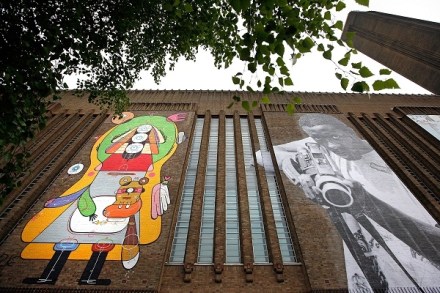
'Passion for freedom' is now holding its fourth exhibition at the Unit 24 Gallery just behind Tate Modern. The show is a visible and occasionally dazzling manifestation of an often submerged movement in western liberalism that regards the liberal-left mainstream with something close to disgust. They – we – find the indulgence of radical Islam as a betrayal of the best of the liberal tradition. We are equally repelled by multi-cultural orthodoxy, which puts the interest of a 'community' before the interests of the individual, particularly when the individual is a woman. The magnificent Maryam Namazie, One Law for All’s Spokesperson, and a woman you will rarely hear on the BBC, explained the show’s purpose.

Whose freedom? Whose press?

From our UK edition

A love for freedom of the press inspired Milton, Voltaire, Jefferson, Madison, Mill and Orwell. Ringing declarations of the right of citizens to read and write what they choose have run through constitutions and charters of liberties. Modern Britain being the way it is, however, the lofty rhetoric of the past has sunk to debates about celebs and breasts. Specifically, the breasts on page three of The Sun, and the tits who publish them. Evan Harris, tribune of the Hacked Off campaign, makes a plausible argument that an effective press regulator could ban page three girls. After Lord Justice Leveson hears all the evidence of mass wrongdoing by journalists, he is likely to recommend a media authority that would treat journalists as if they were professionals akin to doctors or lawyers.

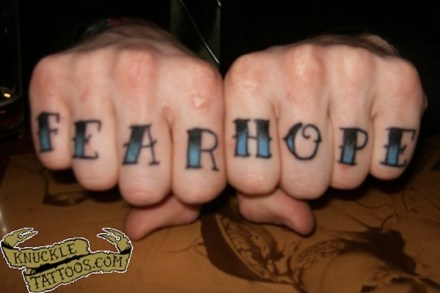
Battle of the Chancellors: hope v fear

From our UK edition

At the Spectator debate on the economic consequences of Mr Osborne last night, Andrew Neil repeated JK Galbraith’s line that 'economic forecasters exist to make astrologers look good.' The impressive Conservative MP Jesse Norman countered with 'an economist is a man who knows 17 ways to make love to women – but no women'. Lord Oakeshott, I think, joined the mockery by pointing out that every forecast from the Office of Budget Responsibility had been wrong. Its consistent incompetence, its steady state of stupidity, its unerring unreliability, made it a surprisingly useful institution, however. Whatever it predicted you could be sure the opposite would occur. How we laughed. But political commentators are no better.

The Great Reckoning

From our UK edition

In my Observer column today, I talk about the scourging of Britain’s failed elite. To give readers an idea of how many institutions are in the dock, I quote an extract from Piers Morgan’s diaries from the summer of 2004. Because I have more space, I can give you the full ghastly detail here – what lucky people you are. Morgan's managers had just fired him from the editorship of the Mirror for running pictures of British soldiers pissing on Iraqi detainees, which a fool could have told him were crude fakes. There is a risk that when the pictures are seen in the Middle East they will endanger men and women in the forces. Morgan does not care. He toddles off to the 40th birthday party of Ross Kemp. Brown is there. Blunkett is there.

The BBC regains its honour

From our UK edition

I hope that the entire editorial staffs of the Times, Sunday Times, Sun, Mail, Mail on Sunday, Telegraph and Sunday Telegraph (oh and the Express newspapers if they are still around) along with Alastair Campbell, the Parliamentary Conservative Party and Rupert Murdoch are going to be gracious enough to praise the BBC today. How many other institutions would allow junior staff to carry out a forensic examination of an internal scandal and broadcast it to the world? How many others would allow employees to expose a manager who made a self-serving decision? If you think you could do what Panorama did last night in any other media organisation, ask yourself, where were the journalists in the press warning their employers of the dangers of phone hacking?

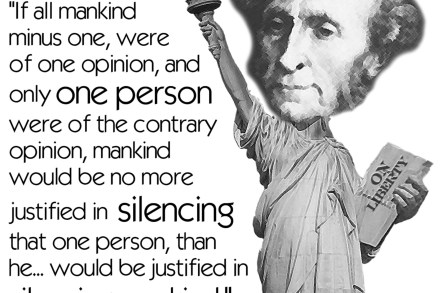
Mr JS Mill and the Twitterati

From our UK edition

Corn dealers were the bankers of the early 19th century.  In the popular imagination, they were monsters who threatened the poor with starvation by inflating their prices to satiate their greed. The abused gentlemen, naturally, hated the opprobrium, while the authorities wondered whether agitators would spark food riots or revolution.

The myth of the paperless citizen

From our UK edition

Another day and another unasked for letter asking me to live online. This time it is from my bank, NatWest – and yes, yes, thank you I know that by not moving my account to a reputable bank I am endorsing the pocket-lining incompetents who helped bring Britain to its knees, but as gleeful financiers say: bank customers are more likely to divorce than change banks. The heirs and successors to Fred Goodwin say they will now send me a bank statement once every three months instead of once a month. They will save on the cost of paper and postage if I agree, and I suppose that in the struggle to repay the billions they owe the taxpayer, NatWest believes that every little helps. NatWest clearly wants me wants to dispense with paper statements completely and sign up to Internet banking.

Eric Hobsbawm: A man of Extremes

From our UK edition

A few years ago, I wrote a review of Eric Hobsbawm’s last collection of essays and noted  'Hobsbawm is now 94, and although I have no wish to usher the old boy from the room, I can see his obituaries now. Conservative and liberal writers will say that his loyalty to totalitarianism disfigured his writing, most notably, in his whitewashing of Soviet atrocities in The Age of Extremes, his history of the 20th century. Leftists will say he was the greatest Marxist historian of our times, whose sweeping accounts of the world from the Enlightenment to the present have shaped the way we think. Neither will acknowledge that both have a case.' I’ll have to wait for tomorrow’s papers to see if I’m right, but I can defend my argument now.

God, guns,welfare: conspiracy theories about working class Americans

From our UK edition

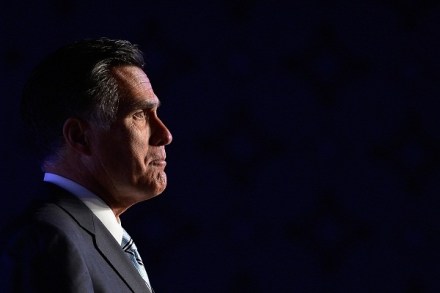
Mitt Romney has been caught saying what he really thinks – or in modern journalistic jargon has committed a 'gaffe'. Serious American commentators believe that his election challenge is all but over after he declared, that 47 per cent of the electorate will vote for Obama no matter what because they were 'dependent upon government'. They saw themselves as victims, Romney explained. They believed the government had a responsibility to care for them, and that 'they are entitled to health care, to food, to housing, to you-name-it. ..They will vote for this president no matter what. . . . These are people who pay no income tax.' To Romney’s mind, poor and working class Americans are the corrupted stooges of the left.

Salman Rushdie: He’s still here

From our UK edition

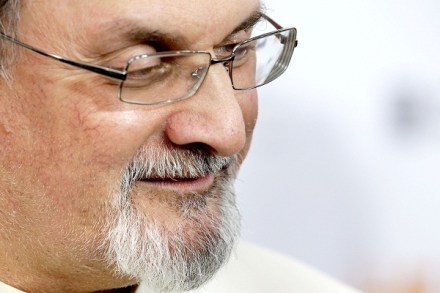
Until the launch party for Salman Rushdie’s autobiography, the best story I’d heard about the forced marriage of literary London and the Special Branch came from the night of the 1992 general election. Melvyn Bragg was hosting a party to watch the results. The guests were overwhelmingly left-leaning writers and intellectuals, and had gathered to celebrate an apparently certain Labour victory that would end 13 years of Tory rule. Yet as the evening wore on, nothing went according to plan. Neil Kinnock’s Labour was winning a few seats, but John Major’s Tories were doing far better than the polls predicted. The chatter subsided. Apprehension replaced expectation.