Nick Cohen

Nick Cohen

Nick Cohen is the author of What's Left and You Can't Read This Book.

The Right’s attitude to radical Islam is as bad as the Left’s

From our UK edition

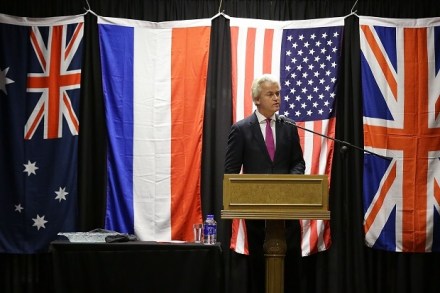
Whenever a heresy-hunting left-winger fixes me with an accusatory glare and demands to know how can I talk to 'someone like that' (the 'someone' in question being a right-wing object of righteous denunciation) I reply, 'I’m a journalist and will talk to anyone - even you.' Still, I like to have a choice. I did not have one when I was sitting on a platform discussing Silent Conquest - a film about the 'Muslim' destruction of free speech in Europe and North America. I was uneasy about what I had seen, and became more irritable when the organisers announced a surprise guest, Tommy Robinson, formerly of the English Defence League. It is not that I doubt the sincerity of his conversion from extremist politics.
Why can’t we admit we’re scared of Islamism?

From our UK edition

Firoozeh Bazrafkan is frightened of nothing. Five foot tall, 31 years old, and so thin you think a puff of wind could blow her away, she still has the courage to be a truly radical artist and challenge those who might hurt her. She fights for women’s rights and intellectual freedom, and her background means her fight has to be directed against radical Islam. As a Danish citizen, she saw journalists go into hiding and mobs attack her country’s embassies just because Jyllands-Posten published cartoons of Muhammad that were so tame you could hardly call them ‘satirical’. Bazrafkan is also the daughter of an Iranian family, and the Islamic Republic’s subjugation of women revolts her.

British journalists lock each other up and throw away the key

From our UK edition

In the past few days, my colleagues on the Guardian have been publishing stories of national and international significance – indeed, if truth be told, they have been publishing them for most of the autumn. The international scoop was that America’s National Security Agency tapped Angela Merkel’s mobile phone (along with the phones of many more world leaders). As the shock of the revelation has sunk in, most observers have grasped that the shrug-of-the-shoulder explanation that 'spies spy', doesn’t really work in this instance. Spies in democratic countries are meant to be under democratic control. Elected politicians have few problems authorising surveillance on their country’s enemies.

They used to catch crooks – now they trawl Twitter. Are our police turning into spies?

From our UK edition

Just before the hacking scandal broke, the Sun sent a young and by all accounts decent reporter to meet a woman who said she had a story — a ‘walk-in’ as we call them in the trade. The walk-in produced a phone and said the Sun would want to take a look. One picture on it showed the face of a much-loved TV presenter. The rest of the celeb’s body was more lustful than lovable, however, as he was exposing his member in triumphant fashion. Accompanying the picture was a lot of explicit sex talk. The phone looked as if it belonged to the star’s mistress, and the very famous and very married presenter had been sending her pornographic ‘selfies’ and sex texts to remind her of the joys that awaited her when they next met. The reporter took the phone.

Norman Geras: Rest in peace, comrade

From our UK edition

I was shocked this morning to log on to Twitter and learn that Norman Geras had died. I can think of few political writers, who have influenced me more comprehensively. Whenever I faced a difficult moral question, I would at some point think 'ah, what is Norm saying about this,' go to his blog and see that Norm had found a way through. Last year Norm's colleagues Stephen de Wijze and Eve Garrard published a collection of essays in Norm's honour. I was flattered when they asked me to write about Norm's dual life as Manchester University's Emeritus Professor of Politics and one of the first writers to embrace the Web. As a tribute to him, I reprint it below.

Press Freedom: The state goes for everyone (and you have no right to be surprised)

From our UK edition

Britain's journalists ought to be asking themselves an unfamiliar question: what is the point of my life? If they have any knowledge of history, they ought to know that they are the custodians of a tradition of press freedom, which began with John Milton and the “Independents” who opposed both Charles I and the Presbyterian theocrats of the 1640s. The point of having freedom is to hang on to it. Although you would never guess that from imbecilic games the British media plays. Before I go further, I must acknowledge that you only have to say “press freedom” to see sneers appear on the wolfish lips of the media academics, who provide what intellectual backing the movement towards a state-supervised media possess. 'What does it mean?' they ask.

Who is the greater hypocrite: Mehdi Hasan or the British left?

From our UK edition

As displays of duplicity go, Mehdi Hasan’s performance on the BBC discussion show Question Time seemed hard to beat. Hasan delighted leftists by hounding the Daily Mail. Who really “hated Britain”? he asked. Not Ed Miliband’s father, as the Mail had claimed, but the “immigrant-bashing, women-hating, Muslim-smearing, NHS-undermining, gay-baiting Daily Mail.” How the audience clapped and cheered. How they loved the sight of a principled left-wing journalist taking on the “Daily Hate” without fear of the consequences. Unfortunately for everyone concerned, the Mail showed within a day that Hasan’s outrage was phoney: a piece of cynical crowd-pleasing by a manipulative hack. He had sent Paul Dacre a begging letter asking for work.

Righteous indifference and how to fight it.

From our UK edition

Last week I wrote in the Observer about Qatar's treatment of the hundreds of thousands of migrant labourers, who will build the stadiums and hotels for the 2022 World Cup. They were dying at a rate of one day. They had to cope with inhuman conditions and labour laws that treated them as serfs by giving employers the power to break contracts and stop them leaving the country if they complained. The absolute Qatari monarchy ran a kind of apartheid system, I said. It denied rights it granted the natives to poor workers from Nepal and India. If the image of the old South Africa did not appeal, I offered Sparta as an alternative – 'but instead of a warrior elite living off the labour of helots, we have plutocrats and sybarites sustained by faceless armies of disposable migrants'.

Where Red Ed goes, the Tories will follow

From our UK edition

That wrenching sound you can hear is the noise of the Tory columnists slamming their gears into reverse. Until yesterday, they had assured their readers that Ed Miliband was a useless, limp-wristed bleeding heart without the machismo to hack it as prime minister. He was weak. He was hopeless. He was toast. But that was then. This morning conservative journalists have been issuing their versions of “Ed Miliband: An apology” - as Private Eye likes to say. Far from being a whey-faced wonk, he is now a red-in-tooth-and-claw, "socialist" (Toby Young in the Telegraph).

Extremists and the mainstream: the case of Comrade Newman

From our UK edition

The Chippenham Labour Party has decided that its candidate to contest the 2015 general election will be one Andy Newman. As the anti-totalitarian blogs Howie’s Corner and Harry’s Place have already argued he is almost certain to be the worst politician to stand for a mainstream party. An innocent observer, who believes the British Left’s protestations that it is for workers’ rights and against sexism, racism and homophobia, could go further wonder how such a man could get close to the Labour Party – let alone close enough to run on a Labour ticket. Newman manages the laughably named “Socialist Unity" website: laughable, not just because it engages in vicious factionalism, but because it indulges the religious strain of far-right thinking.

Richard Dawkins and me: A reply to my many critics

From our UK edition

In the Spectator last week, I described how Richard Dawkins had become a space-filler for empty-headed pundits with no idea what else to write about in these slow summer days. The standard form was to upbraid him for being an Islamophobe because of a series of remarks he had tweeted about Islam in general and the behaviour of Islamist conservatives in particular. Some were crass, others reasonable. A few writers chose to add a variant, which has been chugging along for years now, and asserted that 'militant atheism' was as bad as 'militant religion'. If I had had the space, I would have pointed out that militant atheism has a precise meaning. Communist regimes were militantly atheist.

Richard Dawkins attacks Muslim bigots, not just Christian ones. If only his enemies were as brave

From our UK edition

It’s August, and you are a journalist stuck in the office without an idea in your head. What to write? What to do? Your empty mind brings you nothing but torment, until a thought strikes you, ‘I know, I’ll do Richard Dawkins.’ Dawkins is the sluggish pundit’s dream. It does not matter which paper you work for. Editors of all political persuasions and none will take an attack on Darwin’s representative on earth. With the predictability of the speaking clock, Owen Jones, the Peter Hitchens of the left, thinks the same as Craig Brown, Private Eye’s high Tory satirist. Tom Chivers, the Telegraph’s science blogger, says the same as Andrew Brown, the Guardian’s religious affairs correspondent. The BBC refuses to run contrary views.

David Miranda’s arrest proves how sinister the state has become

From our UK edition

Always remember mornings like these, the next time police officers and politicians demand more powers to protect us from terrorism. They always sound so reasonable and so concerned for our welfare when they do. For who wants to be blown apart? But the state said its new powers to intercept communications would be used against terrorists. They ended up using them against fly tippers. Now the police are using the Terrorism Act against the partner of a journalist who is publishing stories the British and American governments would rather keep quiet. The detention of David Miranda at Heathrow is a clarifying moment that reveals how far Britain has changed for the worse.

When is corruption not corrupt? When the establishment says it isn’t

From our UK edition

Mr Justice Tugendhat delivered a ferocious verdict last week. Undercover reporters from the Sunday Times claimed they had found Peter Cruddas, co-Treasurer of the Conservative Party, offering influence in return for wodges of cash. With damning language, the judge found against the paper, leaving it with costs and damages of around £700,000. I don’t want to discuss the merits of the case. Cruddas, who had to resign when the story came out, may have been unjustly maligned. Conversely, the Sunday Times is going to the Court of Appeal, so it may be that the paper is the true victim. I want to look at the judge’s reasoning instead, because it unconsciously reveals how platitudes, evasions and logical fallacies hide corruption in British public life.

Can we trust the state to censor porn?

From our UK edition

The most sweeping censorship is always the most objectionable. In principle, however, there is nothing wrong with David Cameron’s sweeping proposal that the customers of internet service providers must prove that they are 18 or over before they can watch online pornography. The rule for liberal democracies is (or ought to be) that consenting adults are free to watch, read and listen to what they want. It stops child pornography – because by definition children are not consenting adults – and it could stop children accessing pornographic sites. Children are no more able to give informed consent to watching pornography than they are to appearing in it – if 'appear' is not too weak a verb to describe the rape and abuse of children on camera.

Edward Snowden shouldn’t play the coward

From our UK edition

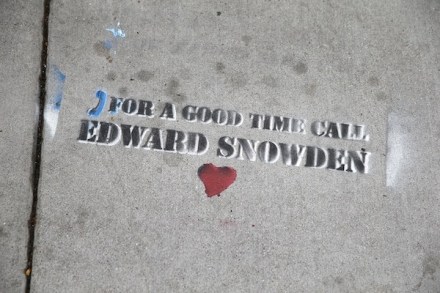
If you run, you look like a coward. It may be that you have good reason to be cowardly. It may be that anyone else in your position would run as far and fast as you do. There is nothing wrong with taking the cowardly course, unless like Edward Snowden, you claim to be engaged in civil disobedience. It is an easy claim to make in theory but hard to live up to in practice. Genuine civil disobedience is one of the toughest forms of protest there is. You decide a law is unjust – which in Snowden’s case means you decide that blanket surveillance by the US authorities affronts rights to privacy. You break the law and then…you must wait for the police to arrest you, and defend your actions in court. I am sure you can see why civil disobedience is a hard road.

In defence of paranoid hysteria

From our UK edition

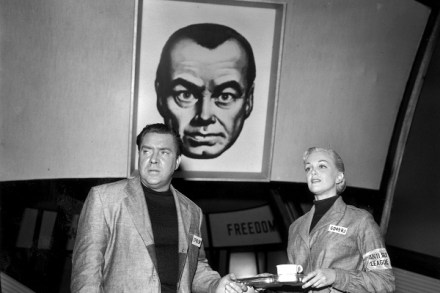
Compare a democracy to a dictatorship and world-weary chuckles follow. The last thing a citizen can do in true tyrannies is call them tyrannies. He or she has to pretend that the glorious socialist motherland or virtuous Islamic republic is not only as free as democracies but has a level of freedom that those who rely on universal suffrage and human rights cannot attain. If you are free to call your country a tyranny, then it is almost certainly is not. In the United States, the politically sophisticated are enjoying themselves immensely as they tear into leftish claims that America is now George Orwell’s all-seeing totalitarian state.

How social media helps authoritarians

From our UK edition

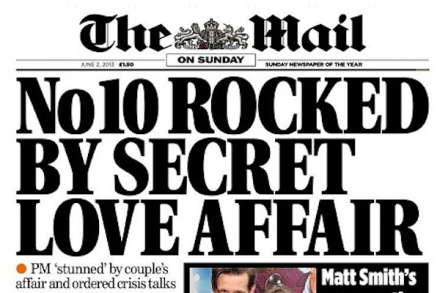
Have you heard? Do you know? Are you, as they say, ‘in the loop’? When the Mail on Sunday said a ‘sensational affair’ between ‘high profile figures’ close to Cameron had ‘rocked’ No. 10, did you have the faintest idea what it was talking about? I did, but then I’m a journalist. Friends in the lobby filled me in on a story which had been doing the rounds for months. I even know which law stopped the Mail on Sunday  following the basics of journalism and giving its readers the ‘whos’, ‘whats’, ‘whens’, ‘whys’ and ‘hows’. (Although with most affairs the ‘whys’ are self-evident.

Julie Bailey: Enemy of the People

From our UK edition

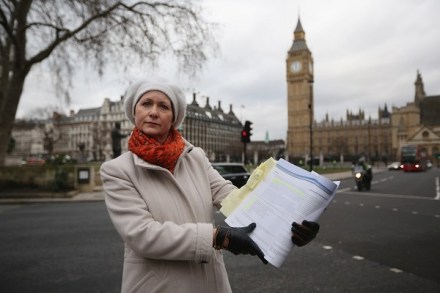
They’re running Julie Bailey out of town. The poison pen letters, foul-mouthed phone calls, slashed tyres, shit through the letterbox, boycott of her cafe and attacks on her mother's grave have become too much. Stafford's upstanding citizens, or a good number of them, want her gone. So she is leaving her home and business, and looking for a better place. 'People come up to me in the street and just start bawling,' she told me. 'I can’t go out by myself. I always need someone with me'” Bailey had been the public face of the campaign to highlight the conditions inside Stafford Hospital. She showed that nurses left food and drink out of patients’ reach and that those in agony screamed for pain relief that never came.

Writers in a state of fear

From our UK edition

A State of Fear, Joseph Clyde’s new thriller*, stands out for many reasons. Thrillers only work if they are thrilling, and Clyde’s description of the search for the terrorist who planted a dirty bomb in central London keeps the reader fascinated. The best thrillers are more than just page-turners, however, and Clyde presents a convincing picture of what Britain could look like after law and order breaks down and the economy collapses. Like all dystopian novelists, he takes conflicts in the present and imagines how they will play out in his imagined future. Today’s sectarian divisions and the failure of Britain to deal with them, or even admit they exist, clearly fascinate him.