Nick Cohen

Nick Cohen

Nick Cohen is the author of What's Left and You Can't Read This Book.

Rupert Murdoch and the revival of the Labour Party

From our UK edition

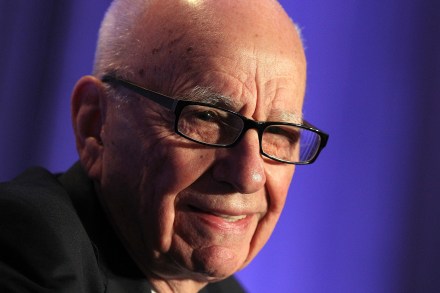
Last year I wrote that the Leveson inquiry would suit Jeremy Hunt rather well. He had appointed Lord Justice Leveson, a judge with little previous experience of media law to sit alongside a remarkably undistinguished panel of assessors. They would inflict more blows on the battered cause of freedom of speech, I thought. But they would steer well clear of the corrupt relationship between Rupert Murdoch and successive governments, which had allowed his hacks to believe that the law of the land did not apply to them. I underestimated Murdoch’s titanic self-pity. The old American definition of an honest politician is that ‘once he’s bought, he stays bought’. The same does not apply to the Dirty Digger.
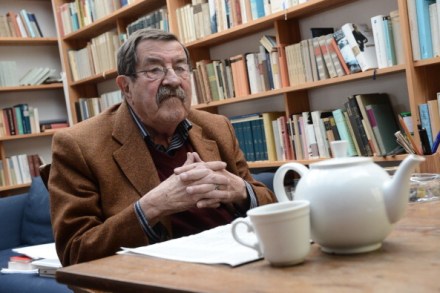
Gunter Grass: the tin drum and the tin ear

From our UK edition

This morning's editorial in Israel’s left-wing Haaretz newspaper noted a double standard that was also a bad joke. Israel’s Interior Minister’s had declared, 'If Gunter Grass wants to continue to distribute his false and distorted works, I suggest he do so from Iran, where he'll find an appreciative audience.' The minister could not detect the irony in his words, the paper said. It is precisely his decision not to let Grass enter Israel because of a poem he wrote that 'is characteristic of dark regimes like those in Iran or North Korea'. You can read Grass’s poem here. I find it a false and vainglorious work because of its strong element of self-pity. Grass calls it 'What Must Be Said,' as if he is making a courageous stand.

The tweet police

From our UK edition

Writing with the optimism of a high-Victorian liberal, John Stuart Mill said that the only legitimate restriction on freedom of speech was to stop the direct incitement to a crime. He picked the example of corn dealers. The 19th century poor hated them. They made inflammatory accusations that the dealers were enriching themselves by keeping the price of bread artificially high. But Mill said ‘An opinion that corn-dealers are starvers of the poor, or that private property is robbery, ought to be unmolested when simply circulated through the press, but may justly incur punishment when delivered orally to an excited mob assembled before the house of a corn-dealer, or when handed about among the same mob in the form of a placard.

Will Osborne close the ‘Livingstone Loophole’?

From our UK edition

When I spoke to the tax justice campaigner Richard Murphy about Ken Livingstone’s tax avoidance, he said that the practice of individuals pretending that they were companies caused ‘a massive leakage of tax revenue. They have all the tax advantages of a company without the obligation to tell the world what they are doing with the privilege society has granted them.’ You need to think about the secrecy as much as the self-enrichment when considering the behaviour of Livingstone and his kind. For a Chancellor facing a massive national debt the advantages of cracking down on individuals who turn themselves into KenCos are obvious. The Livingstones of the world only pay corporation tax on their earnings rather than the full higher rate of income tax.

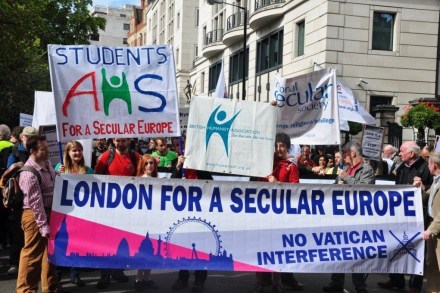
The spectre of militant secularism

From our UK edition

At the weekend, I was honoured to award the Secularist of the Year prize to Peter Tatchell on behalf of the National Secular Society. From the stage, I looked across the restaurant where the celebratory lunch was held and saw only intelligent, polite people (if by that stage of the proceedings, intelligent, polite and slightly tipsy people). I had to break the news to them that according to respectable society they were fanatics; the moral equivalents of religious bigots.

Can we talk about this?

From our UK edition

Can actors at the National Theatre quote Christopher Hitchens’ destruction of Shirley Williams for her failure to defend freedom of speech against suicide murderers on Question Time, while all the time contorting themselves in athletic dance moves? My somewhat surprising answer is ‘yes they can’.   The DV8 dance company’s Can We Talk About This? is almost a compendium of stories I have covered. The opening section moves from Salman Rushie to Ayaan Hirsi Ali to the Danish cartoon ‘crisis’. It maps the opening section of my You Can’t Read This Book: Censorship in an Age of Freedom, where I look at the power of religion to provoke censorship and self-censorship.

Should Christians kill Mark Thompson?

From our UK edition

I’d rather they didn’t. But perhaps a campaign of clerical terror would make the BBC ‘respect’ Christianity. According to the Telegraph, the director general of the BBC said it handles Islam with far more sensitivity than Christianity because: ‘The point is that for a Muslim, a depiction, particularly a comic or demeaning depiction, of the Prophet Mohammed might have the emotional force of a piece of grotesque child pornography. One of the mistakes secularists make is not to understand the character of what blasphemy feels like to someone who is a realist in their religious belief.

The brass neck of Julian Assange

From our UK edition

On 1 March, the Old Vic theatre in London is hosting the première of Europe’s Last Dictator — a film documenting torture and state-sponsored murder and kidnap in Aleksandr Lukashenko’s Belarus. I don’t know if it looks at the brilliantly subversive Belarus Free Theatre, which has been at the forefront of the dissident movement, but I have been heartened to see British actors — Ian McKellen, Jude Law, Sienna Miller, Samuel West — responding to appeals for solidarity from their fellow performers in Belarus by taking up the cause of the opposition.  Given this admirable record, it is no surprise to learn that Joanna Lumley will be co-hosting the evening at the Old Vic.

Attack of the Militant Secularists

From our UK edition

If you want to hear a BBC discussion going hopelessly wrong, listen to the ‘debate’ between the Bishop of Lichfield, Jonathan Gledhill and Alan Beith on the Today programme this morning. Radio 4 meant it to be about the established church, and set the Anglican bishop against the Methodist Beith. But a freemasonry of the faithful took over, and ‘balance’ went out of the window. Conformist and non-conformist united against their common enemy, ‘militant secularism’. Not just Anglicans and Methodists, Beith assured us, but Sikhs, Jews, Muslims and Hindus were at one in their fear of the secularist menace. ‘It is bad enough having to put up with the platitudinous propaganda of Thought for the Day,’ I thought, ‘but this is too much.

We are all journalists now

From our UK edition

As the cops round up journalists, Trevor Kavanagh’s protest in the Sun has aroused amazement and some scorn. ‘Witch-hunt has put us behind ex-Soviet states on Press freedom’ — ran the headline, and the gist of the complaint among my friends was that it was a self-pitying and self-aggrandising piece of work. Whatever you think of the Sun or Kavanagh, however, it is worth hearing him out for three reasons.   1. Kavanagh is being brave. We ought to applaud Hugh Grant for standing up to the tabloids even though he knows they will give him a bad press for the rest of his career. (You will have noticed that nearly everyone else in the celeb pack has let Grant and a few others fight their battles for them while they cower in a prudent silence.

Whatever happened to Human Rights?

From our UK edition

Human rights campaigners need to follow a self-denying ordinance if they are not to become enemies of the values they espouse. Like a civil servant or judge, they must leave their passions at the office door, and oppose the oppressive, whoever they are and whatever the consequences. It is easy for me to say that, but the record of Human Rights Watch and Amnesty International tells you that it is hard for them to do so. To their politically committed workers impartiality can feel a thin and bloodless doctrine. It requires them to criticise people they regard as friends and provide inadvertent comfort to enemies. The effort required in maintaining universal principles is too much for them, and explains why human rights organisations have gone off the rails.

Ed Miliband: Britain’s Greatest Leader of the Opposition

From our UK edition

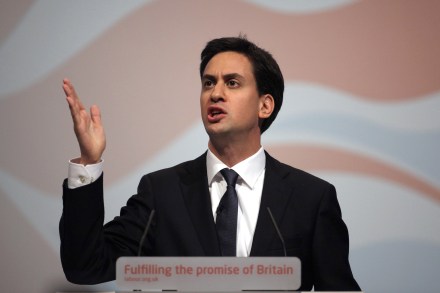
Ed Miliband is a geek, a failure and a loser. All the press says so, so it must be true. Yet the apparent no-hoper retains the ability of the boy who confronted the naked emperor to change the terms of debate. Ever since Mrs Thatcher, the working assumption of the British elite has been that it must always placate Rupert Murdoch. If that meant the corruption of government — the ruling party giving special treatment to Murdoch’s businesses, Murdoch giving the ruling party propagandistic support in return — so be it. If that meant successive Prime Ministers debasing themselves (and their country) before an overmighty citizen, who was not even a British citizen, then, and by all means, they would do that too.

An Advertisement for Myself

From our UK edition

My You Can’t Read This Book: Censorship in an Age of Freedom is out this week. As the title says, it's about freedom of speech, a subject that has come to mean more and more to me as I have watched religious zealots intimidate liberals into silence, and the libel laws and omerta of City hierarchies stop investigations into a catastrophic financial system when they might have made a difference. Writing in this week’s magazine, Alain de Botton talks about how authors can loathe critics, a feeling prompted in his case by a savage attack from Terry Eagleton. He ought to be less concerned.

How freedom goes

From our UK edition

Joan Smith has a piece in the Independent about religious censorship of open debate in Britain, a supposedly free country. It is well written and argued, as Smith’s writing invariably is, but what distinguishes it is that it is the only defence of our liberties in the Sunday papers. Consider the events of the past few days: i) At Queen Mary, University of London students went to hear Anne Marie Waters speak on behalf of the One Law For All — a campaign to stop Sharia law afflicting British women. An angry young man entered the lecture theatre. He filmed the audience on his mobile, and told them he knew where they lived and would track them down if a single negative word was said about Muhammad. The organisers informed the police and the meeting cancelled.

Web of tyrants

From our UK edition

The internet can promote freedom and democracy – it’s a shame it also facilitates mob rule and witch-hunts Even those who are wary of the utopianism the net has generated tend to take it for granted that the new communications technologies have saved us from the need to worry about censorship. Sceptics fear that the web provides us with too much information, not too little. Enthusiasts see a future of unlimited free speech when all the old arguments about libel, official secrecy and blasphemy become redundant. To see how far the consensus spreads look at Is the Internet Changing the Way You Think?, a new collection of the views of 150 of the world’s leading minds on the technological revolution.

See? Simple. Next!

From our UK edition

Ed Miliband is in the happiest position he has been for months. Both left and right are attacking him for stating the obvious. The unions or at least their leaders hate him for accepting effective public sector pay cuts. Unions are meant to represent their members, but they are making a debased utilitarian calculation in this instance. Pay cuts hurt all members a little, but job cuts hurt a few members a lot. The temptation for a union leader is to put the small interest of the many in maintaining their income above the urgent interest of the few in holding on to their jobs. It is an understandable seduction to fall for, but not an honourable one. Nor is it likely to increase public support.

A left-wing writer conservatives should enjoy

From our UK edition

I have a review of Pity the Billionaire by Thomas Frank, one of the few left-wing writers I believe conservatives can read with pleasure. He is old fashioned, so old-fashioned indeed that most American leftists would not call him left-wing. He has no time for the culture wars, which still stir the passions of so many on the right and left (and not only in the US). Instead he has concentrated on why ordinary working and middle class Americans do so badly when Wall Street is thriving and have to bail it out when it fails. Since 2008 events have justified him with a vengeance. He is also a dazzling writer: honest, sardonic, scornful and literate – worth one thousand Michael Moores.

The Good, the Smug and the Blind

From our UK edition

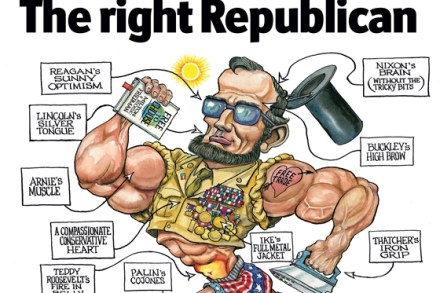
The Economist has a rather good, rather smug and – in the end – entirely self-deluding leader about the predicament of the American right this week. It is good because the Economist sets out with neatness and style what policies a Republican candidates must sign up to if he or she is to make it through the primaries. The aspiring president must believe not just some but all of the following: That abortion should be illegal in all cases. That gay marriage must be banned even in states that want it. That the 12m illegal immigrants, even those who have lived in America for decades, must all be sent home. That the 46m people who lack health insurance have only themselves to blame. That global warming is a conspiracy.

Interview with a Danish journalist

From our UK edition

He came to talk to me about British Euroscepticism, and I did my best to explain. I said it was far stronger in England than Scotland for nationalist reasons, and that although Labour MPs were, in general, mildly Eurosceptic — Brown would not take us into the Euro, for instance — Euroscepticism was a passion on the Conservative side. ‘I know some of the young MPs who supported Cameron,’ I said.

A regiment of women monsterers

From our UK edition

Another day at the Telegraph and another attack on Laurie Penny, this time for writing a short piece describing how she had received excellent treatment at a New York hospital. While she was on her sickbed, she reflected that in the States, 'Those who are wealthy enough to afford decent healthcare have their needs met in relative luxury, while those who are poor live in fear of getting ill, worrying that one misadventure might leave you with yet more debts to pay off.' This humane thought inspired one Daniel Knowles of the Telegraph to pen a whole column condemning Penny . ‘I have no intention of defending the American healthcare system,’ he says, and then excoriates Penny for not defending it either.  He depicts her as a dogmatist and a bore.