Nick Cohen

Nick Cohen

Nick Cohen is the author of What's Left and You Can't Read This Book.

Nowhere to hide | 13 September 2012

From our UK edition

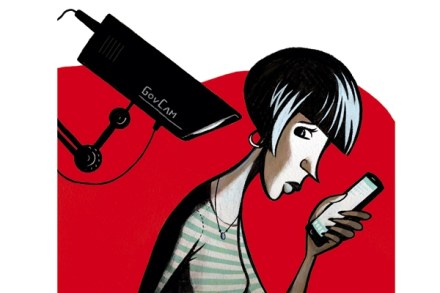
Ever since the millennium, I have wondered how long the utopian faith in the emancipatory potential of the web will last. Of course, we know the new technologies give the citizen new powers to communicate and connect. We hear this praised so loudly and so often, how could we not know? But what benefits the individual also benefits the powerful, and gives states and corporations surveillance powers the secret police forces of the 20th century could only dream of. If you doubt me, consider how today’s scandals are technologically enabled. The Telegraph’s publication of MPs’ expenses would have been impossible 30 years ago. The source would have had to photocopy hundreds of thousands of pieces of paper.
A Rough Guide to Tyranny

From our UK edition

There is an over genteel style in English argument which acts like a sedative. Just when you think that a proper debate is getting going, one of the participants will say, 'I am not sure that we’re really disagreeing.' I am afraid I must use this tired line, if only for a moment. Matthew Teller criticises me for writing about the indulgence of dictatorships by his fellow writers in the guidebook game, by saying : 'Guidebooks exist to help people find a room, have a meal and get a drink, with the added bonus of directions to a quiet beach or a pretty village. A paragraph or two of political background can be diverting, but you’d hardly base a world-view on what you read in your guidebook, would you? Nick Cohen, angry journalist, is savaging a paper tiger.

What lonely planet are they on?

From our UK edition

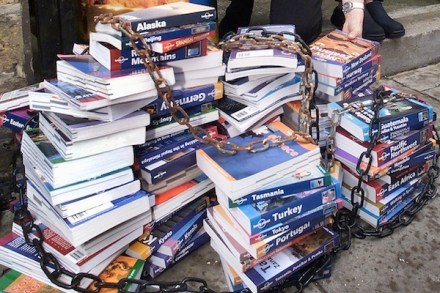
A few years ago, I wrote a piece about the Lonely Planet guide to Burma. I looked at how the supposedly right-on publishers sweetened the rule of the military so that western tourists could travel with a clean conscience. The crimes of the junta — which had the appropriately sinister name of the Slorc — could be discounted, the guidebook said. Tourists should not worry about the conscripted workers who built their hotels because forced labour is 'on the wane'. Maybe Lonely Planet had an ideological reason to whitewash dictatorships, I speculated. Or perhaps it was a cheapskate enterprise that did not much care what it published, as long as it could secure maximum profits for minimum outlay.

RIP Robert Hughes: Enemy of the Woozy

From our UK edition

Few books have had a greater effect on me than Robert Hughes’ Culture of Complaint. The clarity of Hughes’ style in his dissection of the discontents of the 1980s was enough to make me love him. In his political writing, histories and art criticism he never descended into theory or jargon, but imitated his heroes, Tom Paine, George Orwell and EP Thompson, and talked to the reader without condescension or obscurantism Critics denounce and admirers celebrate the ‘muscular style’, but I find it more courteous than macho. Hughes tackled hard and often obscure subjects, the rise of modern art, the penal colonies in early Australia, and made a deal with the reader.

Green Party Candidate: Give me more money!

From our UK edition

As a slogan, 'give me more money' is an unlikely election winner. Nevertheless, Peter Cranie came close to trying it at the hustings for the leadership of the Green Party in Manchester on Friday. At the start of the above clip, a member of the audience asked what wage the contenders would take. Pippa Bartolotti purred that she wanted the Greens to spend party funds on campaigns not individuals – a sentiment to win elections with. But then it was easy for Ms Bartolotti to be selfless because she had a career in business before going into politics. Cranie was more cautious. He explained that he earned £29,000 as a lecturer. If he became the Greens’ leader outside Westminster he would have to give up his job.

The racism of the respectable

From our UK edition

To be a racist in Britain, you do not need to cover yourself in tattoos and join a neo-Nazi party. You can wear well-made shirts, open at the neck, appreciate fine wines and vote Left at election time. Odd though it may seem to older readers, the Crown Prosecution Service now regards itself as a liberal organ of the state. This week it is making a great play of its success in deterring violence against women. Its lawyers brought 91,000 domestic violence prosecutions last year and secured 67,000 convictions. As I have mentioned in this space before, many criminologists believe that the willingness, not just of prosecutors and the police but of wider society, to take violence against women and children seriously explains the welcome fall in homicide rate.

Tories, oppose family values

From our UK edition

For almost a decade now, what social conservatives say and the evidence in front of our eyes has been diverging with remarkable speed. According to the received wisdom, the permissive revolution of the 1960s led to family breakdown, which in turn led to today's terrifying crime rates. The small snag with the argument is that crime rates are not terrifying. The decline in marriage and rise in divorce notwithstanding, crime rates have collapsed. Social conservatives can take some comfort from the fact that the fall coincides with the increase in the prison population since 1990. But a rise of about 30,000 in the number behind bars is small beer when set against, the vast and vastly welcome fall in crime. The murder rate has seen the most startling decline of all.

Censorship Olympics

From our UK edition

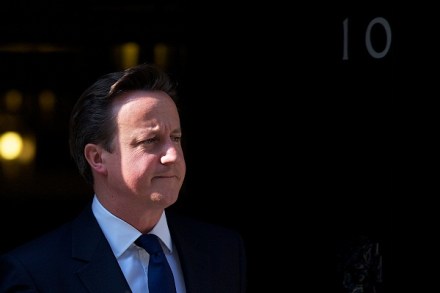
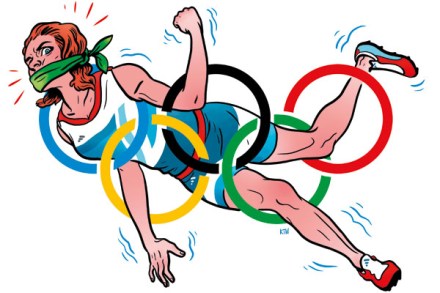
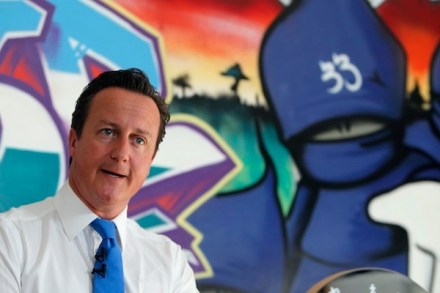
The guards would not let me walk round the Olympic park. ‘We’re in lockdown because of a security alert,’ one explained. The rain fell. The overbearing policing intimidated. ‘London is going to host the Paralympics and the paramilitary Olympics,’ I muttered with unpatriotic grumpiness, as I retreated to the bright lights and piped music of Stratford’s new Westfield centre, only to find another lockdown in progress. David Cameron said the Olympics should be a ‘showcase of national enterprise and innovation’. As far as the enterprising shopkeepers and restaurant managers at Westfield were concerned, the games might as well not be happening.

Westminster’s hollow men

From our UK edition

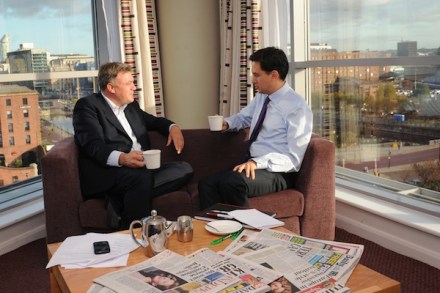
In my Observer column today I say that a judicial review into the banking scandal would have achieved little unless the judge could have persuaded the politicians to change the law. As if on cue, Ed Miliband and Ed Balls popped up to demonstrate that they have no desire to change banking law in any way that might make a difference. Their proposals to expand the number of banks and make it easier for customers to switch accounts, amount to more of the same. Instead of five big banks running on taxpayer guarantees, we will have seven big banks running on taxpayer guarantees. Neither Labour nor the Tories is willing to accept that the deregulation of finance from the 1980s on allowed bankers to take insane risks.

Crony Conservatism

From our UK edition

The fundamental division in modern politics is between corporatists and believers in free markets. So what, you might say, that has been a fundamental division for quite a while. This time it is different, however. As a general rule, the more right wing a politician or commentator is seen to be, the more likely he or she is to support the propping up of lame ducks and the requisitioning of public money to subsidise grasping workers. Meanwhile those who support breaking up the banks so that they are no longer too big to fail are variously described as lefties, the enemies of wealth creation, banker bashers and the like. The fact that the trust-busting we desire would allow the separated high street and investment banks to succeed or fail on their own merits is everywhere ignored.

Whatever happened to freedom of speech?

From our UK edition

The issues raised by the Twitter Joke case have been gone over so thoroughly that, as is so often in public debate, only the obvious question remains undiscussed and unanswered: whatever happened to the right to free speech? The Human Rights Act guarantees it. Article 10 states: 'Everyone has the right to freedom of expression. This right shall include freedom to hold opinions and to receive and impart information and ideas without interference by public authority and regardless of frontiers.' 

That this is a new type of free speech case is beyond doubt to my mind. I've an essay in the current issue of Standpoint on how the web is providing the authorities and employers with ineradicable evidence they can take down and use against their targets.

The war against the young

From our UK edition

At the time of the student protests, I laid out in the Observer the demographic facts that push unscrupulous politicians into picking on the young. Their political vulnerability is the best explanation for the regularity with which the coalition assaults their interests, I said. In democracies, politicians worry about those who vote and a majority of the young do not. Ipsos MORI estimated that only 44% of 18 to 24-year-olds and only 55% of 25 to 30-year-olds voted in the 2010 election. By contrast, 73% of 55 to 64-year-olds and 76% of those aged 65 or over turned out: In the mid-20th century, the customary political apathy of youth did not matter overmuch. Electorates split on class lines.

Jimmy’s “Scam”

From our UK edition

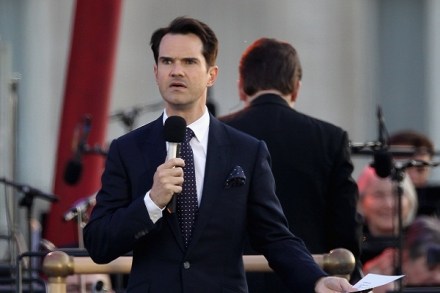
Satirists are like pop stars in two respects. They earn extraordinary amounts of money, and the public assumes that they are left wing. You do not need to be a Marxist to suspect that the former will work against the latter. Investments in a hedge fund have a habit of dominating your mind however many songs of teenage rebellion you sing or jokes you make about the cruelties of ConDem Britain. As time goes on, your anti-establishment views change from sincere opinions into poses. They are your meal ticket. Like a lawyer defending a client he knows to be guilty, you must maintain the illusion that you believe every word you say or lose your appearance fees. The rock star, who lauds urban riots, can never admit that if there were trouble around his mansion he would call the chief constable.

Why are the unions frightened?

From our UK edition

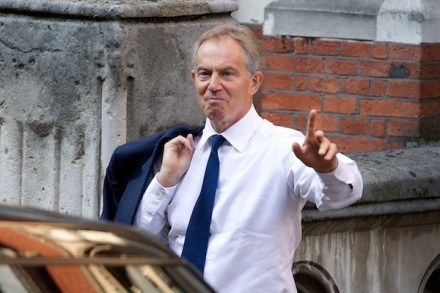
Labour has only ever won a general election from the autumn of 1974 onwards when its leader has been called &"Tony Blair”. Four other leaders tried, but they were not called &"Tony Blair,” and Labour paid the price. I find it hard to credit the left’s failure myself sometimes, and, equally, find it easy to understand how Labour supporters became riddled with self-hatred and self-doubt as they saw ‘their’ Blairite government in action. But it is going a bit far for Paul Kenny of the GMB to deal with the compromises of the past by calling on Labour to declare the Blairte think tank Progress an anti-party organisation and ban it     I won’t detain you for long with the obvious objections.

Why the Jubilee Coverage was so bad

From our UK edition

One of my objections to monarchy is that it is a vulgar institution that encourages verbosity, prurience, sycophancy and banality. I was not therefore surprised that the BBC’s jubilee coverage was vulgar, verbose, prurient, sycophantic and banal. Others were, however, and the papers are full of condemnations of the corporation. You should always remember that the BBC’s rivals have a commercial interest in doing it down, just as the BBC has a commercial interest in doing down News Corporation at the Leveson Inquiry. No journalists are as compromised as writers who write about their employer’s rivals. As a rule, you should never believe a word they say.     That said, no one can deny that the BBC offered itself as a target to its enemies.

A diplomatic racket

From our UK edition

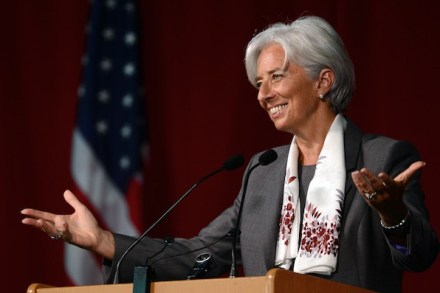
In my Observer column on Sunday I mentioned in passing that in a crisis, elites have to be able to show that they are sharing the plight of the masses. Asking for 'equality of suffering' is too much, you will never have that, but there has to be a sense that — to coin a phrase — we are all in this together. Christine Lagarde had just lectured the Greeks on why they must pay their taxes. She was in no way inhibited by the knowledge that as an official of the IMF she was a 'diplomatic agent' and hence exempt from taxes under the terms of the 1961 Berne Convention. The inevitable accusation from the Greeks that she was a hypocrite so lost in a world of privilege she could no longer know a double-standard when she saw it, took her and her colleagues aback. But not all of them.

Take the mickey back

From our UK edition

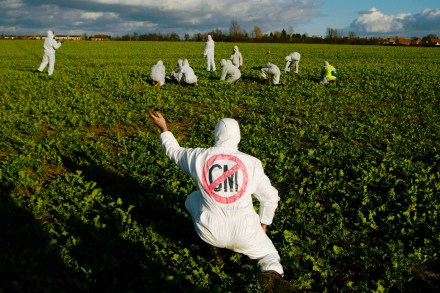
Our beliefs are like our families. Some we live with every day. Others are distant relations we rarely see but still think of as part of our clan in a warm, vague way. On the odd occasions they thought about it, leftists and more conservatives than readers of the Spectator may expect have seen the green movement as an eccentric aunt: a bit dotty perhaps, but a good sort and one of the family. I suspect that the majority of the population thinks the same. Stereotypes reveal popular attitudes, and although many mock the caricature lentil-eating, bicycle-loving vegetarian, their mockery is not malicious. No one would complain if an organic shop were to open in their town — indeed, they would feel their town was coming up in the world.

Don’t trust the West

From our UK edition

A few days ago, I attended the Oslo Freedom Forum, where dissidents and human rights campaigners gather to exchange ideas. I feared the mood was a little too optimistic, and remembered that the first duty of the journalist was to be the bearer of bad tidings.

Beware the ferret-faced heresy hunters

From our UK edition

I fell in with bad company while I was on a story in Oslo last week: American conservative journalists. I am glad to say confirmed the public’s stereotype of reporters by enjoying their drink. (They make it their first task after landing in a new city to find the best bar, an example that should inspire us all.) But they bore no resemblance to the European stereotype of the ignorant, right-wing yank. They were cosmopolitans who were at ease in Europe. They were well read. Although they would hate the label, they were also crusading journalists, who had made the cause of the dissident opposition to Putin and Lukashenko their own.

‘It’s the newspapers I can’t stand’

From our UK edition

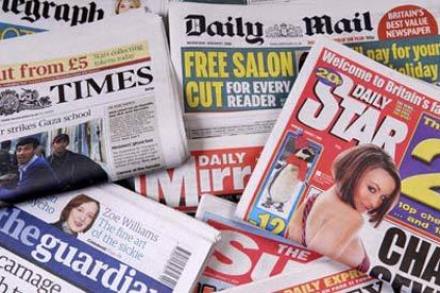
In Tom Stoppard’s Night and Day, Milne, an idealistic journalist, describes the limitations of newspapers, and then gives the best argument for press freedom I know of. ‘You don't have to tell me,’ he says to Ruth, the bored wife of a mining tycoon. ‘I know it better than you — the celebration of inanity, the way real tragedy is paraphrased into an inflationary spiral of hackneyed melodramas — Beauty Queen in Tug-of-Love Baby Storm... Tug-of-Love Baby Mum in Pools Win... Pools Man in Beauty Queen Drug Quiz. I know. It's the price you pay for the part that matters. ‘Junk journalism is the evidence that society has at least got one thing right, that there should be no one with the power to dictate where responsible journalism begins.