Miriam Cates

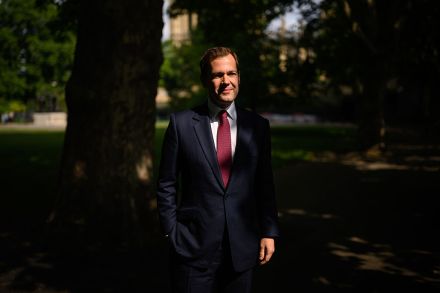
Miriam Cates is a GB News presenter and former Tory MP

Is TikTok slop to blame for the fertility crisis?

Highly effective campaigning from parents and parliamentarians has forced the government to agree to introduce age restrictions for under 16s on social media. This promises to be extraordinarily popular among the public, but there are many well-founded objections that should be taken seriously. Raising the age limit for social media for under 16s will not be a silver bullet Some of these objections are practical. How exactly would a social media ban work? Critics point to Australia, where a world-first ban was implemented in December last year. It is being claimed that the policy is not working, but it’s far too soon to write off the Aussie experience.

Trump’s Arctic madness, political treachery & banning social media

45 min listen

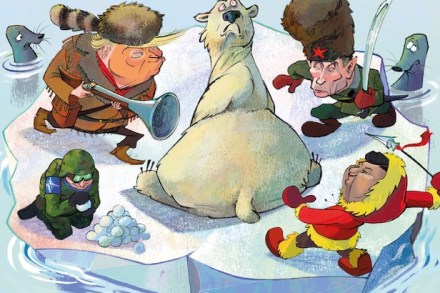
Another week, another foreign policy crisis – this time over Greenland. America's European allies watched as Trump increased the tension over the Arctic territory, only to announce he 'won't use force' in a set-piece speech in Davos. For the Spectator's cover this week, Paul Wood examines the strategic role of the Arctic, both against Russia and China and from nuclear energy to the space race. With a deal supposedly done between Denmark and the US, is there method in Trump's madness? For this week’s Edition, host William Moore is joined by deputy editor Freddy Gray, online commissioning editor Lara Brown and broadcaster Miriam Cates.

Sophie Winkleman is right: parents can’t tackle the screendemic alone

The actress Sophie Winkleman has been honest and punished for it. As one of Britain’s foremost campaigners against the digitalisation of childhood, Winkleman regularly takes to the airwaves to speak about the multifarious ways in which the screendemic is harming children. Eyebrows were therefore raised when, earlier this week, Winkleman told the Times that, despite her passionate convictions, she had ‘failed’ and given her twelve-year-old daughter a mobile phone.

Debate: what next for the British right?

30 min listen

The general election result of 2024 reflected – among other things – a collapse of trust among British voters in the Conservatives. How can the British right evolve so it learns lessons from the past and from across the pond, in order to win back its base? This is an excerpt from an event hosted by The Spectator and American Compass; a leading US think tank.

Why is the Assisted Dying Bill being rushed through the Lords?

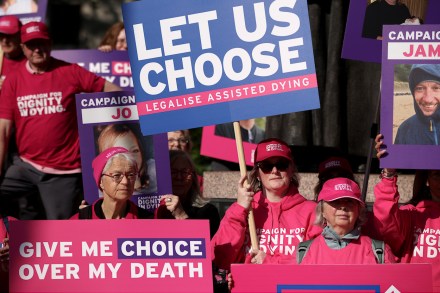
One may hardly be surprised that the battle over life and death in Parliament, focused on Kim Leadbeater’s controversial assisted suicide Bill, has featured Machiavellian manoeuvres inside Westminster’s halls. As the resignation of the Deputy Prime Minister dominated the headlines, a significant announcement was slipped out As the resignation of the Deputy Prime Minister, the cabinet reshuffle, and Nigel Farage’s conference speech dominated the headlines earlier this month, a quiet but significant announcement was slipped out by the government. At 2 pm on 5 September, peers were informed by email that extra time would be given for the assisted suicide Bill’s Second Reading debate in the House of Lords. On the surface, this might look like a practical tidying-up exercise.

Online Safety Act: are Labour or the Tories worse on free speech?

27 min listen

Is the Online Safety Act protecting children – or threatening free speech? Michael Simmons hosts John Power, who writes the Spectator's cover piece this week on how the Act has inadvertently created online censorship. Implemented and defended by the current Labour government, it is actually the result of legislation passed by the Conservatives in 2023 – which Labour did not support at the time, arguing it didn’t go far enough. Michael and John joined by former Conservative MP Miriam Cates who defends the core aims and principles at the heart of the Act. They debate the principles of Big Tech, the risks of government overreach and whether freedom of expression is under threat. Produced by Megan McElroy and Patrick Gibbons.

Why the baby bust matters

Birth rates are tumbling across the world. This isn’t just a tragedy for the growing number of women who have fewer children than they want; below-replacement fertility rates mean that each generation will be smaller than the one before. This could lead to a permanent spiral of decline where the old always outnumber the young. But can anything be done about it? A report published last month by the United Nations Population Fund (UNFPA) acknowledges the problem, but its analysis is rather confused. The authors complain that economic barriers prevent women from having ‘reproductive agency’ while simultaneously arguing that governments trying to reduce these barriers are, in some cases, ‘coercive’.

Taboos around incest are there for a reason

Since Tory MP Richard Holden called for first-cousin marriage to be banned in the UK earlier this month, few people have been prepared to speak in favour of the practice. While not unheard of among white British families, cousin marriage is rare and viewed as rather odd. So, when writer Charles Amos agreed to speak to GB News in defence of such relationships, we welcomed the opportunity for debate. The interview with Andrew Pierce and myself took an unexpected turn when, having argued against a ban on cousin marriage on the grounds that the state should not interfere in such matters, I asked Amos if this view extended to sibling marriage.