Ramses and the Pharaohs’ Gold is, let’s not shy away from it, a profit-seeking exhibition mounted by an entertainment business. Neon opened its high-tech space at Battersea Power Station last year with dinosaurs, and has partnerships with the likes of Harry Potter and Marvel. The gold mask fronting Ramses’s publicity has nothing to with Ramses. Neither does the other gold and jewellery on display: his tomb was looted long ago, and all that remains is his recycled cedar box, sarcophagus and the king himself. A notable offer in the expansive retail zone is the chance to have your name drawn on papyrus by a robot.
But go forewarned, and you will enjoy the experience. After all, there are many striking objects here, atmospherically lit and the better for being given space among the textured walls and giant photos. The 180 exhibits range from monumental stone carvings to mummified cats, their paws and tails lovingly bandaged. OK, these animals (others include crocodiles and beetles) have nothing to do with Ramses. But hey, they’re fascinating to see.

So who was Ramses?
You might know him as Ramesses II. Ancient Greeks called him Ozymandias. A colossal stone head of the Egyptian pharaoh, which was sent to the British Museum in 1821, inspired the poem of that name – though Shelley finished it before it arrived. The Luxor Obelisk at the centre of the Place de la Concorde in Paris belonged to Ramesses, too. This gargantuan carving, with a companion still in Egypt, doesn’t even hint at what Ramesses built. He came to the throne in 1279 bc, and ruled for an extraordinary 66 years. That gave him plenty of time to make his mark.
He fought military campaigns on all fronts, seeing off Mediterranean pirates, recovering Egyptian territories lost by his predecessors and battling old enemies in the modern Levant, Syria and Turkey. Five years after his accession, he took on the Hittite Empire at the Battle of Kadesh, with a record-breakingly large army riding thousands of chariots. The battle was inscribed into monuments across Egypt as a great victory (as does a 3D display in the exhibition). Unfortunately for Ramesses’s posterity, however, the Hittites had their own writing – cuneiform – which unsurprisingly tells it differently. Fifteen years later, the two parties agreed a treaty, recognised today as a landmark in international diplomacy. A replica of a clay tablet giving the Hittite version, signed by the two leaders, hangs near the entrance to the Security Council Chamber in the UN’s New York headquarters.
The documented extent of Ramesses’s armies and the mass production of weapons and vehicles would seem incredible were it not for the surviving remains of cities, temples and palaces that tell a similar story of fabulous wealth. More than a millennium after the pyramids, Ramesses was building on such a scale that his constructions often had the effect of remoulding landscapes. He even moved the capital from Thebes (down in the Nile valley) to a site near the Mediterranean coast. One of his best-known monuments today is at Abu Simbel, the massive rock-cut temples that were edged a few hundred metres from the rising waters of the Aswan dam by Unesco in 1964 for £3 billion.
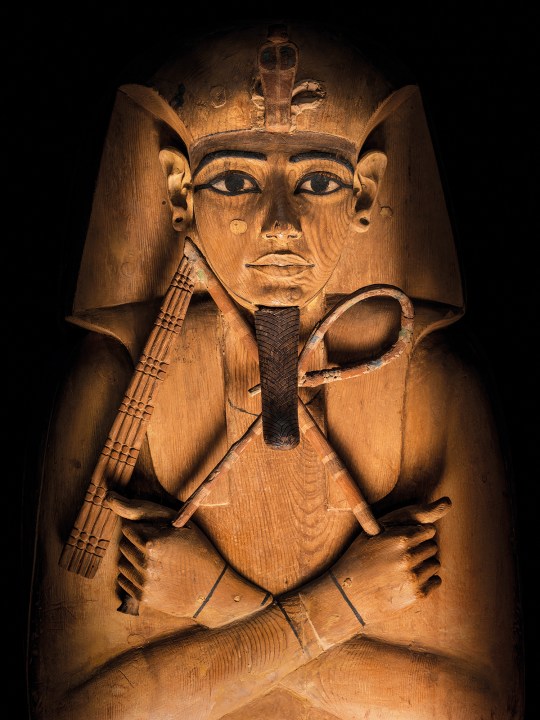
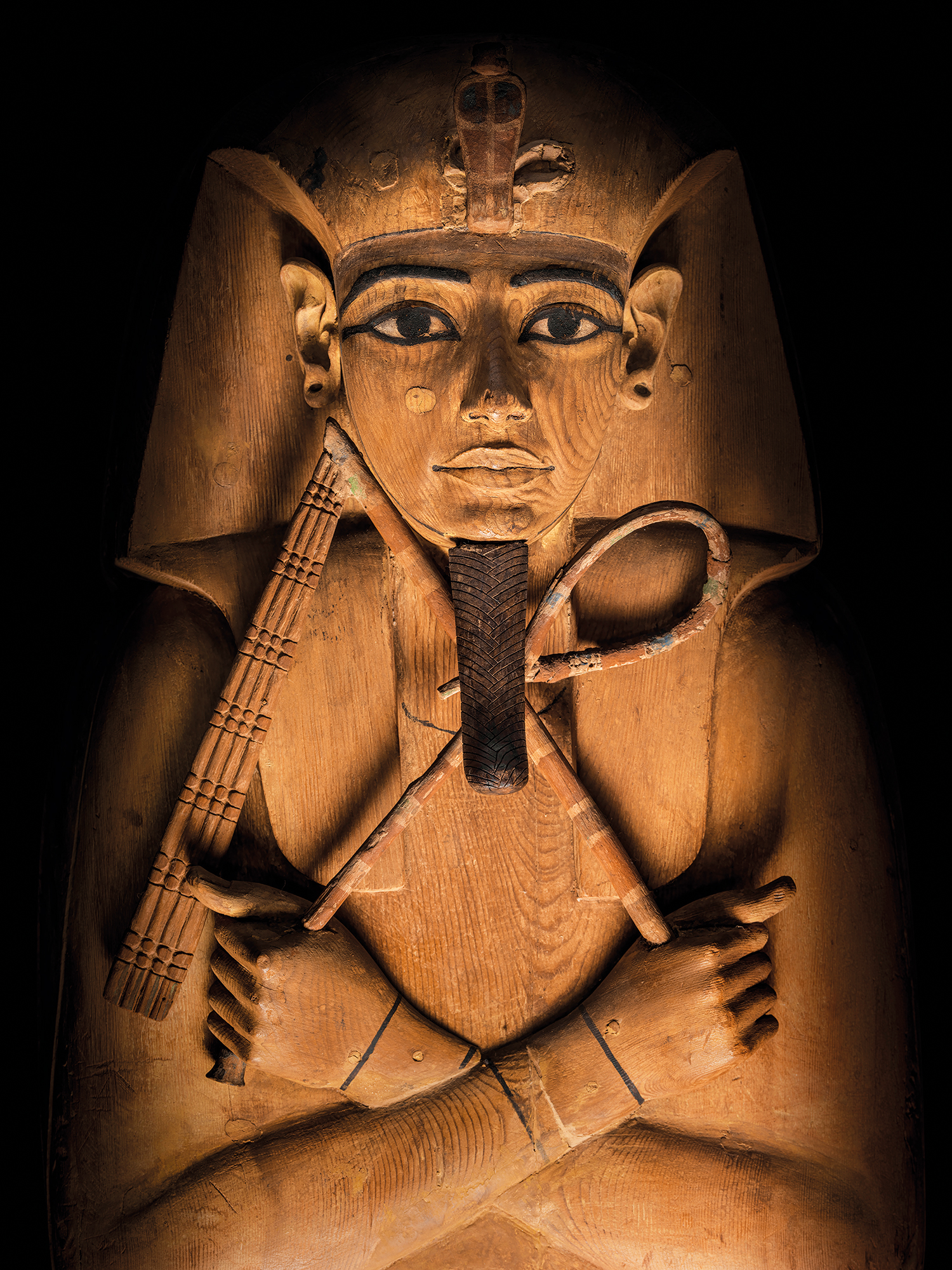
Ramesses’s coffin – a beautiful, lightly gilded wooden carving – is on display here, accompanied by a wall-sized video of Ramesses’s corpse. I was asked not to photograph it. Not because of any sensitivities towards dead bodies but because The One Show had an exclusive.
The objects are loaned by Egypt’s Supreme Council of Antiquities, and the exhibition’s illustrated guidebook is written by Zahi Hawass, an archaeologist and former Egyptian minister of tourism and antiquities. He paints Ramesses as a heroic king-saint: a handsome peacemaker and sensitive human being, who loved his wife. Forget that his mercenaries at Kadesh tallied enemy casualties by cutting off their hands, that he declared himself a god or that his beloved spouse was one of 200. Despite this, Elizabeth Frood, professor of Egyptology at the University of Oxford, welcomes the exhibition. Ramesses’s long reign, she tells me, released possibilities for extraordinary experimentation and innovation in visual and written culture. Were he here now, I think he’d have enjoyed his show.




Comments