Michael Tanner

Triple triumph | 30 April 2015

From our UK edition

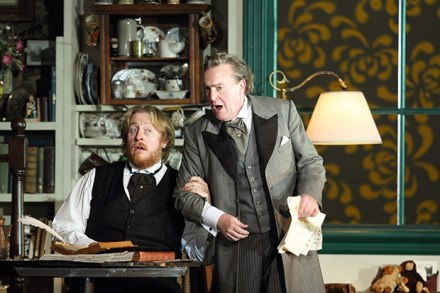
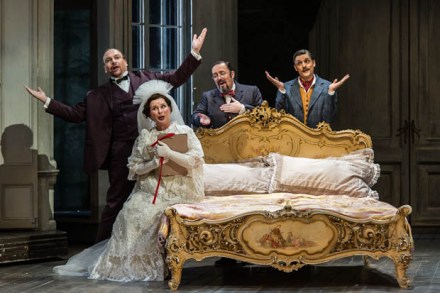
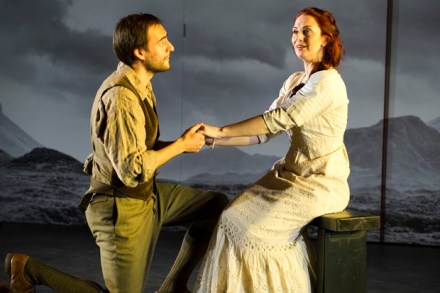
Three staples of the Italian repertoire, performed and seen in very different circumstances, have confirmed my view that they deserve their place in the repertoire, however many other works by their composers or contemporaries may be unearthed. I saw OperaUpClose’s version of Donizetti’s The Elixir of Love in the Mumford Theatre Cambridge, an underused venue that has the advantage of being 200 yards from my house. It is by far the best thing I have seen OUC do, and I regret catching only the last of many performances, but the only one here, where there is almost no interest in opera.
Beauty and the bleak

From our UK edition

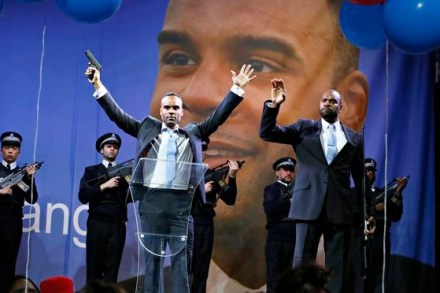
The Ice Break is Michael Tippett’s fourth opera, first produced at Covent Garden in 1977 and rarely produced anywhere since, though there is an excellent recording of it. Its brevity (75 minutes) rather took the wind out of the Royal Opera’s sails, since they had envisaged a full evening’s piece. So, I imagine, did its wackiness, though more extreme things in that line were to follow from Tippett. There are numerous ingredients in The Ice Break, but it gives the impression that its composer was so fascinated by all of them that he restlessly moves from one to another, leaving his audience to see whether they can make sense of them. As with his previous opera, The Knot Garden, almost all the characters have strange names — Lev, Yuri, Olympion, Astron etc.

Royal Opera’s Rise and Fall of the City of Mahagonny review: far too well behaved

From our UK edition

Brecht/Weill’s Rise and Fall of the City of Mahagonny was premièred in 1930, Auden/Stravinsky’s The Rake’s Progress in 1951. Twenty-one years separate them, but it seems, as one looks back, enormously more than that. Think of 1994 and now, no time at all, and not only for an ageing opera reviewer. Both works tend to be routinely referred to as masterpieces, but seeing them both in the space of three days — Mahagonny at the Royal Opera, The Rake’s Progress at the Royal Academy of Music — I felt fairly strongly that they are both patchy pieces, neither representative of their composer at or even near his best.

Iolanta/Duke Bluebeard’s Castle, Met Opera Live, review: enterprising take on two masterpieces

From our UK edition

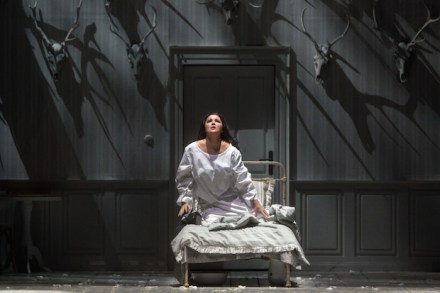
Iolanta / Duke Bluebeard's Castle  Met Opera Live The Met's antepenultimate relay of the season was an enterprising pairing of two operas, one of which we should see more often, and both of them done with intelligence and care. Tchaikovsky's Iolanta, his last opera, inconveniently lasts about 100 minutes, so is especially hard to find a partner for. It is a strange, touching piece, though it has few of the characteristics we associate with him. There is hardly a memorable melody in it, and little that is overwrought, indeed the colours are pastel. Iolanta is a princess, blind from birth, but skilfully kept in ignorance of her condition, and surrounded in this production by bored maids who treat her sweetly and otherwise bitch.

Mastersingers of Nuremberg, ENO, review: ‘a triumph’

From our UK edition

ENO’s new production of Wagner’s The Mastersingers of Nuremberg is a triumph about which only the most niggling of reservations can be set. Every aspect — orchestral, vocal, production — works in harmony to effect one of the richest, most intensely absorbing, energising and delightful afternoons and evenings I have ever spent in the theatre. It is above all a team effort, and since individuality and teamwork are very much what Mastersingers is about, that made it still more satisfying. However, two people must be singled out: Richard Jones for the finest of all the productions of his I’ve seen. This one comes from Cardiff, where it was unveiled almost five years ago.

Les Contes d’Hoffmann, Met Opera Live, review: ‘superlative’

From our UK edition

Les Contes d'Hoffmann Met Opera Live This was another excellent performance from the Met, though that house's addiction to enormously elaborate scenery - most of which could be sold off to Las Vegas - reaches lunatic proportions, robbing the work of its dream-like or hallucinatory quality, though that must surely have been a large part of Offenbach's intention. The paradox of Les Contes d'Hoffmann is that the finer the performance, the more frustrating the piece itself becomes. Perhaps it has that in common with its near-contemporary Carmen, another work that succeeds only on a superficial level.

An artistic crime is committed at the Royal Festival Hall

From our UK edition

In one of the more peculiar concerts that I have been to at the Royal Festival Hall, Vladimir Jurowski conducted excerpts from Das Rheingold in the first half of the programme, and Rachmaninov’s little-known opera The Miserly Knight in the second half. The idea, I gleaned from a pre-concert chat by the conductor and others, was that the first half would shed some light on the second, showing that although Rachmaninov, at one time an industrious operatic conductor, almost certainly never conducted Wagner, he was strongly influenced by him. The point seems academic, unless you are interested in the minutiae of musical history. Anyway, the Rheingold excerpts failed miserably, on their own terms and as a portent.

Met Opera Live’s Merry Widow, review: kitsch, glorious kitsch

From our UK edition

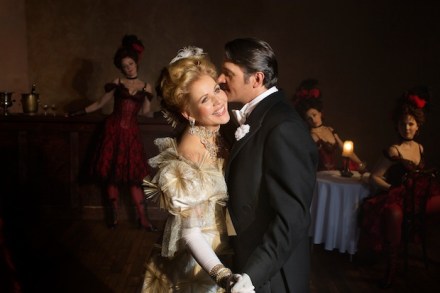
The Merry Widow Met Opera Live 'Even today, at 75, the waltz from The Merry Widow sends me into a fit of rage,' wrote Richard Strauss to his close collaborator Clemens Krauss in 1940. In a brilliant piece in his book Essays and Diversions Robin Holloway discusses why that waltz, and indeed the whole of Lehar's masterpiece infuriated Strauss so much, and mainly concludes that Strauss was jealous of the man who could write the 'deathless' tunes of The Merry Widow. Five years before, Strauss had complained 'to think that one must get to be 70 years old to discover that one's best gift is for kitsch!'But that only shows that there is kitsch and kitsch.

Royal Opera’s Tristan und Isolde: an absurd production – but still a magnificent night

From our UK edition

Any adequate performance of Tristan und Isolde, and the first night of the Royal Opera’s production was at least that, leaves you wondering what to do with the rest of your life, as Wagner both feared and hoped it would. What Tristan does — one of the things — is to present an image of romantic love, in both its torments and its ecstasies, which makes everything else seem trivial; and at the same time to undercut that image by asserting the claims of ordinary life, but in the subtlest way.

Michael Tanner’s five least objectionable opera performances of 2014

From our UK edition

1. Khovanskygate A typically brilliant and wayward production by the Birmingham Opera Company of this unfollowable opera, with stupendous choral singing by local inhabitants. 2. Dialogues des Carmélites The Royal Opera did Poulenc's gamey masterpiece proud, in a direct and intense account, with ideal all-round casting. 3. Götterdämmerung Opera North, under the inspiring leadership and baton of Richard Farnes, brought the greatest enterprise that a company can undertake to a stupendous close, and in two years' time will be performing the entire Ring cycle. 4. Macbetto The live relays from the New York Met.

Agents will be queuing up to sign this 26-year-old baritone from Sichuan

From our UK edition

The Royal Academy of Music’s end-of-term opera can always be looked forward to because it never disappoints: the repertoire is enterprising, the musical performance is invariably on a high level, and the productions are almost always sane and unpretentious: qualities that can’t be relied upon in more prestigious houses. This term’s production(s) were no exception: the strongest two of Puccini’s Il trittico. If you have to say that one of the three is weaker than the others, my vote goes to Il tabarro, Puccini’s attempt at verismo, a B-opera comparable to B-movies of the 1940s, except that they tended to be not quite so relentlessly conscientious in building atmosphere and more intent on actually getting on with the plot.

Royal Opera’s Idomeneo: get seats but make sure they’re facing away from the stage

From our UK edition

Mozart’s first great opera, Idomeneo, is not often performed, and perhaps it’s better that way. It should be seen as a festival work, celebrating qualities that we rarely reflect on, but are of the utmost importance. In his fine essay on the opera, David Cairns writes that it encompasses ‘love, joy, physical and spiritual contentment, stoicism, heroic resolution; the ecstasy of self-sacrifice, the horrors of schizophrenia, the agonising dilemma of a ruler trapped in the consequences of his actions; mass hysteria, panic in the face of an unknown scourge, turning to awe before the yet more terrible reality; the strange peace that can follow intense grief.

Met Opera Live’s Macbeth: Netrebko’s singing stirred almost as much as her décolletage

From our UK edition

This season of live Met relays got off to a most impressive start, with an electrifying account of Verdi’s tenth opera and first really great, though uneven piece, Macbetto (as I think it should be called; that’s what the central figure is called throughout). Fabio Luisi showed that he is far more at home conducting Verdi than Wagner — though his Bruckner performances are also magnificent. What made this the most stirring performance of Macbetto that I have seen was the strength of Željko Lucic’s performance in the title role.

Royal Opera’s Rigoletto: your disbelief may wobble but your excitement won’t

From our UK edition

One of the greatest tests of how an opera house is functioning is the quality of its revivals. Both the Royal Opera and the English National Opera score highly in that respect. You can go to the Met, to Munich, to the Vienna State Opera and see pathetically run-down performances, the cast thrown on to the stage and told to get on with it. That never happens at the two London houses. The latest revival of Rigoletto at the Royal Opera is, in most ways, fresher than the first run in 2001. It’s the production with the split-second full-frontal male nude in the opening scene, now prolonged to two split seconds. Actually, the opening scene, revealing the Duke of Mantua’s court in all its libidinous squalor, is the least convincing part of the proceedings.

Michael Tanner: Why I prefer Donizetti to Strauss

From our UK edition

Three operas this week, each of them named after its (anti-)heroine: one of the heroines (the most sympathetic) murders her husband, one of them spends her time successfully plotting the deaths of her mother and stepfather, one insists on the murder of a prophet who refuses her advances, and has an orgasm as she kisses the tongue of his severed head. Very much standard operatic fare. Two of them belong in the grand tradition of German high romanticism, one to the Italian tradition of bel canto melodrama of the first half of the 19th century. Unfashionably, I much prefer Donizetti’s Lucia di Lammermoor to Richard Strauss’s Salome and Elektra, indeed to any of his operatic works with the exceptions, perhaps, of Intermezzo and Capriccio.

In defence of Puccini

From our UK edition

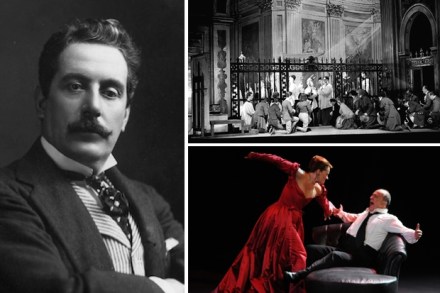
During my opera-going lifetime the most sensational change in the repertoire has, of course, been the immense expansion of the baroque repertoire, with Monteverdi, Rameau and above all Handel being not only revived but also seen now as mainstays in most opera houses. To think that only 50 years ago it was regarded as daring for Glyndebourne to mount L’incoronazione di Poppea, even in Raymond Leppard’s abbreviated and sumptuous version, which has been most unfairly denigrated in recent years. Yet just as remarkable, though hardly ever remarked on, has been the instatement of Puccini (who never needed reviving, since after initial scandals and flops he has always been more or less responsible for opera houses sometimes being in the black).

I think I’ve found the new Maria Callas

From our UK edition

Some of my most enjoyable evenings, when I reviewed opera weekly for The Spectator, were spent at the Royal College of Music, in the tiny but elegant and comfortable Britten Theatre. The performers, onstage and in the pit, are mostly current students of the RCM, led by one or another expert but puzzlingly little-known conductor. Repertoire is reasonably adventurous, but Handel, Mozart, Britten are perhaps the backbone. One of the pleasures of those performances is spotting the singers that one is sure will go on to big operatic careers, if they choose to. I spent a lot of time doing that, and almost always got it wrong. You have to remember that voices that sound well there may not prosper in Covent Garden or other theatres of comparable proportions.

In Norwich, a director is caught trying to murder Wagner’s Tannhäuser

From our UK edition

Seventeen years ago the Norwegian National Opera staged two cycles of the Ring in Norwich’s Theatre Royal, performances that have remained vividly in the minds of anyone who saw them. Now Theater Freiburg has visited Norwich with two performances each of Parsifal and Tannhäuser. I was hoping to see both, but transport problems meant that I was only able to go to the second performance of Tannhäuser. I shall have quite a few criticisms to make, but all told it was a triumph, and was warmly received by a far from capacity audience. There aren’t many chances to see this problem child of Wagner’s, and this was the finest account I have seen in several decades, much more moving than the Royal Opera’s production of nearly four years ago.

Opera North’s Götterdämerung is astounding (nearly)

From our UK edition

It seems a very short time since I interviewed Richard Farnes about Opera North’s planned Ring cycle, the dramas to be done one a year, semi-staged in an idiosyncratic way. In fact, it is four years, and now the complete cycle has been performed to universal acclaim, with the loudest cheers going to the conducting and the stupendous playing by the orchestra of Opera North, with some reinforcements — all six harps, and so on. Farnes explained to me in the interview that he was studying the Ring, with which he had previously had no professional connection.

Dialogues des Carmélites brings out the best in Poulenc – and the Royal Opera House

From our UK edition

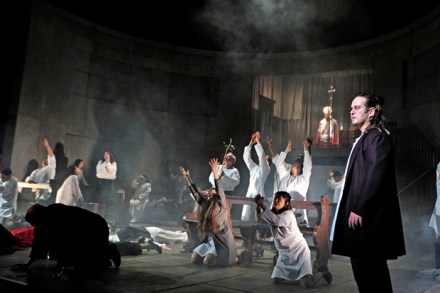
Poulenc’s Dialogues des Carmélites is an audacious work, much more so than many others that advertise their audacity. It deals with Love and Death, the central topics of opera, but the love is that of God; and death, rather than being a romantic consummation or a stirring tragedy, is something to be terrified of. The central character, Blanche de la Force, is terrified of life too, and her determination to enter a convent is seen initially as an attempt to escape, so that in the powerful second scene of the opera, after being given a hard time by her father and brother, she is subjected to searching questions by the Old Prioress, herself very ill and shortly to face death.