Michael Tanner

Interview: Semyon Bychkov: his own man

From our UK edition

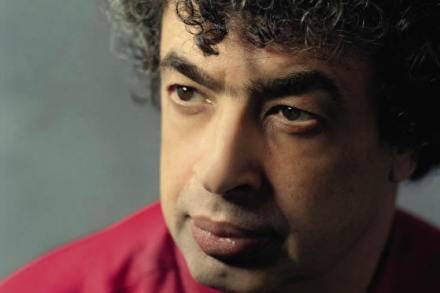
Semyon Bychkov has rather unspectacularly become one of the world’s most sought after conductors, and at present he is in London to conduct a series of performances of Wagner’s now least often staged canonical opera, Tannhäuser, at the Royal Opera House. Semyon Bychkov has rather unspectacularly become one of the world’s most sought after conductors, and at present he is in London to conduct a series of performances of Wagner’s now least often staged canonical opera, Tannhäuser, at the Royal Opera House.
Magnificent Mozart

From our UK edition

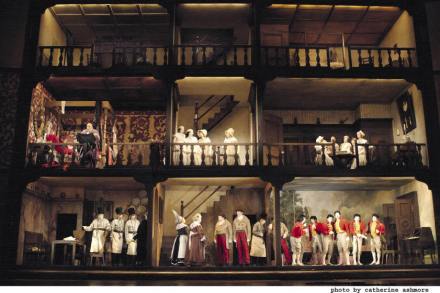
The subtitle of Mozart’s Don Giovanni is ‘Il dissoluto punito’ (the rake punished), that of Rossini’s La Cenerentola is ‘La bontà in trionfo’ (goodness triumphant), while Monteverdi’s L’Incoronazione di Poppea might well be subtitled ‘Vice rewarded’. The subtitle of Mozart’s Don Giovanni is ‘Il dissoluto punito’ (the rake punished), that of Rossini’s La Cenerentola is ‘La bontà in trionfo’ (goodness triumphant), while Monteverdi’s L’Incoronazione di Poppea might well be subtitled ‘Vice rewarded’. They are the three operas that Glyndebourne is taking round the country this year, whether with moralistic intent I don’t know.

Conflicting passions

From our UK edition

Francesco Cilea’s Adriana Lecouvreur, his biggest success, dating from 1902, leads a fringe existence, but it persists thanks primarily to the name role, dramatically meaty and not imposing too great a strain on the performer. Francesco Cilea’s Adriana Lecouvreur, his biggest success, dating from 1902, leads a fringe existence, but it persists thanks primarily to the name role, dramatically meaty and not imposing too great a strain on the performer. It has been mainly associated with singers at a fairly late stage — or thinking they were — of their career, Magda Olivero and Renata Tebaldi being the most notable.

Mangled Mozart

From our UK edition

Don Giovanni is an opera which gives plenty of scope for alternative interpretations, as has been very clearly demonstrated in the past 30 or so years, since directors took over as the determining force in productions. But there are certain basic features which any production, to be taken seriously, must respect. The two most obvious are that the Don must be a figure of riveting allure, and that social position is a key factor in the development of the action, at any rate until that gets dispersed in the ill-organised Act II.

Spellbound

From our UK edition

Jonas Kaufmann’s ascent to the position of the leading German lyric-dramatic tenor has been surprisingly gradual. I first saw him in Edinburgh in 2001, giving a Lieder recital in the Queen’s Hall, and was immediately astonished that I hadn’t heard of him before. For the next few years, I heard him there in more recitals, and in concert performances of Der Freischütz, Capriccio and culminating as Walther in Die Meistersinger in 2006. Jonas Kaufmann’s ascent to the position of the leading German lyric-dramatic tenor has been surprisingly gradual. I first saw him in Edinburgh in 2001, giving a Lieder recital in the Queen’s Hall, and was immediately astonished that I hadn’t heard of him before.

Static and staid

From our UK edition

The Royal Opera last revived its production of Gounod’s Roméo et Juliette ten years ago, with what were then known as the lovebirds, Gheorghiu and Alagna, who imparted their own kind of glamour to the work. The Royal Opera last revived its production of Gounod’s Roméo et Juliette ten years ago, with what were then known as the lovebirds, Gheorghiu and Alagna, who imparted their own kind of glamour to the work. Nicolas Joël’s production badly needs some pepping up, since it is a desperately static and staid affair, as revived by Stephen Barlow, with some hyperactive running around on the part of the principals, while the chorus remain rooted to whichever spot they are on.

Northern lights

From our UK edition

It’s been too long since I saw The Merry Widow. I have been thinking that for some time, and the superb new production of it by Opera North only made me feel that we should be able to go to more performances of it than we get a chance to. It has been newly and wittily translated by Kit Hesketh-Harvey, and the production is in the safe hands of Giles Havergal, with set and costume designs by Leslie Travers. It’s been too long since I saw The Merry Widow. I have been thinking that for some time, and the superb new production of it by Opera North only made me feel that we should be able to go to more performances of it than we get a chance to.

Who’s deceiving whom?

From our UK edition

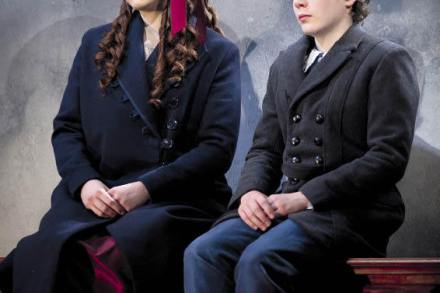
The more often I see Britten’s The Turn of the Screw, the more I am bewildered and fascinated by it. The more often I see Britten’s The Turn of the Screw, the more I am bewildered and fascinated by it. There is no question that it is one of his most brilliant operatic scores, if not the most brilliant of all. One thing that never fails to astonish is the variety of interpretations that the work is susceptible of, both the score and the drama, though of course in a fine production they are complementary — and almost every production I’ve seen has been good. The latest version, from Opera North, is one of the most bemusing so far.

Opera Perfect performance Michael Tanner

From our UK edition

Promised End Linbury Studio, in rep until 16 November Radamisto English National Opera, in rep until 4 November ‘There is perhaps no play which keeps the attention so strongly fixed; which so much agitates our passions and interests our curiosity. Promised End Linbury Studio, in rep until 16 November Radamisto English National Opera, in rep until 4 November ‘There is perhaps no play which keeps the attention so strongly fixed; which so much agitates our passions and interests our curiosity. The artful involutions of distinct interests, the striking opposition of contrary characters, the sudden changes of fortune, and the quick succession of events, fill the mind with a perpetual tumult of indignation, pity and hope.

Visual tricks

From our UK edition

Any seasoned opera-goer is likely to have had the experience of attending a performance where most things are right, but the overall impression is dismal; and also where, even more puzzlingly, most things are wrong but somehow the total effect is good or even overwhelming. To some extent it is relative to the work being performed, but not entirely; and to a much greater extent it depends on what your expectations are — I always try to have low ones, but expectations aren’t voluntary, alas. Last Sunday’s performance of Tristan und Isolde at the Royal Festival Hall was, emphatically, the second kind of occasion. It’s not hard to list what was wrong with it, and that will sound damning.

Age concern

From our UK edition

English National Opera seems, at the start of the season, to be preoccupied, as we should all be, with how long we want to live, and in what kind of condition. In Janacek’s The Makropoulos Case the eponymous heroine is able, if she wants to, to live in a state of perpetual early maturity, but after 337 years decides to call it a day. In Gounod’s Faust the eponymous hero is feeling his years, and is offered back his youth by a diabolical force in return for his soul. Neither of these works, even in brilliant productions, advances the discussion much, but neither of the productions on offer is helpful, and Christopher Alden’s, of Makropoulos, seriously deflects attention away from where it should be directed.

Crime and punishment

From our UK edition

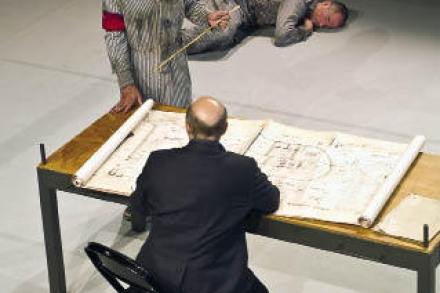
As I descended, then descended again, then again, to get to my seat in the subterranean, uncomfortable Linbury Studio at the Royal Opera House, I thought gloomily of the number of miserable evenings I have spent there, and reflected that Philip Glass’s In the Penal Colony was probably all too apt a name for what I was about to experience. As I descended, then descended again, then again, to get to my seat in the subterranean, uncomfortable Linbury Studio at the Royal Opera House, I thought gloomily of the number of miserable evenings I have spent there, and reflected that Philip Glass’s In the Penal Colony was probably all too apt a name for what I was about to experience.

Murdering Mozart

From our UK edition

While the Royal Opera is touring Japan, its home team opened what looks to be mainly an unadventurous season with revivals of two celebrated productions by Jonathan Miller, for which Miller himself returned, having, it seems, modified his view of Così fan tutte drastically, while there probably aren’t two ways of looking at Don Pasquale. While the Royal Opera is touring Japan, its home team opened what looks to be mainly an unadventurous season with revivals of two celebrated productions by Jonathan Miller, for which Miller himself returned, having, it seems, modified his view of Così fan tutte drastically, while there probably aren’t two ways of looking at Don Pasquale.

Without harmful intent

From our UK edition

Hänsel und Gretel Royal Albert Hall How frightening an opera is Humperdinck’s Hänsel und Gretel, or how frightening should it be? The answer to the first question, if one had only encountered Hänsel at the Prom performance which Glyndebourne brought to London last week, was ‘not at all’. It was given in a semi-staged version, but virtually nothing of Laurent Pelly’s distinctive production survived.

Bliss with Stravinsky

From our UK edition

Renard; Mavra; The Rake’s Progress Glyndebourne Anyone who was lucky enough to go to Glyndebourne on one of three days last week had the option of seeing not only the opera they had booked for, but also, before it, a couple of brief works by Stravinsky that were put on by the Jerwood Chorus Development Scheme, with the Britten Sinfonia and young singers, in the Jerwood Studio. It was rigged up as a circus tent, the action of the pieces taking place in the arena, while the small orchestra — a little too backward — played behind that. The two together made 45 minutes of bliss, Stravinsky at his insouciant best, though with imposing moments or more of ritual. The works were sung in English translation, but the feeling of Russianness was very strong.

Sound bites

From our UK edition

Tête à Tête: The Opera Festival Hammersmith Studios It’s 11 years since I first went to a Tête à Tête evening, then at the Battersea Arts Centre, a most agreeable location, but not used by Tête à Tête since 2004, I think. Nowadays there is a whole festival each year in August, the operatic low season, planned by the founder and artistic director, Bill Bankes-Jones, whose enthusiasm knows no bounds. Sometimes I wonder if it might not be a good thing if it knew at least one or two. The first, and excellent idea he had was to encourage young composers with an interest in writing opera to write a short one, say 20 minutes long, with a pithy text.

Sabotaging Tchaikovsky

From our UK edition

Eugene Onegin Bolshoi, Royal Opera House  La bohème Soho Theatre, until 4 September Rule 1 for the sophisticated contemporary opera-goer: complain about the poor diction of singers, especially as compared to 50 years ago, and lay most of the blame on surtitles (actually the connection between the two phenomena is unclear). Rule 2: be astonished at the naïveté of anyone who is bewildered by contradictions between what is said (sung) and what is happening. To judge from the Bolshoi Opera’s production of Tchaikovsky’s Eugene Onegin, Russian directors are cottoning on to modern trends. The whole thing is set in a vast dining room, with a big table round which the chorus sits.

Rare outing

From our UK edition

Francesca da Rimini La forza del destino Opera Holland Park, in rep until 14 August Tristan und Isolde Act II Royal Albert Hall Opera Holland Park makes a speciality of reviving Italian operas of the early 20th century, often absurdly and lazily dubbed ‘verismo’. Its latest, and possibly most courageous effort on this front, is Zandonai’s Francesca da Rimini, which, far from conforming to the aesthetic brilliantly outlined in the sung Prologue to I Pagliacci, takes a subject very far removed from quotidian life, and decked out in the almost fatally pretentious language of D’Annunzio.

It’s a knockout

From our UK edition

Die Walküre Longborough Not having been to Longborough and its opera festival before, I was bowled over by it in all respects. The much-referred-to extended garage is an extremely comfortable theatre, with more than 400 seats, and with plenty of space in the foyer to make intervals a far more agreeable affair than they are in London’s two major opera houses. The setting is, of course, enchanting, the trimmings slightly playful, no hint of pretentiousness such as one finds in several other country-house operatic establishments, and no lengthy hectoring before the performance gets under way. However, none of that would count for anything if the performances weren’t well worth the trouble of getting there. I went only to Die Walküre, and it was a knockout.

Great expectations

From our UK edition

La Traviata Royal Opera House Jette Parker Young Artists Summer Performance Royal Opera House The Royal Opera ended its season with yet another revival of Richard Eyre’s production of La Traviata, and the Jette Parker Young Artists Summer Performance, the latter a most interesting affair, but without much of a critical presence, presumably because it was at 1 p.m. on a Saturday. The distinctive feature of the Traviata revival was that Angela Gheorghiu returned to sing the role of Violetta, in which she had her first great international success, and which she has not sung at Covent Garden since 1996. I attended the third performance (First Capital Connect had thwarted my attempt to go to the first) and was somewhat disappointed. I had very high expectations.