Michael Tanner

Excellence amid the gore

From our UK edition

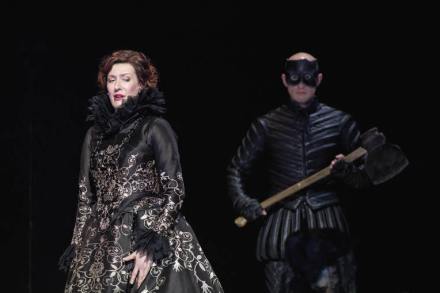
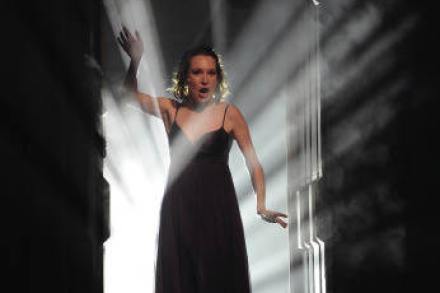
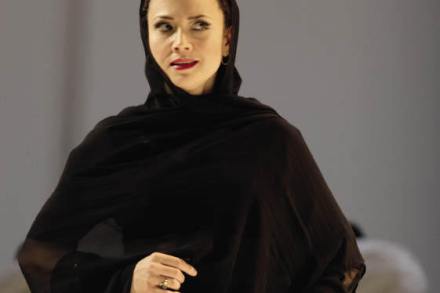
Salome Royal Opera House Die Meistersinger Welsh National Opera on tour, Birmingham Richard Strauss’s Salome is no joke for its director, however much it may be for the audience. When David McVicar mounted it at the Royal Opera in 2008, the production, together with the cluttered designs of Es Devlin, seemed to have as its main object to keep the eye occupied while the mind wondered and probably wandered. Scenes reminiscent of Pasolini’s Salò, not a movie I was happy to be reminded of, and one that has no connection I can see with Strauss (stills from it continue to illustrate the programme), were enacted down below, while at the very top of the stage a lavish Edwardian dinner was in full guzzle, and the heroine rushed up and down a connecting staircase to no purpose.

Elusive Mozart

From our UK edition

Don Giovanni Glyndebourne, until 27 August Rigoletto Welsh National Opera, on tour Glyndebourne’s new production, by Jonathan Kent, of Don Giovanni is a wretched failure, not gross like its last one, in which the characters waded around in shit and Don Giovanni disembowelled a dead horse to eat its innards, but as irrelevant to the essence of what now seems to be Mozart’s most elusive dramatic work. In 15 years of reviewing I haven’t seen a production which was even approximately adequate, presumably because, while Mozart could perform a miraculous balancing act with his central figure, we no longer can. Gerald Finley, the extremely experienced performer of the title role, here makes him a man without qualities.

Cause for celebration

From our UK edition

Simon Boccanegra Royal Opera House, in rep until 15 July Manon Royal Opera House, in rep until 10 July The Royal Opera’s latest revival of Verdi’s Simon Boccanegra is notable above all for Plácido Domingo’s assumption of the title role, that is, his British debut as a baritone. It is also notable for his rapid recovery from serious illness, and his giving every appearance of being in fine fettle. Those combined circumstances made it difficult, at any rate for me, to decide just how artistically successful his transformation, and thus the whole revival, actually was.

Awe and gratitude

From our UK edition

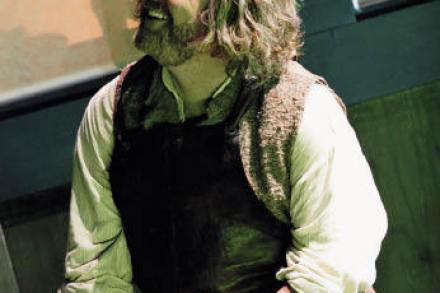
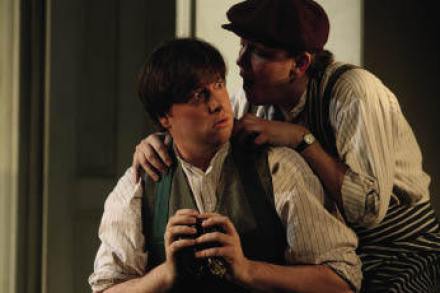
Die Meistersinger Welsh National Opera, Cardiff and touring Welsh National Opera’s new staging of Die Meistersinger von Nürnberg is a triumph. Not an unqualified one — I doubt whether there has ever been such a thing — but enough to leave the audience feeling that mixture of glowing wellbeing and sadness that this work alone engenders. WNO has a distinguished history of Wagner productions, thanks above all to the close relationship which it had with Reginald Goodall in the late 1970s and early 1980s, and which resulted in the most inspired performances of Tristan und Isolde that I have ever attended. By then Goodall had had his say with his great, enormous accounts of The Mastersingers with ENO a decade before, and the Welsh company moved on with him to Parsifal.

Curses and blessings

From our UK edition

Idomeneo ENO, in rep until 9 July Lohengrin City of Birmingham Symphony Orchestra Mozart’s Idomeneo remains, despite the best efforts of its proselytisers, a connoisseur’s piece. For all its beauties and its emotional power, it is a predominantly static work, and one in which one can’t really care all that much about what happens to the central sympathetic characters — think of the Da Ponte operas and of Die Zauberflöte, by contrast, and the point is made. Katie Mitchell, who directs the new production at ENO, ‘places Idomeneo’s timeless dilemma in a contemporary context’, according to the programme. She would. One wonders, first, if Idomeneo’s dilemma is timeless.

The axeman cometh

From our UK edition

Maria Stuarda; Rusalka Opera North, in Leeds and on tour until July Carmen Royal Opera House, until 26 June Donizetti’s Maria Stuarda is most celebrated for the apocryphal meeting of Mary Queen of Scots and Elizabeth, in which Mary descends to some coarse insults, backed up, in Antony McDonald’s new production for Opera North, by the use of a riding whip — Elizabeth has one, too, and the two queens do get quite physical. The drama here is stronger than the music, though, which is as perfunctory as most of the score, and only rises to an impressive level for the long monologues for the central characters, and especially the final scene — a very slow walk to the scaffold, inevitably.

Mozart magic

From our UK edition

Le nozze di Figaro Royal Opera House, in rep until 3 July The Pearl Fishers English National Opera, in rep until 8 July A Midsummer Night’s Dream English Touring Opera, in Cambridge The Marriage of Figaro, in a fine performance, makes an impression different from that of any other opera. Almost all the characters are in a state of anxiety or rage or misery or frustrated lustfulness throughout, and they are vividly portrayed in the round; yet the listener is in a constant state of joy, from the mutinous opening scurryings of the overture onwards.

A blow for fidelity

From our UK edition

Così fan tutte In rep until 17 July Billy Budd In rep until 27 June Glyndebourne Glyndebourne has opened this year with two troubling operas, but ones which disturb in quite different ways. Così fan tutte is described by Max Loppert, in an excellent essay in the programme, as ‘the cruellest and most disturbing opera ever written’, and, though I can think of a couple of others that might equally lay claim to that title, there is no doubt that Così is a harrowing work, ever more so the more one knows it: which is not at all to deny that it is a comedy — that is what makes it so terrible.  This revival of Nicholas Hytner’s 2006 production is superb, if not in every respect quite as fine as the first time round.

Murder most fine

From our UK edition

Tosca English National Opera, in rep until 10 July La Fille du régiment The Royal Opera, in rep until 3 June Tosca has had several new productions at ENO in the past 20 years which have proved rapidly perishable. It’ll be interesting to see whether the new production, with set designs by Frank Philipp Schlössmann and the direction in the hands of Catherine Malfitano, proves more durable, though I think it is certain that one major modification will be effected. The opening chords, giving the audience a pretty vivid impression of what it would be like to be a torture victim of Scarpia’s, were tremendous, immensely loud and crushing, and throughout the evening the chief source of my pleasure was in the orchestral playing.

Dying gracefully

From our UK edition

La Traviata Royal Opera House, in rep until 24 May; and with cast change 8 July to 17 July This year, when operatic fare in the UK has become sparser and less adventurous than at any time since I remember, it’s no surprise that the old stand-bys should be wheeled out regularly. Top scorer in 2010, without question, has been La Bohème, with productions ranging from the brilliantly resourceful minimalism of The Cock in Kilburn, which has been running nightly since early December, to the elaborate squalors of the Royal Opera’s quarter-century-old production, which improves with every advance into decrepitude; with many other versions in between.

Elegant evening

From our UK edition

Juan Diego Flórez Barbican It was an ideal way to spend the evening after Polling Day: a relaxed recital, undemanding and not too long, by one of the most individual of present-day singers. At the same time there was an element of risk: Juan Diego Flórez, the young Peruvian who created a stir singing the comparatively small role of Rodrigo in Rossini’s Otello at Covent Garden, and has since achieved enormous popularity there in bel canto roles, performed a series of songs and arias from the 18th and 19th centuries, with only one solo from his accompanist Vincenzo Scalera. The risk was in exposing the limitations of his voice and of his stage personality.

Out of time

From our UK edition

Aida Royal Opera House, in rep until 16 May Powder Her Face Linbury Studio, in rep until 12 May In the programme for the Royal Opera’s new production of Aida, George Hall tells us that ‘the total number of complete or substantially complete recordings of Aida, made either live or in the studio, currently stands at over 250’, a statistic that shook me, hardened discomaniac as I am. There can’t be more than one or two other operas which achieve such a tally. What adds to my surprise is that Aida is so far from being Verdi’s finest opera, and that it does urgently need seeing as well as hearing.

Lovers’ tangle

From our UK edition

Elegy for Young Lovers Young Vic, in rep until 8 May Albert Herring Blackheath Halls Hans Werner Henze’s Elegy for Young Lovers, with a libretto by Auden and Chester Kallman, is less familiar than one might expect. Never recorded complete, it has rarely been performed in the UK since Glyndebourne staged it in 1963. Yet in the excellent new production at the Young Vic, the concentration awarded by the audience was instantly apparent, and maintained throughout the three hours the piece lasts. ENO has got Fiona Shaw to direct, and one of the results is that the performers behave like human beings rather than opera singers, and even speak their lines — there is a considerable amount of spoken dialogue — naturally.

Jarring Janacek

From our UK edition

The Adventures of Mr Broucek Edinburgh Festival Theatre Prima Donna Sadler’s Wells There is no composer to whose works my reactions fluctuate so much as Janacek. I don’t mean the various compositions in his output, I mean specific works on different occasions. When I saw a concert performance of his comic opera The Adventures of Mr Broucek at the Barbican in 2007, conducted by Jiri Belohlavek, I became an instant, passionate convert to a piece that I had previously thought was mostly a dismal flop. And I felt the same when the CDs of that performance were issued.

Hypermanic Rossini

From our UK edition

Il Turco in Italia Royal Opera, in rep until 19 April Commentators on Rossini’s Il Turco in Italia tend to take a defensive line, comparing its absence from the repertoire for many decades with that of Così fan tutte, and even comparing the two works directly, as well as pointing out that Mozart’s great opera was playing in Milan at the time that Rossini was composing Turco.

Fallen Angel

From our UK edition

Angels in America Barbican Angels in America is the latest in the series of contemporary operas which are being mounted at the Barbican by the BBC Symphony Orchestra. The others have been semi-staged, this was three-quarter staged, with props, moved around by the performers, and an Angel crashing into the action at the close of Act I. It is the latest opera by the Transylvanian composer Peter Eötvös, whose previous opera Love and Other Demons was premiered at the 2008 Glyndebourne Festival, to no great acclaim. Angels in America, by contrast, has been given very warm welcomes in the various cities in which it has been produced, beginning with Paris in 2004.

Janacek revealed

From our UK edition

Cunning Little Vixen Royal Opera House, in rep until 1 April Perhaps the most heartening feature of the British and especially the London operatic scene is the frequency with which Janacek’s operas are mounted now. His progress in that respect is comparable to that of Mahler, with whom he otherwise has mercifully little in common. Mahler’s symphonies soul-search, despair, exult, usually unconvincingly, or peter out, much more convincingly, in resignation and acceptance.

Missing spark

From our UK edition

Katya Kabanova ENO, in rep until 27 March Katya Kabanova is Janacek’s grimmest opera, perhaps the grimmest opera ever written, but it is flooded with radiant music, which is decisively stamped out in the last few moments. With Katya having drowned herself, and the happy young lovers Kudrjas and Varvara having taken their most unChekhovian leave for Moscow, what hope is there for this community, whose senior figure, the Kabanicha, sees Katya’s suicide as the vindication of her moral stance?

Celebrating freedom

From our UK edition

Albert Herring Royal Academy of Music La bohème The Cock Tavern, Kilburn Whenever there is a new production of Britten’s great comedy Albert Herring I go to it and then carry on at some length about how wonderful the opera is, and this particular production, whichever it may be. And it is always true. For several obvious reasons, Herring is an opera that producers mess around with very little — mild and harmless updatings are just about all that it is subject to; and, though it would be catastrophic to impose a radically new interpretation on it, it would be no worse than what is visited on many other stage works which should be just as directorially unmolested.

Long evening with Handel

From our UK edition

Tamerlano Royal Opera, in rep until 20 March Handel’s Tamerlano is rated extremely highly by the cognoscenti, indeed routinely listed as being among his two or three greatest operas. I have only seen it twice, once at Sadler’s Wells nine years ago in a production by Jonathan Miller, conducted by Trevor Pinnock, and now at the Royal Opera in a production by Graham Vick, with Ivor Bolton conducting. On both occasions I have been bored to the verge of paralysis, but more so by the present one. It lasts from 6.30 until 11 o’clock, with two relatively short intervals. So it is as long as Die Walküre or Tristan, though they are always scheduled to start at 6 or even earlier.