Michael Simmons

Michael Simmons

Michael Simmons is The Spectator's economics editor. Contact him here.

Sage admits its models were ‘at variance to reality’. But why?

From our UK edition

The Sage committee was set up as a pool of experts on tap to advise government. During the pandemic, it mutated into something different: a group whose advice ended up advocating long lockdowns. Its regular meetings have now been discontinued, with questions being asked in No. 10 about whether it’s time to disband Sage and set up a new structure – in the same way that Public Health England was reformed and became the UK Health Security Agency. There will be plenty of lessons to learn. But we might not have much time to learn them: a new variant or (given the growth of genomic sequencing) a new pathogen could come along at any time. This matters.

Is Scotland really the most vaccinated part of the country?

From our UK edition

'Scotland right now is the most vaccinated part of the UK,' said Nicola Sturgeon on the Sunday Morning show this weekend. And if you look at the UK dashboard figures that’s certainly true. A reported 92 per cent have had a first jab and 68 per cent are boosted compared to 91 per cent and 64 per cent in England. But are these numbers reliable? If you look at vaccination in certain age groups in Scotland the rollout has been impressive. In the over-50s, 101 per cent are vaccinated, restricted to over-70s it’s 103 per cent. More jabs than people. But how can more than 100 per cent of a population have been vaccinated? Obviously, they can’t. The problem lies in the denominator. Vaccination rates are based on an absolute number divided by an estimate.

Sage ‘scenarios’ vs actual: an update

From our UK edition

Given that lockdown was very nearly ordered on the advice of Sage last month, it’s worth keeping an eye on the ‘scenarios’ it published, and how they compare to the situation today. Another week of data offers more food for thought. This week was the period when deaths were supposed to be peaking – so given that no extra restrictions were ordered, it’s interesting to compare the peak the models predicted for this week with what actually happened. Deaths were said by Sage to peak at anything from 600 to 6,000 a day (the latter figure, predictably, hogged the headlines).

Omicron is on its way out

From our UK edition

Omicron peaked in England in early January, according to figures just released by the ONS. The estimates from the weekly infection survey show that cases in the UK peaked at around four million before falling. In the week ending 15 January, 1 in 20 had Covid in England, Scotland and Northern Ireland, and 1 in 25 in Wales. We shouldn't be surprised by this We shouldn't be surprised by this — this is how Omicron seems to go world over. As in Gauteng, as in South Africa, as in Lambeth, as in London and now in the UK: it falls almost as fast as it rises. Quite simply, the variant is so infectious that it quickly reaches levels of prevalence that are unsustainable because so many people have been vaccinated, infected and become immune.

Sage scenarios vs actual: an update

From our UK edition

‘Deaths could hit 6,000 a day,’ reported the newspapers on 17 December. A day later documents for the 99th meeting of Sage were released which said that, without restrictions over and above ‘Plan B’, deaths would range from 600 to 6,000 a day. A summary of Sage advice, prepared for the Cabinet, gave three models of what could happen next: Do nothing (ie, stick with 'Plan B') and face "a minimum peak" of 3,000 hospitalisations a day and 600 to 6,000 deaths a dayImplement ‘Stage 2’ restrictions (household bubbles, etc) and cut daily deaths to a lower range: 500 to 3,000.

Will Omicron overwhelm the NHS? The crucial missing data

From our UK edition

If you catch Omicron your risk of ending up in hospital is between 50 to 70 per cent less likely than if you’d had Delta. That’s according to a new analysis released this evening by the UK Health Security Agency. It’s another blow to the case for lockdown. That case for lockdown goes like this: Omicron is growing exponentially and its casualties will overwhelm the NHS unless action is taken to slow the growth. The cautious course of action is to wait until we know more about crucial unanswered questions, such as: What is the limit to Omicron’s growth?How much milder than Delta is it?Is Imperial’s figure of 45 per cent fewer hospitalisations robust? And independently verified?

Omicron is now Britain’s dominant Covid strain

From our UK edition

If you test positive for Covid now in Britain, the odds are that it’s Omicron: it’s now the dominant strain in England and Scotland. Data released this evening by the UK Health Security Agency showed that by Tuesday, 54 per cent of PCR tests were positive for S-gene target failure (a proxy for Omicron). For perspective, it has only taken eight days for the variant to become dominant: Delta took nearly a month. North of the border, Sturgeon said that the ‘tsunami [of cases] was starting to hit’ and confirmed that in Scotland more than half of cases were Omicron too. Again, that’s using S-gene dropout as a proxy. Some 13,741 Omicron cases have been confirmed in England so far: 696 in Scotland, 313 in Northern Ireland and 159 in Wales.

Christmas Special

From our UK edition

90 min listen

Welcome to the special Christmas episode of The Edition! In this episode, we look at five major topics that dominated the news this year and the pages of The Spectator. First up a review of the year in politics with our resident Coffee House Shots' team James Forsyth, Katy Balls and Isabel Hardman. We discuss how Boris seemed to make such a strong start to the year through the vaccine rollout, but squandered this goodwill with several own goals. We also touch on some of the big political moments of the year: Partygate, the Owen Paterson affair and of course Matt Hancock. (00:39) Next, we go global and look at three of the major powerhouses that took headlines this year. The EU, who ends the year in a panic over Russia, extreme Covid measures, and upcoming elections.

Sturgeon: all cases will be Omicron by Christmas

From our UK edition

Nicola Sturgeon has said that Scotland should expect a ‘tsunami’ of Covid cases, so has said Christmas parties should be cancelled and household contacts of any positive case — Omicron or not — should isolate for ten days regardless of vaccination status. Given that Scotland and England have very similar Covid profiles (both in waves and vaccination) this is relevant to the whole of the UK. But what especially jumps out is the prediction from Scottish government modelling that Omicron will account for all Covid cases by Christmas. Her document: Omicron in Scotland — evidence paper released during Sturgeon’s TV appearance pointed to modelling to suggest that half of new cases could be Omicron by Monday.

What’s the evidence for England’s vaccine passports?

From our UK edition

The Prime Minister has just announced Plan B. Working from home has been all but mandated and large venues — as well as nightclubs — will be required to check for vaccine passports. But where is the evidence for this, and what does the data say? Johnson’s vaccine passport idea copies Nicola Sturgeon’s policy in Scotland which was found, in a 70-page evidence paper, not to have had any measurable effect. As evidence Chris Whitty presented South African hospitalisations — a country with less than a third vaccinated. When Omicron was discovered the government said we should wait for data to be gathered before reacting. Sensible, given the huge economic and livelihood consequences of even small restrictions. Data is published every day.

UK approves new Covid antibody drug

From our UK edition

In the face of the Omicron strain, the UK regulator has approved a drug that its manufacturers, GlaxoSmithKline, claim reduces hopsitalisations and deaths by 79 per cent. The MHRA announced this morning that it had given the NHS approval to start administering the Xevudy antibody drug to everyone over 12. The drug has been sanctioned for use in patients with ‘mild or moderate’ Covid who are at risk of developing severe illness.It is the second treatment of its kind to be approved after Roche’s Ronapreve was given the green light in August. Both treatments are ‘monoclonal antibodies’, and work by binding to the spike protein of the virus and blocking its ability to enter human cells.

Sturgeon’s 70-page dossier finds no evidence for vaccine passports

From our UK edition

Nicola Sturgeon wants to extend vaccine passports in Scotland, and today her government released a 70-page document purporting to show evidence. The snag? There’s not a shred of evidence to show that her vaccine passports are having any effect. The document, entitled Coronavirus (COVID-19) vaccine certificationww: evidence paper update makes a very bold claim: that Scotland’s choice is more vaccine passports or restrictions. To suppress the virus further we are now faced with a choice. This is to limit social contacts and the risk of infection by limiting social contacts by closing venues, limiting group sizes and advising people not to meet each other.

What’s the evidence for Scotland’s vaccine passports?

From our UK edition

Nicola Sturgeon is considering extending vaccine passports to Scotland’s cinemas, theatres and pubs. ‘We are also considering whether an expansion of the scheme to cover more settings would be justified and prudent given the current state of the pandemic,’ the First Minister said yesterday: she’ll decide next Tuesday. As she mulls, what data will she have to go on? Her deputy, John Swinney, conceded earlier this month that the government doesn’t have much in the way of evidence: the data is ‘impossible to segment,’ he says. Yet he told The Spectator at an event this morning that he still believed vaccine passports had a ‘role to play’ — pointing to an increased uptake of the vaccine in under-thirties.

Pfizer’s Covid pill breakthrough

From our UK edition

After the UK medicines regulator yesterday approved Merck’s Covid pill for use on recently infected, vulnerable patients, Pfizer announced its own successful treatment, Paxlovid. Pfizer’s pill was shown to reduce the risk of hospitalisation and death in Covid patients by up to 89 per cent compared with a placebo. The drug has proved so effective that enrolment in the trial has been stopped and Pfizer says it plans to apply to the US regulator for emergency use ‘as soon as possible’. The pill is most effective when treatment starts as soon as a patient becomes aware they are infected with or have been exposed to the virus. It’s taken with a pre-existing HIV drug — ritonavir — which helps it stay in the body for longer.

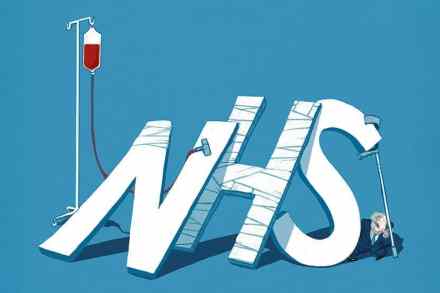
Will Sajid Javid really fire 106,000 unvaccinated NHS workers?

From our UK edition

When Sajid Javid was interviewed at Tory party conference recently, he was asked if he’s going to start firing unvaccinated NHS staff, given that care workers are about to lose their jobs under ‘no jab, no job’ rules. He said he was considering it, which would be quite a move. The unjabbed may make up a small percentage of the NHS workforce of 1.6 million people. Today’s Sunday Times says that he has decided to press ahead by introducing legislation that will make vaccinations ‘a condition of employment’ for health workers. This would follow what Joe Biden has done in America — where all medical employees face vaccine mandates and companies with more than a hundred employees must enforce vaccinations or weekly testing.